
 By admin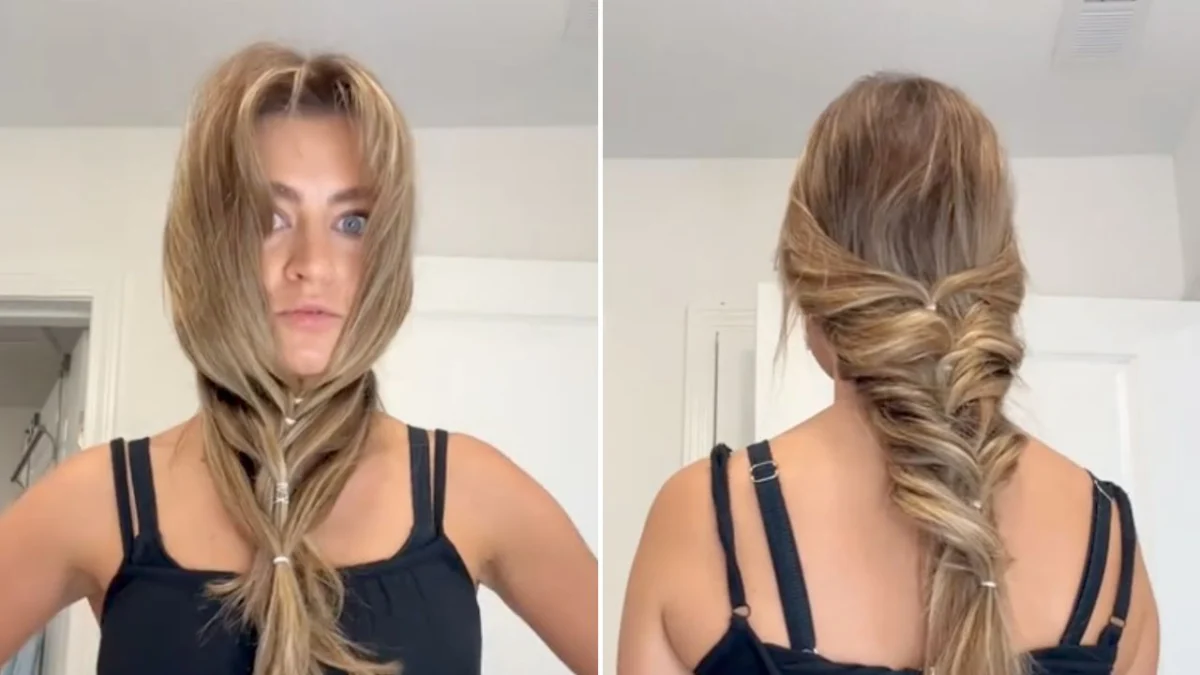
What began as an unusual TikTok trend, where users tie their hair under their chin in a manner resembling a beard before flipping it back to reveal an intricate braid, has rapidly evolved into a widely adopted hairstyling phenomenon. This technique, dubbed the "beard braid," has captivated social media platforms, particularly TikTok’s "For You Page" (FYP), demonstrating how unconventional methods can yield surprisingly sophisticated results. The trend’s viral nature underscores a broader shift in how individuals discover and experiment with hair styling, moving beyond traditional tutorials to embrace creative, community-driven hacks.
The "beard braid" concept hinges on a clever manipulation of hair strands, creating structural complexity and textural interest without the need for painstaking sectioning and braiding typically associated with intricate hairstyles. Instead, users gather front sections of hair, secure them beneath the chin, and then strategically flip the entire mass backward. This action pulls the hair through a designated opening, forming the foundation of a braid that appears remarkably deliberate and polished. The widespread appeal of this hack lies in its deceptive simplicity, offering a visually impressive outcome with a surprisingly accessible execution. Its rapid ascent in popularity is a testament to the power of social media algorithms in amplifying creative content and fostering emergent trends.
The Genesis and Evolution of the Beard Braid
The exact origin of the beard braid is difficult to pinpoint, as is common with many viral internet trends. However, its surge in visibility on TikTok can be broadly attributed to the platform’s algorithm, which favors short-form video content and encourages user participation and replication. Over the past year, numerous creators began showcasing the technique, often with "before and after" reveals that highlighted the dramatic transformation. Initial videos likely emerged organically, with users experimenting and sharing their discoveries. As more individuals attempted and succeeded with the hack, a feedback loop was established, amplifying its reach.
By late 2023 and early 2024, the beard braid had become a staple on FYPs globally. Hashtags such as #beardbraid and #hairhack garnered millions of views, indicating a significant level of engagement. The trend’s adaptability also contributed to its longevity. What began as a single, albeit unusual, method quickly spawned numerous variations, catering to different hair types, lengths, and desired aesthetics. This evolution from a singular hack to a diverse set of styling possibilities is characteristic of how successful trends mature within online communities.
Unpacking the Mechanics: How the Beard Braid Works
At its core, the beard braid is a masterful illusion. The initial step of tying hair under the chin serves a dual purpose: it gathers the front sections of hair and creates a crucial tension point. When this bundle is flipped backward, the hair is naturally directed into a structured path. The subsequent steps involve either dividing these flipped sections into manageable portions to create a traditional braid or utilizing a pull-through technique, where strands are interwoven to achieve a net-like appearance.
The effectiveness of the beard braid can be understood through basic principles of hair manipulation. By redirecting the flow of hair from front to back, the technique effectively reorganizes the hair’s natural direction, allowing for the creation of intricate patterns that would otherwise require significant skill and time. The tension created by the initial tie is essential for maintaining the braid’s structure as it is formed. This method bypasses the need for precise partings and individual strand braiding, making it accessible even to those with limited braiding experience.
Five Popular Variations on the Viral Theme
The versatility of the beard braid has led to the development of several distinct styles, each offering a unique aesthetic and catering to different preferences. These variations demonstrate the creative potential inherent in the core technique.
1. The Curly Accessorized Hairstyle
This variation is particularly striking on curly hair textures, where the natural volume and texture enhance the visual appeal. The process begins by gathering the front tendrils of hair and tying them together loosely beneath the chin, ensuring a gap within the knot. When the hair is flipped backward, this opening acts as the anchor point for the braid. The remaining hair is then divided into two sections, with each part progressively integrated into the neighboring strand as the braid moves towards the nape of the neck. This creates a distinctive pull-through braid effect, resulting in a net-like pattern that drapes elegantly across the back of the head. For added flair, users often incorporate hair piercings or decorative pins, infusing the style with a personalized touch. This approach leverages the inherent texture of curly hair to amplify the braid’s intricate appearance, making it a standout choice for those with natural curls.
2. The Bubble Braid Half Updo
For those seeking a playful yet polished look, the bubble braid half updo offers a contemporary twist on the beard braid. The initial step involves tying the front sections of hair under the chin, but with a crucial modification: the tie is secured midway down the strands, rather than at the ends. This creates a distinct point of connection. From this mid-length tie, the lower portion of the hair is transformed into bubble braids. This is achieved by using small elastics to segment the hair at intervals of a few inches, followed by gently pulling each segment outwards to create a voluminous, puffed effect. Once the bubble braid elements are formed, the entire style is flipped back into a half updo. Further fluffing and shaping are then applied to achieve a voluminous and refined finish. This style retains the architectural integrity of the beard braid while incorporating the trendy, bouncy aesthetic of bubble braids, resulting in a look that appears both sophisticated and artful.
3. The Flipped-Back Look
Considered the most beginner-friendly variation, this style adheres to a straightforward, consistent pattern, making it ideal for those new to the beard braid trend. The process commences by tying together the side sections of hair beneath the chin. Subsequently, the sections immediately behind these are also gathered and tied in the same manner. This step-by-step approach continues, moving backward through the hair until all sections are brought forward and secured in a "beard-like" configuration. The truly satisfying part of this method is the subsequent flipping of each section backward, one by one. As each strand is returned to its original position, care is taken to pull and tuck the tails, ensuring a neat and structured appearance. The outcome is a beautifully crafted braid that evokes the grandeur of ancient Greek hairstyles, often described as "Greek goddess-worthy." Its red-carpet appeal belies its simple execution, making it a highly accessible yet impactful style.
4. The Braided Style
This variation integrates traditional braiding techniques with the beard braid concept, appealing to those who enjoy the process of braiding itself. The foundation is established by tying two thin strands of hair together under the chin, forming an anchor. These initial strands are then braided all the way to their ends. From this point, side sections of hair are progressively attached directly onto the existing braid, much like branches extending from a tree trunk. This method produces a more defined and structured braid compared to the woven net effect seen in other variations. The inspiration for this style clearly draws from "no-hair-tie" braid hacks, emphasizing a seamless integration of strands. Once all side sections are incorporated, the entire arrangement is flipped backward and smoothed to refine its shape. This option is particularly well-suited for occasions where a meticulously styled appearance is desired, conveying an impression of significant effort and skill.
5. The Twisted and Flipped Hairstyle
For individuals seeking a romantic half updo with added texture and an effortless charm, this variation proves to be an excellent choice. The styling begins by tying the first two front sections of hair together beneath the chin. These secured sections are then flipped backward, directing them towards the nape of the neck. Two additional sections of hair are incorporated using the same flipped technique, also brought back and secured. The final result is a soft half updo at the back of the head, characterized by a tousled, woven quality. This style strikes a harmonious balance between the structured outcome of a classic elastic braid hack and the relaxed elegance of a romantic updo. It appears intentionally styled yet maintains a sense of effortless grace. This method is especially effective on second-day hair, where natural oils and texture provide the necessary grip to hold the shape beautifully.
Broader Implications and Future Trends
The widespread adoption of the beard braid hack highlights several significant trends in contemporary hairstyling and digital culture. Firstly, it underscores the increasing democratization of hairstyling. Platforms like TikTok have empowered individuals to share innovative techniques that bypass traditional salon expertise, making complex looks accessible to a broader audience. This shift is supported by data from social media analytics firms, which consistently show the rapid dissemination of user-generated content related to beauty and fashion hacks. For instance, studies have indicated that user-generated video content on platforms like TikTok can achieve engagement rates significantly higher than professionally produced content, especially within niche communities.
Secondly, the trend demonstrates the power of visual learning and community engagement. Users are not only discovering new styles but also actively participating by attempting, adapting, and sharing their own interpretations. This collaborative environment fosters a sense of shared creativity and can lead to the rapid evolution of trends. The proliferation of variations on the beard braid theme is a direct result of this community-driven innovation.
From a broader perspective, the beard braid’s success suggests a growing appetite for "effortlessly chic" hairstyles that deliver maximum impact with minimal perceived effort. Consumers are increasingly looking for styles that are both visually appealing and practical for everyday wear, or that can be adapted for various occasions with minor adjustments. The ease of execution, combined with the sophisticated outcome, perfectly aligns with this consumer preference.
The implications for the beauty industry are noteworthy. Brands and hairstylists are increasingly monitoring social media platforms to identify emerging trends and understand consumer preferences. The popularity of hacks like the beard braid can influence product development, marketing strategies, and even the training curricula for aspiring stylists. Furthermore, the success of such viral trends can create opportunities for influencers and content creators who are adept at breaking down complex techniques into easily digestible formats.
The accessibility of tools like TheRightHairstyles’ virtual try-on feature and the HairHunt app further illustrates this evolution. These digital resources empower individuals to experiment with different hairstyles and colors before committing, bridging the gap between online inspiration and real-world application. The availability of such applications, offering both iOS and Android compatibility, suggests a growing demand for personalized digital beauty solutions that complement the physical act of styling.
In conclusion, the beard braid is more than just a fleeting social media trend; it is a testament to the innovative spirit of online communities and the evolving landscape of beauty. It exemplifies how a simple, unconventional idea, when shared and adapted, can blossom into a diverse array of stunning hairstyles, proving that sometimes, the most unexpected techniques yield the most beautiful results. As social media continues to shape our access to and understanding of styling, we can anticipate further innovative hacks emerging, challenging traditional notions of hairstyling and democratizing beauty for a global audience.
