
 By Nila Kartika Wati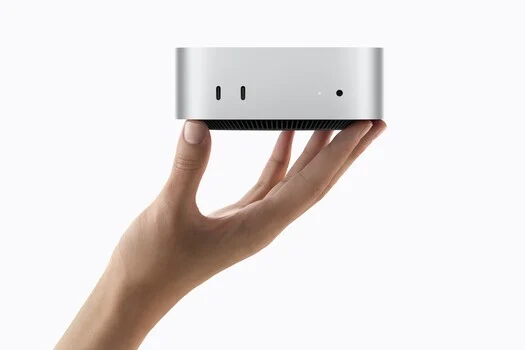
Apple has officially unveiled significantly updated versions of its compact desktop powerhouse, the Mac mini, now powered by the groundbreaking M6 and M5 Pro chips. This latest generation brings a substantial leap in CPU, GPU, storage, and artificial intelligence (AI) performance, alongside a comprehensive overhaul of its connectivity suite, introducing Wi-Fi 7, Bluetooth 6, faster Ethernet, and the unexpected addition of genlock support. Preorders for these highly anticipated machines commenced on August 25, 2026, with the global shipping schedule slated to begin on September 22, 2026. This launch reinforces the Mac mini’s position as a versatile and potent computing solution, particularly for demanding professional workflows and the burgeoning field of local AI processing.
A Legacy of Innovation: The Mac mini’s Evolution into the AI Era
Since its inception, the Mac mini has carved out a unique niche in Apple’s product lineup: a surprisingly powerful and highly adaptable desktop computer in an exceptionally small footprint. Its transition from Intel processors to Apple Silicon, beginning with the M1 chip, marked a pivotal moment, delivering unprecedented performance per watt and redefining expectations for compact desktops. The M6 and M5 Pro iterations build upon this legacy, pushing the boundaries of what a small form factor can achieve, particularly in an era increasingly dominated by machine learning and AI applications. While the physical design remains true to its iconic compact enclosure, the internal architecture has been completely reimagined to tackle a wider array of intensive local workloads.
Apple’s strategy with the Mac mini has always been about providing accessible power. The M6 model represents a significant generational leap for general users and creative enthusiasts, offering substantial boosts across the board. The M5 Pro configuration, however, is explicitly aimed at the most demanding professional users—those immersed in high-resolution video editing, complex 3D rendering, advanced AI model development, intricate data processing, and large-scale software compilation. This dual-pronged approach ensures that the Mac mini line continues to serve a broad spectrum of users, from home offices to professional studios.
The company has been vocal about the performance gains, particularly in AI. According to Apple’s internal testing, the M6 version delivers up to four times faster AI performance, twice the graphics processing capability, twice the storage performance, and a robust 40% faster CPU performance when compared to the preceding M4 generation. While these are Apple-provided figures and await independent verification, they serve as a strong indicator of the expected generational improvements and Apple’s continued commitment to integrating cutting-edge chip technology into its desktop offerings.
The Powerhouse Within: A Deep Dive into the M6 Mac mini
At the heart of the standard Mac mini model lies the new M6 chip, boasting a formidable 12-core CPU, which adds two more performance cores than its M4 predecessor. Complementing this is a 12-core GPU, also gaining two cores, with a significant architectural enhancement: each GPU core now incorporates a dedicated Neural Accelerator. This design choice is a direct response to the increasing demand for GPU-based machine learning and AI processing, promising substantial speedups for tasks that leverage these capabilities.
Further enhancing its AI prowess, the M6 chip includes what Apple describes as a dual 16-core Neural Engine, a specialized component designed for accelerating machine learning operations. For memory, the standard configuration maintains 16 GB of unified memory, but users can now configure their systems with up to 32 GB, providing more headroom for multitasking and demanding applications. Memory bandwidth has also seen a considerable boost, now reaching up to 170 GB/s, facilitating faster data access for both the CPU and GPU, which share this unified memory pool.
Apple’s performance claims for the M6 Mac mini are impressive and illustrate its improved capabilities across various applications. The company states that the new system can process prompts in popular large language model (LLM) interfaces like LM Studio up to an astonishing 13.5 times faster than the original M1 Mac mini, and up to 4.8 times faster than the M4 Mac mini. For productivity, spreadsheet calculations in Microsoft Excel are reportedly up to 2.3 times faster than on an M1 system and up to 1.5 times faster than on an M4. Gaming enthusiasts will also appreciate the gains, with ray tracing in graphically intensive titles like Cyberpunk 2077: Ultimate Edition rated at up to twice the performance of the M4 model. It is crucial to remember that these comparisons are based on Apple’s controlled testing environments and should be viewed as indicative of expected generational improvement rather than absolute, universally reproducible benchmarks across all applications.
Unleashing Professional Might: The M5 Pro Mac mini
For users with the most demanding creative and computational needs, the higher-end Mac mini variant is equipped with the M5 Pro chip. This professional-grade silicon offers configurations with up to an 18-core CPU and an even more powerful 20-core GPU. The M5 Pro’s GPU is further enhanced with an improved shader core, third-generation ray tracing acceleration for more realistic lighting and reflections, and the same Neural Accelerators integrated into each GPU core found in the M6, albeit at a higher count and likely greater overall throughput.
A defining feature of the M5 Pro model, crucial for professional workflows, is its significantly higher memory capacity. It supports up to 64 GB of unified memory, more than double the maximum of the M6 model. Furthermore, memory bandwidth is substantially increased to an impressive 307 GB/s. This additional capacity and bandwidth are not merely for bragging rights; they are critical for professionals handling massive video projects (especially uncompressed or high-bitrate codecs), constructing complex 3D scenes with intricate textures and simulations, running larger and more sophisticated local AI models, or working with extremely large datasets that benefit from vast amounts of accessible memory. Apple specifically targets these demanding applications, citing enhanced performance for editing ProRes Raw files, operating extensive local AI models, managing large datasets, and rendering complex 3D environments as key use cases.
The performance uplift for the M5 Pro Mac mini is equally compelling. Apple asserts that the M5 Pro provides up to 8.5 times faster LLM prompt processing in LM Studio compared to the M2 Pro Mac mini, and up to four times the performance of the M4 Pro in the same test. For 3D artists, ray-traced rendering in Blender is claimed to be up to 4.5 times faster than on the M2 Pro and up to 1.4 times faster than on the M4 Pro. Image processing in Affinity, a popular creative suite, reportedly sees performance gains of up to 2.1 times that of the M2 Pro and 1.5 times that of the M4 Pro. These figures underscore the M5 Pro’s capabilities in accelerating professional creative and computational tasks, positioning it as a potent desktop solution for studio environments and demanding individual professionals.
Connectivity Redefined: A Future-Proofing Upgrade
Beyond raw processing power, the new Mac mini models introduce a suite of connectivity upgrades that significantly enhance their utility and future-proofing. Both the M6 and M5 Pro systems now feature Wi-Fi 7, the latest wireless standard offering substantially faster speeds, lower latency, and improved network efficiency compared to previous generations, critical for studios relying on fast wireless data transfer. Bluetooth 6 is also integrated, promising enhanced range, improved reliability, and lower power consumption for peripherals.
For wired networking, a notable upgrade is the inclusion of 2.5 Gb Ethernet as standard on both models. This is a practical and welcome improvement for studios and users regularly moving large photo catalogs, high-resolution video files, or extensive project data across network-attached storage (NAS) systems. For the most data-intensive workflows, an optional 10 Gb Ethernet connection remains available, catering to environments built around high-speed shared storage and enterprise-level network infrastructure.
The physical port layout maintains a blend of familiarity and innovation. The front panel remains minimalist, featuring two USB-C ports supporting USB 3 for convenient access, alongside a headphone jack that now supports high-impedance headphones, a nod to audio professionals. The rear panel differentiates the models: the M6 model is equipped with three Thunderbolt 4 ports, while the M5 Pro version steps up to three state-of-5-the-art Thunderbolt 5 ports. Both models also include HDMI for display output and the aforementioned Ethernet port. Thunderbolt 5 is particularly significant for the M5 Pro, offering up to 120 Gbps bi-directional bandwidth, enabling support for multiple high-resolution displays (e.g., three 6K displays or two 8K displays simultaneously), and blistering speeds for external storage arrays, critical for video editors and data scientists.
Perhaps the most unusual, yet impactful, addition is genlock support via USB-C. Genlock is a professional feature that allows multiple components within a production environment—such as cameras, monitors, and recording devices—to operate from a precisely synchronized timing signal. This capability is paramount in multi-camera video productions, broadcast studios, virtual production stages, and other workflows where exact frame synchronization is crucial to avoid visual artifacts and ensure seamless integration. Apple’s inclusion of genlock on a general-purpose desktop like the Mac mini is groundbreaking, potentially democratizing access to high-end production features. The company has explicitly stated that this feature can synchronize a display and camera, specifically mentioning the iPhone 17 Pro as a supported camera, hinting at a tightly integrated Apple ecosystem for professional capture. For creators operating multiple demanding systems, Apple is also highlighting Thunderbolt 5’s capability for connecting several M5 Pro Mac mini systems together, creating powerful compute clusters for large-scale local AI model training and inference.
macOS 27 Golden Gate: The Software-Hardware Symphony
The launch of the new Mac mini hardware is meticulously synchronized with the introduction of macOS 27 Golden Gate, Apple’s latest desktop operating system. This release is a cornerstone of Apple’s broader strategy for integrated AI, introducing "Siri AI" alongside a suite of additional Apple Intelligence features and significant enhancements to several standard Mac applications.
Siri AI is poised to become a profoundly more capable and context-aware virtual assistant. Apple states that Siri AI will be able to leverage personal information from messages, email, and photos as contextual cues, enabling it to respond to complex, nuanced questions and perform multi-step tasks across various applications with greater understanding. This advanced AI is also being integrated deeply into system functions like Spotlight search and systemwide context menus, allowing users to interact with their Mac in more intuitive ways. A new "Visual Intelligence" feature will allow users to ask questions or perform actions related to material currently displayed on their screen, blurring the lines between system and user content.
Other enhancements in macOS 27 Golden Gate include additional organizational and browsing tools within Safari, making web navigation more efficient. The Shortcuts application gains natural-language automation creation, allowing users to build complex workflows using plain English commands. The Photos application receives new, more powerful photo-editing functionalities, likely leveraging the new chips’ AI and GPU capabilities for intelligent adjustments. Furthermore, Apple is introducing interface changes to its "Liquid Glass" design language, which includes revised toolbars, sidebars, window shapes, and menu bar icons, aiming for a refreshed and more cohesive user experience.
While the vision for macOS 27 and Apple Intelligence is ambitious, some of these features are still undergoing testing. Apple has confirmed that macOS 27 Golden Gate will be released as a free software update in the fall of 2026, while Siri AI is expected to arrive as a public beta later in 2026. Feature and language availability will vary by region and over time, indicating a phased rollout for some of the more advanced AI capabilities.
Broader Impact and Implications for Creative Professionals and Enterprises
This latest Mac mini update carries significant implications for a wide range of users, particularly within the creative and professional sectors. For photographers, while Apple has not provided specific benchmarks for applications like Lightroom, Photoshop, or Capture One, the reported GPU, memory, and general image-processing improvements are highly relevant. The M5 Pro configuration’s claim of up to 1.5 times faster Affinity image processing compared to the M4 Pro is a strong indicator of the potential gains in other photo editing suites, assuming proper optimization. The M5 Pro model’s impressive 64 GB unified memory ceiling and 307 GB/s memory bandwidth are crucial for heavy creative work. Given Apple Silicon’s unified memory architecture, where CPU and GPU share the same memory pool, this capacity becomes critical when handling large-format images, intricate composite layers, high-resolution panoramas, or when leveraging local AI tools for tasks like upscaling and noise reduction.
For video users, the combination of native ProRes Raw support, the high-bandwidth Thunderbolt 5 ports, significantly higher GPU performance, and the novel genlock feature makes the M5 Pro Mac mini a compelling proposition. Genlock, in particular, transforms the Mac mini from a general-purpose desktop into a potentially integral component of professional synchronized capture and display environments. This could see the Mac mini deployed in studio settings, broadcast control rooms, multi-camera live events, and advanced virtual production setups, where precise timing is non-negotiable. The ability to synchronize with devices like the iPhone 17 Pro further underscores Apple’s ecosystem approach to professional content creation.
Local AI processing stands out as a major theme of this update. Apple specifically highlights photo and video upscaling, as well as large diffusion models, among the M5 Pro’s intended workloads. Regardless of the extent to which creators engage with generative AI, the underlying improvements to GPU compute and memory bandwidth are poised to benefit conventional machine-learning features. This includes accelerated tools for intelligent masking, advanced noise reduction, subject recognition, transcription, and other AI-driven functionalities, provided that individual applications are optimized to leverage the new hardware’s capabilities.
Connectivity enhancements also play a pivotal role. The standard 2.5 Gb Ethernet connection is a practical upgrade for any studio or individual pulling source footage or image libraries from network-attached storage. For workflows built around high-speed shared storage solutions, the optional 10 Gb Ethernet offers the necessary bandwidth. Thunderbolt 5 on the M5 Pro model is particularly relevant for video professionals who routinely work with fast external SSD arrays, RAID systems, and other high-bandwidth peripherals, ensuring rapid data transfer for even the most demanding projects. Apple also continues to list its Studio Display and Studio Display XDR as ideal display companions, leveraging the Mac mini’s robust display output capabilities.
Market Positioning, Pricing, and Availability
The new Mac mini models are positioned competitively within Apple’s desktop lineup and against PC alternatives, offering substantial power in a compact and energy-efficient package. The M6 Mac mini starts at an accessible price of $899 in the U.S., making it an attractive option for general users, students, and professionals with moderate demands. The more powerful M5 Pro model, tailored for intensive creative and computational tasks, begins at $1,699, reflecting its advanced capabilities and professional-grade features.
Apple initiated preorders for both models on August 25, 2026, across 30 countries and regions worldwide, indicating a broad initial rollout. Deliveries to customers, in-store availability at Apple Stores, and distribution through authorized resellers are all scheduled to commence simultaneously on September 22, 2026. This streamlined launch ensures that users globally can quickly access the latest Mac mini technology.
Conclusion: A Compact Desktop Forging New Frontiers
The latest refresh of the Mac mini is not about altering its familiar and beloved physical concept; rather, it is a profound internal transformation focused on dramatically increasing its processing power and expanding its connectivity horizon. The M6 version delivers broad and significant improvements across CPU, GPU, storage, and AI performance, making it an exceptionally capable machine for everyday tasks and creative endeavors. The M5 Pro version elevates this further, providing substantially more unified memory, greater memory bandwidth, the cutting-edge Thunderbolt 5 standard, and additional headroom specifically designed for the most demanding creative applications and computational workloads.
For photographers and video creators, the inclusion of genlock support may be the most unconventional yet potentially revolutionary new feature, opening up new possibilities for integrating the Mac mini into professional production pipelines. More broadly, the faster GPU performance, higher memory limits, improved networking capabilities (especially 2.5 Gb Ethernet standard), and Thunderbolt 5 support are likely to have a wider, more immediate day-to-day relevance across various professional workflows. Apple’s benchmark claims suggest sizeable improvements in several key workloads, but the ultimate practical value and real-world gains will depend on independent testing and, crucially, on how well specific photo, video, and production applications are optimized to leverage the new M6 and M5 Pro chips. In essence, the Mac mini continues to evolve, solidifying its role as a versatile, powerful, and now even more professionally oriented compact desktop computer ready to tackle the challenges of the next generation of computing, particularly in the realm of AI and high-end content creation.
