
 By Jia Lissa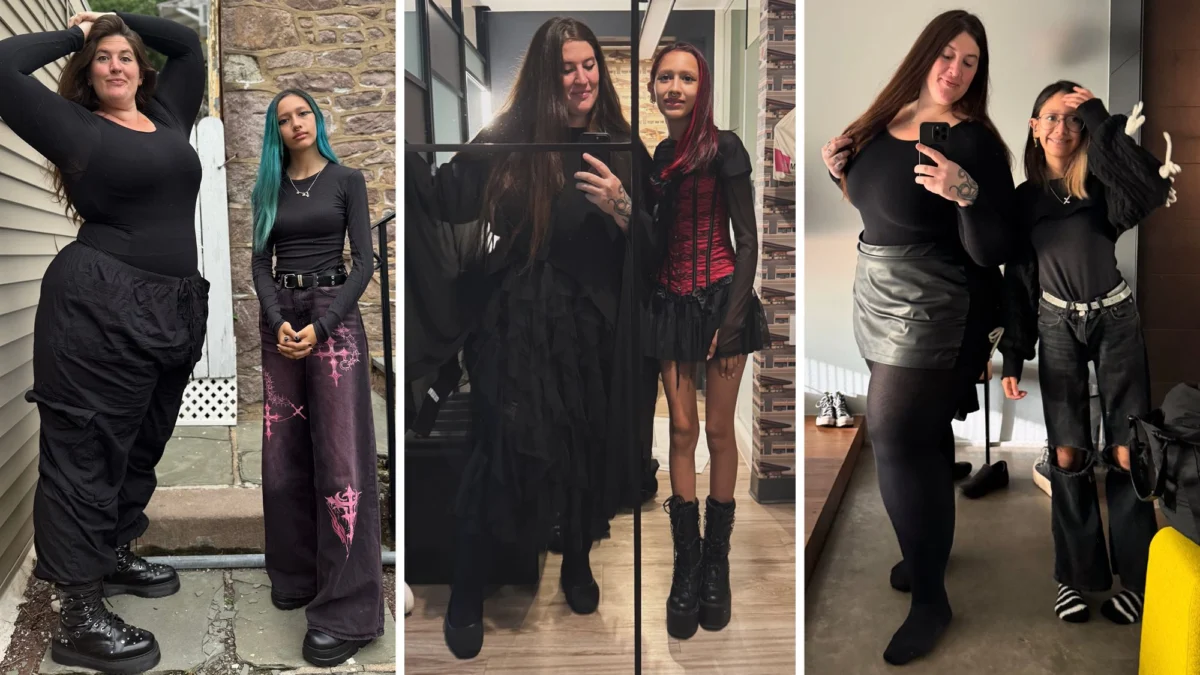
The quiet unease began subtly, a ripple in the otherwise confident demeanor of my 14-year-old daughter, Carolyn. It manifested in a moment of vulnerability as she twisted in front of the mirror, attempting to capture a fleeting glimpse of her spine. "Am I sick?" she whispered, her eyes fixed on the sharp protrusions of her shoulder blades. "The internet says I’m sick." This was a stark contrast to just an hour earlier, when her appetite seemed boundless, a testament to youthful metabolism. Lunch had been a generous Caesar salad with double dressing, followed by a substantial bowl of mac and cheese, a refreshing lemonade, and a decadent peanut butter chocolate dessert. My own meal, a more modest portion of salmon over gem lettuce, served as a visual counterpoint.
"No, you’re not sick," I reassured her, my fingers gently tracing the bony ridges along her back. "They’re spines," I offered, attempting a lighthearted comparison, "like a dragon." Her immediate rejection, "I’m not a dragon," underscored the depth of her burgeoning concern. She pressed her arms back, observing the way her collarbones pressed against her skin. "Why do I look like this?" The question hung in the air, laden with an anxiety I recognized all too well.
My own lifelong struggle with body image began in childhood. At seven, my mother’s critique of my stomach rolls, coupled with a dire prediction of future loneliness and marital prospects, instilled a deep-seated shame. This led to a restrictive diet of apples, only for my mother to then inform me of their calorie count, initiating a cycle of disordered eating that persisted through adolescence. Despite these efforts, my body never conformed to the slender ideal so prized in my mother and perpetuated by the media. For years, I internalized this perceived inadequacy, my self-hatred mirrored and amplified by the constant barrage of unattainable body standards presented in television, film, and magazines.
It was a profound irony, then, that as Carolyn grew, she consistently registered in the single-digit percentile for weight on her growth charts. Pediatricians expressed concern, yet I observed her genuine delight in food, her ability to eat with enthusiasm and volume. I suspected she had inherited the "skinny genes" that had eluded me, a genetic lottery I had often envied in relatives. Witnessing her develop into a lean, lithe teenager, I felt a sense of relief. My hope was that she would be spared the relentless scrutiny and societal judgment that often accompanies larger bodies. I believed I had protected her from the emotional toll of body dissatisfaction, a burden I had carried for so long. Yet, a new worry emerged: would she be ashamed of me? I scanned her interactions for any sign of embarrassment, any subtle distancing as I navigated the world with a body that did not conform to the prevailing ideal.
The shift in her perception, however, was not about my body, but her own. At fourteen, the pervasive influence of the internet began to take its toll. She returned from a friend’s house, armed with printed images of a celebrity’s arms – described as "sinewy" and "thin." Holding them up against her own, she exclaimed, "Look! Everyone’s saying if your arms look like this then you’re sick." The casual dissemination of such commentary, often framed as objective observation or concern, had planted a seed of doubt.
"You’re not sick," I reiterated, my voice firm but gentle. "You’re just a skinny person. You’ve always been that way." I deliberately avoided mentioning her childhood battle with leukemia, a period where "sick" had a tangible and undeniable definition. The stark reality was that her current physique, while the subject of online discourse, was not indicative of illness.
A week later, the persistent nature of this digital echo chamber became apparent. While she was engrossed in her phone, I noticed a still image from Ariana Grande’s music video for "Petal." Carolyn’s gaze flickered from the screen to her own sternum, her finger tracing the delicate ridges. "Is my… this… showing too much?" she asked, her voice tinged with apprehension. The question, so loaded with the anxieties of an era obsessed with visible bone structure, was a stark reminder of the pressures young women face.
Maintaining my composure was a conscious effort. "There is no such thing as too much as long as you’re okay," I responded, echoing the reassurance I had longed to hear as a child. "You’re exactly the way you’re supposed to be." This was the affirmation I had spent years cultivating for myself, the belief that my worth was not contingent on my appearance.

Her response, however, was one of deflation. She leaned back, a look of defeat clouding her features. "But why don’t I look like you?" This question, posed by my daughter whose body had always been the societal ideal I secretly envied, was a revelation. It underscored a fundamental flaw in our societal discourse surrounding bodies. Amidst the escalating conversations about thinness – the celebrity endorsements of GLP-1 medications, the pronouncements on collarbone prominence – I was witnessing my daughter navigate the same treacherous waters I had for most of my life, albeit from a diametrically opposed perspective. My long-held assumption that her inherent thinness would shield her from body image issues was proving to be a misconception. The persistent narrative that achieving a certain level of thinness brings ease and acceptance was being challenged by her experience.
The dangers of disordered eating and being underweight are undeniable, and health is a private matter between an individual and their physician. However, the public’s penchant for speculation, condemnation, and veiled "concern" often translates into a young person internalizing a sense of inherent wrongness.
Carolyn’s body represents the ideal I pursued, and often starved myself towards, for much of my adult life. As a child, I idolized the figures in magazines, yearning for their ethereal forms, irrespective of the mental and physical cost. Even with years of striving, I never achieved that particular silhouette.
Now, at 38, I have largely shed the burden of self-loathing. I have learned to appreciate my body, to embrace its presence and the advantages it offers. I enjoy the natural attention I command, the space my body occupies. I feel beautiful more often than not, and I see the same inherent beauty in my daughter, albeit expressed differently.
The years I spent navigating the exhausting conversations surrounding larger bodies, a constant theme in my own life, surprisingly prepared me to support my daughter through her own body-related anxieties, even those stemming from a place of perceived thinness. My lifelong experience of being primarily defined by my body’s appearance made me hyper-vigilant to the moment Carolyn began to fall into a similar trap. It became imperative to teach her, and to remind myself, that she is more than her physical form.
The end of the school year brought an unexpected call from Carolyn’s art teacher. Her tone was friendly yet cautious, prompting my immediate concern. A month prior, an incident involving paint and a clogged sink had led to a disciplinary discussion. This call, I assumed, was related.
"One of the girls pulled up a photo of the Venus de Milo to use as a reference for her sculpture because she said it represents the most beautiful woman," the teacher began, her voice laced with an implied question.
I waited, curious as to where this was leading.
"Carolyn laughed and said, ‘you haven’t seen my mom,’" the teacher continued, a smile evident in her voice. She paused, then delivered the punchline that would forever shift my perspective: "’I just wanted you to know that she’s always telling people how beautiful you are.’"

In that moment, the full impact of our shared journey through the landscape of body image became clear. My daughter and I stand on opposite ends of a societal spectrum regarding body size, yet our experiences have converged on a fundamental truth: the relentless public discourse surrounding bodies, regardless of size, inevitably leads to self-doubt. The most potent antidote, I realized, is mutual affirmation, the unwavering recognition of beauty within ourselves and in each other.
The societal pressures surrounding body image are complex and multifaceted, impacting individuals of all sizes. For years, the prevailing narrative has championed thinness as the ultimate aesthetic, a benchmark of health and desirability. This has fueled intense scrutiny of larger bodies, often framed as a public health issue, leading to widespread judgment and discrimination. Data from organizations like the National Association to Advance Fat Acceptance (NAAFA) consistently highlight the prevalence of weight bias in healthcare, employment, and daily life, demonstrating the tangible negative consequences for individuals in larger bodies.
However, as the original article suggests, the relentless pursuit of thinness, and the constant online discourse surrounding it, has created a new set of anxieties for those who naturally embody a slender physique. The rise of social media platforms, where curated images and trend-driven beauty standards proliferate, has amplified these pressures. Celebrities and influencers, often promoting specific diets or aesthetic ideals, inadvertently contribute to a culture of comparison and inadequacy. The phenomenon of "thinspiration" and the online obsession with visible bones – collarbones, ribs, spines – exemplifies a concerning shift towards celebrating extreme thinness as a marker of success and beauty.
This shift is not without its potential health implications. While the article notes that being underweight can be a health concern, the pervasive online commentary often fails to differentiate between natural leanness and potentially unhealthy weight loss. The medical community, represented by organizations like the World Health Organization (WHO) and the Centers for Disease Control and Prevention (CDC), emphasizes that health is a spectrum and that individual health assessments should be conducted by qualified medical professionals, not by public opinion or social media trends. The pressure to conform to a specific body type, regardless of its natural form, can lead to disordered eating patterns, body dysmorphia, and a range of psychological and physical health issues.
The narrative presented by the author, Elizabeth Austin, illustrates a generational shift in how body image is perceived and discussed. Her personal history of struggling with body dissatisfaction due to societal expectations of larger bodies contrasts with her daughter Carolyn’s experience of feeling inadequate despite possessing a naturally thin physique. This highlights the pervasive nature of body discourse, suggesting that the problem is not necessarily with the body itself, but with the societal obsession with scrutinizing and categorizing bodies.
The author’s reflections on her daughter’s experience underscore the broader implications for parenting and societal education. The constant exposure to idealized and often unattainable body types through media and online platforms necessitates a proactive approach to fostering self-esteem and body positivity in young people. This includes open conversations about media literacy, critical engagement with online content, and a focus on health and well-being rather than purely aesthetic ideals. The anecdote of Carolyn’s art class, where the Venus de Milo was presented as the epitome of beauty, and Carolyn’s proud retort about her mother, serves as a powerful testament to the impact of positive familial affirmation in counteracting negative societal messaging.
Ultimately, the article advocates for a paradigm shift in how we discuss bodies. It calls for a move away from public judgment and towards private health assessments and individual acceptance. The emphasis on self-love and mutual appreciation, as demonstrated by the author’s eventual reconciliation with her own body and her encouragement of her daughter’s self-acceptance, offers a hopeful path forward. The ongoing dialogue surrounding body image, encompassing both the pressures faced by individuals with larger bodies and those with naturally thin bodies, is crucial for fostering a more inclusive and compassionate society. The experiences of individuals like Elizabeth Austin and her daughter Carolyn serve as vital case studies, illuminating the complex and often contradictory nature of our contemporary obsession with the human form.
