
 By admin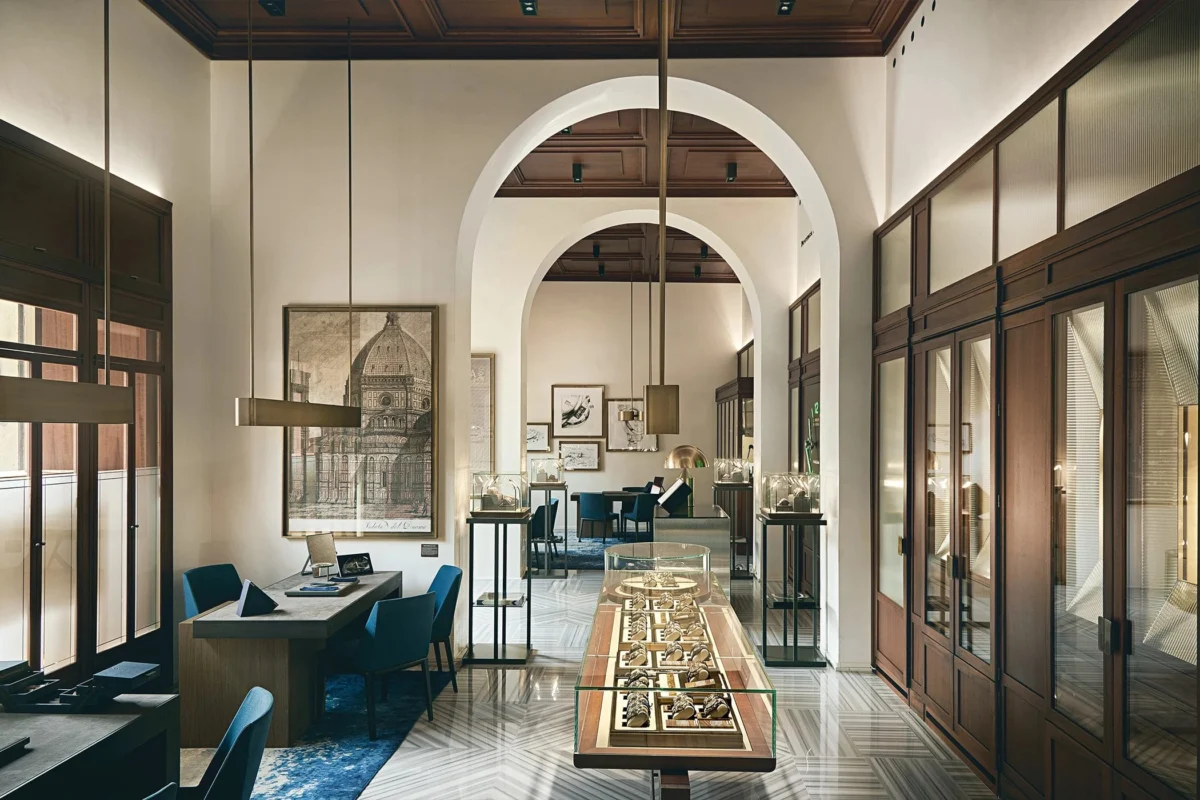
The city of Florence, widely regarded as the cradle of the Renaissance, is set to host a significant milestone in horological history as Panerai commemorates the 100th anniversary of its flagship boutique in Piazza San Giovanni. This centenary celebration, culminating in a specialized exhibition titled "Immersion," marks a century of continuous operation at the site that transformed Panerai from a local workshop into an international symbol of Italian design and Swiss engineering. The exhibition, scheduled to run from September 10 to September 19, 2026, at the Museo Marino Marini, aims to provide an exhaustive retrospective of the brand’s evolution, highlighting its transition from a secretive military supplier to a preeminent luxury watchmaker.
The Architectural and Cultural Significance of Piazza San Giovanni
The boutique located across from the Baptistery of San Giovanni is more than a retail space; it is a historical landmark. Identified by the gilded "OROLOGERIA" signage and traditional wooden storefront, the shop originally opened its doors in 1926 under the name "Orologeria Svizzera." This name was strategically chosen by Giuseppe Panerai to signal the boutique’s status as an authorized dealer and service center for the finest Swiss watch brands of the era, a role that allowed the Panerai family to study and master the technical intricacies of high-end horology.
The 1926 opening represented a critical consolidation of the brand’s identity. While the Panerai family had been active in the watchmaking trade since 1860, the establishment of the Piazza San Giovanni location provided a permanent public face for the company during a period of rapid industrial and social change in Italy. Today, the boutique remains the oldest operating Panerai storefront in the world, serving as a pilgrimage site for "Paneristi"—the brand’s dedicated global collector community. The interior of the boutique, which has undergone meticulous restoration to preserve its original character, features a fully functional watchmaker’s station, bridging the gap between early 20th-century craftsmanship and modern precision.

A Chronological Evolution: From Ponte alle Grazie to Global Renown
The history of Panerai is inextricably linked to the geography of Florence. The brand’s origins date back to 1860, when Giovanni Panerai opened his first shop and watchmaking school on the Ponte alle Grazie. This original site served as a hub for innovation, where the foundations of the "Panerai method"—a blend of technical instruction and retail excellence—were laid. However, the path to the current centenary was marked by significant upheaval.
During World War II, the original Ponte alle Grazie site was destroyed by retreating Nazi forces, a blow that necessitated several relocations. The eventual permanence of the Piazza San Giovanni boutique in 1926 allowed the brand to survive the post-war reconstruction of Italy. It was within these walls that Giuseppe Panerai experimented with luminous substances and waterproof casing, responding to the specific demands of the Royal Italian Navy (Regia Marina).
A defining characteristic of Panerai’s history is its era of "clandestine horology." From the early 1910s until 1993, the company’s most significant innovations—including the Radiomir and Luminor models—were produced under strict military secrecy. These instruments, characterized by their oversized cushioned cases and high-visibility dials, were never intended for the civilian market. It was not until 1993, following the end of the Cold War and a subsequent decline in military contracts, that Panerai unveiled these designs to the public, initiating a new chapter in the luxury watch sector.
Technical Innovations and the Italian Navy Connection
The "Immersion" exhibition will place a heavy emphasis on the technical milestones that defined the brand’s 20th-century output. Central to this narrative is the development of "Radiomir," a radium-based powder that provided superior luminosity in low-light conditions. Patented in 1916, this substance allowed Italian frogmen to execute underwater missions with precise timing.

As the health risks of radium became apparent, Panerai transitioned to "Luminor," a tritium-based compound patented in 1949. This technical shift coincided with the introduction of the iconic crown-protecting bridge, a feature designed to ensure water resistance and protect the winding crown from accidental impact. These developments were not merely aesthetic choices but were driven by the rigorous "Special Operations" requirements of the Navy’s Command of the First Submersible Group.
Supporting data from horological archives indicates that during the mid-20th century, Panerai’s production was extremely limited, often consisting of fewer than 300 units for specific military tranches. This rarity has contributed to the brand’s current standing in the secondary market, where vintage military-issued Panerai watches frequently command six-figure sums at international auctions.
The "Immersion" Exhibition: A Sensory Journey
To be held at the Museo Marino Marini, a venue that itself represents the intersection of historical architecture and modern art, the "Immersion" exhibition is designed as a multi-sensory experience. Unlike traditional museum displays, the exhibition aims to simulate the environments for which Panerai watches were built.
Visitors will navigate through themed zones that replicate the pressure of the deep sea and the darkness of night-time naval operations. The curation includes:

- The Archive Room: Displaying original blueprints and patents from the early 1900s.
- The Naval Gallery: Featuring rare instruments, including depth gauges and compasses used by the Italian Navy.
- The Contemporary Suite: Showcasing the current Luminor, Submersible, and Radiomir collections, demonstrating how historical design language has been adapted for modern materials like Carbotech and eSteel.
Industry analysts suggest that the exhibition is a strategic move to reinforce Panerai’s "Laboratorio di Idee" (Laboratory of Ideas) philosophy. By highlighting its heritage, the brand justifies its position within the Richemont Group as a leader in material science and durability.
Analysis of Market Impact and Brand Legacy
The centenary of the Florence boutique arrives at a time of robust growth for the luxury watch industry in Italy. According to market reports, the demand for watches with "provenance" and "authentic history" has surged among younger affluent demographics. By celebrating its 100-year presence in Piazza San Giovanni, Panerai is leveraging its status as a "local hero" with global reach.
The transition from a military supplier to a Richemont-owned luxury powerhouse (following the 1997 acquisition) has not stripped the brand of its Florentine identity. If anything, the centralized focus on the Florence boutique as a "home base" serves to ground the brand’s increasingly complex technical complications in a tangible, historical reality.
The "Immersion" exhibition also serves an educational purpose. As luxury brands face increasing scrutiny regarding their origins, Panerai’s transparent look at its military past and its eventual pivot to the civilian market provides a clear narrative of survival and adaptation. The decision to hold the event in Florence, rather than a traditional horological hub like Geneva, underscores the brand’s commitment to its Italian roots.

Implications for the Future of Panerai
As Panerai enters its second century at the Piazza San Giovanni site, the brand faces the challenge of maintaining its "tool watch" heritage while catering to a market that demands high-complication movements and sustainable manufacturing. The centenary exhibition is expected to act as a springboard for new product launches that utilize recycled materials and carbon-neutral processes, aligning the brand’s historical durability with modern environmental standards.
Observers in the luxury sector note that the Florence boutique’s longevity is a rarity in a retail landscape often characterized by rapid turnover and digital displacement. The physical presence of the boutique, situated directly across from one of the most visited religious sites in Europe, ensures that the Panerai story remains integrated into the cultural fabric of Florence.
For the city of Florence, the 2026 centenary and the accompanying "Immersion" exhibition represent a significant cultural event, drawing international visitors and highlighting the city’s ongoing role as a center for high-end craftsmanship. As the gilded letters of "OROLOGERIA" continue to catch the Tuscan sun, Panerai stands as a testament to the enduring power of historical continuity in an ever-changing global market.
