
 By admin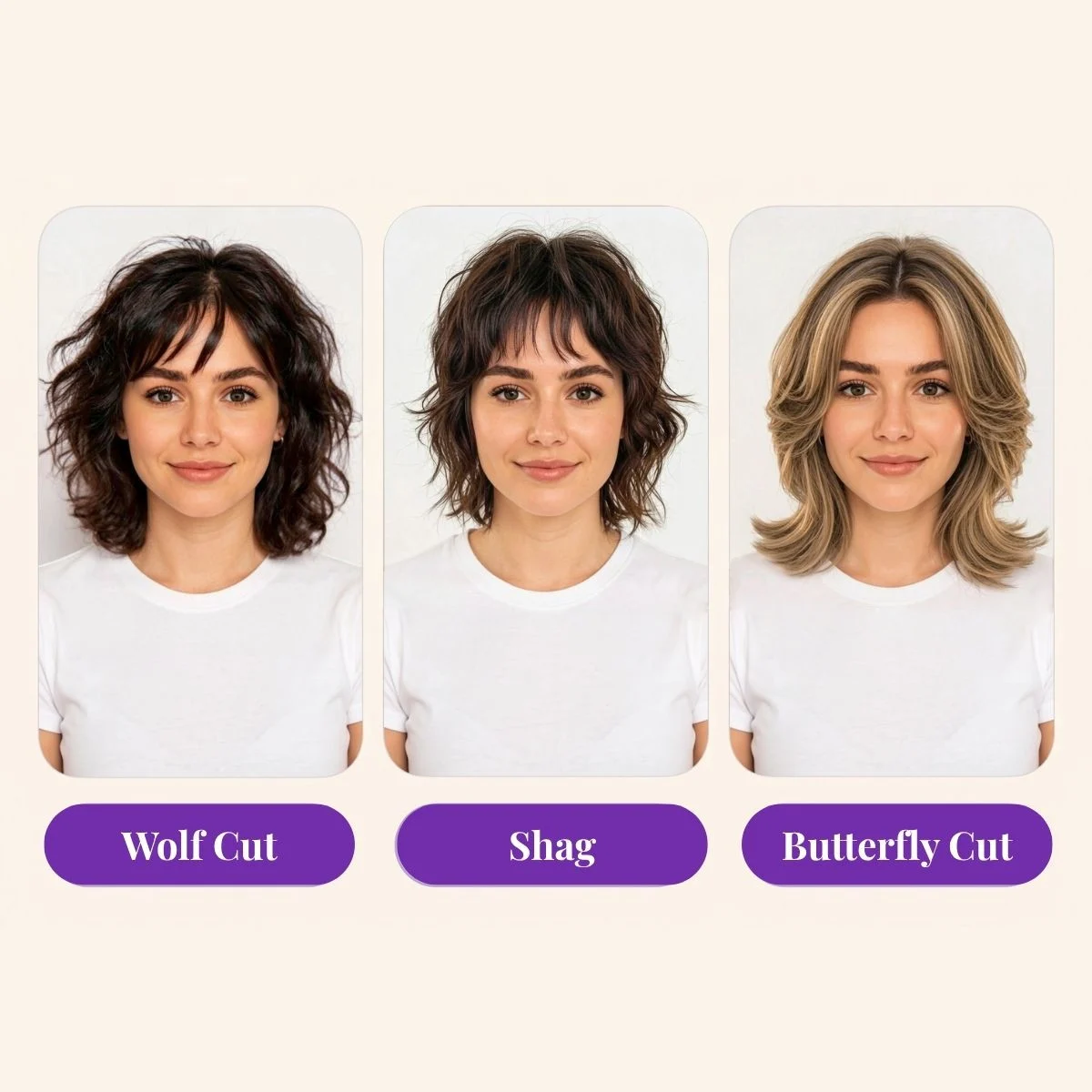
The distinction between the wolf cut, shag, and butterfly hairstyles often blurs in online searches, leading to confusion for those seeking a modern, layered look. While all three cuts feature significant layering to create texture and movement, they are not interchangeable. Understanding their precise differences is crucial for achieving the desired aesthetic and avoiding styling regrets. This comprehensive guide aims to clarify these popular layered haircuts, providing a decision-making framework based on hair type, lifestyle, and personal preference.
Decoding the Layered Trio: Wolf Cut, Shag, and Butterfly
At their core, the wolf cut, shag, and butterfly hairstyles represent variations on the theme of breaking up a one-length silhouette with strategic layering. The key differentiators lie in the starting point of the shortest layers and the overall choppiness and length retention of the cut.
-
The Wolf Cut: This style is characterized by its pronounced choppiness and cropped layers, often beginning at the crown. It draws inspiration from the mullet, featuring shorter layers on top that blend into longer lengths, but it avoids the distinct, stacked back of a traditional mullet. The emphasis is on texture and a somewhat untamed, "wolf-like" appearance.
-
The Shag: Positioned as a middle ground, the shag features face-framing layers that typically start around the chin or collarbone. Its layering is generally softer and more feathered than the wolf cut, with less dramatic volume concentrated at the crown. The shag is renowned for its versatility and ability to flatter a wide range of hair types.
-
The Butterfly Cut: Designed for those who desire significant movement and layering without sacrificing overall length, the butterfly cut incorporates heavy internal layering. The shortest layers usually begin around the cheekbone or shoulder, creating a fanned, wing-like effect as the hair moves. This cut preserves more of the original length compared to the wolf cut and shag.

A Comparative Overview: Key Features at a Glance
| Feature | Wolf Cut | Shag | Butterfly |
|---|---|---|---|
| Ideal Hair Type | Thick to medium density, straight to wavy | Fine to medium, any texture | Medium to thick, straight to wavy |
| Shortest Layer Length | Crown-length or shorter | Chin to collarbone | Cheekbone to shoulder |
| Maintenance Level | High (6-8 week trims) | Medium (8-10 week trims) | Low to medium (10-12 week trims) |
| Grow-out Behavior | Can become unstructured quickly | Eases into longer layers smoothly | Blends back into one length with ease |
| Regret Risk | Highest (difficult to reverse) | Moderate (noticeable length loss) | Lowest (retains most length) |
| Try-on Accuracy | Strong (cropped layers are visible) | Strong (mid-length layers preview well) | Good (subtler layering is harder to judge) |
The Wolf Cut: A Bold Statement in Choppy Layers
The wolf cut amplifies the texturizing techniques found in the shag, pushing them further with layers cut very close to the scalp. This results in a highly choppy, piecey finish that is distinct from its counterparts. While it borrows shape from the mullet, the key difference lies in the more integrated and less segregated layering at the back.
Who the Wolf Cut Suits Best:
This cut is particularly flattering for individuals with thick or medium-density hair, as it provides the structure needed to support substantial layering. Straight and wavy textures showcase the choppy lines most effectively. While curly hair can also achieve a wolf cut, it requires a stylist skilled in dry cutting curly hair to ensure proper shaping. For those with round or square face shapes, the volume created at the crown can draw the eye upward, away from the jawline, offering a balancing effect.
Maintenance Reality for the Wolf Cut:
Maintaining the sharp, choppy lines of a wolf cut typically requires salon visits every six to eight weeks. Without regular trims, the layers can soften, gradually morphing into a less defined shag. Daily styling is often essential, with texturizing sprays or pastes being key to achieving the cut’s signature roughness. For individuals with fine hair, there’s a potential risk of the shortest layers appearing thin rather than textured if not strategically placed, a common point of regret among those who opt for this style without careful consideration.
The Shag: Timeless Face-Framing with Enduring Appeal
The shag haircut offers a more subdued approach to layering, with the shortest pieces typically falling between the chin and collarbone. It is characterized by softer, feathered layers rather than the blunt choppiness of the wolf cut, making it a highly adaptable style across various hair textures.
Who the Shag Suits Best:
Fine hair textures often benefit significantly from a shag, as the layering creates an illusion of fullness without adding excessive bulk, which can sometimes be an issue with one-length cuts. Curly-haired individuals also find the shag to be an excellent choice. The layers help to reduce weight, allowing natural curl patterns to flourish and preventing the hair from falling into an undesirable triangular shape. Oval and heart-shaped faces are particularly well-suited to the shag, as the face-framing layers can strategically add width where desired.
Maintenance Reality for the Shag:
The shag is a lower-commitment option among the three, generally maintaining its shape for eight to ten weeks between trims. Styling time is typically manageable, often involving a quick rough dry with a diffuser or a light application of a styling tool to the ends. The grow-out process for a shag is usually seamless, with the layers gradually lengthening into a softer version of the original cut, minimizing awkward phases.

The Butterfly Cut: Maximizing Movement While Preserving Length
The butterfly haircut is an ideal choice for individuals who desire enhanced movement and volume but are hesitant to sacrifice significant length. The shortest layers in this style generally start around the cheekbone or shoulder, framing the face generously while the majority of the hair’s length is retained towards the back, creating the distinctive "butterfly wing" effect.
Who the Butterfly Suits Best:
This cut is most effective on medium to thick hair that already possesses a good amount of length, as the layering requires sufficient hair beneath it to achieve the fanned-out appearance. The butterfly cut is adaptable to most face shapes. For rounder faces, the heaviest layers can be positioned at cheekbone level to create width, while for longer face shapes, they can be placed at the jawline to achieve a similar effect.
Maintenance Reality for the Butterfly:
A significant advantage of the butterfly cut is its graceful grow-out phase. Because a substantial portion of the hair’s original length is preserved, the layers blend back into a one-length style with minimal awkwardness. Trims are typically needed every ten to twelve weeks to maintain the shape. Daily styling can be as simple as air-drying with a leave-in product, although the cut’s movement is best showcased with loose curls.
Navigating the Choice: A Decision Tree for Layered Cuts
The selection process for a wolf cut, shag, or butterfly should begin with a clear understanding of personal priorities regarding hair length and styling commitment.
Length Preservation:
If retaining the majority of your hair length is paramount, the butterfly cut is the most suitable option, offering movement without substantial shortening. The shag represents a middle ground, involving a noticeable but not drastic reduction in length, typically to the chin or collarbone. The wolf cut, being the shortest and choppiest of the three, requires the most significant commitment to length loss.
Hair Density Considerations:
Hair density plays a crucial role in how these cuts will perform. Thick hair can comfortably accommodate the dense crown layers of a wolf cut without appearing sparse. Conversely, fine hair often benefits more from a shag, where layering adds perceived volume rather than thinning the hair. For those with hair density falling between these extremes, the butterfly cut can be a safer choice, as its layering is designed to work across a broader spectrum of densities.

Face Shape and Lifestyle Integration:
Beyond length and density, consider how each cut complements your face shape. The ability to adjust the placement of the shortest layers in all three cuts allows for customization to flatter various facial structures. For instance, strategically placed layers can create the illusion of width or length. Ultimately, a thorough consultation with a professional stylist remains the most reliable method to determine the optimal cut for your unique hair characteristics and desired outcome.
Avoiding Regret: Who Should Reconsider These Layered Styles
While the wolf cut, shag, and butterfly are popular, they are not universally flattering or practical. Certain hair types and lifestyles may present challenges:
- Extremely Fine or Thinning Hair: While a shag can add volume, extremely fine hair might struggle to support the dramatic layering of a wolf cut or the internal layering of a butterfly cut without appearing sparse.
- Very Tight Coils: While possible with a skilled dry cutter, very tight curls might require more specialized techniques to achieve the intended shape of these layered styles.
- Minimal Styling Time: The wolf cut, in particular, often demands daily styling to maintain its signature texture. If you prefer a wash-and-go approach, this cut might not be ideal.
- Fear of Short Layers: If the idea of significant layering, especially around the crown, causes anxiety, the wolf cut or even a dramatic shag might be too much.
Virtual Try-Ons: Previewing Your Potential New Look
Before committing to a salon appointment, utilizing virtual try-on tools can provide a valuable preview of how these styles might appear on your own features. Websites and mobile applications that utilize AI to map your face and hair can generate visualizations of different haircuts. This technology offers a more realistic representation than simple filters, which often manipulate existing pixels without accurately depicting new length and layer placement. By uploading a front-facing selfie in good lighting, users can compare the wolf cut, shag, and butterfly side-by-side, aiding in the decision-making process.
Communicating Your Vision to Your Stylist
Effective communication with your hairstylist is paramount. Bringing reference photos is helpful, but using precise terminology ensures your stylist understands your expectations.
- For a Wolf Cut: Request "heavy layering through the crown with choppy, piece-y ends and a shaggy mullet influence."
- For a Shag: Specify "face-framing layers starting at the chin to collarbone length with feathered, not blunt, ends."
- For a Butterfly Cut: Ask for "internal layering starting at the cheekbone or shoulder length, keeping the back length intact."
A crucial stylist tip, regardless of the chosen cut, is to request "point cutting" for the ends rather than blunt cutting. This technique softens the transition between layers, contributing to the movement and blended appearance that defines all three styles.
Frequently Asked Questions About Layered Haircuts
Which layered cut grows out the easiest?
The butterfly cut generally offers the most seamless grow-out due to the retention of length. The layers soften gradually, blending into a longer style. The wolf cut, with its pronounced crown layers, tends to have the most challenging grow-out period as these shorter pieces take time to blend.

Can I achieve a wolf cut with fine hair?
Yes, but it requires careful consideration. The shortest layers should be kept slightly longer than a typical wolf cut to prevent the scalp from showing through. Many stylists recommend a shag for fine hair, as its layering strategy focuses on adding volume rather than removing it.
What is the core difference between a shag and a butterfly cut?
The primary distinction lies in the starting point and overall length. The shag’s shortest layers usually fall between the chin and collarbone, while the butterfly’s start higher, around the cheekbone or shoulder, preserving more length. Shags often have a more tousled, undone aesthetic, whereas butterfly cuts emphasize fanned layers within longer hair.
How accurate are AI try-on tools for haircuts?
AI try-on tools can accurately depict the shape and layer placement of a haircut on your face based on a selfie. However, they cannot perfectly predict how your specific hair density and texture will move and behave once cut and styled by a professional. They serve as excellent visualization aids for comparing shapes.
How long does it take for a wolf cut to grow into a shag?
This transition typically takes approximately four to six months, depending on individual hair growth rates and the shaping done during subsequent trims. Regular maintenance trims during this period can help the cut evolve smoothly.
Do these cuts work on curly hair?
Yes, all three styles can be adapted for curly hair. The shag is often considered the most forgiving, as its layering helps manage bulk and allows natural curl patterns to express themselves. Wolf cuts and butterfly cuts can also work well on curls, provided a stylist experienced in dry cutting curly hair is involved.
Should I prioritize my preferred cut or my stylist’s recommendation?
It’s a collaborative process. Start by identifying your preferences using the decision-making framework. Then, rely on your stylist’s expertise regarding your hair density, texture, and growth patterns to make the final decision. A skilled stylist can identify potential challenges or benefits that a visual representation might not capture.

The journey to choosing between the wolf cut, shag, and butterfly is deeply personal, hinging on an individual’s willingness to embrace change in hair length, their daily styling habits, and how their unique hair density interacts with substantial layering. This guide has aimed to demystify these popular styles, offering a clear path to informed decision-making. For those still uncertain, virtual try-on tools like HairHunt provide an accessible way to visualize each style on one’s own features, bridging the gap between aspiration and salon reality.
Disclaimer: Individual hair results may vary based on natural hair type, texture, density, and condition. AI-generated virtual try-on images are visualizations designed to represent shape and color accurately but cannot precisely predict the outcome of professional styling. Always consult with a licensed hairstylist for personalized advice and before making significant hair alterations, particularly concerning chemical treatments or substantial length changes.
