
 By Nila Kartika Wati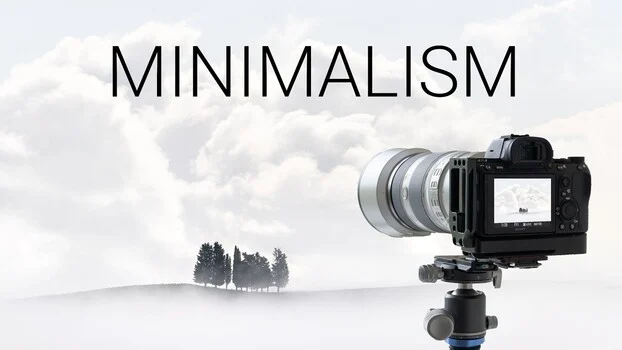
Minimalist landscape photography stands as one of the most intellectually demanding and aesthetically refined genres within the photographic arts. Its inherent challenge lies in a delicate balance: the pursuit of profound simplicity without succumbing to emptiness, and the art of reduction without losing the core message. This intricate dance between absence and presence, between the subject and its surrounding void, is a hallmark of truly impactful minimalist work. Acclaimed photographer Mads Peter Iversen recently offered a comprehensive guide, dissecting the complexities of this style into seven actionable steps, providing a valuable framework for both aspiring and experienced photographers seeking to refine their minimalist vision.
The Philosophical Underpinnings of Minimalism in Art
To fully appreciate minimalist landscape photography, it is essential to contextualize it within the broader art movement of Minimalism. Emerging in the 1960s, primarily in Western art, Minimalism sought to strip away all non-essential forms, features, and concepts from artistic expression. Artists like Donald Judd, Agnes Martin, and Dan Flavin championed geometric abstraction, repetition, and industrial materials, aiming to create objects that existed purely for their physical presence, devoid of symbolic or narrative content. This radical reductionism forced viewers to confront the artwork on its own terms, focusing on line, form, color, and space itself.
In photography, this philosophy translates into a deliberate effort to eliminate visual clutter, focusing instead on essential elements, negative space, and often a muted color palette or monochromatic treatment. The goal is not merely to show less, but to emphasize what remains, to distill the scene to its absolute essence, allowing the viewer’s eye and mind to engage more deeply with the subject and the vastness surrounding it. This approach often evokes feelings of solitude, vastness, contemplation, and serenity, resonating with a growing contemporary appreciation for simplicity in an increasingly complex and visually saturated world. The evolution of this style has seen photographers move from purely abstract forms to incorporating natural landscapes, applying the principles of reduction to the grandeur of nature.
Debunking Equipment Myths and Highlighting Essentials
Iversen’s tutorial begins by challenging a common misconception: the necessity of a specific focal length for minimalist photography. He asserts that both wide-angle and telephoto lenses possess distinct advantages in achieving minimalist compositions. A wide-angle lens, for instance, can render a subject as a tiny, isolated element against an expansive sky or foreground, emphasizing scale and solitude. Conversely, a telephoto lens excels at isolating a single feature – a lone tree, a distant peak – from a busy background, effectively cropping out distractions and directing focus with precision. This flexibility underscores that the photographer’s vision, rather than the lens itself, dictates the minimalist outcome.
However, Iversen identifies several pieces of equipment as genuinely indispensable for this genre, transcending mere preference to become fundamental tools for execution:
-
A Sturdy Tripod: Beyond its role in ensuring sharp images, a tripod is crucial for minimalist work due to its ability to facilitate precise composition. When every element in the frame is meticulously considered, the ability to lock down the camera and fine-tune angles, horizons, and subject placement becomes paramount. Furthermore, tripods are essential for executing long exposures, a technique frequently employed in minimalist photography.
-
A Drone Camera: The advent of drone technology has opened entirely new perspectives for minimalist landscape photography. Top-down angles, in particular, allow photographers to abstract landscapes into geometric patterns, lines, and textures that are invisible from ground level. A solitary boat on a vast expanse of water, or the intricate patterns of sand dunes, can be transformed into compelling minimalist compositions through an aerial viewpoint, emphasizing form and negative space in novel ways.
-
Neutral Density (ND) Filters: Iversen powerfully redefines ND filters not merely as technical tools but as compositional instruments, aptly dubbing them "your eraser." ND filters enable longer shutter speeds, even in bright conditions. This capability is transformative: choppy water can be rendered as a smooth, ethereal mist, blurring away ripples and reflections. Moving clouds become streaks of soft light, unifying the sky. This process effectively removes "visual noise" – distracting details that would otherwise clutter the frame – thereby forcing the viewer’s eye directly to the primary subject. This reframing highlights their artistic potential to simplify and abstract elements, making them integral to achieving a minimalist aesthetic rather than just managing light.
Identifying and Harnessing Minimalist Scenes and Conditions
A core aspect of minimalist photography involves actively seeking out or creating conditions that naturally lend themselves to simplicity. Iversen outlines several environmental factors that act as natural "cleaners" of the frame:
- Snow-Covered Landscapes: Fresh snowfall acts as a pristine, unifying blanket, covering distracting ground clutter and reducing the scene to essential forms, lines, and tones. The stark white expanse creates natural negative space and emphasizes any solitary elements that pierce its uniformity.
- Foggy Mornings: Fog is an incredibly powerful tool for simplification. It physically obscures distant elements, reducing depth perception and isolating subjects. Furthermore, fog introduces a sense of mystery and mood, separating foreground from background and creating layers of ethereal depth that draw the eye to the primary focus without visual competition.
- Calm, Reflective Water: Still water bodies – lakes, ponds, or even puddles – provide perfect mirrors, creating symmetrical reflections that double the impact of a solitary subject while simplifying the background into an abstract expanse. The glassy surface eliminates texture and detail, contributing significantly to a tranquil, minimalist feel.
Beyond these naturally simplifying conditions, Iversen makes a compelling case for embracing "moody, dramatic conditions." Textured storm clouds, rather than being seen as clutter, can reinforce a sense of isolation and grandeur just as effectively as a serene, still lake. A turbulent sky, with its dramatic interplay of light and shadow, can become an integral part of the minimalist composition, providing depth and emotional resonance without detracting from the primary subject. This emphasizes that minimalism is not solely about peacefulness but can also convey powerful emotions through simplified, dramatic elements.
On the compositional front, the role of negative space is paramount. Negative space refers to the empty or open areas surrounding the main subject. In minimalist photography, it is not merely "empty" but an active participant in the composition, often carrying as much weight as the subject itself. Iversen uses the iconic example of Mount Fuji, where a vast expanse of sky above the mountain doesn’t feel void but instead functions to direct attention downwards, framing the majestic peak and enhancing its presence. Negative space provides visual breathing room, prevents visual fatigue, and allows the primary subject to stand out with clarity and impact. Its deliberate inclusion elevates the subject, emphasizing its isolation and significance within the vastness of the natural world.
The Nuances of Mastery: Beyond the Obvious
The true depth of Iversen’s guidance emerges in the latter half of his video, where he delves into the subtleties that differentiate competent minimalist photography from truly exceptional work. One of his most counterintuitive yet profound points involves knowing when not to remove elements in post-processing. While the impulse in minimalism is often to strip away everything, a completely barren frame can sometimes read as unintentional or incomplete rather than deliberate.
Iversen demonstrates through specific examples how the judicious inclusion of a single secondary element can create crucial visual balance and imbue simplicity with purpose. For instance, a lone cloud on the opposite side of the frame from a solitary tree, or a small foreground stone near the reflection of a misty dead tree, provides an anchor, a counterpoint, or a subtle narrative that prevents the image from feeling truly empty. These secondary elements don’t compete with the main subject but rather complement it, creating a harmonious dialogue within the minimalist framework. This challenges the notion of absolute emptiness, suggesting that thoughtful imperfection can often lead to a more resonant and purposeful composition. This principle aligns with broader artistic theories where a subtle disruption can heighten the appreciation of overall harmony.
The Post-Processing Imperative for Minimalist Imagery
Iversen also outlines his editing approach, emphasizing how post-processing is not merely about correction but about further refining the minimalist vision:
- Strategic Contrast Enhancement: Even in minimalist shots, Iversen advocates for pushing contrast hard in specific situations. This isn’t about creating harsh images but about revealing texture, enhancing graphic strength, and separating key elements from their backgrounds. Increased contrast can make a lone tree stand out more boldly against a subdued sky or accentuate the ruggedness of a rock formation. The goal is to emphasize form and definition, distilling the visual information to its most impactful components.
- Black and White Conversion: This is a particularly powerful tool for minimalist photography. By stripping away color – often a significant source of distraction or complexity – black and white conversion forces the viewer to focus solely on light, shadow, form, texture, and line. It reveals the underlying graphic structure of the scene, transforming it into an abstract interplay of tones that can be incredibly impactful. Historically, many iconic minimalist landscape photographers, such as Michael Kenna, have worked predominantly in monochrome, recognizing its inherent ability to simplify and emphasize essential elements. The absence of color allows for a more direct emotional and intellectual engagement with the subject matter.
- Selective Adjustments: Beyond global changes, localized adjustments like dodging and burning (lightening and darkening specific areas) can further sculpt the light and shadow, guiding the viewer’s eye and enhancing the minimalist aesthetic.
Broader Implications and the Future of Minimalist Photography
The accessibility of expert guidance, such as Iversen’s video, has significant implications for the photography community. In an era where visual content is abundant, the ability to create images that stand out through clarity and impact is increasingly valued. Tutorials like this democratize complex photographic concepts, making sophisticated artistic principles accessible to a wider audience. This contributes to a higher overall standard of photographic literacy and practice.
Minimalist landscape photography, while challenging, offers profound rewards. It encourages a contemplative approach to the natural world, fostering an appreciation for subtlety and essence over grand spectacle. This aligns with the burgeoning "slow photography" movement, which advocates for a more thoughtful, deliberate, and less quantity-driven approach to image-making. By focusing on reduction and clarity, photographers are encouraged to spend more time observing, composing, and editing, resulting in a more meaningful engagement with their craft and their subjects.
The enduring appeal of minimalism suggests its continued influence on contemporary photography. As visual noise proliferates in digital spaces, the clean, uncluttered aesthetic of minimalism offers a refreshing antidote, providing visual respite and a deeper connection to the fundamental beauty of form and space. Iversen’s practical, nuanced advice serves as a vital resource for photographers committed to mastering this challenging yet deeply rewarding genre, demonstrating that true artistry often lies not in what is added, but in what is thoughtfully removed.
