
 By admin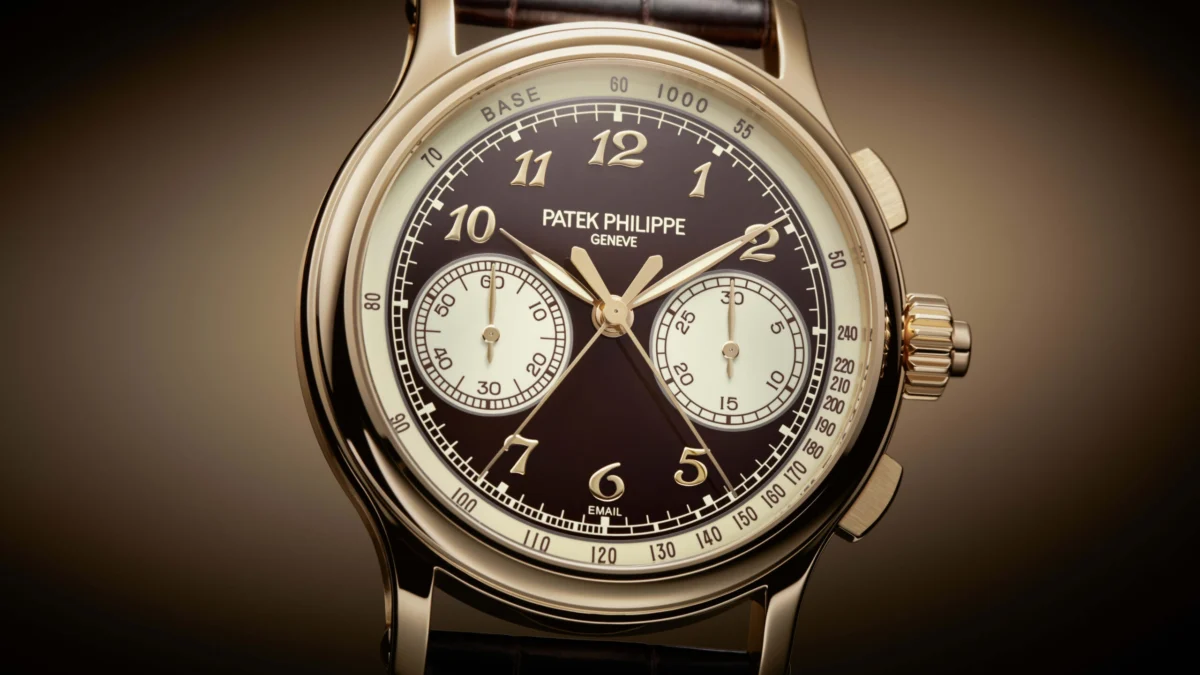
The Patek Philippe Reference 5370 serves as a definitive architectural statement on the manufacture’s horological philosophy, representing a rare intersection of mechanical complexity and aesthetic restraint. When the Genevan manufacture first unveiled the Ref. 5370P in 2015, it signaled a pivotal moment for high-complication watchmaking. By stripping away the additional complications often paired with the split-seconds function—such as perpetual calendars or minute repeaters—Patek Philippe created a "pure" rattrapante. This move positioned the Reference 5370 not merely as a timepiece, but as a specialized instrument designed for the most discerning segment of the collecting community. The subsequent release of the Reference 5370R in rose gold further solidified this model’s status as the emotional and technical anchor of the brand’s contemporary chronograph lineup.
The Genesis of a Modern Icon: Historical Context and Chronology
To understand the significance of the Reference 5370, one must look at the broader timeline of Patek Philippe’s chronograph development. For decades, the manufacture relied on highly modified third-party ébauches, most notably the legendary Lemania-based movements. However, the early 21st century marked a strategic shift toward total vertical integration.
The journey toward the 5370 began in earnest in 2009 with the launch of the Calibre CH 29-535 PS, the manufacture’s first in-house, manually wound, lateral-clutch chronograph movement. This base calibre was designed from the ground up to eventually support more complex modules. In 2012, Patek Philippe introduced the Reference 5204, which combined a split-seconds chronograph with a perpetual calendar. While the 5204 was a triumph of "Grand Complication" engineering, there remained a demand for a standalone split-seconds chronograph that echoed the proportions and focus of the mid-century classics.
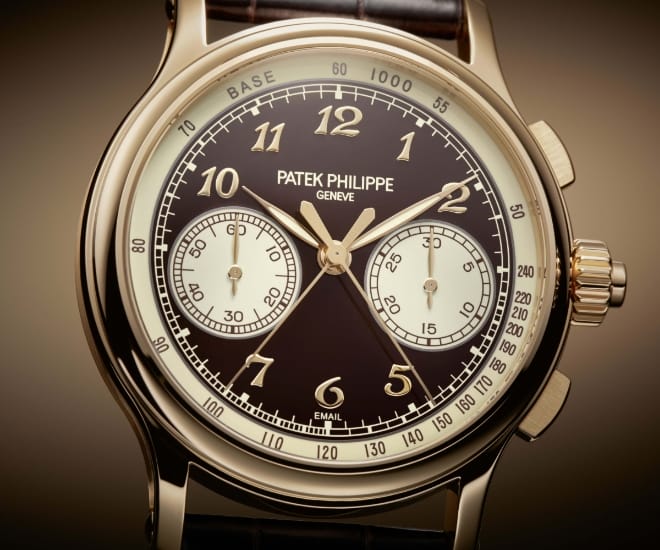
In 2015, Patek Philippe answered this call with the Reference 5370P. Clad in platinum and featuring a black Grand Feu enamel dial, it was an immediate sensation. It was followed in 2020 by a blue enamel variant, and more recently by iterations in rose gold (Reference 5370R), including versions featuring a sophisticated mahogany-brown enamel dial. This chronology reflects a deliberate pacing, ensuring that each iteration of the 5370 remains a low-production, highly sought-after rarity.
Architectural Design and the Art of Grand Feu Enamel
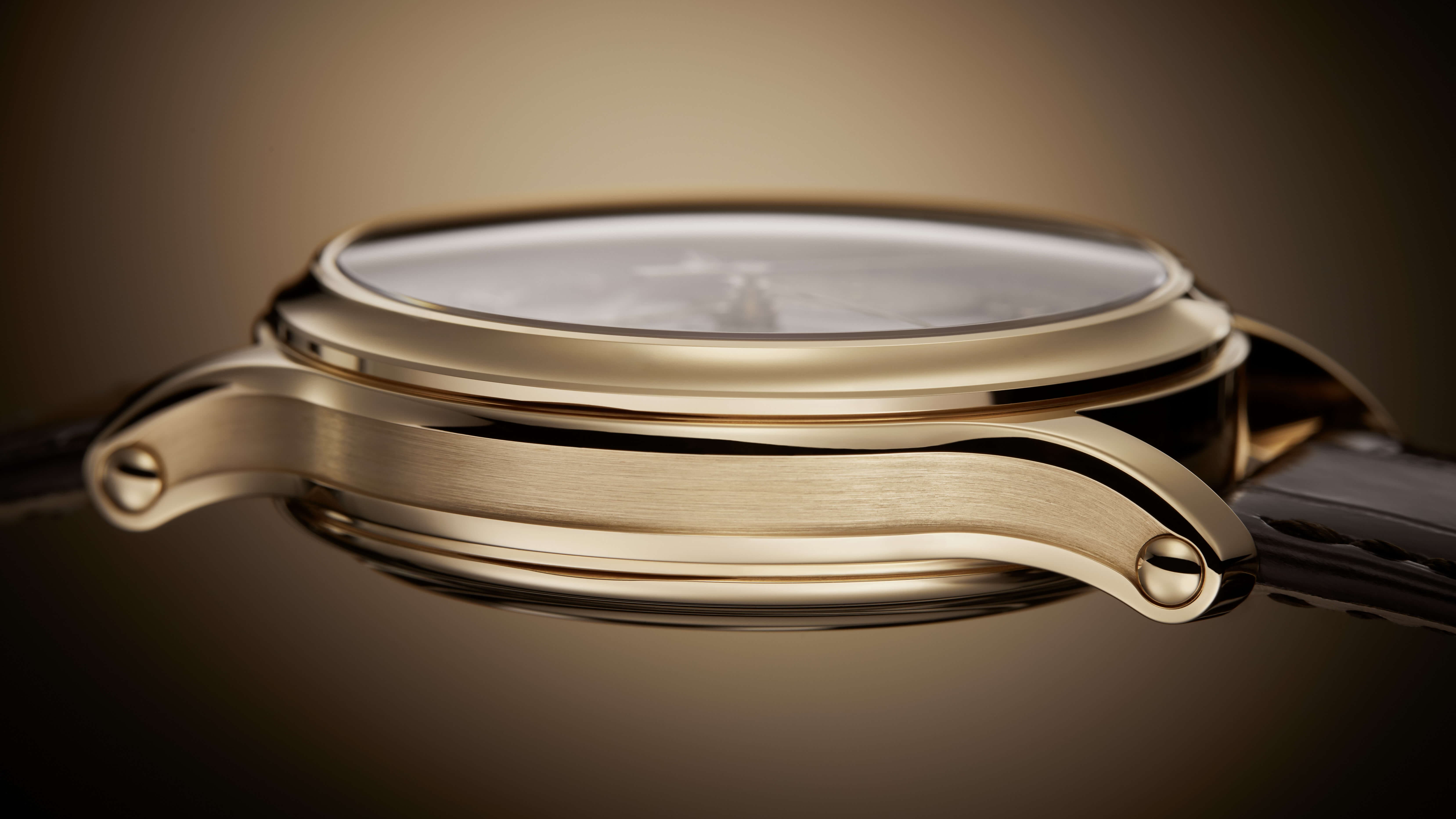
The exterior of the Reference 5370 is a study in purposeful elegance. The 41-millimeter case diameter is a modern concession to legibility and movement housing, yet it retains a profile that feels classically proportioned. The case features sculpted, recessed flanks with a satin finish that contrasts sharply with the polished surfaces of the lugs and bezel. A signature detail of Patek Philippe’s platinum cases is the small Top Wesselton diamond set between the lugs at 6 o’clock, a discreet marker of the precious metal’s presence.
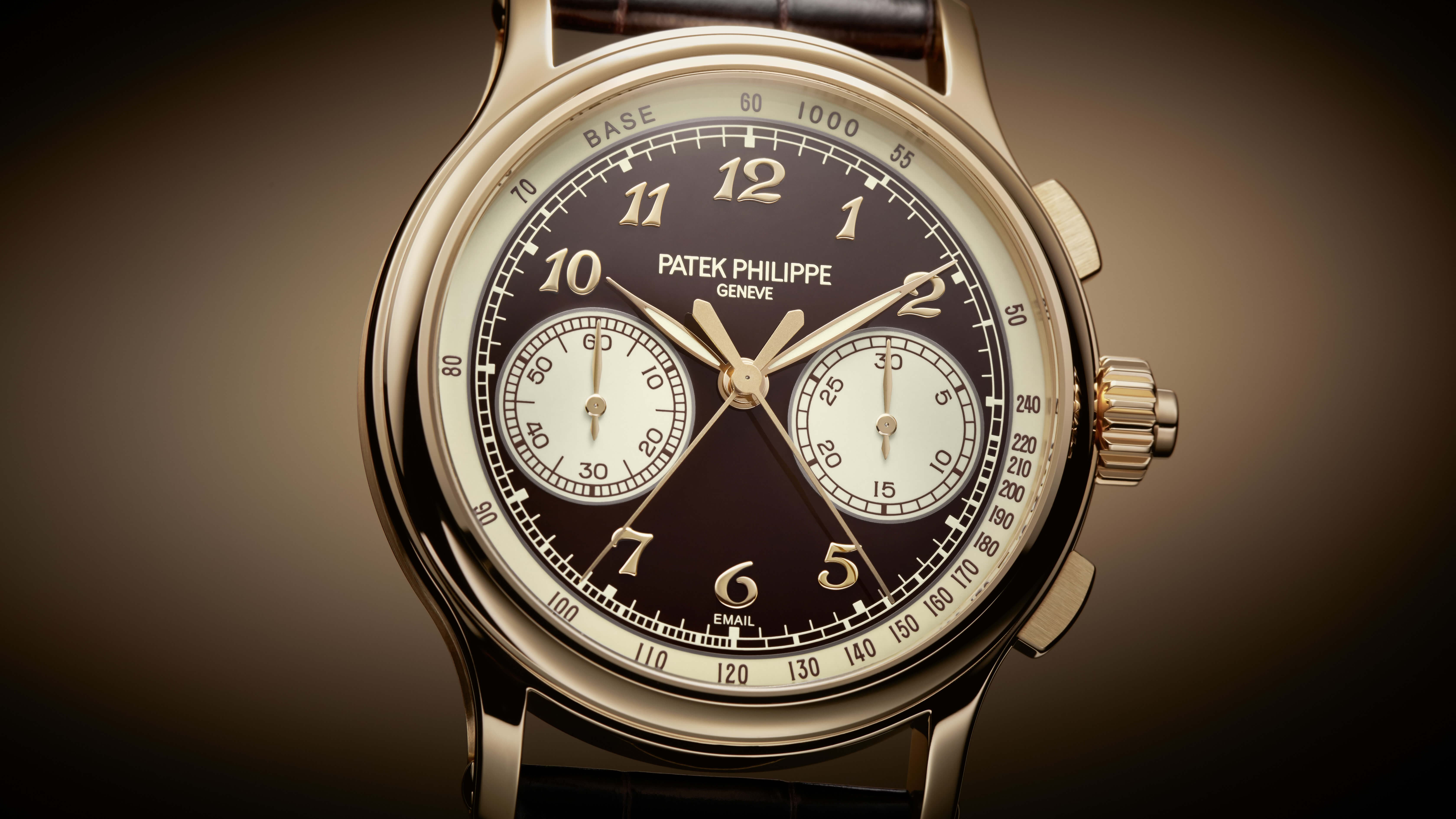
However, the centerpiece of the 5370’s external identity is undoubtedly the dial. Created using the Grand Feu (Great Fire) technique, the dial is a product of high-risk artisanship. A solid gold disc is coated with layers of enamel powder and fired in an oven at temperatures exceeding 800 degrees Celsius. This process is repeated multiple times to achieve the desired depth and luster. Because the cooling process can cause the enamel to crack or bubble, the failure rate is exceptionally high, making every successful dial a masterpiece of chemistry and patience.
The dial layout emphasizes functional clarity. Applied Breguet numerals in white or rose gold provide a touch of traditionalism, while the leaf-shaped (feuille) hands are luminescent for enhanced visibility. The tachymeter scale, which circles the outermost edge of the dial, allows the user to calculate speed over a fixed distance—a nod to the chronograph’s origins as a professional tool for timing. The twin recessed registers at 3 and 9 o’clock provide the 30-minute counter and running seconds, respectively, maintaining a balanced, symmetrical aesthetic that avoids the "clutter" found in more complicated references.
Engineering Excellence: Calibre CHR 29-535 PS
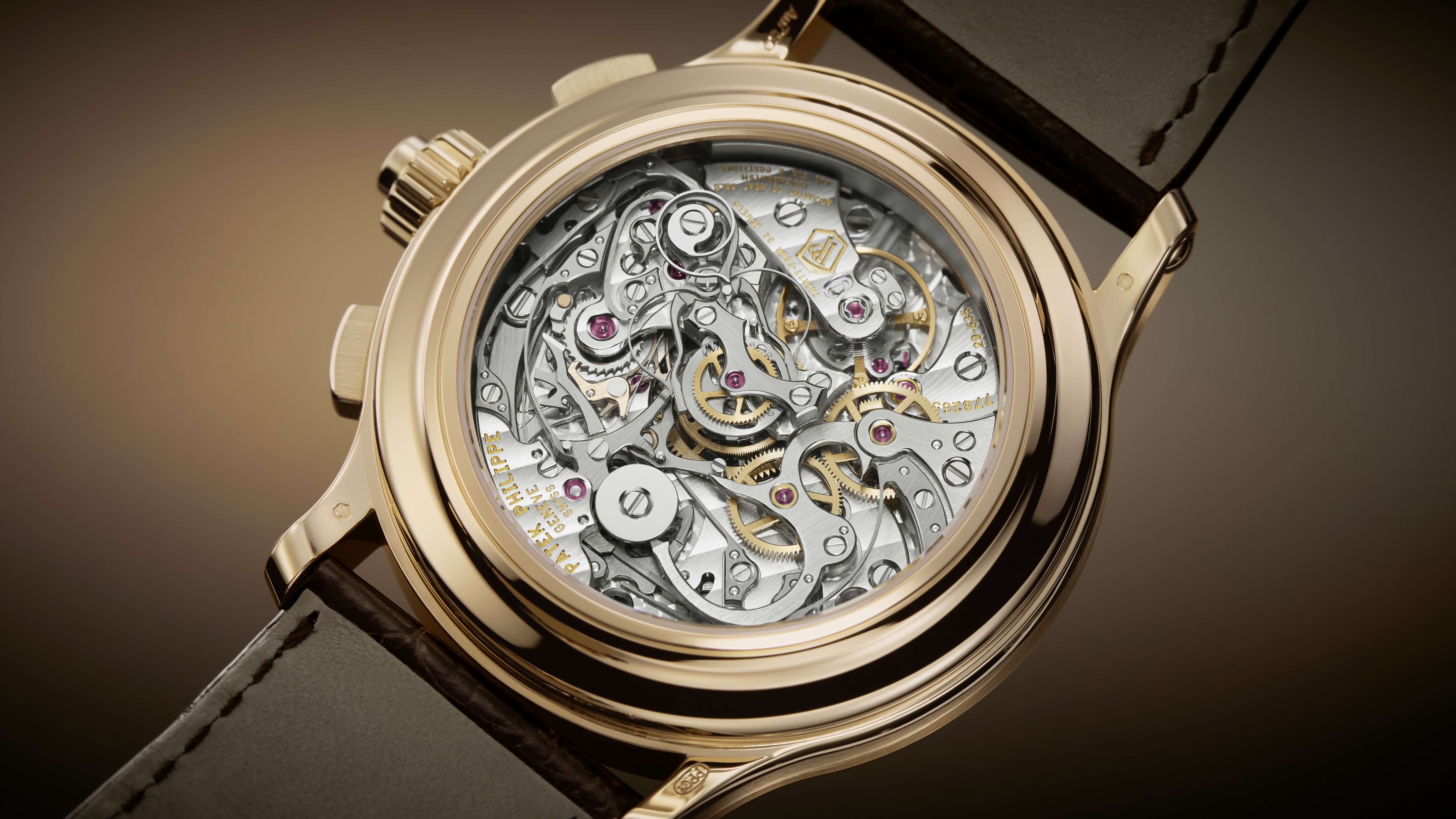
The true complexity of the Reference 5370 lies beneath its sapphire crystal caseback. The Calibre CHR 29-535 PS is a manually wound movement that incorporates six specific patents designed to optimize the performance of the chronograph. These innovations address traditional weaknesses in chronograph design, such as hand quiver upon starting, energy loss when the complication is engaged, and the synchronization of the various levers and wheels.
The split-seconds (rattrapante) function is among the most difficult complications to assemble and regulate, often ranked alongside the tourbillon and minute repeater in terms of difficulty. It features two central chronograph seconds hands that run simultaneously. When the pusher integrated into the crown is pressed, the "split" hand stops to record an intermediate time, while the primary hand continues to run. A second press allows the split hand to instantly "catch up" (rattraper in French) to the moving hand.
To ensure this operation is seamless, Patek Philippe implemented a sophisticated isolator system. In traditional split-seconds movements, when the rattrapante hand is stopped, the friction created by the brake can cause a drop in the balance wheel’s amplitude, affecting the watch’s timekeeping accuracy. Patek’s patented isolator uncouples the split-seconds wheel from the chronograph gear train when the hand is stopped, eliminating this friction and maintaining consistent energy flow.
Furthermore, the movement utilizes a horizontal clutch system. While many modern chronographs have moved toward vertical clutches for their efficiency, Patek Philippe chose the horizontal clutch for the 5370 to honor traditional watchmaking aesthetics. Through advanced tooth geometry—specifically a patented tooth profile that reduces wear and prevents the "jumping" of the seconds hand—the manufacture has mitigated the technical drawbacks of the horizontal clutch while preserving the visual beauty of the interconnected wheels and levers.
Hand-Finishing and the Patek Philippe Seal
Every component of the Calibre CHR 29-535 PS is finished to the exacting standards of the Patek Philippe Seal. This internal certification, introduced by the manufacture in 2009 to replace the Geneva Seal, mandates that every part of the watch—even those never seen by the owner—must meet rigorous aesthetic and functional criteria.
The steel parts of the split-seconds mechanism, including the bridges, clamps, and levers, are finished with manual chamfering (anglage) and polishing. The flat surfaces are mirror-polished, while the flanks are straight-grained. The brass bridges are decorated with Côtes de Genève (Geneva Stripes) and circular graining (perlage). The sight of the twin column wheels—the "brains" of the chronograph that coordinate the start, stop, and reset functions—is a highlight for enthusiasts, representing the pinnacle of mechanical logic rendered in precious metal and steel.
Market Positioning and Collector Impact
The Reference 5370 occupies a unique niche in the luxury watch market. Unlike "hype" watches that rely on stainless steel sport cases and integrated bracelets, the 5370 is a "purist’s complication." Its high entry price and limited production numbers ensure that it remains a rarity, even within the context of high-end auctions.
Industry analysts note that the 5370 serves as a bridge between the vintage era of Patek Philippe (defined by the 1436 and 1563 references) and the future of the brand. By focusing on the split-seconds function in its purest form, Patek Philippe has created a "textbook" for future watchmakers. In a market where complications are often added for the sake of marketing, the 5370 stands out for its mechanical honesty. It does one thing—measure elapsed time with extreme precision—and it does so with a level of refinement that few other manufactures can replicate.
The emotional appeal of the 5370 is equally significant. For the wearer, the tactile experience of the pushers—the crisp "click" of the column wheel and the smooth resistance of the winding crown—provides a physical connection to the heritage of Swiss horology. It is a watch that demands interaction, rewarding the owner with a display of mechanical choreography every time the chronograph is engaged.
Broader Implications for High Horology
The continued success and evolution of the Reference 5370 underscore a broader trend in the watch industry: a return to classical complications housed in modern, reliable movements. As technology allows for more automated production, the manual labor required for a Grand Feu dial and a hand-finished rattrapante movement becomes even more valuable.
The 5370 also reinforces Patek Philippe’s dominance in the chronograph category. While competitors like A. Lange & Söhne (with the Double Split and Triple Split) and Vacheron Constantin have produced extraordinary split-seconds watches, Patek Philippe’s ability to blend technical innovation with the sheer elegance of the Grand Feu enamel dial remains the industry benchmark.
Ultimately, the Patek Philippe Reference 5370 is more than a watch; it is a testament to the enduring relevance of mechanical engineering in a digital age. It serves as a reminder that true luxury is found not in the addition of features, but in the perfection of a single, difficult task. Whether in the cool brilliance of platinum or the warm glow of rose gold, the 5370 remains a definitive chapter in the ongoing story of Patek Philippe’s split-seconds philosophy.
