
 By admin
The evolution of residential outdoor spaces has transitioned from simple gardening and lawn care into a complex discipline of landscape architecture and environmental engineering. A successful landscape transformation is no longer viewed as a series of disparate cosmetic upgrades but rather as a unified system that brings together design, drainage, hardscaping, planting, and ongoing maintenance to create a durable, functional, and aesthetically cohesive outdoor environment. This integrated approach is particularly critical in regions like St. Louis, Missouri, where specific soil conditions and volatile seasonal shifts demand a high level of technical precision. By coordinating these elements under a single professional framework, homeowners can mitigate common construction conflicts, ensure the longevity of their investment, and create a property that functions as a seamless extension of the indoor living space.
The Integrated Landscape Model: Beyond Aesthetics
In the traditional landscaping model, a homeowner might hire a designer for a plan, a separate contractor for hardscaping, and a third party for planting. However, modern industry standards increasingly favor the "design-build" or full-service model. This approach treats the property as a single, interconnected ecosystem. When a single firm manages the lifecycle of a project—from the initial site review to the final irrigation adjustment—it eliminates the "silo effect" where one contractor’s work inadvertently complicates another’s. For instance, a masonry team installing a patio must be perfectly aligned with the drainage engineers to ensure that water runoff does not compromise the home’s foundation or the health of future planting beds.
For St. Louis homeowners, the necessity of this coordination is amplified by the region’s geography. The presence of dense clay soils and the potential for heavy, localized storms mean that "bare yard" opportunities are actually complex engineering challenges. Grading, soil chemistry, and access for heavy machinery are all variables that must be solved before the first ornamental shrub is selected. A full-service firm acts as a central coordinator, ensuring that every measurement, material choice, and elevation change is documented and executed in relation to the master plan.
Phase I: The Comprehensive Site Assessment and Chronology
The transformation of a residential landscape follows a strict chronological progression to ensure structural integrity. The process begins with a rigorous site review. Professional teams analyze the existing topography to identify slopes and natural drainage patterns. This phase also includes a "utility and constraint" audit, where property lines, underground utilities, sun exposure windows, and existing vegetation are mapped.
Understanding the "site history" is crucial. In many suburban developments, the natural topsoil has been stripped away during home construction, leaving behind compacted subsoil that resists water penetration. A site assessment identifies these "dead zones" where plants would likely fail without significant soil remediation. This data informs the placement of every future feature, from retaining walls that hold back eroding slopes to the positioning of a pool to maximize afternoon sunlight.
Chronology of a Transformation:
- Site Analysis and Surveying: Identification of grades, utilities, and soil health.
- Conceptual Design and 3D Modeling: Translating client goals into a spatial layout.
- Engineering and Permitting: Addressing drainage, structural walls, and local building codes.
- Site Preparation and Demolition: Clearing unwanted material and establishing "rough grade."
- Infrastructure and Hardscaping: Installing the "bones" of the yard, including pipes, wires, and stone structures.
- Softscaping and Irrigation: Placing organic elements and their life-support systems.
- Final Grading and Turf Establishment: The final layer of the visual landscape.
- Stewardship and Maintenance: Long-term care to ensure the design matures as intended.
Phase II: Precision Design and Digital Visualization
The transition from broad ideas to measurable construction decisions is facilitated by advanced design technology. Firms like Poynter Landscape utilize computer-aided design (CAD) to develop blueprints that are accurate to the inch. These drawings serve as the legal and technical roadmap for the project, showing how paved areas, lighting zones, and elevation changes interact.
Beyond 2D blueprints, three-dimensional (3D) renderings have become a standard tool for high-end residential projects. These visualizations allow homeowners to virtually walk through their future yard, checking sightlines from the kitchen window or evaluating the proportions of a pergola against the scale of the house. This phase is also the most cost-effective time to make changes. Adjusting the curvature of a walkway on a digital model costs nothing; relocating a poured concrete path after it has been installed is a significant financial setback.
In Missouri, the design phase must also account for the "micro-climates" created by the St. Louis urban and suburban environment. Design plans must factor in the "Heat Island Effect," where hardscaped surfaces like driveways and large patios can raise local temperatures, necessitating the strategic placement of shade trees or heat-tolerant plant species.
Addressing the Missouri Soil Challenge: Engineering for Drainage
One of the most critical aspects of landscape transformation in the Midwest is the management of clay-heavy soil. St. Louis properties often sit on soil types that expand when wet and contract when dry, a cycle that can wreak havoc on hardscapes and plant roots. Without proper grading, water tends to pool, leading to basement dampness or "drowning" the root systems of expensive ornamental trees.
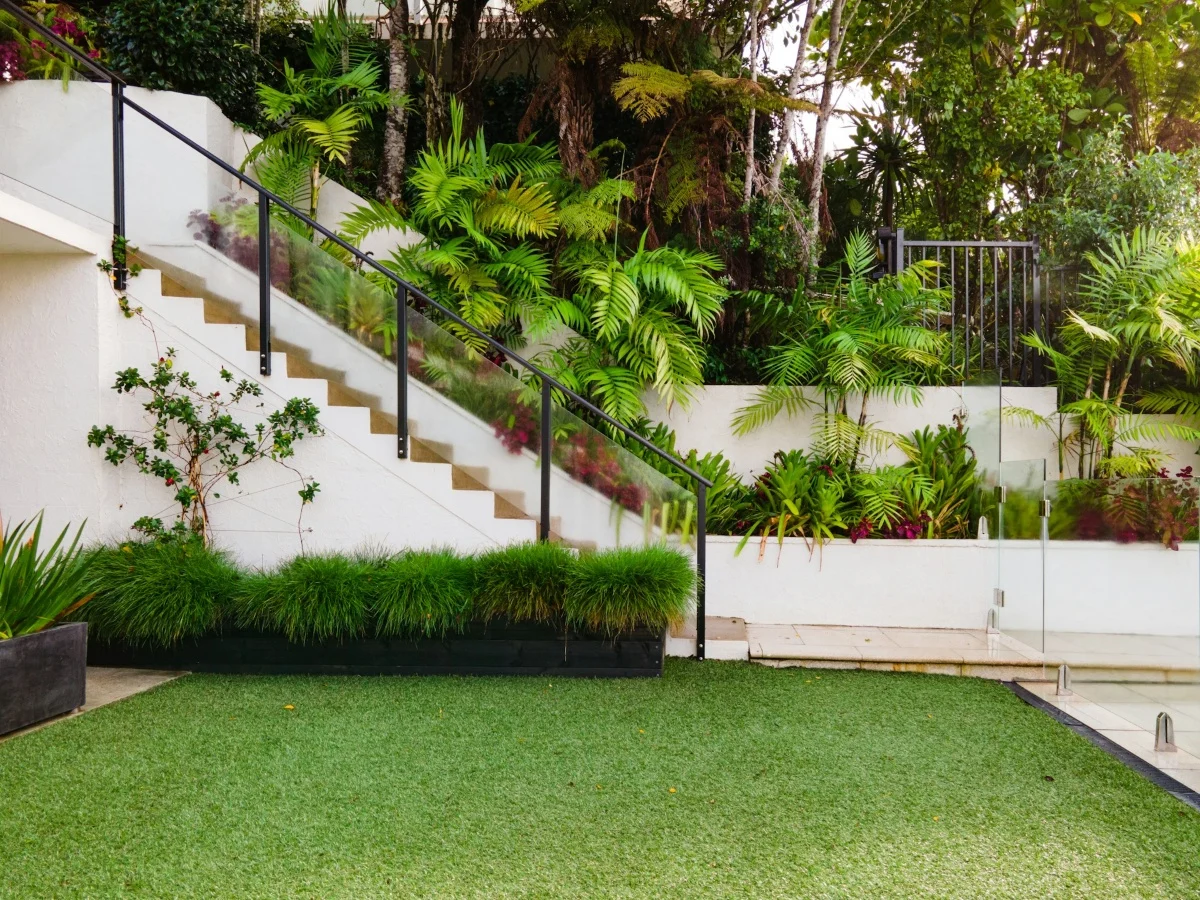
Crews must often perform "sub-grade" work that remains invisible once the project is finished. This includes the installation of French drains, catch basins, and channel drains designed to move thousands of gallons of rainwater away from the home’s foundation. In some cases, a sloped yard may require a series of tiered retaining walls. These walls serve a dual purpose: they create level, usable "outdoor rooms" while simultaneously managing soil pressure and erosion. By shaping the ground before any decorative elements are added, contractors ensure that the finished landscape is as functional during a thunderstorm as it is on a sunny afternoon.
The Framework of Outdoor Living: Hardscaping and Utilities
Hardscaping provides the usable framework of the yard. In the modern market, homeowners are increasingly requesting "resort-style" amenities that require complex utility planning. An outdoor kitchen, for example, is not merely a grill on a patio; it requires gas lines, electrical outlets for refrigeration, and plumbing for sinks.
Safety and accessibility are also paramount in hardscape construction. Patios and walkways must be designed with proper "pitch" to ensure water doesn’t ice over in the winter, and steps must meet specific rise-and-run ratios for ease of use. For properties with pools, the relationship between the water feature, the surrounding deck, and the safety fencing must be handled with extreme precision to meet both aesthetic goals and strict municipal safety codes.
Environmental Stewardship: Planting, Lighting, and Irrigation
While hardscaping provides the structure, the "softscape"—the plants, trees, and turf—provides the life and color. However, successful planting in St. Louis is a science of selection. The region’s USDA Hardiness Zone (typically 6a to 7a) allows for a wide variety of plants, but they must be able to survive both sub-zero winters and humid, 100-degree summers.
There is a growing trend toward using native Missouri species, such as Purple Coneflower, Blue Amsonia, and various species of Oak and Viburnum. Native plants are better adapted to local soil and weather patterns, requiring less water and chemical intervention once established. Furthermore, a well-planned planting layout considers the "mature size" of the vegetation. A common mistake in amateur landscaping is planting shrubs too close to a house or to each other, leading to overcrowding and disease within five to ten years.

To support these biological investments, professional firms install smart irrigation systems. Modern controllers can be linked to local weather stations, automatically skipping a watering cycle if rain is in the forecast. Similarly, low-voltage outdoor lighting is integrated into the plan to extend the yard’s usability. LED fixtures are used to highlight architectural features, illuminate paths for safety, and create "depth of field" in the garden after dark.
Long-Term Maintenance: Protecting the Investment
The completion of a landscape project is not the end of the process, but the beginning of the property’s maturation. A "finished" yard is a living entity that requires a structured care plan. In Missouri, seasonal maintenance is non-negotiable. Spring inspections are necessary to check for "frost heave" in hardscapes and to adjust irrigation heads that may have shifted during the winter. Fall cleanups are essential for removing debris that could harbor pests or mold over the colder months.
Full-service firms often provide ongoing stewardship, which includes precision pruning, turf fertilization, and drainage checks. This proactive approach prevents small issues—like a clogged drain or a nutrient deficiency in a specimen tree—from turning into expensive failures. As household needs change, these firms can also facilitate "iterative" improvements, such as adding a new flower bed or updating lighting fixtures to reflect new technology.
Broader Impact: Economic and Psychological Benefits
The implications of a professional landscape transformation extend beyond personal enjoyment. Real estate data consistently shows that high-quality landscaping can increase a home’s resale value by 10% to 15%. Unlike interior renovations, which can quickly go out of style, a well-engineered and maintained landscape grows in value as the trees and privacy hedges mature.
There is also a significant psychological component. The concept of "Biophilia"—the innate human tendency to seek connections with nature—suggests that well-designed outdoor spaces can reduce stress and improve mental well-being. By creating a "connected space" that offers both areas for social interaction (patios and kitchens) and areas for quiet reflection (shaded gardens), homeowners are essentially increasing the square footage of their living environment.
Conclusion: The Path Forward for Homeowners
A successful yard transformation is the result of a disciplined sequence: site assessment, precise engineering, architectural design, and dedicated maintenance. For St. Louis residents, navigating the challenges of clay soil and seasonal extremes requires more than just a green thumb; it requires a coordinated team capable of managing the property as a single, complex system.
Homeowners looking to begin this journey should seek out partners who offer a comprehensive scope of work. By centralizing the design and construction phases, the risk of technical errors is minimized, and the vision for the property remains consistent from the first shovel in the ground to the final pruning of the season. In the modern era of residential development, a durable and functional outdoor space is the ultimate luxury, providing a private sanctuary that stands the test of time and weather.
