
 By admin
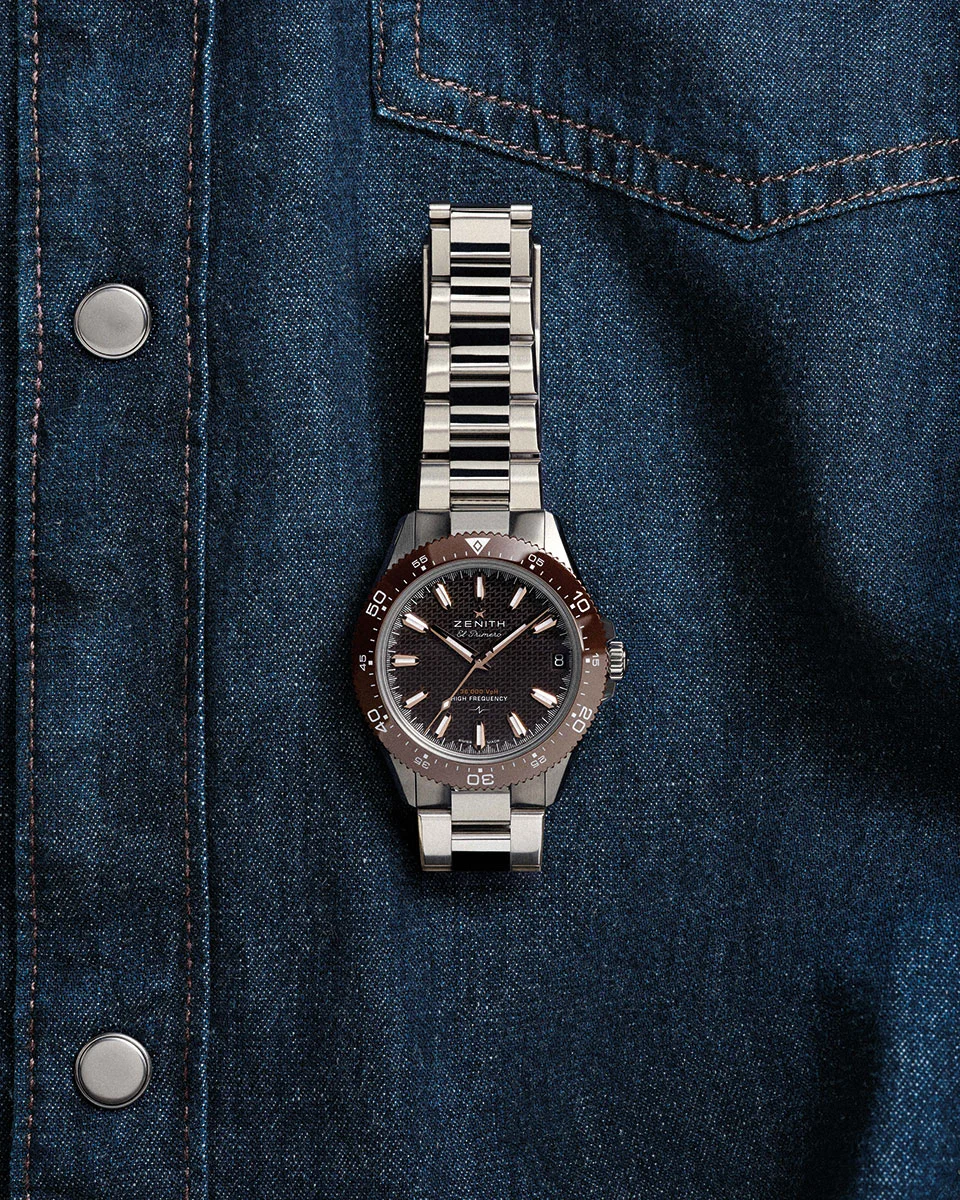
The landscape of high-frequency horology underwent a significant shift at the Geneva Watch Days 2026 as Zenith unveiled the Chronomaster Solo Sport. This new collection marks a strategic departure for the Le Locle-based manufacture, as it seeks to decouple its most famous movement, the El Primero, from its traditional chronograph architecture. By presenting the El Primero as a dedicated three-hand timekeeper within the Chronomaster line, Zenith is making a calculated bid to capture a broader segment of the luxury sports watch market—one that prioritizes the aesthetic of a classic racing watch with the daily utility of a simplified dial.
The Chronomaster Solo Sport arrives as the latest iteration of Zenith’s "Master of Chronographs" identity, yet it intentionally lacks the very complication that defined that title for over half a century. Instead, the manufacture has focused on the fundamental advantage of its high-frequency heritage: precision. By utilizing the 5 Hz (36,000 vibrations per hour) cadence of the El Primero for a standard time-only display, Zenith provides a visual experience characterized by a exceptionally smooth sweeping seconds hand, a hallmark of the brand’s mechanical prowess.
A Strategic Evolution: Beyond the Chronograph
Since its debut in 1969, the El Primero calibre has been synonymous with the integrated automatic chronograph. It was a movement born out of a race to create the world’s first automatic chronograph, and for decades, it remained strictly tethered to that function. However, the modern era of Zenith, under the progressive leadership that has defined the brand in the 2020s, has seen a push toward versatility.
The groundwork for the Chronomaster Solo Sport was laid by the commercial success of the Defy Skyline and the updated Pilot collection. Both of these lines successfully integrated the Calibre 3620—a movement derived from the El Primero 3600 architecture but modified for three-hand operation. Industry analysts note that the Defy Skyline, in particular, proved there was significant consumer appetite for high-frequency movements outside of the traditional chronograph format. The Solo Sport represents the first time this philosophy has been applied to the Chronomaster range, which is widely considered the "soul" of the Zenith brand.
Technical Specifications of the Calibre 3620
At the heart of the Chronomaster Solo Sport is the manufacture Calibre 3620. This automatic movement is a direct descendant of the El Primero 3600 1/10th of a second chronograph. By removing the chronograph complication, Zenith has created a movement that is not only more robust for daily wear but also thinner, allowing for a more ergonomic case profile.
The Calibre 3620 operates at a frequency of 36,000 VpH (5 Hz), which is significantly higher than the industry standard of 4 Hz. This high-frequency oscillation allows for greater chronometric stability and a more precise adjustment of the movement. To ensure longevity and efficiency at these high speeds, Zenith has equipped the movement with a silicon escape wheel and pallet lever. These components are non-magnetic and require no lubrication, reducing friction and extending service intervals.
Furthermore, the movement features a hacking seconds mechanism, allowing the wearer to stop the seconds hand for precise time setting. The power reserve is approximately 60 hours, ensuring that the watch remains operational even if left off the wrist over a weekend. The movement is visible through a sapphire crystal caseback, revealing a contemporary finish with a star-shaped oscillating weight—a nod to the Zenith logo.
Design Philosophy: Active Meets Urban
The Chronomaster Solo Sport is housed in a 40mm stainless steel case, a size that has become the "sweet spot" for modern versatile sports watches. The case design is a study in functional geometry, featuring dynamic crown guards that protect the screw-down crown without adding excessive bulk. The watch is rated for significant water resistance, making it suitable for aquatic activities while maintaining a refined profile for formal settings.
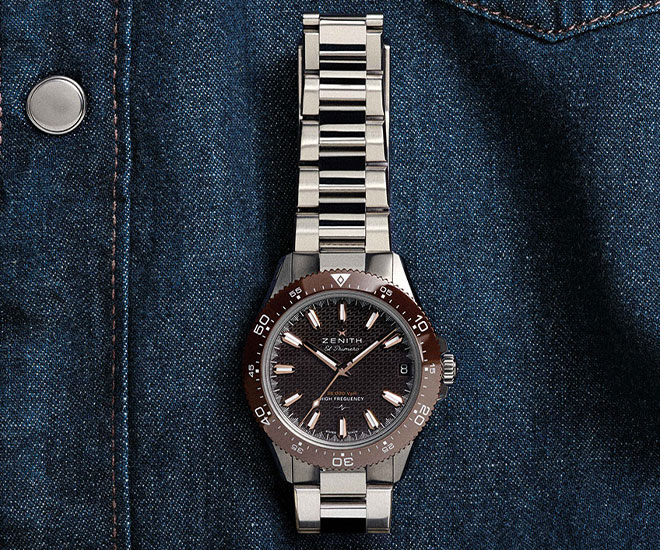
One of the most striking features of the Solo Sport is its unidirectional rotating ceramic bezel. While rotating bezels are typically associated with dive watches or chronographs, Zenith has utilized it here to provide a functional tool for tracking elapsed time in minutes, effectively replacing the minute counter of a chronograph. The engineering of the bezel is noteworthy; the manufacture has designed the case such that the steel edges extend slightly beyond the ceramic insert’s height at critical points. This ensures that the bezel insert—while appearing to be edge-to-edge for maximum visual impact—is protected from direct impacts that could shatter the ceramic material.
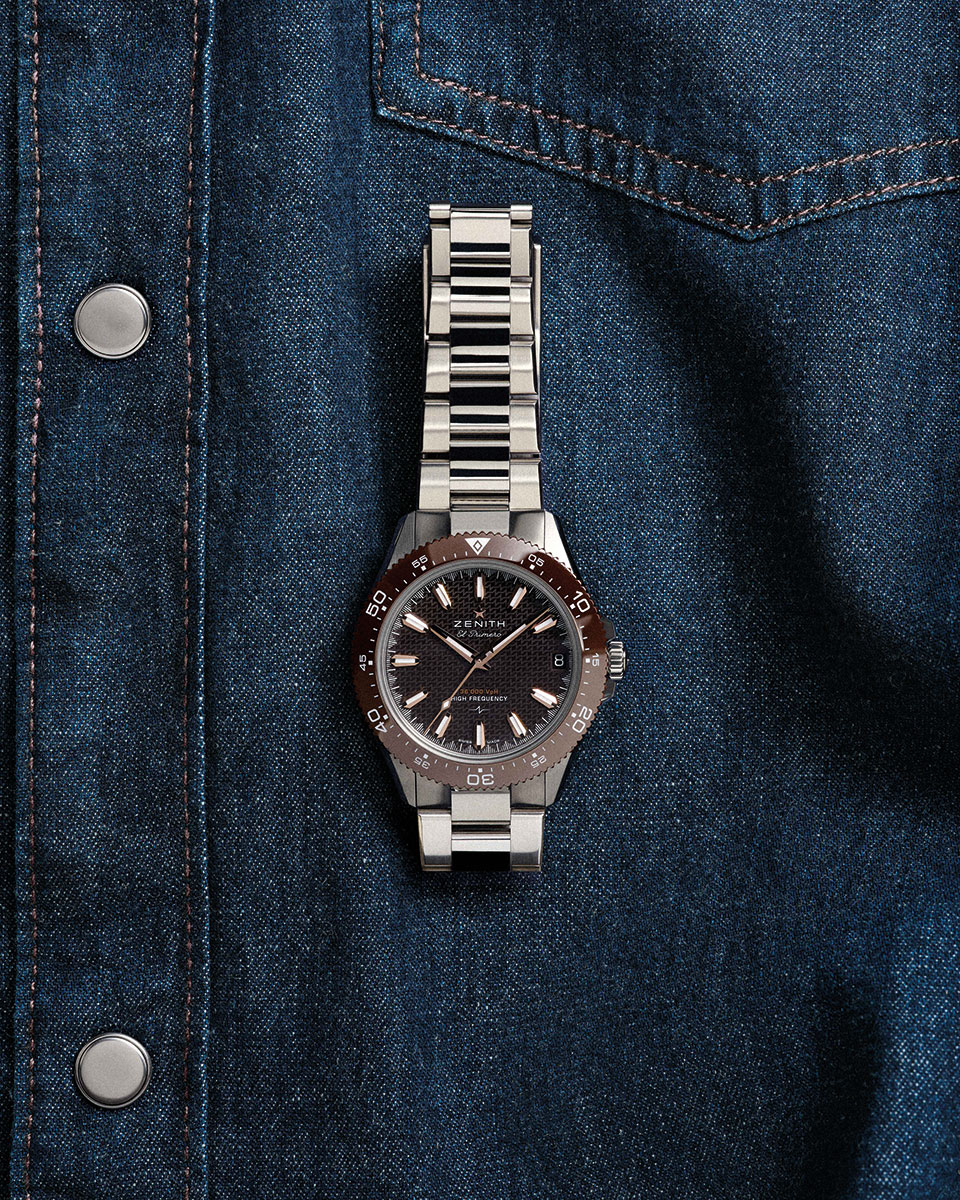
The dial is a centerpiece of material innovation, crafted entirely from ceramic. It features an engraved motif exclusive to this collection, designed to visually represent the high-frequency vibrations of the movement beneath. This "vibration" pattern adds depth and texture, catching the light in a way that distinguishes it from standard lacquered or sunray dials.
Heritage Cues and Modern Ergonomics
Zenith has carefully balanced the Solo Sport’s modern aesthetic with historical references. The peripheral minute track features a "shark tooth" design, a vintage-inspired detail that recalls Zenith’s sportier models from the late 1960s and early 70s. The indexes are faceted and applied, filled with Superluminova SLN C1 for high visibility in low-light conditions. The central seconds hand features the signature Zenith star counterweight, providing a final touch of brand identity.
Perhaps the most significant advancement for the wearer’s daily experience is the introduction of the "Zenclasp." This new three-link stainless steel bracelet is equipped with a state-of-the-art folding clasp that allows for tool-free, on-the-fly micro-adjustments. As luxury consumers increasingly prioritize comfort, the ability to expand or contract the bracelet size instantly to account for temperature changes or wrist swelling is a major competitive advantage. While Zenith has been gradually rolling out this technology, the Chronomaster Solo Sport is among the first in the core Chronomaster range to feature it, potentially giving it an edge over its more expensive chronograph siblings.
Market Context and Industry Reaction
The launch at Geneva Watch Days 2026 comes at a time when the Swiss watch industry is navigating a shift in consumer behavior. While the "hype" surrounding integrated-bracelet sports watches has stabilized, there is a growing demand for "everyday" luxury watches that offer genuine horological substance.
Industry experts suggest that the Solo Sport is positioned to compete directly with heavyweights like the Rolex Explorer and the Omega Seamaster Aqua Terra. By leveraging the El Primero name, Zenith is offering a movement with more "story" and a higher frequency than many of its competitors at a similar price point.
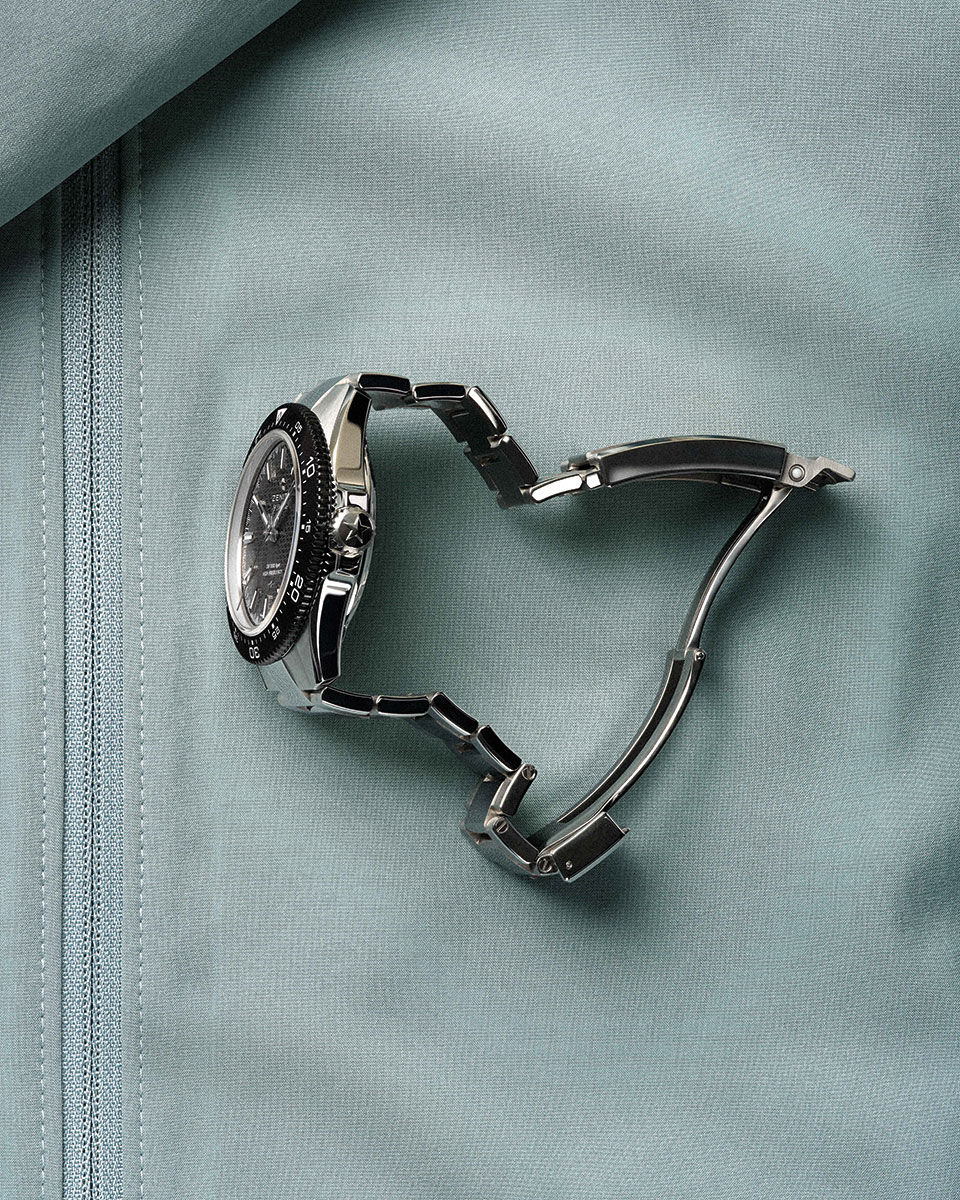
Initial reactions from retailers at Geneva Watch Days have been largely positive, particularly regarding the "no-date" variant. The black-on-black model, which omits the date window at 3 o’clock, has been praised for its symmetrical purity and "purist" appeal. The other three models in the launch collection include a date function, catering to the segment of the market that views the date as an essential daily complication.
Chronology of the El Primero’s Evolution
To understand the significance of the Chronomaster Solo Sport, one must look at the timeline of the El Primero’s development:
- 1969: Zenith launches the El Primero, the world’s first high-frequency automatic chronograph calibre.
- 1975: During the Quartz Crisis, Zenith Radio Corporation (the American owners at the time) orders the destruction of all mechanical movement tools. Charles Vermot famously hides the tools and plans in the attic of the manufacture.
- 1984: Mechanical watchmaking sees a resurgence. Zenith resumes production of the El Primero using Vermot’s saved tools, famously supplying movements to Rolex for the Daytona.
- 2019: Zenith celebrates the 50th anniversary of the El Primero with the launch of the Calibre 3600, a modernized version capable of measuring 1/10th of a second.
- 2022-2024: The introduction of the Calibre 3620 in the Defy Skyline and Pilot lines begins the transition of the El Primero into a three-hand format.
- 2026: The Chronomaster Solo Sport debuts, bringing the three-hand high-frequency movement into Zenith’s most iconic design language.
Broader Implications for the Manufacture
The introduction of the Chronomaster Solo Sport suggests that Zenith is looking to de-risk its portfolio. By diversifying the use of the El Primero movement, the brand is less reliant on the cyclical popularity of chronographs. Furthermore, the use of ceramic dials and advanced clasp technology indicates a move toward higher-spec materials across their entire entry-level to mid-range offerings.
The success of the Solo Sport will likely be measured by its ability to attract "first-time" Zenith buyers—those who admire the brand’s history but found the traditional chronographs either too complex or too expensive for a daily wearer. By offering the "Solo" version, Zenith has created a gateway drug to the El Primero universe.
The Chronomaster Solo Sport is now available through Zenith’s global network of boutiques, authorized retailers, and its digital e-commerce platform. As the brand continues to refine its identity under the LVMH umbrella, the Solo Sport stands as a testament to the idea that sometimes, less is indeed more—especially when what remains is a high-frequency heart beating at the center of a modern classic.
