
 By Layla Zulfa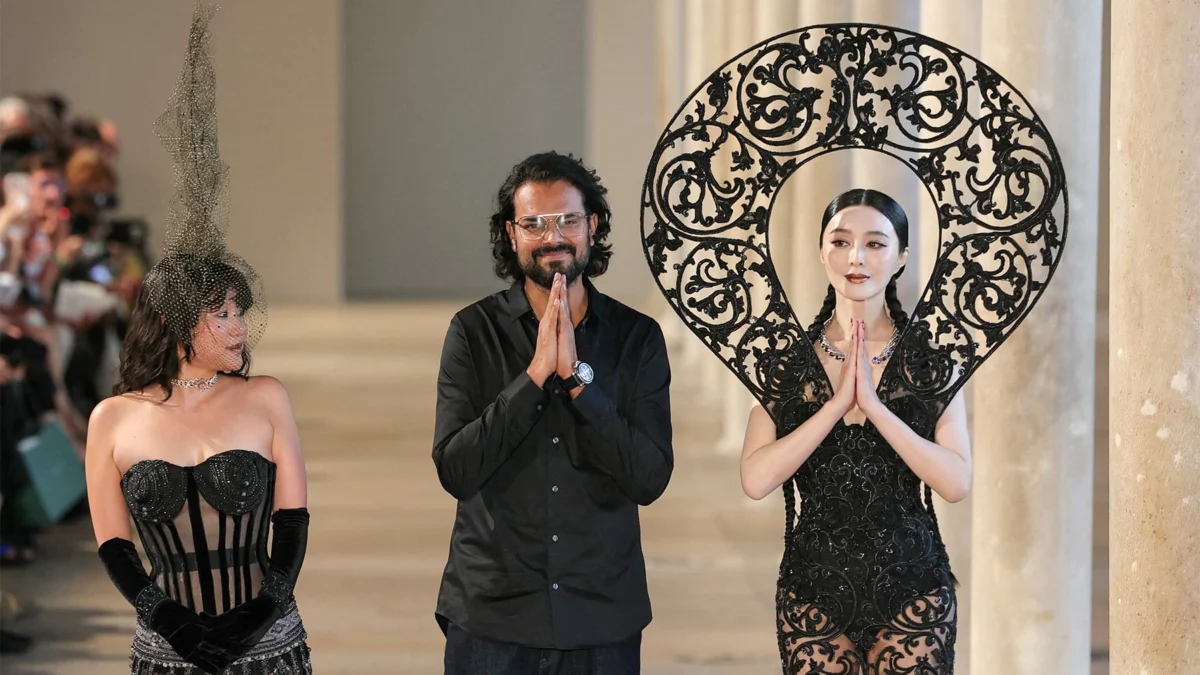
The Global Stage of Couture: Rahul Mishra’s Vision at Paris Couture Week 2026
On July 6, 2026, Indian fashion designer Rahul Mishra once again commanded the global spotlight at Paris Couture Week, showcasing a collection that solidified his reputation as a master of intricate craftsmanship and thoughtful design. The show, held in a historic Parisian venue, drew an illustrious audience, including acclaimed Chinese actress Fan Bingbing, whose presence underscored the growing cross-cultural appeal of Mishra’s work. Mishra’s latest collection, while not explicitly detailed in its thematic elements, is widely anticipated to have continued his signature exploration of nature, sustainability, and the profound beauty of artisanal techniques. Known for his "crafts for change" philosophy, Mishra consistently champions the empowerment of Indian artisans through fair wages and ethical production practices, embedding a strong social narrative within his haute couture offerings.
His journey to becoming a fixture at Paris Couture Week began after winning the prestigious International Woolmark Prize in 2014, an accolade that propelled his brand onto the international stage. Since then, Mishra has consistently presented collections that marry traditional Indian embroidery and textile techniques with contemporary silhouettes and a global aesthetic. Fashion critics and industry analysts often laud his work for its meticulous hand-embroidery, often requiring thousands of hours to complete a single garment, and his commitment to slow fashion in an industry often criticized for its rapid pace. The 2026 show is expected to further reinforce his position as a pioneer in sustainable luxury, demonstrating that ethical production and breathtaking artistry can coexist at the highest echelons of fashion. The presence of Fan Bingbing, a recognized global fashion icon with immense influence in Asian markets, further amplified the show’s visibility. Her attendance highlights the strategic importance of celebrity endorsements in connecting couture with a broader international audience and bridging cultural divides, particularly in the lucrative Asian luxury market. The collection’s reception is poised to influence upcoming trends in haute couture, emphasizing handcrafted elements, narrative-driven design, and a renewed focus on environmental and social responsibility, setting a benchmark for future seasons.
Intellectual Property in the Digital Age: Louis Vuitton’s Landmark Victory in China
In a significant development for intellectual property rights enforcement within the global luxury sector, Louis Vuitton has reportedly secured a landmark trademark victory in China. While the specific details of the case remain under wraps, such a ruling by Chinese courts sends a powerful message about the country’s evolving legal landscape regarding brand protection. China has long been a complex market for luxury brands, characterized by both immense growth potential and persistent challenges related to counterfeiting and intellectual property infringement. However, in recent years, the Chinese government has intensified its efforts to strengthen IPR laws and their enforcement, a move crucial for fostering innovation and attracting foreign investment. This victory for Louis Vuitton, a brand synonymous with luxury and a frequent target of counterfeiters, underscores the effectiveness of these enhanced measures.
The fight against counterfeiting is not merely about protecting brand image; it has substantial economic implications. The global market for counterfeit goods is estimated to be worth hundreds of billions of dollars annually, siphoning revenue from legitimate businesses, undermining consumer trust, and often funding illicit activities. For Louis Vuitton, a brand with a strong global presence and an extensive portfolio of iconic trademarks, defending its intellectual property is a continuous strategic imperative. This recent victory in China builds on a long history of the brand’s proactive stance against infringement worldwide, often involving lengthy and costly legal battles. Industry experts suggest that this ruling will serve as a strong deterrent to potential infringers within China, setting a precedent that other luxury brands can leverage in their own IPR defense strategies. Furthermore, it reinforces the confidence of international luxury houses in the Chinese legal system, encouraging continued investment and market penetration. As China’s consumer market continues to mature and its domestic brands gain global traction, robust IPR protection becomes increasingly vital for both international and local enterprises, fostering a more equitable and competitive business environment.
Saudi Arabia’s Retail Renaissance: A New Luxury Destination Emerges
Saudi Arabia is poised to further reshape its luxury retail landscape with the announcement of its "next luxury mall," signaling a continued aggressive push towards economic diversification under Vision 2030. This development is a crucial component of the Kingdom’s broader strategy to transform its major cities, particularly Riyadh, into global hubs for business, tourism, and entertainment. The proposed luxury mall is not just another shopping center; it represents a strategic investment aimed at catering to a burgeoning domestic consumer base with high disposable incomes and attracting international visitors as the country opens up to tourism. While specifics regarding the mall’s developer, exact location, and projected opening date are yet to be fully disclosed, the initiative aligns perfectly with the Public Investment Fund’s (PIF) ambitious projects, which include giga-developments like NEOM, Qiddiya, and Diriyah Gate.
Saudi Arabia’s luxury market is experiencing significant growth, driven by a young, affluent population and evolving consumer preferences. Data from market research firms indicates a consistent upward trend in luxury spending within the Kingdom, with a particular demand for high-end fashion, jewelry, and automotive brands. The new mall is expected to house an array of international luxury boutiques, exclusive dining experiences, and state-of-the-art entertainment facilities, creating an immersive lifestyle destination. This is part of a deliberate effort to capture domestic luxury spending that previously flowed to regional competitors like Dubai or international fashion capitals. The strategic implications are manifold: it will create thousands of direct and indirect jobs, enhance the country’s retail infrastructure, and elevate Riyadh’s status as a premier luxury destination in the Middle East, potentially drawing a new wave of international brands eager to tap into the Saudi market. Moreover, such developments are integral to the Kingdom’s tourism goals, offering compelling attractions for visitors beyond religious pilgrimages. Developers are likely to emphasize unique architectural designs and curated experiences, aiming to set new global benchmarks for luxury retail environments, further solidifying Saudi Arabia’s place on the world’s luxury map.
Weaving a New Future: Nigeria’s Textile Industry at a Crossroads
Nigeria’s textile industry is currently at the heart of a robust national debate, grappling with the challenge of revitalization amidst a complex interplay of historical decline, import competition, and ambitious government policies. Once a vibrant sector, employing millions and contributing significantly to the national GDP, Nigeria’s textile industry has faced a prolonged period of contraction since the 1980s. This decline has been attributed to a confluence of factors: infrastructural deficits, particularly unreliable power supply, high production costs, inadequate access to finance, widespread smuggling of cheaper foreign textiles, and unfavorable trade policies. At its peak in the 1980s, Nigeria boasted over 250 textile mills; today, only a handful remain operational, struggling to compete with an influx of imported goods, predominantly from Asian markets.
The ongoing debate centers on the most effective strategies to resuscitate the industry. Key stakeholders, including textile manufacturers, cotton farmers, labor unions, and government officials, are advocating for various interventions. The Central Bank of Nigeria (CBN) has been a significant player, implementing initiatives like the Anchor Borrowers’ Programme for cotton farmers, aimed at boosting local cotton production, and providing intervention funds to textile companies. However, the effectiveness and sustainability of these programs are frequently debated. Manufacturers emphasize the need for robust protectionist policies, including stricter border controls to curb smuggling and higher tariffs on imported textiles, arguing that a level playing field is essential for local industries to thrive. Conversely, some economists and trade advocates highlight the potential benefits of the African Continental Free Trade Area (AfCFTA), suggesting that Nigeria’s textile sector should focus on improving competitiveness and efficiency to leverage regional markets rather than relying solely on domestic protection.
The implications of this debate are profound for Nigeria’s economic diversification agenda and job creation efforts. A revitalized textile industry could significantly reduce unemployment, particularly among the youth, and bolster the country’s manufacturing base. It would also contribute to foreign exchange savings by reducing reliance on textile imports. The government’s challenge lies in balancing the immediate need for protection and support with long-term goals of fostering a competitive, export-oriented industry. The discussion underscores a critical juncture for Nigeria, where strategic policy decisions in the coming months will determine the trajectory of one of its most historically significant industrial sectors, impacting not only economic metrics but also the livelihoods of countless citizens.
These diverse yet interconnected developments—from the artistic triumph in Paris to legal victories in China, strategic investments in Saudi Arabia, and critical policy discussions in Nigeria—collectively paint a vivid picture of a global fashion industry in constant flux. It is an industry navigating the complexities of cultural exchange, technological advancement, economic shifts, and social responsibility, continually redefining its boundaries and impact on the world stage.
