
 By Nila Kartika Wati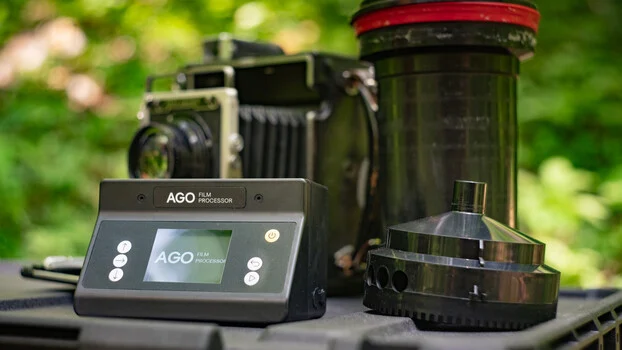
The Vintage Visual AGO Film Processor, a mobile solution for analog photography development, stands at a critical juncture over a year after its initial market assessment. This in-depth, long-term review for 2026 scrutinizes its enduring appeal, operational performance, and critical reliability issues that have emerged, alongside the manufacturer’s proactive responses. Having processed an estimated 264 frames across 135 (35 mm), medium format, and 4×5 sheet film since autumn 2024, in addition to various experimental papers and historical processes, the AGO’s journey from an innovative tool to a staple in the workflow of many analog enthusiasts has not been without its complexities, presenting both significant advantages and notable setbacks.
Genesis and Core Functionality of the AGO Processor
First introduced to the market, the AGO Film Processor from Vintage Visual aimed to democratize and streamline the film and paper development process, particularly for photographers seeking mobility and consistency outside a traditional darkroom setup. Its design philosophy centered on a small-footprint, portable unit compatible with industry-standard Paterson Super System developing tanks. This integration allowed users to leverage existing darkroom equipment while benefiting from automated agitation and temperature-compensated development times.
The processor arrived pre-loaded with a diverse range of development presets, catering to popular color and black-and-white film chemistries, as well as RA-4 color paper. This feature significantly lowered the barrier to entry for complex processes like C-41, E-6, and ECN-2, which traditionally demand precise temperature control and agitation sequences. The unit’s rechargeable nature, facilitated by a USB-C charging port, and Wi-Fi connectivity for firmware updates and custom program creation via a browser-based interface, underscored its modern, user-friendly appeal. At its launch, the AGO was lauded for its potential to bring laboratory-grade consistency to home development, making it an attractive proposition for both seasoned analog photographers and newcomers. The initial review in 2024 highlighted its innovative approach, noting only minor points for potential refinement.
Evolution Through User Feedback: Addressing Initial Concerns
A testament to Vintage Visual’s commitment to product development, the company has demonstrated a responsiveness to early user feedback, addressing two primary points of contention identified in the initial review of the 2024 model. These improvements, though seemingly minor, significantly enhance the overall user experience and safety.
The Splash Problem: A Refined Pouring Solution
One of the most frequently cited minor inconveniences with the original AGO unit was the tendency for chemistry to splash during pouring, particularly when the processor was attached to the Paterson tank in a horizontal orientation. While experienced users could mitigate this with a slow, steady hand or by orienting the tank vertically, it remained a point of friction. In response, Vintage Visual introduced the AGO Quick Pour Funnel. This optional accessory, priced at $23 in 2026, attaches directly to the mouth of the AGO, which interfaces with the Paterson tank, effectively eliminating spills.
While some users might question the necessity of purchasing an additional accessory to resolve a fundamental design aspect, the funnel’s effectiveness is undeniable. The alternative of a deeper, integrated pouring trough would likely necessitate a complete redesign of the processor, potentially impacting its compact form factor or cost. The Quick Pour Funnel thus represents a pragmatic and reasonably priced compromise, offering a tangible improvement to the pouring experience without requiring a full product overhaul. This iterative design approach, responding directly to user experience, exemplifies a positive model for product evolution in niche markets.
Enhancing Safety: The USB-C Port Cover
The inherent juxtaposition of electricity and corrosive liquids in film development necessitates stringent safety considerations. The original AGO processor featured an unsealed USB-C charging/data port, raising concerns among some users regarding potential liquid ingress, especially during the rinse cycles where the unit remains attached to the tank. This vulnerability prompted proactive measures from users, such as the acquisition of aftermarket USB-C port covers, as a precautionary measure against accidental splashes or immersion.
Vintage Visual acknowledged this safety concern with the introduction of a proprietary USB-C port plug included with the 2025 model of the AGO. This addition provides a factory-sanctioned solution to protect the vital electronic port from liquid exposure. While the integrated design of some aftermarket plugs, which remain attached to the processor, offered a slight convenience advantage by preventing loss, the inclusion of a dedicated plug by the manufacturer signifies an important step towards enhancing the product’s robustness and user confidence. This development underscores the manufacturer’s attention to detail and a commitment to addressing potential points of failure, even those perceived as minor by some but critical for others.
A Critical Juncture: The Seal Failure Incident
The narrative of the AGO Film Processor’s long-term performance took a dramatic turn with the discovery of a significant internal failure in the original unit. This incident, while isolated, proved to be a critical test of both the product’s design integrity and Vintage Visual’s customer support framework.
Unveiling the "Tragedy": Internal Leakage
Approximately a year into its intensive use, the initial AGO processor developed an internal leak. Fluid – a mix of developer, fixer, or rinse water – permeated the internal electronics, becoming visibly apparent within the LCD screen. This ingress of liquid into the heart of the processor’s electronic components represented a major operational failure, rendering the unit compromised and raising serious questions about its long-term durability. Such a failure in a device explicitly designed for use with liquids highlights a fundamental flaw in its sealing mechanisms.
Upon immediate notification, Vintage Visual responded promptly, acknowledging that while sporadic, such seal failures were not entirely unknown. This transparency, coupled with the company’s swift action, became a defining moment in the user’s experience. Recognizing the unit was still under warranty, Vintage Visual dispatched a replacement processor without delay and provided a return shipping label for the faulty unit. This decisive response mitigated the immediate impact of the product failure on the user and demonstrated a strong commitment to warranty obligations and customer satisfaction.
Post-Replacement Assessment: Testing the Updated Design
The replacement AGO processor, representing an updated model, underwent a period of rigorous testing to assess the efficacy of any potential design improvements, particularly concerning the internal seals. For approximately one month, the new unit was used regularly without incident. Subsequently, in an effort to simulate conditions that might precipitate a similar failure, the processor was intentionally left unused in storage for two months. This admittedly unscientific but practical test aimed to observe if prolonged dormancy or exposure to ambient conditions could trigger a recurrence of the sealing issue.
Following this period, the updated AGO was put back into active service, successfully processing a roll of medium format Ilford FP4 film. Crucially, no signs of leakage or internal fluid ingress were observed. While this limited testing cannot definitively predict the unit’s overall longevity or guarantee immunity from future seal failures, it provides encouraging preliminary evidence that Vintage Visual may have addressed the underlying cause of the leak in subsequent production runs. The inherent challenge in evaluating the long-term durability of any photographic equipment remains, yet the immediate performance of the replacement unit offers a degree of reassurance regarding the manufacturer’s corrective actions.
Market Position and Value Proposition in 2026
The Vintage Visual AGO Film Processor’s market standing in 2026 is defined by its unique blend of automation, portability, and the manufacturer’s demonstrated customer support. Priced at $529 for the processor bundled with a Paterson tank, it occupies a specific niche within the broader analog photography ecosystem.
Cost-Benefit Analysis for Diverse Users
The $529 price tag positions the AGO as a significant investment for many analog photographers. For enthusiasts who process film and paper in high volumes, particularly those working with RA-4 color paper or bulk black-and-white and color film (including complex processes like E-6 and ECN-2), the AGO’s value proposition is compelling. It automates critical steps, ensures consistent results through precise temperature and agitation control, and significantly reduces the headaches associated with manual processing. The time saved and the consistency achieved can easily justify the initial outlay for a dedicated user. For photographers who frequently work "off-grid" or in environments with limited space and chemistry access, its "go anywhere" automatic development capabilities offer unparalleled convenience.
Conversely, for casual photographers who develop only a few rolls sporadically, the cost could prove prohibitive. The occasional user might find manual processing, though more labor-intensive, to be a more cost-effective solution. The decision to invest in an AGO processor, therefore, hinges on individual usage patterns, the desire for consistency, and the value placed on automation and portability.
Vintage Visual’s Commitment and Future Outlook
Vintage Visual’s handling of the seal failure incident significantly reinforces its credibility in the market. The prompt replacement under warranty underscores a robust commitment to product reliability and customer satisfaction. This level of support is crucial in a niche market where word-of-mouth and community trust play a substantial role. It reassures potential buyers that even in the event of a rare product defect, the company stands firmly behind its offerings.
The ongoing evolution of the AGO, including firmware updates that refine development programs and the introduction of user-driven accessories like the Quick Pour Funnel, signals a dynamic and responsive product lifecycle. Furthermore, Vintage Visual’s recent announcements of new tools, such as the REEL Paper 8 for cinematic film and large format printing, suggest a broader strategic vision for expanding their suite of analog processing solutions. This forward-looking approach indicates a commitment not just to the AGO but to the wider analog community, positioning Vintage Visual as a key innovator in the field. The anticipation of upcoming reviews for these new products highlights the company’s continuous engagement with the market and its user base.
Broader Implications for Analog Photography
The experience with the AGO Film Processor offers several broader implications for the analog photography community and the industry at large. The product’s success, despite initial challenges, highlights the persistent demand for convenience and consistency in a medium often perceived as laborious. As analog photography continues its resurgence, tools that simplify complex processes without sacrificing quality are increasingly vital.
The importance of robust customer service, as exemplified by Vintage Visual’s handling of the warranty claim, cannot be overstated. In a market often driven by passion and personal investment in equipment, a manufacturer’s willingness to support its products and rectify issues directly impacts brand loyalty and market reputation. This case serves as a positive model for how companies can navigate product defects while maintaining customer trust.
Moreover, the iterative design process, where manufacturer refinements are directly influenced by user feedback, showcases a healthy ecosystem for product development. This collaborative approach fosters a sense of community ownership and ensures that products evolve in ways that genuinely benefit the end-user. The AGO’s journey, from initial concept to a refined tool, reflects the ongoing vitality and innovation within the analog photography sector, promising a future where traditional photographic processes are made more accessible and enjoyable for a new generation of enthusiasts.
Conclusion: A Qualified Endorsement for 2026
As of 2026, the Vintage Visual AGO Film Processor remains a compelling option for a specific segment of the analog photography market. Its blend of automation, portability, and preset versatility continues to offer significant advantages for high-volume users, those processing complex chemistries, or photographers requiring mobile development solutions. While the past seal failure represents a significant durability concern, Vintage Visual’s prompt and effective warranty response, coupled with apparent improvements in later models, provides a crucial layer of reassurance.
The AGO is not without its considerations, primarily its price point for casual users and the ongoing assessment of its long-term mechanical reliability, which only time will fully reveal. However, for the dedicated analog photographer who "lives and breathes film" and values consistency, convenience, and manufacturer support, the AGO Film Processor stands as a fantastic tool. Its continuous use in demanding scenarios underscores its utility and integration into the modern analog workflow. As Vintage Visual continues to innovate and refine its offerings, the AGO processor, with its blend of romance and a touch of past tragedy, remains a central figure in the evolving landscape of analog photographic development. The journey continues, with future updates and developments eagerly anticipated.
