
 By admin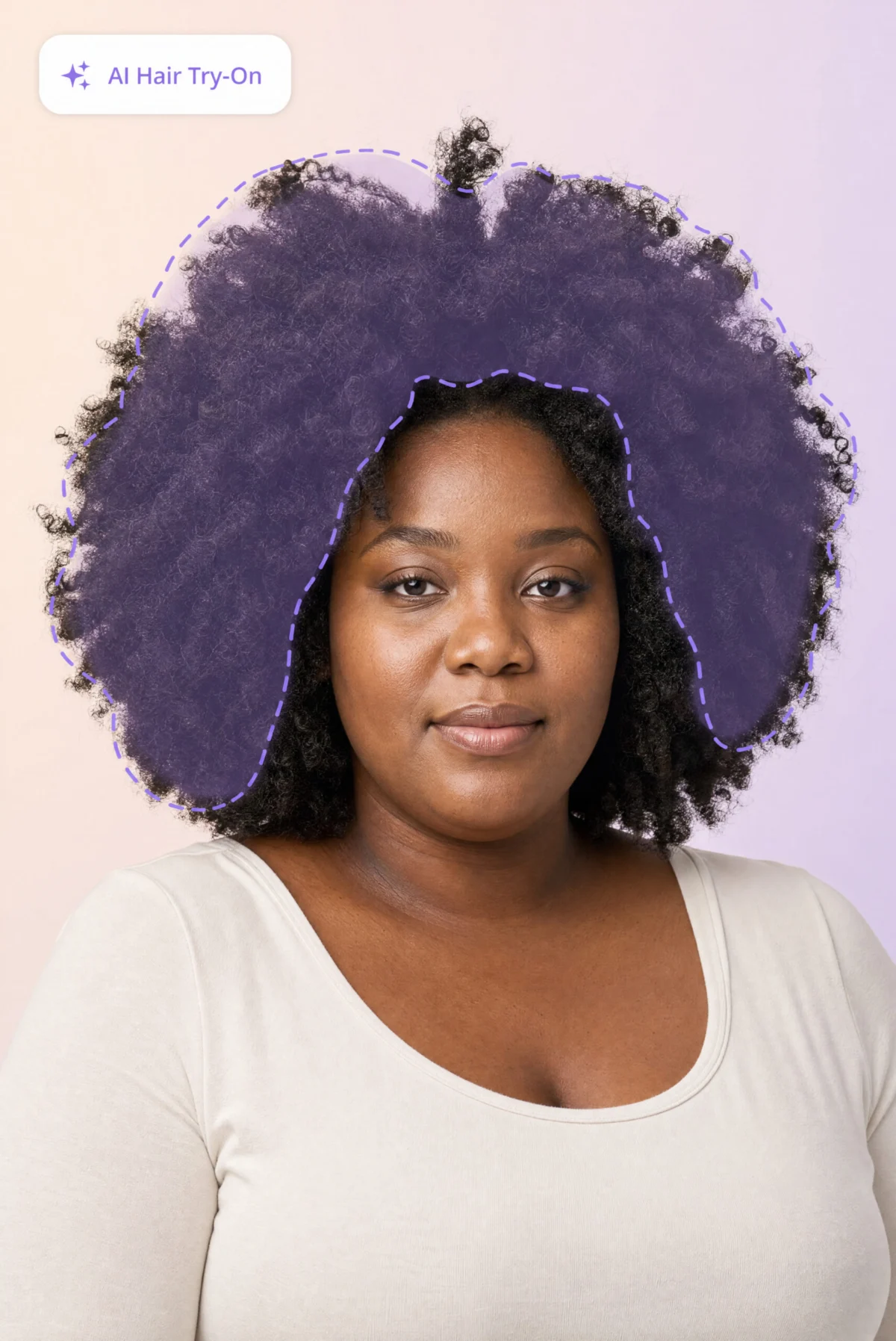
Artificial intelligence-powered virtual hair try-on tools, while increasingly sophisticated, present a unique challenge for plus-size women: their current calibration often prioritizes facial features over full-body proportions, leading to potentially misleading previews. This disparity stems from the fundamental way these technologies operate. AI hair try-on primarily analyzes and maps hairstyles onto a user’s face shape—jawline, forehead width, cheekbone position, and chin shape. This focus on facial geometry, while effective for close-up analyses, fails to capture the crucial element of body frame, which significantly influences how a hairstyle reads visually in its entirety. A cut that appears perfectly balanced on a screen when viewed in isolation, focusing solely on the face, can manifest entirely differently when the entire body is considered, potentially overwhelming or appearing disproportionate on a fuller frame. This article delves into the intricacies of why a singular focus on face shape is insufficient for accurate virtual hair consultations for plus-size individuals, exploring the vital role of body frame, the current limitations of AI calibration, and practical strategies for achieving more reliable previews.
The Dichotomy of Visual Perception: Face vs. Frame
The efficacy of any virtual hair try-on tool hinges on its ability to accurately replicate how a hairstyle will complement an individual’s natural features. For most users, the primary input for these AI algorithms is a photograph, often a selfie, which is meticulously analyzed for distinct facial landmarks. Technologies like the one powering HairHunt excel at identifying these key facial contours, which are indeed fundamental in determining the suitability of various haircuts and styles. A perfectly executed analysis of facial structure can lead to recommendations for a layered bob or a blunt lob that align with established principles of facial aesthetics.

However, the critical oversight in many current AI try-on systems lies in their limited scope of analysis. Unless a photograph is specifically framed to include the upper torso and shoulders, the AI is blind to crucial proportional cues. These unobserved elements include shoulder width, neck length, and the overall body frame. These are not mere secondary considerations; they form the second half of the equation that professional hairstylists routinely employ when assessing a client’s suitability for a particular hairstyle. The disconnect between a close-up facial preview and the reality of a full-body appearance is amplified for plus-size individuals. A hairstyle that flatters a round face in a tightly cropped image might suddenly appear ill-suited when viewed against broader shoulders or a fuller neck in person. This is not to say either visual interpretation is inherently "wrong"; rather, they address distinct aspects of aesthetic balance. A truly comprehensive virtual preview, therefore, must be capable of integrating both facial and bodily proportions to provide an accurate representation.
Face Shape: The Foundation, Not the Final Word
The established principles of face shape analysis remain a vital starting point for all individuals seeking flattering hairstyles, including plus-size women. The assumption that increased body weight automatically alters one’s fundamental face shape is a misconception. Many plus-size individuals possess distinct facial structures such as oval, square, or heart shapes, and the traditional guidelines for maximizing their appeal still apply. The critical divergence emerges in the subsequent stage: the scaling and adaptation of a chosen style to complement the overall physique.
Round and Oval Faces: The Enduring Power of Vertical Lines
For individuals with round faces, regardless of their body size, the strategic use of layers that extend to or below the jawline continues to be a powerful tool for creating an illusion of verticality. This technique helps to elongate the face and break up its inherent roundness. Similarly, oval faces, with their balanced proportions, continue to offer the greatest versatility in terms of hairstyle choices. When a round face is paired with a fuller frame, a chin-skimming lob, particularly one enhanced with face-framing layers, serves a dual purpose. It contributes to facial elongation and strategically avoids adding visual width at the widest point of the jaw. Further exploration of hairstyles specifically tailored for round faces, detailing optimal lengths and layering techniques, can be found in comprehensive guides dedicated to this facial shape.

The Nuances of Neckline and Double Chins: A Deeper Dive
A more subtle, yet significant, factor influencing hairstyle recommendations for any individual, and particularly relevant for plus-size clients, is the presence of a double chin. This is not directly correlated with overall body weight but rather with the specific contours of the neck and jawline area. Hairstylists pay close attention to this region because it directly impacts the perception of length and proportion. Hair that terminates precisely at the jawline can inadvertently draw the eye towards the area of perceived fullness. Conversely, hairstyles that fall a few inches below the jawline, or those that are significantly shorter and well above the chin, can effectively circumvent this visual focus. Resources dedicated to haircuts for double chins offer more detailed insights into the specific length thresholds that prove most flattering in these situations.
Body Frame: The Crucial Variable in Volume and Length Perception
Once the foundational aspect of face shape has been addressed, the next critical filter in determining hairstyle suitability is the body frame. This encompasses elements such as shoulder width, torso length, and the individual’s overall scale. These are precisely the dimensions that a standard headshot selfie cannot adequately convey, and they represent the key differentiator between a hairstyle that looks appealing in a virtual preview and one that translates effectively to a real-world appearance.
The Balance of Volume and Shoulder Width
The perceived volume of a hairstyle is not an isolated attribute; it interacts dynamically with the wearer’s physical frame. A voluminous, heavily layered style that appears harmoniously balanced on a person with a narrower shoulder width can, conversely, create a top-heavy or overwhelming effect on someone with broader shoulders, even if their facial structure is identical. Professional stylists often mitigate this by subtly reducing the overall volume for clients with wider shoulders. Instead of relying on blunt, heavy layering throughout, they might opt for point-cutting at the ends to introduce texture and movement without adding excessive bulk. This nuanced approach ensures that the hairstyle complements, rather than competes with, the wearer’s natural frame.

Neck Length and the Perception of Short Cuts
The length of an individual’s neck also plays a significant role in how shorter hairstyles are perceived. A pixie cut or a cropped bob that is perfectly suited to a shorter neck might appear unfinished or overly truncated on someone with a longer neck, unless there is sufficient length left at the nape to provide a sense of balance. This consideration is entirely independent of face shape and highlights a significant limitation of AI previews that focus exclusively on facial data. The intricate relationship between an individual’s body frame and the optimal length and style of their hair is a complex interplay that has been extensively studied and documented.
The Advantage of Medium-to-Long Layers on Fuller Frames
Across numerous analyses and style guides focused on plus-size individuals, a consistent pattern emerges: medium-to-long layered haircuts that incorporate movement at the ends tend to offer a more consistently flattering silhouette on fuller frames. This is attributed to the way these layers create a continuous visual line, flowing seamlessly rather than abruptly terminating at the shoulder. While not a universal rule, this approach often serves as a reliable starting point for stylists seeking to achieve a harmonious and balanced aesthetic.
AI Calibration Gaps for Plus-Size Users
The ongoing development of AI hair try-on technology is continually evolving, but its calibration for plus-size individuals presents a relatively newer frontier compared to the established algorithms for face shape analysis. Transparency regarding the current limitations of this technology is crucial to managing user expectations.

The vast majority of virtual try-on platforms, including those that utilize advanced AI engines, have been trained on datasets that predominantly feature close-up facial images. This training data prioritizes the extraction of detailed information about jawlines, cheekbones, and forehead dimensions. Consequently, while these AI models can effectively predict how a hairstyle will align with a user’s facial features, their capacity to accurately assess the impact of shoulder width or neck length is severely constrained, unless the input photograph explicitly includes these elements.
The practical implication of this training bias is that a virtual preview might achieve a perfect match in terms of face shape while failing to provide reliable insight into how that hairstyle will complement the user’s overall body frame. Furthermore, the accuracy of AI try-on tools can be further compromised when dealing with highly textured hair, such as 4A to 4C curl patterns. For plus-size clients who also possess these hair textures, the challenge is compounded, involving not only the segmentation and accurate rendering of complex textures but also the proportional assessment against their body frame.
While these limitations do not render AI hair try-on tools entirely useless, they underscore the fact that the preview’s confidence level is significantly higher for face-shape alignment than for body-frame compatibility. It is also important to acknowledge that AI technology, in its current iteration, cannot fully simulate the dynamic behavior of hair once it is professionally styled. The virtual preview primarily conveys shape and color, not the nuanced way hair falls and moves with styling techniques.

Enhancing Accuracy: A Proactive Approach to Virtual Previews
Despite the inherent limitations, users can take proactive steps to improve the accuracy of virtual hair try-on previews, even with tools that are primarily optimized for facial data. The most direct method for individuals seeking to test these capabilities is by utilizing dedicated mobile applications, such as the HairHunt app, which is accessible on both the iOS App Store and Google Play. These platforms often offer free trials that permit a limited number of full-quality try-ons, enabling users to compare different styles and color combinations. This allows for a direct side-by-side comparison of, for instance, a longer layered option against a shorter, more cropped style, before making any definitive decisions.
Engaging with Your Stylist: Beyond the Cut Name
When consulting with a hairstylist, it is highly recommended to bring along any saved virtual try-on images as visual aids. However, the conversation should extend beyond simply identifying a desired cut. It is crucial to engage the stylist in a discussion about how the proposed hairstyle will interact with specific aspects of your physique, such as your shoulder width and neck length.
Phrasing your questions effectively can prompt a more comprehensive assessment. Instead of merely stating, "I like this layered lob," consider asking, "I like the shape of this layered lob, but can we adjust the volume slightly so it doesn’t add undue width at the shoulders?" Such a question encourages the stylist to consider the broader proportional implications of the hairstyle, addressing the very gap that a purely face-centric virtual preview might leave unaddressed.

Frequently Asked Questions on Plus-Size Hair Try-Ons and Proportion
Does body type truly influence haircut suitability, or is it solely about face shape?
Both face shape and body type are significant factors, and they address distinct aesthetic considerations. Face shape guides decisions regarding flattering lengths and the placement of layers that best accentuate facial features when viewed up close. Body frame, on the other hand, dictates how a particular haircut is perceived at a full-body distance. A hairstyle can successfully complement one aspect while falling short on the other, highlighting the need for a holistic approach.
Why does my AI hair try-on preview differ from the actual haircut outcome?
Most AI hair try-on tools are trained to analyze facial features from photographs, generating realistic representations of shape and color. However, they often lack the capacity to incorporate data related to shoulder width or neck length unless the input photograph provides this contextual information. While the technology accurately renders the chosen cut on your face, its overall impact in relation to your full frame is a dimension that warrants separate discussion with your hairstylist.
Are there any virtual hair try-on solutions that account for body frame in addition to face shape?
Currently, a single, automated step that comprehensively integrates both face and body frame analysis for virtual try-ons is not widely available. The primary reason for this is that most AI try-on engines are calibrated using facial data. A practical workaround involves utilizing a selfie that captures at least the upper half of your body, or a wider-framed shot, whenever the tool permits. Subsequently, comparing the resulting preview against your reflection in a mirror at a similar distance to a real photograph can provide a more accurate assessment.

What hairstyle is most recommended for a plus-size woman with a round face?
For plus-size individuals with round faces, a lob that falls at or just below the chin, enhanced with face-framing layers, is generally an excellent choice. This style elongates the face vertically and effectively controls volume, preventing it from adding perceived width at the jawline. It is advisable to avoid very short, rounded styles that might inadvertently echo the face’s roundness without providing visual disruption.
Does hair length hold more significance for a fuller frame than for face shape?
Hair length influences both face shape and body frame independently. In relation to face shape, length determines where the eye is drawn relative to the jaw and cheekbones. For body frame, it impacts the overall silhouette, influencing whether the visual line feels continuous or abruptly terminates at the shoulder. This is a primary reason why stylists often favor medium-to-long layered styles for fuller frames, as they contribute to a more cohesive and balanced appearance.
Ultimately, whether you are exploring options through a virtual application or engaging in a consultation with a professional stylist, achieving a truly informative virtual hair preview for any body type, especially for plus-size individuals, requires looking beyond the close-up facial approximation. It necessitates envisioning how the hairstyle will integrate with your shoulders, neck, and overall physical scale before considering the virtual try-on results as definitive.

Disclaimer: Individual hair results may vary depending on natural hair type, texture, density, and condition. Virtual try-on images are AI-generated visualizations and, while accurate in shape and color representation, cannot definitively predict how your hair will behave once professionally styled. It is always advisable to consult with a licensed hairstylist before undertaking any significant hair transformations, particularly those involving chemical treatments or substantial changes in length.
