
 By admin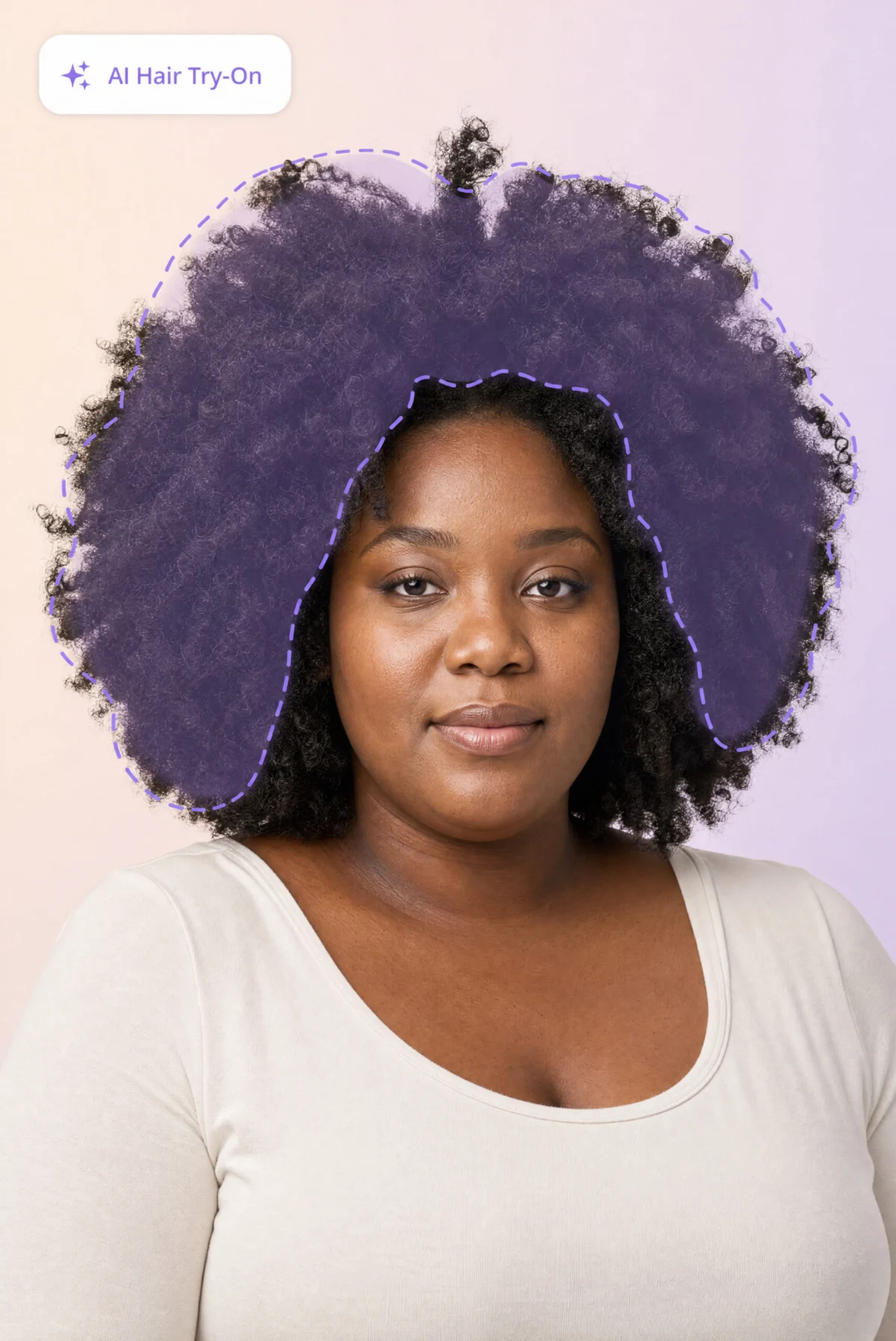
The burgeoning field of artificial intelligence-powered virtual hair try-on tools, while offering unprecedented convenience, presents a unique challenge for plus-size individuals seeking to visualize new hairstyles. Current AI algorithms primarily focus on mapping hairstyles onto a user’s facial geometry, analyzing features such as jawline, forehead width, and cheekbone prominence. This approach, however, often overlooks the crucial interplay between facial features and overall body frame, a factor that stylists have long considered essential for achieving a truly harmonious and flattering look, particularly for plus-size clients. The discrepancy arises because a hairstyle that appears balanced in a close-up digital preview can translate to a disproportionate appearance in person when viewed from a wider perspective, highlighting the need for AI calibration to encompass a more holistic understanding of a user’s physique.
This comprehensive guide delves into the nuances of why AI hair try-on technology, in its current iteration, falls short for some plus-size users and outlines how these tools are evolving. We will explore the fundamental principles stylists employ when advising plus-size clients, the emerging advancements in AI calibration for diverse body types, and practical strategies users can adopt to obtain more accurate virtual previews before making significant hairstyle decisions.

The Dichotomy of Digital Preview vs. Real-World Perception
At the core of the issue lies the inherent limitation of most virtual hair try-on applications. These platforms, including sophisticated engines like the one behind HairHunt, are meticulously trained on datasets that predominantly emphasize facial analysis. This focused approach enables the AI to effectively assess an individual’s face shape, identifying key landmarks that inform recommendations for styles like layered bobs or blunt lobs.
However, this narrow focus means that critical elements of a person’s overall silhouette—such as shoulder width, neck length, and general body proportions—are frequently excluded from the AI’s computational model. Unless a photograph is specifically framed to capture a wider view of the body, these vital contextual clues remain unseen by the algorithm. This oversight becomes particularly pronounced for plus-size individuals, where the perceived scale and balance of a hairstyle can be significantly altered by their broader shoulders or fuller neck. A pixie cut, for instance, which might perfectly complement a heart-shaped face in isolation, could appear diminutive or out of proportion when contrasted against a more substantial frame. Neither interpretation is inherently "wrong"; rather, they represent different perspectives on aesthetic balance, and a truly effective preview must bridge this gap.
Face Shape: The Foundational Element, But Not the Sole Determinant
The principles of face shape analysis remain a cornerstone of hairstyling advice for all individuals, including those who are plus-size. It is a misconception to assume that body weight automatically dictates face shape. Many plus-size clients possess classic face shapes such as oval, square, or heart-shaped, and the established guidelines for flattering these shapes still apply. The critical differentiator emerges in how these styles are subsequently scaled and adapted to complement the individual’s overall frame.

Round and Oval Faces: Vertical Lines and Versatility
For individuals with round faces, the objective is typically to introduce vertical lines to create an illusion of elongation. Layers that fall at or below the jawline are highly effective in achieving this. Similarly, oval faces, known for their inherent symmetry, offer the greatest flexibility in terms of hairstyle choices. For a plus-size client with a rounder face and a fuller frame, a lob (long bob) that skims the chin, enhanced with face-framing layers, serves a dual purpose. It artfully elongates the face while strategically avoiding the addition of width at the broadest part of the jaw. This principle underscores that the fundamental rules of face shape flattering remain consistent, regardless of body size.
The Influence of Double Chins on Length Recommendations
Beyond general weight considerations, stylists pay particular attention to the area beneath the chin. The presence of a double chin, which can occur at any body size, significantly influences hairstyle length recommendations. Hair that terminates precisely at the jawline can inadvertently draw the eye towards the lower face, potentially emphasizing this area. Conversely, lengths that extend a few inches past the jawline, or shorter cuts that sit well above it, can effectively circumvent this visual emphasis. This highlights that subtle anatomical features, rather than overall body mass, can be more impactful in determining flattering lengths.
Body Frame: The Unseen Architect of Hairline Proportion
Once the face shape has been assessed, the next crucial filter for stylists is the client’s body frame. This encompasses elements like shoulder width, torso length, and the overall scale of the individual. These are precisely the dimensions that close-up selfie-based AI previews often fail to capture, yet they are indispensable in determining how a hairstyle will truly read in real life.

Volume and Shoulder Width: A Delicate Balance
The volume of a hairstyle is not solely dictated by the width of the face. A highly voluminous or heavily layered cut that appears balanced on someone with narrower shoulders can create a top-heavy or overwhelming effect on an individual with broader shoulders, even if their face shapes are identical. Professional stylists often subtly reduce the overall volume for clients with wider shoulders, opting for techniques like point-cutting at the ends to introduce texture and movement rather than employing blunt, heavy layering throughout. This nuanced approach ensures that the hair complements, rather than competes with, the wearer’s natural proportions.
Neck Length and the Perception of Short Cuts
The length of an individual’s neck also plays a significant role in how short hairstyles are perceived. A cropped pixie or a very short bob that might appear chic and polished on someone with a shorter neck could look unfinished or overly severe on someone with a longer neck, unless sufficient length is retained at the nape. This is a subtle yet important consideration related to body frame that AI tools, focused solely on the face, are likely to miss. The interplay between hairstyle length and body proportion is a recurring theme in expert advice, with stylists frequently recommending medium-to-long layered cuts for fuller frames. These styles create a more continuous and flowing silhouette, avoiding abrupt stops at the shoulder that can sometimes disrupt visual harmony.
The Evolving Landscape of AI Calibration for Plus-Size Users
The development of AI hair try-on tools specifically calibrated for plus-size individuals is a relatively nascent area of technological advancement. While the progress in analyzing facial geometry has been substantial, incorporating a comprehensive understanding of diverse body frames is an ongoing challenge. Many existing AI try-on platforms, including those trained on vast selfie datasets, are optimized for tightly cropped images that primarily showcase the face. This inherent bias means the AI excels at interpreting facial features but has limited exposure to—and therefore, understanding of—the impact of shoulder width and neck length.

The practical implication for users is that while a virtual preview might accurately render a hairstyle onto their face based on shape, it offers less reliable insight into how that same hairstyle will appear in proportion to their overall body. This limitation is further compounded for plus-size individuals with highly textured hair, such as coily or kinky textures (Type 4A-4C). These users often face a dual calibration hurdle: the AI’s ability to accurately segment and render textured hair, and its capacity to interpret hairstyle proportion in relation to their body frame.
It is crucial to acknowledge that these limitations do not render AI try-on tools entirely useless. Instead, they signify that the technology currently provides a more confident assessment of face-shape compatibility than of body-frame harmony. Furthermore, AI simulations cannot replicate the dynamic behavior of hair once it is professionally styled. They offer a visualization of shape and color but do not account for the nuances of how hair will fall, move, or be manipulated by a stylist.
Enhancing Accuracy: A User’s Guide to Better Virtual Previews
Despite the current constraints of AI technology, users can take proactive steps to obtain more insightful virtual previews. By optimizing the input photographs, individuals can provide the AI with more relevant data for analysis, even on platforms primarily designed for facial metrics.

- Wider Frame Photography: When using AI hair try-on applications, opt for photographs that capture more of your upper body, including your shoulders and neck. This provides the AI with crucial contextual information that can lead to more proportionate renderings.
- Consistent Lighting and Angle: Ensure that your photographs are taken in consistent, even lighting and from a straightforward angle. This minimizes shadows and distortions that can affect the AI’s interpretation of facial and bodily features.
- Natural Expression: Use a natural facial expression and avoid tilting your head excessively. This allows the AI to accurately map your natural face shape and proportions.
- Consider Multiple Angles: If the application allows, experiment with different angles or upload multiple photos to get a more comprehensive understanding of how a hairstyle might look.
The HairHunt mobile application, available on both the iOS App Store and Google Play, offers a practical avenue for users to experiment. Its free trial allows for a full-quality try-on of any style and color combination, providing ample opportunity to compare contrasting styles—such as a longer layered option against a shorter, cropped cut—before committing.
Strategic Consultation: Beyond the Virtual Image
While virtual try-on tools offer a valuable starting point, the ultimate arbiter of a successful hairstyle remains a consultation with a professional stylist. Bringing your saved virtual try-on images to your appointment is recommended, but the conversation should extend beyond simply identifying a preferred cut.
It is essential to engage your stylist in a dialogue that addresses how the proposed hairstyle will interact with your specific body frame. Instead of asking, "Does this cut suit my face?", frame your questions around proportionality. For example, a query like, "I like the shape of this layered lob, but can we adjust the volume so it doesn’t add perceived width at my shoulders?" prompts the stylist to consider your frame in addition to your face shape. This type of inquiry encourages a holistic approach to hairstyling, bridging the gap that AI previews may leave open.

Frequently Asked Questions
Does body type actually change which haircut suits me, or only face shape?
Both face shape and body type are critical factors in determining which haircuts are most flattering. Face shape influences how lengths and layers complement your facial features up close. Body frame, on the other hand, dictates how a hairstyle reads at a full-body distance, impacting overall proportion and visual balance. A cut can be flattering to one aspect while being incongruous with the other.
Why does my AI hair try-on look different from how the cut actually turned out?
Most AI hair try-on tools are trained on facial data and primarily analyze the face in a photograph. While they can accurately render shape and color onto your face, they often lack the ability to account for shoulder width or neck length unless your photograph explicitly includes these elements. The technology excels at facial mapping but cannot fully predict how a hairstyle will interact with your complete physique. This aspect requires discussion with a professional stylist.
Is there a hairstyle for plus-size women preview that accounts for frame, not just face?
Currently, there isn’t a single automated step that perfectly accounts for both face and frame in AI hair try-on. The closest workaround involves using wider-framed selfies that capture more of your upper body when the tool permits. Subsequently, comparing these results against a mirror at a similar distance to a full-body photograph can offer a more contextualized preview.

What hairstyle works best for a plus-size woman with a round face?
For a plus-size woman with a round face, a chin-skimming or slightly longer lob featuring face-framing layers is often highly effective. This style provides vertical elongation and helps to break up the roundness of the face. It is generally advisable to avoid very short, rounded styles that can echo the face’s shape without creating desirable contrast.
Does hair length matter more for a fuller frame than for face shape?
Hair length is significant for both face shape and body frame, albeit in different ways. For face shape, length influences where the eye is drawn relative to facial features. For body frame, length impacts the overall silhouette; medium-to-long layered cuts are often favored for fuller frames as they create a continuous line and avoid abrupt endings at the shoulder, contributing to a more harmonious appearance.
Ultimately, whether you are exploring options through a mobile application or consulting with a seasoned stylist, achieving a truly effective and flattering hairstyle for a plus-size individual involves looking beyond the close-up facial analysis. It requires visualizing the intended cut in relation to your shoulders, neck, and overall scale to ensure a balanced and harmonious aesthetic.

Disclaimer: Hair results are subject to individual natural hair type, texture, density, and condition. Virtual try-on images are AI-generated visualizations intended to accurately represent shape and color but cannot precisely predict how your hair will behave when professionally styled. It is always recommended to consult with a licensed hairstylist before undergoing significant hair transformations, particularly those involving chemical treatments or substantial length changes.
