
 By admin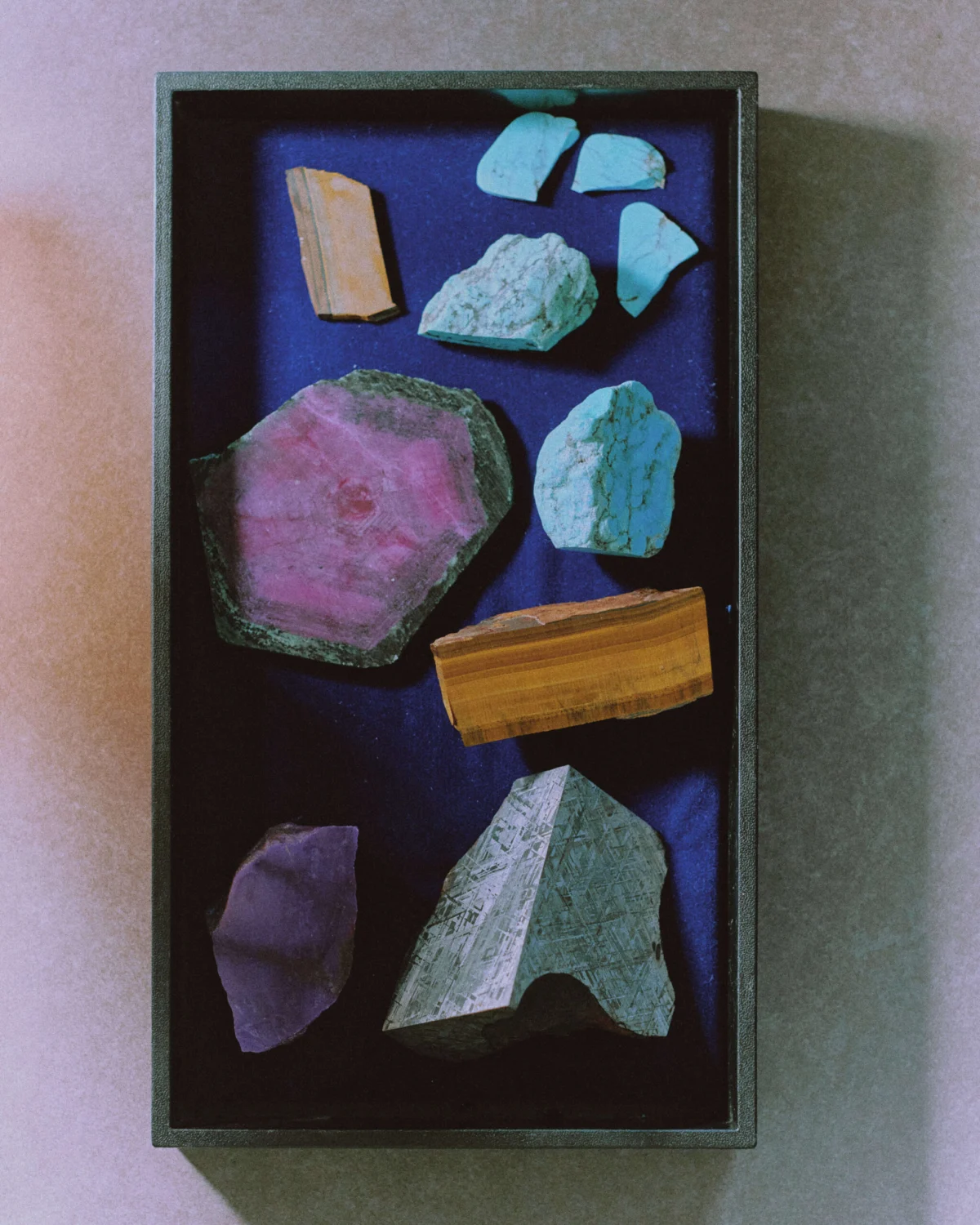
The global horological landscape is currently witnessing a profound shift as the industry moves away from uniform, mass-produced aesthetics toward the raw, unrepeatable beauty of the natural world. While the previous decade was defined by "color trends"—most notably the industry-wide obsession with specific shades of green or "Tiffany" blue—2026 has ushered in the era of the mineral dial. Driven by significant advancements in laser-cutting technology and a surging consumer demand for "oneness," watchmakers are now transforming rare boulders and ornamental hard stones into wafer-thin canvases that ensure no two timepieces are ever truly identical.

The scale of this movement is evidenced by the sheer volume of new releases. In the first six months of 2026 alone, more than 50 high-profile timepieces featuring mineral dials have entered the market. This surge includes contributions from the industry’s most prestigious "Holy Trinity" members and independent avant-garde houses alike. The current roster of brands engaging in this "stone rush" includes Patek Philippe, Audemars Piguet, Arnold & Son, H. Moser & Cie, Biver, Zenith, Pequignet, Louis Vuitton, Frédérique Constant, Dennison, and Jacob & Co. These modern players are building upon a foundation laid decades ago by pioneers such as Piaget and Rolex, who first recognized the potential of the earth’s crust to serve as the ultimate luxury dial.
A Millennial Heritage: The Historical Context of Ornamental Stones
The contemporary obsession with mineral dials is not a fleeting fashion statement but rather the latest chapter in a multi-millennial dialogue between humanity and the earth’s geology. Historically referred to as "semi-precious stones," these materials have served as markers of divinity and status since the dawn of civilization. Archaeological records indicate that Neolithic communities in Mesopotamia utilized beads crafted from these minerals, while ancient Egyptian artisans reached a pinnacle of lapidary art. One of the most famous examples remains Tutankhamun’s winged scarab pectoral, which integrated lapis lazuli, carnelian, and turquoise into a complex religious talisman.

The intellectual cataloging of these materials dates back to the Roman Empire. In approximately 78 CE, Pliny the Elder dedicated the 37th and final book of his Natural History to the study of gemstones and minerals. He remarked that in beholding these stones, one could witness "the supreme and absolute perfection of Nature’s work." Throughout the Middle Ages and the Renaissance, these stones were primarily used for cameos and religious reliquaries. During the Art Deco movement of the 1920s and 30s, they were incorporated into clocks and objets d’art. However, their integration into the confined space of a wristwatch remained a technical impossibility for centuries due to the physical limitations of the materials.
The Technical Revolution: From Manual Attrition to Laser Precision
The primary barrier to using stone in watchmaking has always been the requirement for extreme thinness. To fit within the narrow clearance between a watch movement and its crystal, a dial must typically be sliced to a thickness of approximately 1.0mm or less. Achieving this with natural stone—materials that are often brittle, prone to internal fractures, and varying in hardness—was historically a high-attrition nightmare.

The breakthrough occurred in 1963, led by the House of Piaget. This achievement was not merely one of lapidary skill but of mechanical engineering. Piaget’s success was predicated on its development of ultra-thin movements, specifically the 2mm-thick manual-winding Calibre 9P and the 2.3mm automatic Calibre 12P. These movements provided the necessary "real estate" within the case to accommodate a stone dial that was significantly thicker than a traditional brass or silver alternative.
In the decades following Piaget’s debut of lapis lazuli, jade, and opal dials, the craft has evolved from manual grinding to computer-guided laser cutting. Modern lasers allow artisans to slice minerals with micron-level accuracy, minimizing the structural shock to the stone. Despite these advancements, the failure rate remains high. Caviraj Appadoo, technical and sales director at the specialist dialmaker Estima, notes that the "churn rate" can reach up to 70 percent. "A dial can break at any time, even when we’re printing the numerals," Appadoo explains. Furthermore, certain materials present health risks; malachite, which is 70 percent copper, produces toxic dust during the cutting process, requiring specialized extraction and filtration systems.

The Economics of Rarity: Market Segments and Valuation
The valuation of stone-dial watches operates on a complex hierarchy dictated by the rarity of the "rough" material and the difficulty of the cut. While stone dials were once the exclusive domain of six-figure high-jewelry pieces, technological democratization has allowed them to enter the mid-range luxury market.
Industry analysts observe a powerful trend in the CHF 3,000 to CHF 5,000 price bracket. At this level, brands can offer a sense of bespoke exclusivity to a broader audience. However, at the pinnacle of the market, the costs remain astronomical. Hervé Cerruti, a professional stone hunter and head of supply at Pylania, highlights the extreme end of the spectrum: "A slab of opal beyond 30mm will cost tens of thousands of Swiss francs before a dial-maker has even started working on it." In such cases, the dial material itself may be more valuable than the mechanical movement or the gold case surrounding it.

Geographic and cultural preferences also play a significant role in market distribution. Pascal Béchu, managing director at Arnold & Son, notes that while the appeal is universal, specific stones resonate in specific regions. "We did a limited series of our Luna Magna with a turquoise dial, and all of it went to the US market," Béchu says, citing the stone’s deep roots in Southwestern American culture. Similarly, jade remains a dominant preference in East Asian markets, where the mineral carries profound historical and spiritual significance.
The Expanding Palette: Diversity Beyond the "Holy Trinity"
For years, the mineral dial category was dominated by what collectors call the "Holy Trinity" of stones: Malachite (green), Lapis Lazuli (blue), and Onyx (black). While these remain staples, the 2026 market is defined by a massive expansion of the geological repertoire. Brands are now exploring "exotic" and "quixotic" materials to differentiate themselves in a crowded market.

The current inventory of stones used in watchmaking now exceeds 100 varieties. This includes:
- Pietersite: A brecciated hawk’s eye known for its chaotic, stormy patterns of blues and golds.
- Verdite: A lush green stone often containing inclusions of chrome-tourmaline.
- Baltic Amber: Fossilized tree resin that offers a warm, translucent aesthetic.
- Falcon’s Eye: A blue-grey quartz that displays chatoyancy, a shimmering effect similar to a cat’s eye.
- Tiger’s Eye: A metamorphic rock with a silky luster and golden to red-brown colors.
Some independent brands have pushed the boundaries into the realm of the eccentric. ArtyA, for instance, has gained notoriety for using fossilized dinosaur coprolite (dung), emphasizing that even the most "unconventional" natural materials can be transformed into luxury through expert finishing.

Broader Impact and Future Outlook: The Hunger for "Oneness"
The resurgence of stone dials reflects a broader psychological shift in luxury consumption. In an age of digital perfection and mass production, high-end consumers are increasingly drawn to "organic imperfection." A mineral dial is a slice of geological history—some stones take millions of years to form under immense pressure and heat. When a collector purchases a stone-dial watch, they are purchasing a unique geological fingerprint.
Jean-Claude Biver, CEO of his namesake brand, summarizes the philosophy driving the trend: "Each stone dial is unique. With their help, we strive to create watches that are never the same twice. A large part of our clientele is precisely looking for such oneness."

As we look toward the latter half of 2026 and beyond, the "stone rush" shows no signs of stabilizing. The ongoing development of mosaic techniques—where smaller fragments of expensive stones are arranged in intricate patterns—is expected to further reduce waste while creating new design languages. This approach allows brands to utilize high-grade materials that would otherwise be too small for a solid 30mm dial, effectively recycling "precious waste" into high-value art.
Ultimately, the mineral dial trend represents a successful marriage of ancient geology and futuristic technology. By reaching into the depths of the earth, watchmakers have found a way to satisfy the modern wearer’s desire for a connection to nature, ensuring that the passage of time is measured against a backdrop of eternal, natural beauty.
