
 By Nila Kartika Wati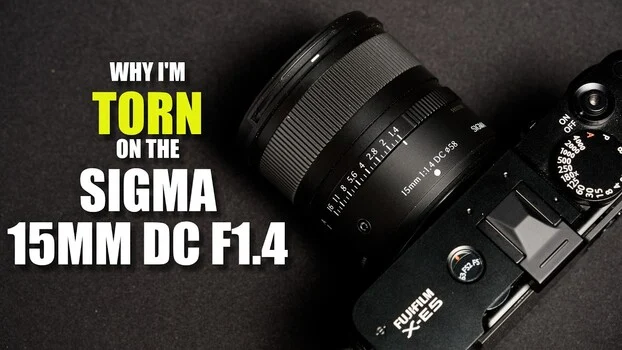
The recent evaluation of the Sigma 15mm f/1.4 DC lens by photographer Luca Petralia casts a spotlight on a burgeoning debate within the photographic community: the distinction between a lens that meticulously adheres to every technical specification and one that truly inspires the user through its unique rendering. Petralia’s findings, meticulously detailed through practical application on a Fujifilm X-E5 camera body, position the Sigma 15mm f/1.4 DC as a prime example of optical engineering prowess that, despite its undeniable excellence on paper, may leave some photographers yearning for a more distinctive, emotive visual signature. This review transcends a mere recitation of specifications, delving into the subjective realm of photographic "character" versus objective technical correction, a dichotomy increasingly relevant in an era of advanced computational lens design.
Unpacking the Sigma 15mm f/1.4 DC: Technical Acumen and Build Quality
Sigma Corporation, a prominent third-party lens manufacturer renowned for its diverse lines catering to various photographic needs, has introduced the 15mm f/1.4 DC as a noteworthy addition to its Contemporary series. This particular designation, "DC," signifies its design for APS-C crop sensor cameras, a segment of the market that demands a balance of performance, portability, and affordability. The lens immediately impresses with its physical attributes, tipping the scales at a mere 225 grams (approximately 7.9 ounces). This featherlight construction ensures that even when mounted on compact mirrorless bodies like the Fujifilm X-E5, the setup remains well-balanced, avoiding the front-heavy imbalance that can plague smaller cameras paired with larger optics. This ergonomic consideration is paramount for photographers engaged in street photography, travel, or extended shooting sessions where comfort and agility are key. For context, many standard prime lenses in this category can easily exceed 300-400 grams, making the Sigma a standout in terms of weight efficiency.
Further enhancing its appeal is the inclusion of a physical aperture ring, a feature often lauded by traditionalists and enthusiasts for its tactile control and intuitive operation. Petralia highlights this as a significant development, noting it as a first for Sigma’s Contemporary DC line, a design choice also reportedly shared with a new 12mm offering. This commitment to physical controls underscores Sigma’s understanding of photographer preferences, moving beyond purely electronic interfaces to offer a more engaging user experience. The build quality itself aligns with the high standards expected from Sigma’s Contemporary line, employing high-quality plastics that contribute to its lightweight profile without compromising durability. A critical inclusion for photographers venturing into challenging environments is the robust weather-sealing, featuring a dedicated gasket at the lens mount. This protective measure guards against dust and moisture ingress, significantly extending the lens’s utility across a broader range of shooting conditions, from misty landscapes to dusty urban environments. While specific optical formulae are often proprietary, Sigma typically employs a sophisticated arrangement of elements, including aspherical and low-dispersion glass, to achieve its optical goals. Priced competitively between $500 and $600, the Sigma 15mm f/1.4 DC presents an almost irrefutable value proposition on paper: a compact, wide-angle f/1.4 prime lens with an aperture ring and weather-sealing, all within an accessible price bracket.
Dissecting Image Quality: Clinical Precision vs. Emotional Resonance
When it comes to image quality, the Sigma 15mm f/1.4 DC largely mirrors its physical perfection, delivering what Petralia describes as a "clinical" output. This term, frequently encountered in contemporary lens reviews, denotes a lens that prioritizes objective technical metrics over subjective artistic rendering. Specifically, the lens exhibits exceptional sharpness in the center of the frame even when shot wide open at f/1.4. This level of detail resolution is maintained with remarkable consistency, so much so that stopping down the aperture to smaller values, even on high-resolution 40-megapixel APS-C sensors, yields negligible visible improvement in central sharpness. This characteristic ensures that subjects positioned centrally benefit from maximum acuity, a crucial factor for genres like portraiture, product photography, or detailed architectural shots where crispness is paramount.
The corners of the frame, a common area for optical compromises in wide-angle lenses, gradually catch up in sharpness, reaching optimal performance around f/5.6. This typical behavior for wide-angle optics is well within acceptable parameters for most photographic applications. Vignetting, the darkening of image corners, is present at wider apertures but diminishes effectively by f/2.8, requiring minimal or no post-processing correction for most users. Chromatic aberration, often manifesting as color fringing around high-contrast edges, is commendably subtle; Petralia indicates that its presence is so minor that one must actively "hunt for it" to detect it, suggesting excellent control of optical distortions, likely due to the inclusion of specialized glass elements. Perhaps surprisingly for a wide-angle lens, renowned for its typically busy or less pleasing out-of-focus areas, the Sigma 15mm f/1.4 DC delivers a remarkably smooth bokeh. This characteristic holds up even when stopped down, providing a pleasing separation between subject and background, which can be advantageous for environmental portraits or selective focus shots despite the wide field of view. The number of aperture blades, typically between 7 and 9 in Sigma Contemporary lenses, likely contributes to this smooth rendering.
However, it is precisely this technical perfection that leads to Petralia’s singular, yet profound, reservation: the images produced, while technically correct and faultless, "don’t speak to your soul." This sentiment encapsulates the core of the ongoing debate surrounding modern lens design. The autofocus performance of the lens is reported to be robust and reliable, utilizing a stepping motor (STM) or similar linear motor often found in Sigma’s contemporary line for fast, quiet, and precise focusing. Any instances of missed shots observed during continuous shooting modes were attributed by Petralia to the Fujifilm camera body itself, rather than the lens, a conclusion drawn from similar performance patterns observed with other lenses tested on the same system. This suggests that the Sigma’s autofocus motor and optical elements are well-optimized for speed and accuracy within the limitations of the camera’s AF system.
The Philosophical Divide: Character Versus Clinical Correction
Petralia’s insightful framing of the Sigma 15mm f/1.4 DC’s output resonates with a broader truth applicable across the entire photographic lens market: the inherent difference between "character" and technical correction. Modern lens design, propelled by sophisticated optical engineering software, advanced material science (such as aspherical elements, extra-low dispersion glass, and specialized coatings), and increasingly demanding sensor resolutions, has overwhelmingly prioritized the latter. Manufacturers have become exceptionally adept at mitigating optical aberrations, flattening field curvature for consistent sharpness across the frame, and delivering edge-to-edge sharpness with unprecedented consistency. This pursuit of objective perfection is precisely why a growing number of contemporary prime lenses are characterized as "clinical."
Historically, lenses often possessed distinctive optical "flaws" – unique bokeh patterns (e.g., swirly or cat’s eye), specific flare characteristics (e.g., rainbow or ghosting), subtle vignetting, or a particular micro-contrast rendition – that, while technically imperfect, contributed to a unique visual signature. These imperfections were often embraced by artists, becoming integral to their photographic style, particularly in the film era and early digital days when post-processing tools were less sophisticated. The advent of digital photography and the subsequent exponential increase in sensor pixel density, with cameras now routinely featuring 24-40+ megapixels in APS-C, coupled with the ubiquity of powerful post-processing software capable of correcting many optical deficiencies, shifted the design paradigm. The emphasis moved towards delivering a clean, neutral, and highly resolved base image, leaving artistic interpretation largely to the photographer in post-production. This approach is often driven by market demand for versatility and the desire to create a "perfect" canvas for digital manipulation.
The implications for photographers making purchasing decisions are significant. The practical question becomes: what is the intended purpose of the image? A lens engineered for maximum technical correction, like the Sigma 15mm f/1.4 DC, provides a clean, predictable file that behaves consistently across various shooting scenarios. This reliability and neutrality make it an ideal choice for documentation, travel photography, photojournalism, scientific imaging, or daily shooting where accuracy, sharpness, and a faithful rendition of reality are paramount. Photographers using such lenses can point and shoot with confidence, trusting the result to be optically sound and easily manipulated in post-processing without fighting inherent optical quirks. This approach aligns well with professional workflows where consistency and a neutral starting point are highly valued.
Conversely, a lens imbued with more optical "personality" or "character" trades some of that technical consistency and neutrality for a more distinct, often less predictable, rendering. This might manifest as a swirly bokeh, unique flare artifacts, specific color shifts, or a particular "glow" that is difficult to replicate artificially. Such lenses are often sought after by photographers who prioritize a specific aesthetic or a vintage feel directly from the optical properties. Examples include classic Leica lenses, or modern lenses intentionally designed with a specific artistic output in mind, sometimes incorporating older optical formulas or unique element arrangements. The choice between these two philosophies is not one of right or wrong, but rather a reflection of individual artistic intent and practical photographic needs. Understanding this fundamental distinction before investing in a lens can prevent the disappointment of acquiring a technically perfect piece of glass only to find its output lacks the emotional depth or unique visual flair one secretly desired.
Chronology and Context: Sigma’s Position in a Evolving Market
The release and reception of lenses like the Sigma 15mm f/1.4 DC can be contextualized within the broader evolution of the photographic lens market, particularly for mirrorless APS-C systems. While the specific announcement date for a "15mm f/1.4 DC" is not widely publicized at the time of this report, its description
