
 By admin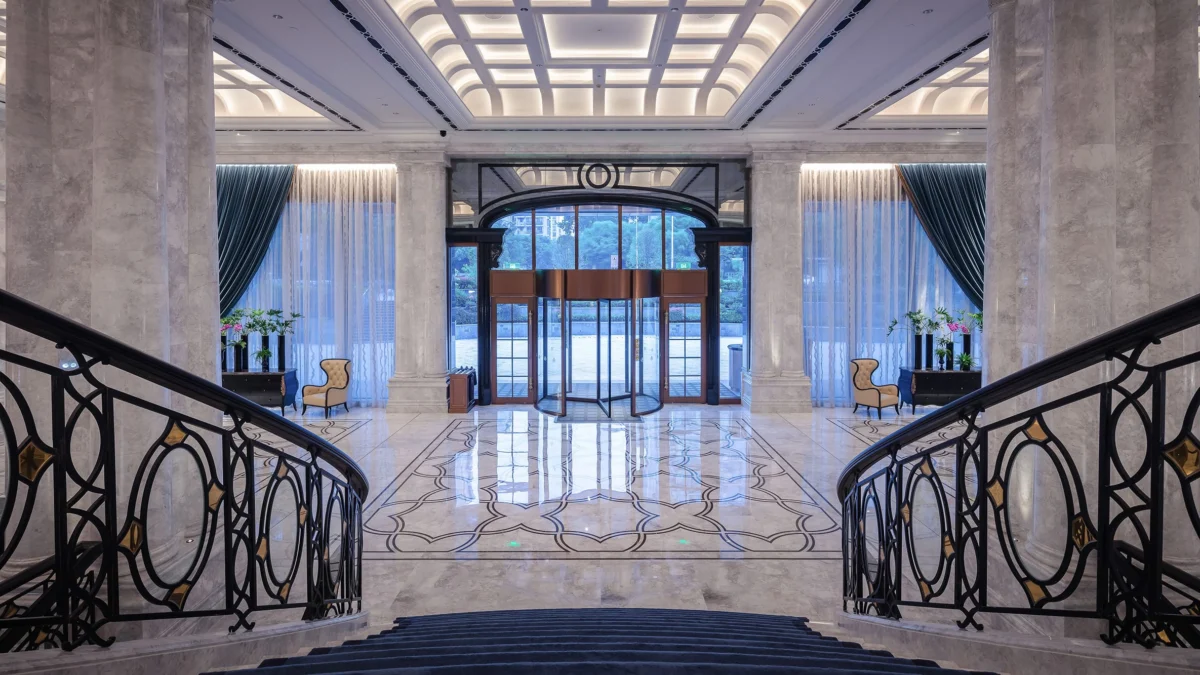
In the competitive landscape of global five-star hospitality, the architectural narrative begins the moment a guest crosses the threshold, and in the most prestigious establishments, that narrative is written in polished stone. A flawless marble lobby serves as more than a mere entryway; it is a silent ambassador of brand standards, signaling a level of hygiene, attention to detail, and opulence that guests expect from a premium price point. However, maintaining the mirror-like elegance of these surfaces is a complex logistical and chemical challenge, requiring a disciplined intersection of high-end machinery, specialized chemistry, and precision timing. Because marble is a natural, porous material, it is far more vulnerable to the rigors of high-traffic environments than its solid appearance suggests.

The Geology and Vulnerability of Luxury Surfaces
To understand the rigors of hotel floor maintenance, one must first understand the material. Marble is a metamorphic rock composed primarily of recrystallized carbonate minerals, most commonly calcite or dolomite. Because it is calcite-based, marble is chemically sensitive to acids. On the pH scale, any solution falling below 7.0 can cause "etching"—a chemical reaction that eats away at the surface of the stone, leaving behind dull, hazy spots that cannot be simply washed away.
In a luxury hotel environment, the threats are constant. Tracked-in silica and grit from the street act as a high-grit sandpaper under the pressure of rolling luggage wheels and heavy foot traffic. Without a rigorous maintenance program, a newly polished marble floor can lose its reflective clarity in as little as 48 to 72 hours of peak operation. This necessitates a tiered approach to care that distinguishes between daily preventative maintenance, periodic gloss restoration, and long-term structural refinishing.

The Chronology of Five-Star Floor Care
The maintenance of a luxury lobby is a 24-hour operation, structured to minimize guest disruption while maximizing aesthetic output. The industry standard follows a specific chronological cycle:
1. The Preventative Layer (Ongoing):
The first line of defense is the management of "walk-off" mats at every entrance. Data from the International Sanitary Supply Association (ISSA) suggests that 80% of the soil entering a building is tracked in on the shoes of entrants. Luxury properties typically utilize recessed matting systems designed to trap 90% of grit before it reaches the marble. Throughout the day, staff perform "micro-maintenance" using microfiber dust mops to remove abrasive particles before they can be ground into the stone.

2. The Nightly Restoration (10:00 PM – 6:00 AM):
The most intensive work occurs during the "third shift." When lobby traffic reaches its lowest point, crews deploy auto-scrubbers and high-speed burnishers. This phase utilizes neutral-pH cleaners that lift oils and proteins without reacting with the calcium in the stone. To maintain the high-gloss "wet look," technicians use specialized pads—often infused with microscopic industrial diamonds—to mechanically smooth the surface at high rotations per minute (RPM).
3. Periodic Diamond Grinding (Annual or Bi-Annual):
Over time, even the best nightly care cannot prevent deep scratches or cumulative etching. At this stage, hotels undergo full restoration. This involves a wet-sanding process using progressively finer diamond-impregnated pads, moving from a coarse 50-grit to a mirror-finishing 3,000-grit or higher. This process removes a microscopic layer of the stone, revealing a fresh, unblemished surface.

The Strategic Supplier Landscape
Luxury hotels do not maintain these standards in a vacuum; they rely on a sophisticated network of distributors and service providers. The choice of a supplier often dictates the efficiency and cost-effectiveness of the entire maintenance program.
Imperial Dade: The National Powerhouse
Following its landmark 2026 merger with BradyPLUS to form Imperial Brady, Imperial Dade has solidified its position as a primary single-source provider for large-scale hospitality groups. With over 130 distribution locations and approximately $10 billion in annual revenue, the company offers a massive catalog of floor equipment and chemicals. For multi-property hotel groups, Imperial Dade provides the advantage of standardization. By using the same neutral-pH chemicals and burnishing pads across an entire portfolio, a brand can ensure that a lobby in New York maintains the exact same reflective index as one in Los Angeles. However, the scale of such a large distributor sometimes means that the highly specialized, boutique needs of rare stone varieties may require additional third-party expertise.

Nassco: The Regional Service Specialist
Based in the Midwest, Nassco represents a different model: the service-integrated distributor. Established in 1955, Nassco does more than sell equipment; they maintain it. For a luxury hotel, the "uptime" of a floor scrubber is critical. If a machine breaks down at midnight, the lobby will look dull by morning. Nassco’s model of providing in-house repair and maintenance for the machines they sell—and even those they do not—offers a layer of operational security that national catalog-based distributors often struggle to match. This "life-cycle" approach to equipment helps hotels manage the total cost of ownership rather than just the initial purchase price.
4M Building Solutions: The Outsourced Labor Model
For many properties, the challenge is not the machine, but the person operating it. 4M Building Solutions, a major janitorial service contractor, manages over 4,000 team members cleaning 125 million square feet daily. Hotels often turn to 4M when they prefer to outsource the entire floor-care outcome. This shifts the burden of training, shift management, and quality control to the contractor. While this provides predictable monthly costs, it requires a high degree of trust, as the hotel surrenders direct control over the specialized techniques used on their expensive marble assets.

Guest Supply: The Integrated Amenity Partner
As a subsidiary of Sysco, Guest Supply is a ubiquitous name in the hotel industry, though their primary focus is on guest-room amenities and linens. Their role in floor care is typically supportive, providing the everyday cleaning consumables and housekeeping supplies that surround the lobby operation. While they do not specialize in heavy-duty diamond grinding machinery, their global distribution network makes them an essential partner for the "daily layer" of maintenance chemicals and microfiber tools used by the daytime housekeeping staff.
Economic Analysis: Buy, Lease, or Outsource?
The financial decision-making behind marble maintenance is driven by the "cost per square foot" metric. High-speed burnishers and auto-scrubbers represent a significant capital expenditure, often ranging from $5,000 to $15,000 per unit.

- Direct Ownership: Properties with high-traffic marble often find that owning equipment and training in-house staff is the most cost-effective long-term strategy, provided they have a partner like Nassco for repairs.
- Leasing: This allows hotels to access the latest "quiet-mode" technology—essential for 24-hour operations—without the depreciation risks of ownership.
- Service Contracts: Outsourcing to firms like 4M is preferred by properties looking to minimize their internal labor footprint, though it typically carries a 15-20% premium over in-house management.
The Impact of Technology and Sustainability
The future of marble maintenance is increasingly defined by two factors: robotics and green chemistry. Leading properties are beginning to pilot autonomous floor scrubbers that use LIDAR and AI to navigate lobbies overnight. These machines provide a level of consistency that human operators cannot match, ensuring that every square inch of stone receives exactly the same number of passes at the same pressure.
Simultaneously, the "Green Hotel" movement is pushing suppliers to move away from traditional wax-based coatings. In the past, many hotels "cheated" by applying a wax finish over dull marble to create a temporary shine. Modern five-star standards have moved toward "mechanical polishing," which uses only water and diamond pads. This eliminated the need for harsh chemical strippers and aligns with the sustainability goals of brands like Marriott, Hilton, and Hyatt.

Implications for the Hospitality Industry
The maintenance of marble is a microcosm of the luxury hospitality industry’s broader challenge: the constant battle against entropy. As global travel continues to expand, with the luxury hotel market projected to grow significantly through the end of the decade, the pressure on physical infrastructure will only increase.
A dull floor is more than a cleaning failure; it is a breach of the "luxury contract" with the guest. By integrating advanced chemistry from suppliers like Imperial Dade, localized service from partners like Nassco, and disciplined labor strategies from contractors like 4M, five-star properties ensure that their first impression remains as enduring as the stone itself. The "mirror-bright" lobby is not an accident of nature; it is a triumph of industrial discipline, proving that in the world of high-end hospitality, excellence truly begins from the ground up.
