
 By admin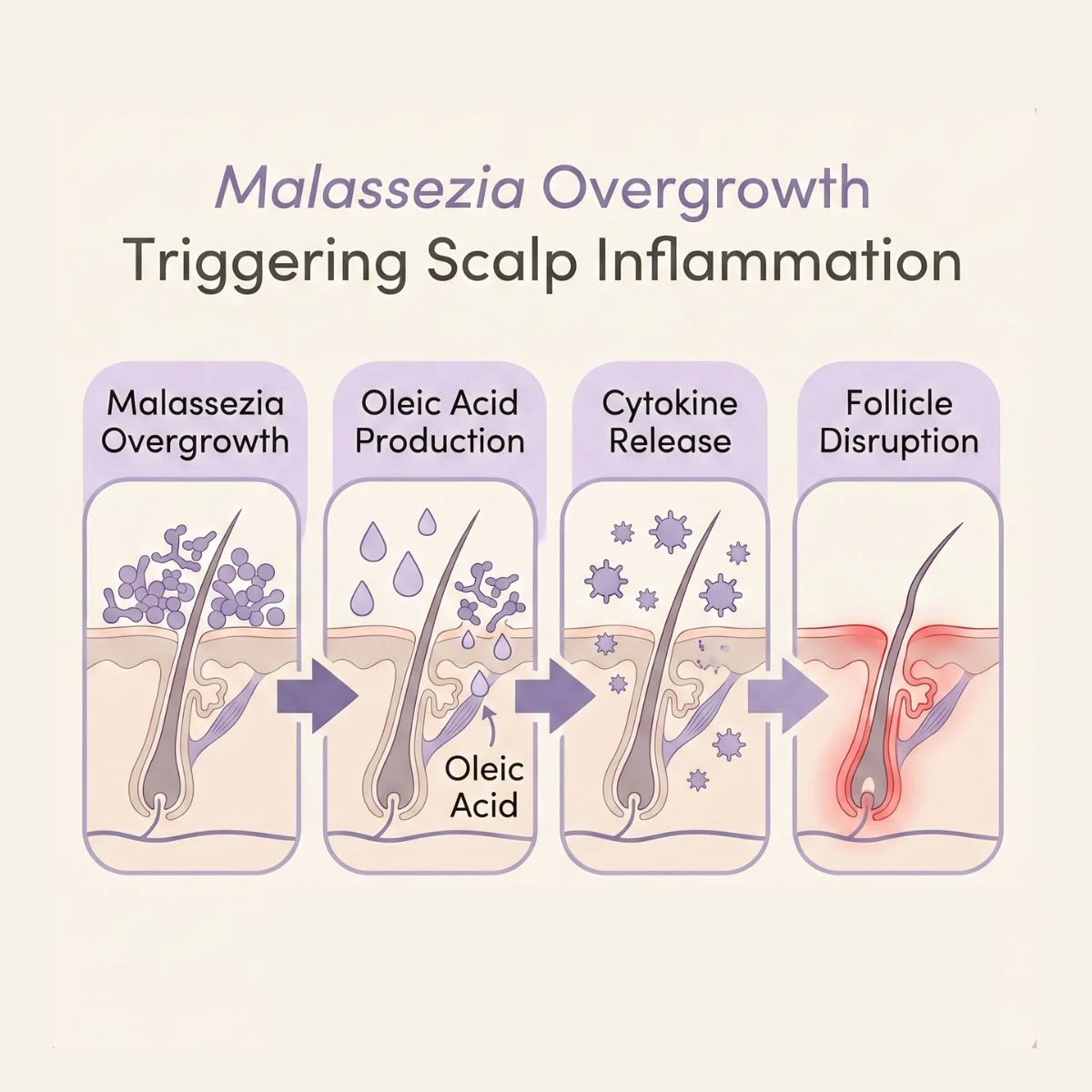
The scalp microbiome, an intricate and largely unseen ecosystem of bacteria, fungi, and other microorganisms residing beneath the surface of our skin, is emerging as a critical factor in regulating hair growth, sebum production, and inflammatory responses. As scientific understanding of this complex environment deepens, new haircare strategies are being developed to address imbalances that can manifest as common scalp issues and even contribute to hair loss. This evolving field is paving the way for innovative treatments, including probiotic, prebiotic, and postbiotic shampoos, aimed at restoring follicular health at its source.

The human body hosts a diverse array of microbial communities on its various surfaces, and the scalp presents a particularly rich and complex habitat. Unlike drier skin areas, the scalp is characterized by a high density of sebaceous glands, which produce sebum—a lipid-rich substance that creates a warm, nutrient-abundant environment favored by specific microorganisms. This environment directly influences the hair growth cycle, how hair follicles respond to hormonal fluctuations and styling products, and the overall comfort and health of the scalp. When this delicate microbial balance is disrupted, the consequences can range from visible issues like dandruff and excessive shedding to persistent, hard-to-treat scalp irritation.
A landmark study published in Frontiers in Cellular and Infection Microbiology, analyzing the scalp microbiome of 140 women, identified Cutibacterium acnes as a significant marker for healthy scalp conditions. Concurrently, the research revealed that elevated levels of Staphylococcus epidermidis were associated with dandruff, a finding that challenged previous assumptions of its neutral role. This research underscores the intricate interplay of microbial species and their impact on scalp health.

Microbial Signatures of Scalp Conditions
The microbiome’s composition can vary significantly across different scalp conditions, each with its unique microbial fingerprint. Understanding these variations is key to targeted treatment:

- Healthy Scalp: Characterized by a balanced presence of Cutibacterium, Staphylococcus epidermidis, and low levels of Malassezia. This equilibrium fosters an optimal environment for the hair growth cycle, with no flaking or itching.
- Dandruff/Mild Seborrheic Dermatitis: Marked by an overgrowth of Malassezia species (M. restricta, M. globosa) and elevated S. epidermidis. Visible signs include white or yellow flakes and mild itching, which can lead to chronic inflammation and accelerated hair shedding.
- Seborrheic Dermatitis: This more severe condition involves significant dysbiosis, with severe Malassezia and Staphylococcus imbalances, and often an elevation of Aspergillus. It presents as greasy, yellowish plaques and redness, posing a risk for telogen effluvium due to follicle irritation.
- Androgenetic Alopecia (AGA): Research in mSystems (American Society for Microbiology) has linked AGA to reduced microbial diversity and disrupted age-related microbiome progression. A composite score, the Microbial Index of Scalp Health (MiSCH), has shown potential in distinguishing AGA patients from controls and even predicting severity. This suggests dysbiosis may exacerbate DHT-driven follicle miniaturization.
- Alopecia Areata: Characterized by an increase in Staphylococcus caprae and altered bacterial balance, this autoimmune condition is increasingly linked to immune dysregulation influenced by microbial imbalances. It manifests as sudden, patchy hair loss.
Scalp Dysbiosis: The Link to Hair Loss
The concept of scalp dysbiosis, a disruption in the microbial equilibrium, is increasingly implicated not only in common scalp ailments but also in hair loss itself. Chronic low-grade inflammation stemming from dysbiotic conditions can interfere with normal hair cycling, a phenomenon increasingly documented as microbiome-associated telogen effluvium. For individuals experiencing both scalp dysfunction and shedding, addressing the follicular environment is as crucial as employing topical hair loss treatments.

A study published in FEMS Yeast Research identified Malassezia and Aspergillus as key fungal biomarkers for seborrheic dermatitis, while Staphylococcus and Pseudomonas served as bacterial markers. This highlights the complex microbial shifts that occur in diseased states.
Factors Disrupting the Scalp Microbiome

Several common haircare practices and lifestyle factors can push the scalp ecosystem towards dysbiosis:
- Over-cleansing: Strips the scalp of its natural oils and beneficial microbes.
- Product Overload: Buildup of styling products and harsh chemicals can disrupt the microbial balance.
- Antibiotic Use: Can indiscriminately kill beneficial bacteria, leading to an imbalance.
- Chronic Stress: Has been shown to impact the gut microbiome, which can have downstream effects on other microbial communities, including the scalp.
- Harsh Haircare Ingredients: Sulfates, parabens, and certain alcohols can be detrimental to the scalp microbiome.
- Environmental Factors: Pollution and UV exposure can also play a role.
- Hormonal Changes: Particularly during perimenopause and menopause, changes in sebum production can alter the scalp environment.
The Rise of Probiotic, Prebiotic, and Postbiotic Shampoos

In response to the growing understanding of scalp microbiome health, a new generation of haircare products has emerged, leveraging probiotics, prebiotics, and postbiotics. These ingredients aim to directly support or rebalance the scalp’s microbial ecosystem.
A systematic review and meta-analysis published in Heliyon analyzed eight clinical trials on probiotic use for hair loss and dandruff. The findings were encouraging: probiotic supplementation relieved scalp itching in 73.1% of participants over 12 weeks. Notably, the Lactobacillus paracasei NCC2461 ST11 strain demonstrated significant improvements in dandruff scaling and itching perception within just four weeks.

Further research in BMC Microbiology investigated a shampoo containing heat-killed Lacticaseibacillus paracasei GMNL-653. Over a five-month period, participants experienced decreased dandruff, reduced sebum secretion, and a notable increase in hair growth, with measurable upregulation of follicle growth factors like IGF-1, VEGF, and keratinocyte growth factor.
It is important to note that live probiotics often cannot survive the typical conditions of shampoo formulations (e.g., pH, surfactant exposure, shelf life). Therefore, many "probiotic" shampoos utilize cellular wall fragments, lipoteichoic acid, or metabolites derived from probiotic strains – collectively termed postbiotics. These postbiotics can offer significant benefits by reinforcing the skin barrier and providing anti-inflammatory compounds.

Understanding the Terminology: Prebiotics, Postbiotics, and Probiotics
- Probiotics: Live microorganisms that, when administered in adequate amounts, confer a health benefit on the host. In haircare, their role is often indirect due to formulation challenges.
- Prebiotics: Non-digestible ingredients that selectively stimulate the growth and/or activity of beneficial bacteria already present on the scalp. Think of them as food for your beneficial microbes. Examples include inulin, xylitol, and fructooligosaccharides (FOS).
- Postbiotics: Bioactive compounds or metabolic byproducts produced by microorganisms during fermentation. These can include organic acids, peptides, and other beneficial molecules that directly support skin health and barrier function. Examples include lactobacillus ferment, bifida ferment lysate, and various fermentation extracts.
The most evidence-backed approach in scalp care often involves a combination of a prebiotic foundation to create a favorable environment and postbiotic actives to reinforce barrier function and provide anti-inflammatory effects. Ingredients like bifida ferment lysate, lactobacillus ferment, inulin, or saccharomyces ferment filtrate are key indicators of a microbiome-focused formulation.

Emerging Products in Scalp Microbiome Care
Several products are gaining attention for their focus on scalp microbiome health:

- Masil 5 Probiotics Scalp Scaling Shampoo: Combines five probiotic strains with salicylic acid for exfoliation. It aims to deep-clean follicles and balance the microbial environment, offering a clarifying effect without excessive dryness.
- 107 Beauty SCALP PURIFYING Microbiome Shampoo: Features a comprehensive prebiotic and probiotic complex, including ingredients like inulin, xylitol, and Lactobacillus ferment. Its fragrance-free formula and addition of salicylic acid make it suitable for sensitive scalps prone to chronic dandruff or seborrheic dermatitis.
- Briogeo Scalp Revival Charcoal + Tea Tree Micro-Exfoliating Shampoo: Utilizes Binchotan charcoal to absorb buildup and tea tree oil for mild antimicrobial action. While effective for product buildup and mild itching, the tea tree oil’s broad-spectrum activity necessitates judicious use to avoid stripping beneficial microbes.
- Kérastase Symbiose Anti-Dandruff Moisturizing Shampoo: Blends probiotic fractions with piroctone olamine, a proven antifungal agent. This creamy, moisturizing formula is designed for dry or sensitized scalps experiencing dandruff, offering a gentle yet effective treatment.
- The Rootist Balancing Scalp Shampoo: Formulated with fermented botanical extracts and a postbiotic complex, this shampoo focuses on supporting the scalp’s natural pH range. It’s positioned as a gentle maintenance or recovery product for those looking to restore scalp flora diversity.
- MDhair Restore Shampoo: A dermatologist-formulated shampoo combining biotin, saw palmetto, and probiotic lysates. It targets both scalp health and DHT-associated thinning, offering a dual-action approach for individuals experiencing concurrent scalp imbalance and pattern hair loss.
Building a Microbiome-Friendly Scalp Routine
Establishing a healthy scalp microbiome involves a holistic approach:

- Mindful Washing Frequency: The ideal frequency varies by individual, but avoiding over- or under-washing is crucial. Most people benefit from washing every 2-3 days with a gentle, pH-balanced, sulfate-free formula.
- Gentle Cleansing: Opt for sulfate-free shampoos with a pH close to the scalp’s natural acidity (4.5-5.5). Harsh detergents can strip the acid mantle and disrupt the delicate microbial balance.
- Targeted Treatments: Incorporate prebiotic and postbiotic treatments to nourish beneficial microbes and support the skin barrier.
- Diet and Lifestyle: A balanced diet rich in antioxidants and omega-3 fatty acids, along with stress management techniques, can positively influence the gut-skin axis and, by extension, the scalp microbiome.
- Scalp Massage: Regular scalp massage can improve circulation, which is beneficial for follicle health and nutrient delivery.
The Broader Implications for Hair Health
The scientific exploration of the scalp microbiome represents a paradigm shift in understanding and treating hair loss and scalp disorders. By addressing the root cause—an imbalanced microbial ecosystem—new therapeutic avenues are opening. For individuals experiencing visible thinning, the integration of microbiome-focused scalp care with appropriate hairstyles, such as bob haircuts for fine hair or medium-length layered styles, can offer both cosmetic improvement and long-term follicular health.

The relationship between scalp dysbiosis and hair loss is becoming increasingly clear. Chronic inflammation, often triggered by microbial imbalances like Malassezia overgrowth, can shorten the hair growth cycle and lead to conditions like telogen effluvium. Furthermore, studies suggest that microbial disruptions may be systemic to the scalp, even in areas not visibly affected by hair loss, as seen in androgenetic alopecia.
Future Directions and Clinical Relevance

The field of scalp microbiome research is rapidly evolving, with ongoing studies exploring the gut-scalp axis and the potential of oral probiotics for conditions like alopecia areata. While the evidence for topical microbiome interventions is growing, it is crucial for consumers to approach product claims with a discerning eye, understanding the scientific backing behind ingredients.
For persistent scalp conditions or significant hair loss, consulting a dermatologist or trichologist remains paramount. These specialists can accurately diagnose the underlying causes and recommend a comprehensive treatment plan that may include microbiome-targeted therapies alongside established medical interventions. The journey to a healthy scalp and robust hair growth is often a long one, typically requiring a minimum of 8-12 weeks for noticeable changes in scalp condition and up to six months for visible improvements in hair density.

As research progresses, the scalp microbiome will undoubtedly play an even more significant role in personalized haircare and the development of advanced treatments for a wide range of hair and scalp concerns.
Disclaimer: This content is for informational purposes only and does not constitute medical advice. Always consult a qualified dermatologist or trichologist for persistent scalp conditions or significant hair loss. Product mentions do not constitute endorsements. Results vary based on individual scalp microbiome composition, hair type, and underlying conditions. Clinical studies referenced were conducted independently; product formulations may differ from trial compounds.
