
 By Jia Lissa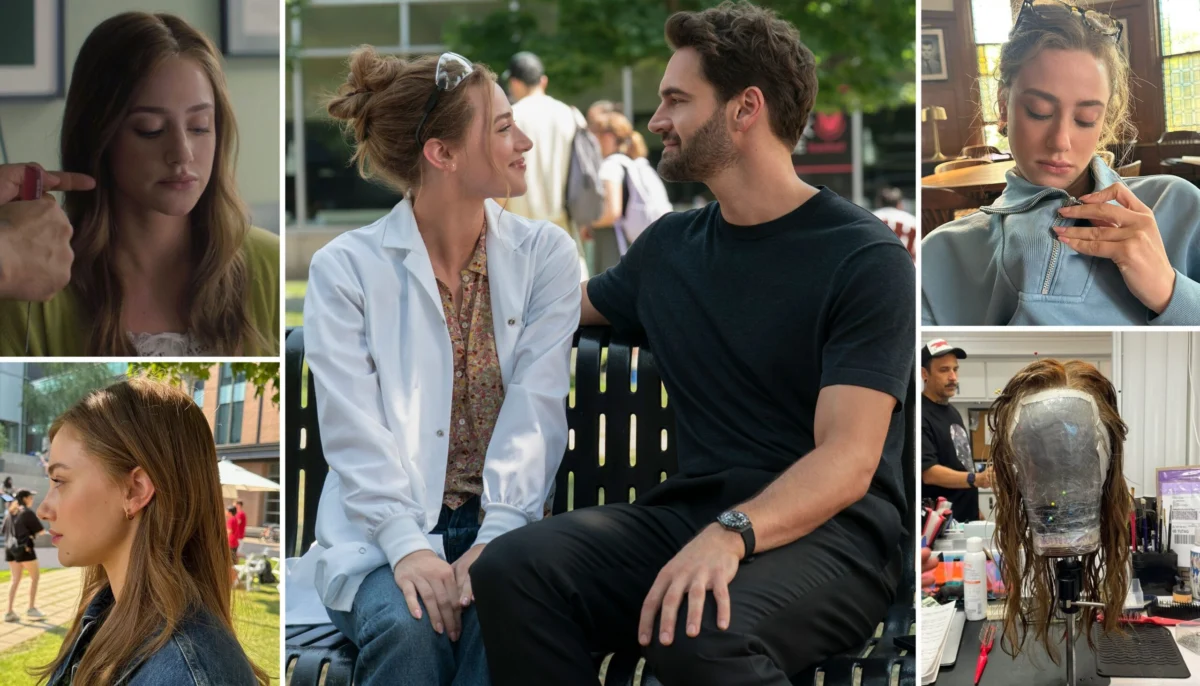
Fans of Ali Hazelwood’s immensely popular novel, The Love Hypothesis, have eagerly anticipated its cinematic adaptation, expecting all the beloved elements that made the book a bestseller: the charming fake-dating trope, a liberal dose of SPF, and the signature, emotionally charged conflicts. Many also held out hope for a subtle nod to the Star Wars fanfiction that served as the novel’s genesis. What few could have predicted, however, was the casting of Lili Reinhart, known for her long-standing portrayal of the golden-blonde Betty Cooper on Riverdale, as the protagonist Olive Smith, sporting a striking new brunette hue. This casting choice, revealed in July of the previous year, was met with considerable enthusiasm, much of which centered on Reinhart’s hair transformation. For six years, audiences had primarily seen her as a blonde, making her shift to brunette for this role a significant visual departure that immediately captured attention.
Frédéric Bélanger, the head of the film’s hair department, acknowledged the immense pressure and expectation that accompany adapting a beloved romance novel. "Everybody has a picture in their head," Bélanger remarked, referring to the internalized visualizations fans hold of these characters’ physical appearances. He elaborated that transforming Reinhart into Olive Smith was a process that extended far beyond simply outfitting her in a lab coat and sensible shoes; it involved a deep dive into character portrayal through hair.

Bélanger provided an in-depth look into Reinhart’s metamorphosis for the film, detailing how the hair styling served not only to embody Olive but also to subtly enhance the character arc of her co-star, Tom Bateman, who plays Dr. Adam Carlsen. His insights offer a fascinating glimpse into the meticulous craftsmanship that occurs behind the scenes to bring fictional worlds to life.
The Nuanced Palette of Olive Smith’s Brunette Hair
"Everybody wanted to turn Lili into a brunette," Bélanger confirmed, yet clarified that Reinhart did not permanently alter her hair for the role. The captivating brunette shades viewers see on screen are, in fact, the result of two expertly crafted wigs, meticulously designed by Bélanger and wigmaker Stacey Butterworth. This approach allowed for flexibility and ensured Reinhart’s natural hair remained undamaged.
The journey to finding the perfect shade of brunette for Olive was a rigorous one, involving multiple trials and considerations. Bélanger emphasized the importance of selecting a hue that felt authentic to the character without being jarring to the audience, especially given Reinhart’s established blonde persona. "We had to choose a level of brunette that wasn’t so dark that it looked shocking," he explained. The process commenced with the creation of a mood board, a visual compilation of ideas and inspirations that kept the book’s fanbase expectations firmly in mind. Bélanger noted that the book’s cover art featured a "red- [or] warm brown," a color the team explored extensively. They experimented with variations, including honey and chestnut browns, ultimately converging on a shade that fluidly bridged the gap between dark blonde and light brown—a hue affectionately termed "bronde" by many in the industry.

Once the ideal color was determined, the intricate process of wig construction began. Butterworth meticulously created a mold of Reinhart’s head, providing a precise base onto which individual strands of hair were painstakingly attached. This labor-intensive method ensured a natural-looking integration and a perfect fit for the actress.
Bélanger candidly discussed the inherent challenges of working with wigs, particularly in maintaining an illusion of natural hair. "Once you know someone’s wearing a wig, your eyes start looking for it, right?" he posed. The team dedicated significant attention to crucial details such as the hairline and the density of the hair, recognizing that even minor imperfections could detract from the realism. "Sometimes it can look wig-y. I think everybody was so concerned from the get-go with that," Bélanger admitted.
To further enhance the wigs’ authenticity on camera, Bélanger and Butterworth introduced variations in color, weaving in strands of different tones to create depth and dimension. They also incorporated lighter, airier fibers throughout the wigs. These were designed to move naturally with air currents, mimicking the behavior of real hair in outdoor conditions, such as during scenes set in the warmth and humidity of a campus environment or when Olive is observing her (conveniently "ripped") fake boyfriend engaged in an energetic game of ultimate Frisbee.

The Art of Wig Application: Balancing Realism and Comfort
The process of concealing Reinhart’s naturally thick hair beneath the wigs necessitated a multi-step approach, often requiring considerable tension. "I had to really work it precisely so that it disappeared," Bélanger stated, describing how he had to pull Reinhart’s hair "very, very, very tight." He was, however, acutely mindful of her comfort, ensuring the process was never painful.
This tight application, while necessary for a seamless look, occasionally caused a slight tugging sensation around the perimeter of Reinhart’s face. She humorously pointed this out, remarking, "She would be like, ‘Fred, you’re giving me a facelift. People will think I have a facelift.’" Bélanger ultimately adjusted the tension, acknowledging Reinhart’s sensitivity to the sensation. Once the wig was securely fastened with U-shaped pins, Bélanger meticulously blended the wig’s part with Kryolan Dermacolor Camouflage Creme, a product color-matched precisely to Reinhart’s scalp to achieve an undetectable transition.
Hair as a Narrative Device: Reflecting the Life of a STEM Student
In a film centered around the demanding lives of students and scientists, the styling of Olive’s hair could easily have been an afterthought. However, Bélanger approached it with deliberate care, recognizing that Olive’s hair should reflect her identity as a dedicated STEM student who spends considerable time immersed in her studies. "Olive is not the perfect girl," he asserted. "She’s a student. Students are overwhelmed. We wanted the hair to look like it could be lived in."

This philosophy translated into varied styling choices that mirrored Olive’s daily experiences. During casual, intimate moments, such as watching Love Island with her best friend Anne, Olive’s hair appears intentionally unstyled, reflecting a sense of ease and comfort. "You’re in pajamas with your best friend eating popcorn and chocolate," Bélanger mused, highlighting that in such private moments, "nobody cares." The hair was styled to deliberately appear as though she had done it herself, embodying the relatable dishevelment of a student at home.
Conversely, when Olive attends a party, her hair is styled, but with a deliberate lack of overt glamour. Bélanger painted a scenario: "She wears a beautiful red dress." He then speculated on the character’s styling choices, suggesting, "Maybe she didn’t go to the hairdresser because she’s a student. Maybe Anne did it for her." This approach underscores the film’s commitment to character authenticity, with every hair detail meticulously considered as if executed by a scientist in a laboratory, prioritizing function and realism.
The Subtle Evolution of Adam Carlsen’s Appearance
Tom Bateman’s portrayal of Dr. Adam Carlsen also underwent a subtle grooming evolution that mirrored his character’s emotional development. Initially perceived as the somewhat stern "Dr. Evil" by his students, Carlsen’s demeanor gradually softens throughout the narrative. Bélanger noted that this shift was reflected in his hair: "At the beginning, his hair was a bit stiffer," he observed. "You really see the progression of him loosening up and being more willing to be warmer. The hair translated that." This visual cue served to underscore Carlsen’s growing emotional accessibility and his burgeoning connection with Olive.
_3000%2520(1).jpg)
Echoes of Fanfiction: The Star Wars Influence on the Adaptation
The narrative of The Love Hypothesis originates from fanfiction centered on Star Wars characters Kylo Ren and Rey, portrayed by Adam Driver and Daisy Ridley, respectively. This foundational element undeniably influenced the film’s creative decisions. "They created these characters thinking of these two other characters, so it had a repercussion in our decisions," Bélanger explained.
One notable decision influenced by this lineage concerned Bateman’s portrayal of Dr. Carlsen. Bélanger pointed out that the original "Dr. Evil" character in the fanfiction, as depicted on the book cover (which bore a resemblance to Adam Driver), did not sport a beard. The filmmakers debated whether a beard would be the most advantageous look for Bateman. "Is it going to be the best look for him?" Bélanger recalled the team asking themselves. "You need to always question how he is going to feel being completely clean-shaven. Because you always want people to relate and to fall in love with him as well." Ultimately, the decision was made to keep Bateman clean-shaven, aiming for a look that would foster audience connection and romantic appeal.
Interestingly, Daisy Ridley is married to Tom Bateman in real life. This personal connection presented an opportunity for a direct nod to the source material. "I know that they tried to have Daisy play a little part in there just for fans," Bélanger revealed, "For whatever reason it didn’t work out." The absence of this cameo, though unfortunate for fans, highlights the team’s efforts to integrate elements that resonated with the novel’s origins.
.jpg)
Recreating the Iconic Book Cover: A Nod to the Fans
A significant element that fans eagerly anticipated was the visual re-creation of the beloved book cover. The cover art, featuring a close-up of the two leads, has become synonymous with the novel. The film’s creative team made a concerted effort to honor this iconic image, ensuring that key visual elements were translated to the screen. The specific scene depicting Olive and Adam in a tender moment, reminiscent of the book cover’s pose, was carefully orchestrated. This deliberate inclusion served as a direct acknowledgment of the book’s dedicated fanbase and their deep connection to its visual identity, aiming to provide a moment of recognition and satisfaction for those who have followed the story from its inception. The meticulous attention to detail in recreating such a pivotal visual element underscores the production’s commitment to honoring the source material and its passionate readership.
