
 By Nila Kartika Wati
A batch of packaging board made at a mill on the Wabash River on August 6, 1945, came out radioactive, and the X-ray film stacked against it fogged after roughly two weeks in the box. This seemingly innocuous industrial anomaly, detected by a physicist at Eastman Kodak, would ultimately trace back to the most profound scientific and military achievement of the era: the Trinity atomic bomb test, conducted approximately 1,000 miles away in the New Mexico desert. The physicist, Julian H. Webb, meticulously worked backward from these mysterious spots, uncovering a truth the public was only beginning to grasp, yet chose to sit on his findings for four years before publishing them, a delay that speaks volumes about the scientific, political, and societal complexities of the nascent atomic age.
The Dawn of the Atomic Age and Its Invisible Byproducts
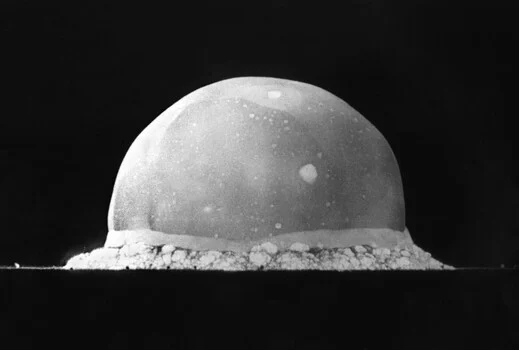
The summer of 1945 irrevocably altered the course of human history. On July 16, within the desolate expanse of New Mexico’s Jornada del Muerto desert, the United States detonated "Trinity," the world’s first atomic bomb. This monumental test, the culmination of the top-secret Manhattan Project, unleashed an unprecedented force equivalent to 21 kilotons of TNT. The initial public explanation for the blast was a mere ammunition depot explosion near Alamogordo Army Air Base. However, the true, terrifying nature of the weapon and its power became unequivocally clear with the bombings of Hiroshima on August 6 and Nagasaki on August 9. As the world reeled into the atomic age, grappling with the profound implications of nuclear warfare, it remained largely oblivious to an insidious, invisible byproduct that would spread across continents: radioactive fallout.
Simultaneously, far removed from the blast site, in the seemingly mundane realm of industrial production, the seeds of an accidental yet profound discovery were sown. Eastman Kodak, a preeminent name in photographic technology, possessed a unique vulnerability that would position it as an unwitting early detector of global nuclear fallout. Photographic emulsion, the core of film technology, functions as an exquisitely sensitive radiation detector. The silver halide grains within the emulsion are indiscriminately tripped by energy, whether it manifests as visible light, X-rays, or even a subatomic beta particle emanating from a decaying atom. Prolonged exposure to even trace amounts of radioactive material will indelibly mark sensitized film with characteristic fogging or distinct spots, a phenomenon first observed by Henri Becquerel in 1896 using uranium salts. This inherent sensitivity meant that for Kodak, ensuring the absolute purity of all materials that came into contact with its delicate products, especially packaging, was not merely a quality control measure but a commercial imperative.
Kodak’s Pre-Existing Protocol: A Hunt for Radiation in Packaging
Kodak’s preoccupation with radiation in its packaging was not a sudden response to the atomic era. The company had encountered significant commercial challenges during World War II, which had compelled it to establish robust radiation detection protocols. The wartime paper salvage program, a vital national effort to conserve resources, inadvertently introduced a pervasive contaminant into general paper supplies. Mills repurposed used paper, often incorporating stock from facilities where radium instrument dials were manufactured. The radium paint, utilized for its luminescence in gauges and watches, contained minute but potent radioactive specks. These particles could then contaminate almost any recycled paper product, crucially including the board used for photographic packaging. Film stored against such contaminated board would, over time, suffer irreversible damage.
To counteract this threat, Kodak implemented stringent quality control measures. They contracted specific mills, including one in Indiana, to produce packaging board using carefully selected, uncontaminated raw materials. This material was typically strawboard, a cost-effective, rigid paperboard manufactured from cereal straw, commonly employed as an interleaving stiffener between sheets of film. This proactive system—a dedicated "clean" supply chain coupled with established testing protocols for incoming materials—was precisely what rendered the 1945 anomaly detectable and decipherable. Kodak possessed a known baseline of material purity, sophisticated analytical methods, and expert personnel trained to identify and quantify any deviations. They were not actively searching for evidence of an atomic bomb, but their commercial necessity made them uniquely positioned to find its distant footprint.
The Unfolding Mystery: Julian Webb’s Meticulous Investigation
The first tangible signs of trouble emerged in August 1945, mere weeks after the Trinity test and the devastating atomic bombings of Japan. X-ray film sheets, typically measuring 14 by 17 inches, which had been stored in direct contact with their strawboard stiffeners, began exhibiting anywhere from ten to several hundred small, dark spots after development. More alarmingly, the radiation responsible for these blemishes had not merely affected the surface layer but had penetrated multiple sheets of film and cardboard, indicating a potent source.
Julian H. Webb, a physicist assigned to Kodak’s research laboratories in Rochester, New York, was tasked with investigating this perplexing issue. Webb was exceptionally qualified for this challenge, having spent two and a half years contributing to the Manhattan Project at both Berkeley and Oak Ridge. His invaluable experience had provided him with a profound understanding of radiation safety, measurement standardization, and monitoring techniques, equipping him with a sophisticated analytical framework.
Webb’s methodical investigation quickly eliminated the film emulsion itself as the source of contamination, shifting his focus to the packaging material. His research meticulously narrowed the fault to a specific production run of strawboard manufactured on August 6, 1945, at a mill in Vincennes, Indiana, situated on the Wabash River. The precise timing, just weeks after the Trinity detonation, provided a crucial initial clue, though its full significance would only be confirmed through Webb’s rigorous scientific analysis.
Scientific Deductions: Pinpointing a Nuclear Fingerprint
Leveraging his specialized knowledge, Webb conducted a detailed radiation survey that immediately ruled out common natural radioactive sources. The contamination emitted fairly strong beta radiation and some gamma radiation, but notably, no detectable alpha particles. This specific radiation signature was inconsistent with naturally occurring radium or uranium. Further precise measurements revealed a maximum beta energy of approximately 0.6 MeV and a decay period of roughly 30 days. A limited radiochemical analysis, challenging given the minute quantities, indicated that the material belonged to the rare earth series of elements.
These precise, quantitative measurements provided the decisive link. The observed values were highly compatible with cerium-141, a well-known fission product with a half-life of about 32.5 days. Cerium-141, a radioisotope of the rare earth element cerium, does not exist in significant natural abundance on Earth and certainly does not originate from agricultural fields in Indiana. Its presence unequivocally signaled nuclear fission—the fundamental process powering nuclear reactors and atomic bombs. While Webb, in his published findings, carefully stated only compatibility with cerium-141 rather than absolute isotopic certainty, the implications were unmistakable: this was a byproduct of an atomic explosion.
Tracing the Fallout: From Desert to Midwest Waterways
To bolster his hypothesis, Webb sought additional corroborating evidence. His investigation soon uncovered a second instance of contaminated strawboard, this time originating from a mill in Tama, Iowa, hundreds of miles from the Indiana site and drawing water from a different watershed. This discovery was pivotal. If the contamination were localized to the straw itself, two geographically disparate mills would not exhibit identical patterns. Webb directly tested the straw and confirmed it was not the carrier. Even straw that had been stored indoors, shielded from external elements, yielded contaminated board if processed at the affected mills.
The conclusive common denominator, Webb deduced, was the process water utilized by both mills. Both facilities drew their water from river systems that had experienced recent, heavy rainfall. Webb observed a direct correlation: increased radiation levels in the board corresponded to periods of significant local precipitation. The radioactive material, propelled by high-altitude winds from New Mexico and subsequently washed down by rain, had settled into these river systems. It was then filtered out of the pulp during the manufacturing process and pressed into the strawboard that Kodak subsequently used for its sensitive photographic products. This established a clear, unsettling pathway for airborne radioactive debris to infiltrate industrial supply chains across a vast geographical expanse.
Timeline and Delayed Disclosure: A Scientific and Political Landscape
Julian Webb meticulously documented his findings within months of the initial discovery in August 1945. Yet, it was not until four years later, in 1949, that his groundbreaking paper, "The Fogging of Photographic Film by Radioactive Contaminants in Cardboard Packaging Materials," was published in the esteemed journal Physical Review. In this publication, he unequivocally named the source: "The most likely explanation of the source of this radioactive contaminant appears to be that it consisted of wind-borne radioactive fission products derived from the atom-bomb detonation in New Mexico on July 16, 1945."
The four-year delay in public disclosure was not due to a lack of awareness within relevant scientific or governmental circles. As early as 1947, a consultant from Los Alamos—the very birthplace of the atomic bomb—contacted Webb directly, seeking detailed information about his findings. This interaction strongly indicates that the nascent U.S. weapons program was cognizant of Kodak’s measurements long before Webb’s research entered the public scientific domain. While Webb’s delay undoubtedly allowed for thorough verification and scientific rigor, it also underscores the pervasive secrecy and sensitivity surrounding atomic weapons information in the immediate post-war era.
It is crucial to correct a common historical misconception: Kodak did not "discover" the atomic bomb. The weapon’s existence became public knowledge with the bombing of Hiroshima on August 6, 1945—the very day the contaminated board was produced. What Kodak’s discovery profoundly established, however, was the far-reaching geographical spread of atomic bomb debris. A single 21-kiloton device, detonated in the New Mexico desert, had deposited measurable fission products in rainfall over the
