
 By Jia Lissa
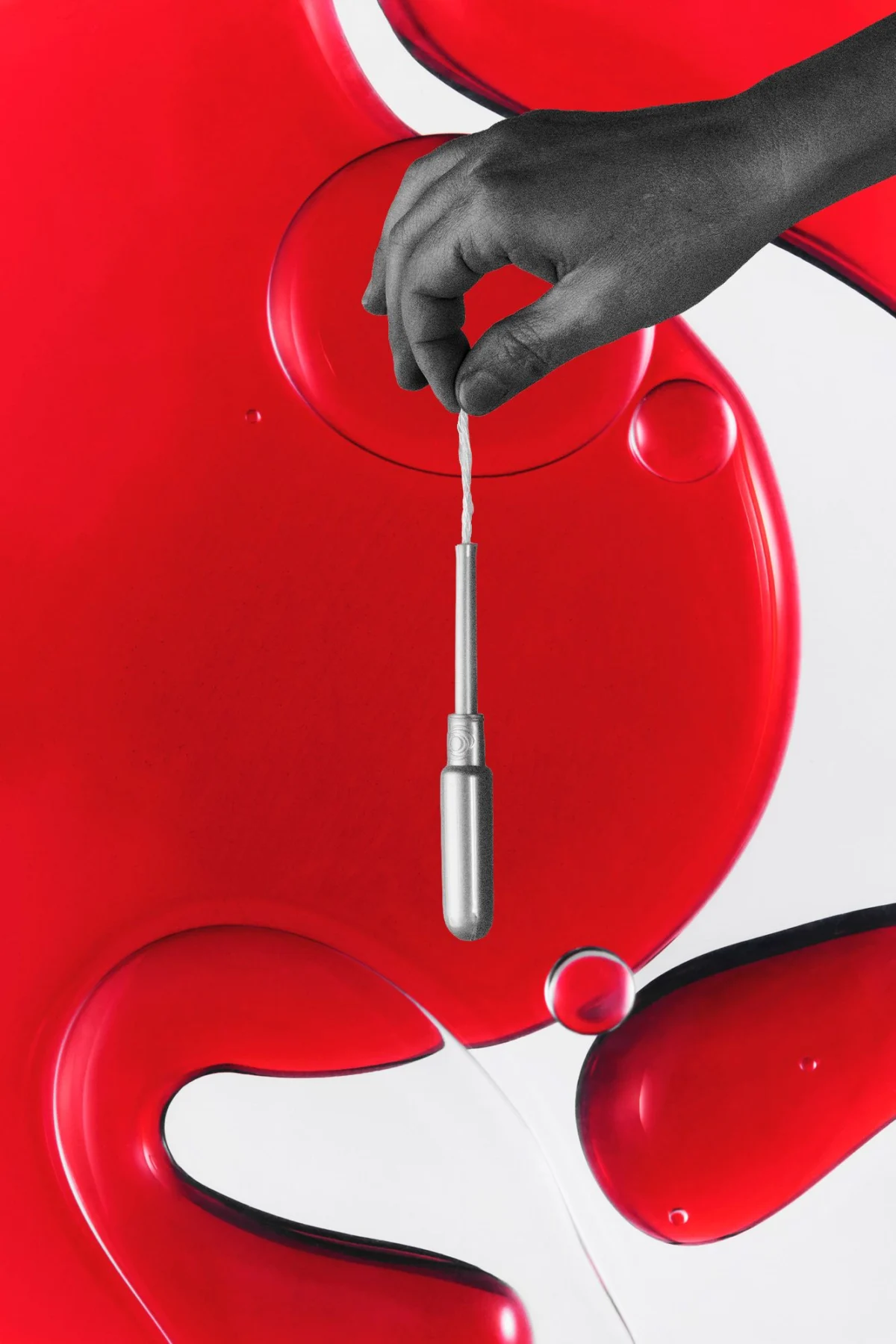
Every month, nearly two billion people worldwide experience menstruation, a biological process that expels approximately six tablespoons of menstrual blood over three to seven days. Traditionally, this fluid, along with discarded tampons and pads, has been treated as waste. However, a growing consensus among researchers is that this "menstrual effluent" holds a wealth of unique health information, unparalleled by any other bodily fluid. This untapped resource, rich with uterine lining, cervical and vaginal secretions, and vital stem cells, is poised to revolutionize women’s health diagnostics and research.
Unlocking a Biological Treasure Trove
Scientific inquiry has revealed that menstrual blood is a complex biological specimen containing over 1,000 distinct proteins, with a remarkable 385 of these proteins not found in peripheral blood. "There’s a whole host of potentially really important information about the health of the uterus itself and also our body’s broader health and wellbeing," explains Dr. Gemma Sharp, PhD, a professor of epidemiology at the University of Exeter and director of the Menarche Menstruation Menopause and Mental Health Consortium. Dr. Sharp is a key figure in efforts to establish large menstrual fluid biobanks, a critical component of research aimed at understanding and treating heavy menstrual bleeding.
This surge of interest in menstrual health is largely a response to its historical neglect in research, clinical practice, and societal discourse. Dr. Sharp notes, "I was really interested to find out why that is. There’s just this huge clinical gap because we haven’t been doing this type of research before." This oversight can be partly attributed to the historical male-centric baseline of healthcare. Women were frequently excluded from clinical trials until 1993, when the National Institutes of Health’s Revitalization Act mandated their inclusion in federally funded studies. Consequently, understanding the impact of treatments, medications, and diseases on women has been a relatively recent endeavor, leaving a significant amount of catching up to do.
Overcoming Historical and Societal Hurdles
Beyond the historical exclusion from research, menstrual health research faces significant hurdles, including a pervasive lack of education, even among medical professionals. Ridhi Tariyal, co-founder of NextGen Jane, a women’s healthcare and biotech company collecting health data via mailed-in menstrual blood samples, recounts a striking encounter during an early pitch to a male oncologist. She found herself explaining fundamental aspects of menstruation, such as the frequency of tampon changes, to a physician who, despite his expertise, lacked basic knowledge of menstrual hygiene. This highlights a critical gap in medical training and lived experience regarding a fundamental aspect of female biology.
Compounding these challenges is the deeply entrenched "ick factor" associated with menstrual blood. Christine Metz, PhD, head of medicinal biochemistry and professor at the Feinstein Institute for Medical Research, observes, "It has always had a social stigma. I don’t know of any culture other than the indigenous population that embraces menstrual blood. Everyone else says, ‘we don’t talk about that stuff.’" This societal reticence, often rooted in shame and cultural taboos, has historically relegated discussions and research around menstruation to the periphery. The portrayal of periods in popular culture, from the exaggerated horror of "Carrie" to the early, tentative mentions on television, often reinforced negative associations, though recent years have seen a positive shift with more open and nuanced depictions in media and evolving product innovations.
The Forensic Origins of Menstrual Blood Research
The initial scientific impetus to analyze menstrual blood did not originate in women’s health but in crime scene investigations. In 2012, forensic scientists at New York City’s Office of the Chief Medical Examiner, led by Donald Siegel, sought to develop methods to disprove the "menstrual blood defense." This defense, employed in legal cases, claimed that bloodstains at a crime scene were from menstruation rather than a violent act. The goal was to differentiate menstrual blood from systemic blood samples.
The groundbreaking work by Siegel and his colleagues established the unique protein profile of menstrual blood. This discovery opened the door to the next critical question: could menstrual blood offer a more convenient or insightful way to detect markers typically measured through conventional blood tests?
Transforming Diagnostics: From Diabetes to HPV and Beyond
One of the earliest advancements in this field came with the measurement of Hemoglobin A1C, a key indicator for diabetes management. Traditionally, individuals with diabetes require frequent venous blood draws or fingerstick tests. Qvin, a health tech company founded in 2014, developed the Q-pad, a menstrual pad with a removable collection strip. In 2024, the Q-pad received FDA approval for measuring and monitoring Hemoglobin A1C levels, offering a non-invasive method for tracking blood sugar in individuals with diabetes or prediabetes.
While Qvin’s innovation marked a significant step, the focus has increasingly shifted towards applications addressing more acute unmet needs. The detection of Human Papillomavirus (HPV) using menstrual blood presents a compelling example. Current HPV testing requires an in-person evaluation with a speculum, a procedure many find uncomfortable. Qvin has since pivoted its diagnostic pads for HPV testing, receiving approval from Thailand’s Food and Drug Administration.
The Endometrium’s Echo: Unveiling Reproductive Health
A substantial portion of current research centers on what menstrual blood can reveal about reproductive organs and associated conditions. Irma Vlasac, a researcher at the Geisel School of Medicine at Dartmouth, explains, "Menstrual blood is distinct in that it’s a proxy for the endometrium, the innermost lining of the uterus, so we get insights into the uterus itself." This includes identifying uterine-specific immune cells and potentially gaining better insights into conditions like endometriosis and reproductive tract cancers than traditional blood samples can provide.
Dr. Metz’s long-standing research into inflammation has also found a powerful new avenue through menstrual blood. Her work, initially reliant on umbilical cords for studying endometrial and myometrial cells, now utilizes menstrual blood due to its unique biomarkers, such as urocortin 3, a protein involved in inflammation. Establishing a biobank of menstrual samples provides her team with a singular perspective on uterine health and a potentially invaluable diagnostic tool.
Revolutionizing Endometriosis Diagnosis
The debilitating condition of endometriosis, characterized by painful periods, cramping, fatigue, and fertility challenges, affects over 6 million women in the U.S. Currently, diagnosis relies on invasive surgical procedures, which are not only uncomfortable but also only detect approximately 70% of cases, according to Dr. Metz. The promise of a non-invasive diagnostic test is therefore immense.
Kelly Lacob, co-founder and CEO of Xella Health, a precision healthcare company for women, is focusing her venture’s efforts on using menstrual fluid for endometriosis testing. While Xella currently uses venous blood draws, they plan to integrate a swab-based menstrual fluid collection method as an add-on service. Lacob emphasizes the principle that "the closer you get to the source, the sooner you’re going to see things and in higher concentrations, and the higher quality your data’s going to be."
The ROSE (Research Outsmarts Endometriosis) study, initiated in 2013 by Dr. Metz and geneticist Dr. Peter Gregerson, has been instrumental in this area. By creating a bank of nearly 4,000 menstrual specimens, the study aims to improve diagnosis and treatment for endometriosis. Their most significant finding to date is the identification of inflammatory biomarkers in menstrual blood that are predictive of the condition. The study has also determined that silicon menstrual cups are the most effective collection method, as absorptive products can damage the cellular integrity of the samples. The National Institutes of Health’s recent $850,000 grant to the ROSE study underscores the growing recognition of its potential.
Beyond the ROSE study, NextGen Jane is developing an at-home tampon-based test for endometriosis and infertility. They are also enrolling patients with autoimmune and inflammatory disorders, recognizing that menstruation itself is an inflammatory process. Further research is underway at Endogene.bio in Barcelona, ETH Zurich (which has developed a diagnostic menstrual pad in early testing stages), and the newly established Fairbairn Menstruation Science Fund at MIT, all dedicated to leveraging menstrual blood for diagnosing endometriosis, other gynecological disorders, and chronic inflammatory diseases.
The potential applications extend beyond endometriosis to uterine fibroids, endometrial hyperplasia, adenomyosis, Premenstrual Dysphoric Disorder (PMDD), lupus, various cancers, and fertility. Lacob envisions menstrual fluid data providing crucial insights into the ovarian environment, assessing not only the quantity but also the quality of eggs, a significant blind spot in current fertility care.
Navigating the Future: Promise and Prudence
The rapid advancements in menstrual blood diagnostics are undeniably promising, yet a note of caution is warranted. As with any emerging technology, the speed of innovation can sometimes outpace the substantiation of evidence. The reliance on AI in platforms like Xella’s, for instance, raises concerns for some researchers. "AI is only as good as what it can train on, and there is not much literature that they’re going to be able to access about menstrual blood," notes Dr. Metz. Xella founder Lacob asserts that their AI has been trained on female-specific clinical guidelines and published literature to identify diagnostic gaps and patterns.
The specter of Theranos serves as a reminder of the need for rigorous scientific validation. However, seasoned researchers in menstrual blood science maintain that its potential is undeniable, with endometriosis being just the beginning. The monthly cycle of shedding and regenerating the uterine lining offers a unique model system for understanding scarless healing and the body’s natural repair mechanisms, a process fascinating for its potential to guide research into fibrosis prevention.
"I think we’re on the right track, but I feel very strongly that until these diagnostics are really solid, you can’t promise anything," emphasizes Dr. Metz. Solid evidence requires rigorous testing in large clinical trials that demonstrate reproducibility, accuracy, precision, and robustness. The fear is that premature or unsubstantiated claims could undermine investor confidence and set back the entire field of women’s health.
The fem-tech industry’s ability to reach vast numbers of people is a significant advantage, but it must be balanced with the rigor of clinical research. Dr. Sharp posits that combining the scale of fem-tech with the rigor of clinical trials will accelerate innovation. The market is large enough to support multiple accurate and reproducible diagnostic approaches, provided they are scientifically validated.
Achieving this validation hinges on addressing the significant research gap. In 2020, only 5% of global R&D funding was allocated to women’s health, with a mere 1% directed towards women-specific conditions. Funneling financial support not only into fem-tech but also into the fundamental research conducted by scientists like Metz, Sharp, and their respective institutions is crucial. As Vlasac aptly states, menstrual blood "holds so much untapped potential." Harnessing this potential requires sustained investment in scientific inquiry, ensuring that this biological treasure trove is no longer discarded but rather utilized to advance health and well-being for all.
