
 By Jia Lissa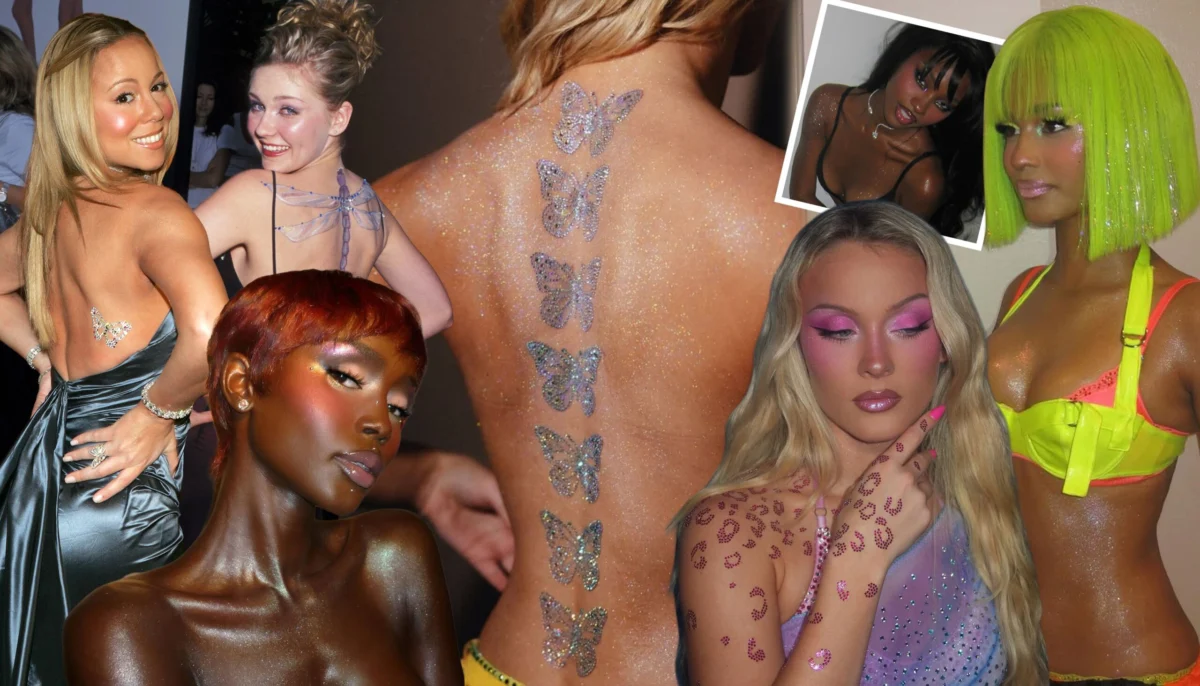
The unmistakable shimmer and sparkle of body glitter and gemstone adornments are experiencing a significant resurgence, drawing inspiration from the iconic aesthetics of the late 1990s and early 2000s. This trend, once synonymous with pop culture moments like Britney Spears’ "Oops!… I Did It Again" music video, is now gracing the looks of contemporary stars such as Zara Larsson, Tyla, and Sabrina Carpenter, and has become a signature element in visually arresting productions like the HBO series Euphoria.
.jpg)
Donni Davy, the lead makeup artist for Euphoria and the founder of Half Magic Beauty, posits that this revival is a natural evolution following an extended period dominated by the "clean girl" makeup trend. "We’ve been in a clean-girl makeup trend for a while now, and whenever something has been popular for a long time, there’s a tendency to go in the other direction," Davy explained. "It makes sense that glitter and shimmer are coming back, and I’m here for it." This cyclical nature of fashion and beauty trends often sees a pendulum swing from minimalist aesthetics to more maximalist and expressive styles.
Beyond loose glitter, the resurgence also encompasses crystal-coated adhesive body stickers, a staple of millennial proms, which are making a notable comeback. Zara Larsson was recently seen sporting intricate butterfly designs on her back, created by performance-wear designer Lucas Stowe. Stowe observes that this interest in nostalgic adornments is bridging generational divides. "Gen Alpha and Gen Z are seeing these things as new," he stated, drawing a parallel to the enduring fascination with Lisa Frank stickers. "I remember loving them. For [my generation], that was so exciting and new. It’s funny to [witness] Gen Z-ers seeing them through new eyes. To us, it’s nostalgia." This phenomenon highlights how cultural touchstones can be reinterpreted and embraced by subsequent generations, infusing them with fresh relevance.

The Enduring Allure of Early 2000s Sparkle
The historical roots of glitter as a decorative element can be traced back to 1934, when machinist Henry Ruschmann developed an early form of glitter for industrial coatings. However, it was in the late 1990s and early 2000s that glitter truly cemented its place as a fashion and beauty accessory, largely propelled by the influence of pop music icons. Artists like Britney Spears and Christina Aguilera, who frequently appeared on music television programs, embraced a "glowy, yet almost futuristic" aesthetic that heavily featured glitter. Charlie Riddle, makeup artist and Stila’s global beauty director and head of artistry, recalls this era: "Think back to the days of Britney and Christina. They were all about being glowy, yet almost futuristic. People were using glitter on the arms, chest, legs, anywhere that could catch the light."
This period also saw the rise of rhinestone adhesives, exemplified by Mariah Carey’s iconic butterfly adornment around 2001. These decorative elements added a sophisticated accent to the prevalent shimmer. Makeup artist Ngozi Edeme noted the widespread adoption of such body art: "All the baddest video vixens had some of the body art we see today, from bedazzled tramp stamps to belly button rings." The cultural impact of these adornments was profound, becoming an integral part of the visual identity of the era’s most influential figures.

For many, the personal journey with body glitter began with accessible products like Bath & Body Works Art Stuff roll-on glitter and Jessica Simpson’s edible body powders from Dessert Beauty. These were often precursors to more sophisticated formulas from brands such as Benefit and Urban Decay. Wende Zomnir, founder of Urban Decay, reflects on the explosion of body glitter’s popularity: "Body glitter blew up back then because it was a natural extension of the moment: girl-led rock bands, brands like Urban Decay shaking up the makeup landscape; permission was given." This cultural climate fostered an environment where bold self-expression through makeup was not only accepted but celebrated.
The early 2000s music video landscape was replete with performers adorned in glitter and gemstones. On red carpets, stars like Kirsten Dunst and Salma Hayek embraced Y2K-coded body art. Hayek, at the 1998 MTV Video Music Awards, complemented her strapless dress with butterfly designs across her chest and back, which, according to a Vogue interview, she may have hand-painted due to the limited availability of pre-made stickers at the time. At the 1999 premiere of Drop Dead Gorgeous, Dunst opted for a striking dragonfly design embellished with strategically placed rhinestones on her back.

Makeup artist Molly R. Stern reminisced about the DIY approach of the era: "We were getting all of our supplies from the art store back then. If we could stick it on our face or body, we did." Larger, statement pieces like those worn by Dunst and Hayek often served as the focal point of their looks, with color schemes carefully coordinated to complement their eye and lip makeup.
The philosophy surrounding body glitter and shimmer during this time was unequivocally "more is more." Lori Taylor Davis, global pro lead artist at Smashbox, described the aesthetic: "Think, collarbones glazed in shimmer oils, shoulders dusted in sparkle, and tiny rhinestones framing the eyes made luminous skin a statement. It wasn’t subtle; it was seen. It was about glow, and catching the light from every angle." Exposed skin, from low-cut necklines to the low-rise jeans of the post-"Dirrty" era, became a canvas for glitter and body shimmer.

As the mid- to late-2000s progressed, the glitter trend evolved. While it began to shift towards a more subtle shimmer, artists like Kesha continued to champion glitter accents, ushering the trend into the "indie-sleaze" era. Makeup artist Mylah Morales explained the inspiration behind Kesha’s looks: "With Kesha, the inspiration is always rooted in rock-and-roll glamour and a ‘more is more’ philosophy. We looked at ’70s disco-era icons and glam-rock legends, but modernized it. The goal was to make the glitter look like it was radiating from her skin rather than just sitting on top of it. We wanted her to look like a celestial creature caught in a strobe light."
Morales emphasized the holistic approach to body adornment: "It makes the entire silhouette feel intentional and high-fashion, and blurs the line between where the makeup ends and the fashion begins." This integrated approach transformed body glitter from a simple embellishment into a fundamental component of a complete artistic vision.

Modern Formulations and Application Techniques
The evolution of body glitter extends beyond aesthetic trends to significant advancements in product formulation. Donni Davy notes that modern glitter products offer enhanced sparkle and finer textures, moving away from the chunkier particles of the past. "Glitter has gotten more sparkly and the textures are less chunky. It’s more refined, and the colors are also more sophisticated," Davy stated.
Cosmetic chemists Victoria Lu and Gloria Fu, founders of Chemist Confessions, concur, highlighting the improvements in base systems. "Back in the ’90s and early 2000s, body glitter formulas were usually simple, large plastic glitter particles suspended in basic gels or oils, with more focus on visual impact," Lu explained. "The concept is fun, but the actual formula and material were less than ideal with goopy, greasy textures." Fu added, "Today, you can find better base systems like lightweight gels, dry-touch oils, even serum-like textures, and more skin care-inspired products with better comfort and wearability. There’s also more awareness around the glitter material itself to improve eye safety, general skin irritation, and glitter’s overall environmental impact." These developments address both the user experience and the ethical considerations surrounding cosmetic ingredients.

To achieve a lasting and luminous effect, proper skin preparation is crucial. Davy advises, "You want to keep the skin slightly tacky. A slightly dewy or tacky base will help the glitter stick better." Davis recommends a layered approach, beginning with a hydrating body moisturizer to ensure a smooth canvas. "If the skin isn’t prepped, glitter can look patchy instead of luminous," she cautioned. "I build in layers, starting with a base for hydration, then adding a tack layer like a balm, mixing medium, or adhesive where needed."
The distinction between craft glitter and cosmetic-grade glitter is paramount. Linnea Sumner, a special effects and beauty makeup artist at New York City’s Kimara Ahnert Studio, stressed the importance of using body-safe options. "Craft glitter can have sharp edges not suitable for skin. Even if you don’t feel the sharp edges putting it on, you’ll definitely feel it taking it off, especially around your eyes." She further advises using a brush to press, rather than swipe, glitter into place, ensuring even distribution.

For optimal placement, Davis suggests thinking like a sculptor: "High points like the collarbones, shoulders, and cheekbones catch the light best, and you can follow the natural lines of your body for elongation. Step back and check symmetry, but don’t be afraid of a little asymmetry to give the look some edge." A final application of a setting spray that creates a physical barrier on the skin is recommended to lock the glitter in place. Sumner advocates for heavy-duty formulas from brands like Kryolan, Mehron, or Ben Nye, as well as high-performance beauty options such as One/Size or Skindinavia Bridal.
Mastering the Art of Body Stickers and 3D Adornments
In contrast to the slightly tacky base required for glitter, body stickers and other three-dimensional embellishments necessitate a dry, clean surface for optimal adhesion. Stowe recommends avoiding spray tans or body oils in the application area and suggests cleaning the skin with rubbing alcohol beforehand. Drawing inspiration from diverse sources—including Cher, Tim Curry’s iconic portrayal of Dr. Frank-N-Furter in The Rocky Horror Picture Show, drag culture, and Lisa Frank—Stowe digitally renders his designs before crafting each sticker. The adhesives are engineered for long-lasting wear, even through high-energy performances.

For beginners, Stowe advises starting with smaller stickers applied to flat areas of the body, being mindful to avoid placement where clothing might cause friction and dislodge the sticker. For applications on curved areas, he suggests using eyelash glue for added security or to affix additional rhinestones around the design.
When creating custom designs with individual rhinestones, Edeme recommends mapping out the pattern with a white pencil on dry skin, then arranging the gems and glue on a plate before using a rhinestone picker tool or tweezers for precise placement. Sumner endorses Duo Brush-On Clear Adhesive for its easy applicator brush. Her tip for application: "Apply glue to the skin where you want the gem, rather than to the gem itself, to avoid sticky hands."

The overarching sentiment from artists is to embrace creativity and personalization. Edeme encourages experimentation: "Have fun with it and let the design reflect your personality. Explore animal prints, flower designs, or even tattoo designs." She recounted creating a freehand tiger design for Tyla’s "We Wanna Party Tour," incorporating glitter spray and blue rhinestone accents that complemented the performer’s outfit and wig. "I always try to channel my muse’s inner baddie," she added. "I look at their aura and come up with a design I feel will fit them both." This approach underscores the idea that body adornments can serve as a powerful form of self-expression, reflecting individual style and personality.
The renewed interest in body glitter and gemstone adornments signals a broader cultural embrace of playful, expressive, and nostalgic beauty. As these trends continue to evolve, they offer a dazzling opportunity for individuals to adorn themselves with a touch of Y2K glamour, reimagined for the contemporary era.
