
 By Nila Kartika Wati
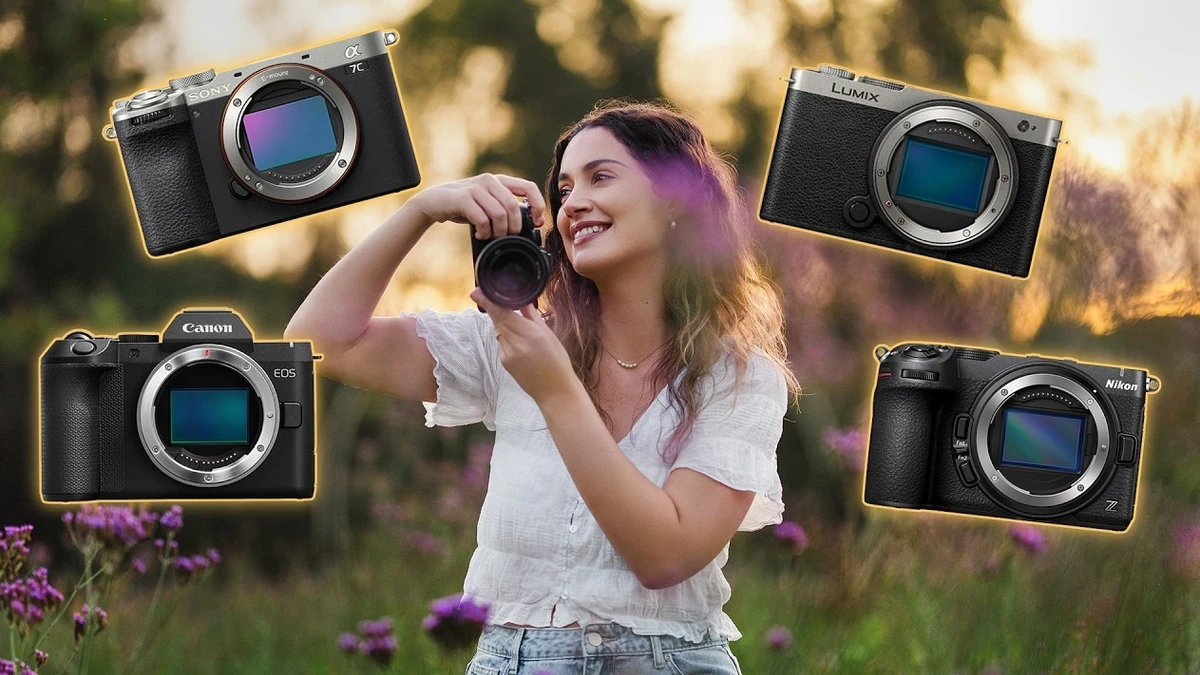
The contemporary photography market is witnessing a significant shift towards more compact and accessible full-frame camera bodies, a trend exemplified by the recent releases of the Canon EOS R8 Mark II, Sony a7C II, Nikon Z5IIC, and Panasonic Lumix S9. Each positioned as the smallest and most affordable full-frame offering from its respective manufacturer, these cameras represent a nuanced approach to addressing the diverse needs of modern photographers and content creators. While sharing the overarching goal of delivering full-frame image quality in a portable form factor, their design philosophies diverge considerably, impacting everything from ergonomic comfort and shutter mechanisms to video capabilities and target demographics. Understanding these distinctions requires looking beyond mere specifications and delving into the practical implications for everyday use, professional applications, and the overall user experience.
The Rise of Compact Full-Frame: A Market Overview
The pursuit of smaller, lighter camera systems has been a defining characteristic of the mirrorless era, a natural evolution from the bulkier DSLR systems that dominated the market for decades. Full-frame sensors, once reserved for large professional cameras, have progressively found their way into more accessible and portable bodies, democratizing high-quality imaging. This trend accelerated with the introduction of models like the original Sony a7C in 2020, which pioneered the compact full-frame concept by integrating a full-frame sensor into a rangefinder-style body. The subsequent years have seen other major manufacturers follow suit, refining this concept to cater to an increasingly diverse audience that values portability without compromising on image fidelity. The Canon EOS R8 Mark II, Sony a7C II, Nikon Z5IIC, and Panasonic Lumix S9 represent the latest iteration of this movement, each launched between late 2023 and mid-2024, signaling a robust commitment from manufacturers to this growing segment. These cameras are not merely scaled-down versions of their larger siblings; they are often purpose-built with specific compromises and advantages designed to appeal to vloggers, travel photographers, street photographers, and enthusiasts seeking an everyday carry solution.
Ergonomics and the Everyday Carry: A Hands-On Perspective
One of the most immediate and impactful differences among these compact full-frame cameras lies in their ergonomic design, particularly the grip. While miniaturization is a primary objective, it often introduces a fundamental paradox: the lightest camera is not always the most comfortable to hold, especially when paired with a substantial full-frame lens. Independent testing, such as that conducted by photographer Julia Trotti, highlights this critical trade-off. Trotti’s real-world usage scenarios revealed that the Canon EOS R8 Mark II and Nikon Z5IIC, despite being among the heavier bodies in this group (though still remarkably light for full-frame), offered superior handling due to their deeper, more substantial grips. These grips provide a secure hold, which is invaluable for stability, prolonged shooting sessions, and balancing the camera with larger lenses.
Conversely, the Panasonic Lumix S9, the smallest and lightest in the group, epitomizes the extreme end of miniaturization. Its minimalist design results in an almost non-existent grip, which, while contributing to its diminutive stature, can make it less comfortable for extended use or when handling heavier optics. Panasonic addresses this by offering an optional add-on grip, providing users with the flexibility to customize their camera’s ergonomics based on their needs. The Sony a7C II strikes a middle ground, offering a more pronounced grip than the S9 but still falling short of the depth found on the Canon and Nikon models. This difference in grip design underscores a core tension in compact camera development: the balance between ultimate portability and practical usability. For a camera intended for "everyday carry," the ability to comfortably hold and operate the device for extended periods, often with a range of lenses, is a significant factor that raw weight specifications alone cannot convey. The tactile experience of holding these cameras, particularly with a lens mounted, often reveals more about their true portability and comfort than a simple spec sheet.
Technical Disparities: Sensors, Shutters, and Viewfinders
Beyond ergonomics, the technical specifications of these cameras reveal distinct approaches to imaging and user interaction. All four models feature a single UHS-II card slot, a design choice that firmly places them in the realm of personal, enthusiast-level use rather than demanding professional assignments where dual card slots offer critical data redundancy. This commonality reinforces their positioning as cameras for everyday adventures, content creation, and personal projects, where the absolute highest levels of backup and robust workflow may not be paramount.
Sensor Resolution and Image Quality:
While most of these cameras converge around a 24-megapixel full-frame sensor, the Sony a7C II stands out with its 33-megapixel sensor. This higher resolution provides photographers with greater cropping flexibility, allowing for more aggressive post-production adjustments without significant loss of detail. However, this comes at the cost of larger file sizes, which can impact storage requirements and processing times. The 24-megapixel sensors in the Canon, Nikon, and Panasonic models are widely considered a sweet spot, offering an excellent balance of detail, low-light performance, and manageable file sizes, making them highly versatile for a broad range of photographic disciplines. Industry analysts suggest that for most users, the difference between 24MP and 33MP is less critical than other performance metrics, particularly given the advancements in image processing.
Shutter Mechanisms: A Core Differentiator:
The shutter design represents perhaps the most significant technical divergence among these cameras, with profound implications for how and where they can be effectively used.
- Nikon Z5IIC: This model is unique in offering a full mechanical shutter. This traditional shutter mechanism provides a distinct advantage in situations where electronic shutter artifacts are problematic, such as under artificial lighting (avoiding banding) or when photographing fast-moving subjects (preventing rolling shutter distortion). A full mechanical shutter delivers a classic photographic experience, though it introduces noise and mechanical wear over time.
- Panasonic Lumix S9: In stark contrast, the Lumix S9 relies solely on an electronic shutter. This choice contributes to its silent operation and eliminates mechanical wear, offering potential for extremely high shutter speeds. However, it significantly increases the likelihood of banding under certain artificial light sources (like LEDs or fluorescent tubes) and can introduce "jello" or skewing effects when photographing subjects moving rapidly across the frame. This makes the S9 less ideal for indoor event photography or sports in environments with problematic lighting.
- Canon EOS R8 Mark II and Sony a7C II: Both Canon and Sony employ an electronic first-curtain (EFC) shutter. This hybrid approach uses an electronic front curtain combined with a mechanical rear curtain. EFC shutters reduce shutter shock and mechanical noise compared to full mechanical shutters, while largely mitigating the banding and rolling shutter issues associated with a full electronic shutter. However, they are not entirely immune to these artifacts, especially under challenging lighting conditions or with extremely fast subjects, and can sometimes exhibit minor bokeh truncation at very high shutter speeds with wide apertures. For general-purpose shooting, EFC shutters offer a good compromise, but for those frequently shooting under artificial light or in specific high-speed scenarios, the mechanical shutter of the Nikon Z5IIC offers a tangible advantage.
The Viewfinder Debate:
Another critical design choice impacting user experience is the presence or absence of an electronic viewfinder (EVF). The trend of omitting EVFs has been gaining traction in the compact full-frame segment, primarily driven by the desire for ultimate miniaturization and cost reduction, alongside the observation that a growing segment of users, particularly those transitioning from smartphone photography, primarily rely on the rear LCD screen for composition.
- Canon EOS R8 Mark II and Sony a7C II: Both of these models retain an integrated EVF, catering to photographers who prefer the traditional eye-level shooting experience. An EVF offers several advantages, including clear visibility in bright sunlight, enhanced stability when bracing the camera against the face (crucial for slower shutter speeds), and an immersive compositional experience.
- Panasonic Lumix S9 and Nikon Z5IIC: These models boldly embrace the viewfinder-less design. This strategic decision aligns them with the emerging market segment of content creators and casual photographers who predominantly use the articulated rear screen for framing. This approach saves space and weight, contributing to the camera’s overall compactness. Nikon, in particular, positions the Z5IIC as a viewfinder-less sibling to its Z5II, sharing the same sensor but offering a more streamlined, screen-centric experience. This design philosophy was notably pioneered by Sony with its ZV-E1 in 2023, followed by Panasonic’s S9 in 2024. While convenient for vlogging and unconventional shooting angles, the absence of an EVF can be a significant drawback for photographers working in bright outdoor conditions, tracking fast-moving subjects, or those accustomed to the stability and immersion an EVF provides. This distinction clearly segments the target audience for these cameras.
Autofocus Prowess and Lens Ecosystems
In the realm of autofocus, all four cameras demonstrate impressive capabilities, reflecting the rapid advancements in computational photography and AI-driven subject detection. Trotti’s testing indicated that the Canon EOS R8 Mark II, Sony a7C II, Nikon Z5IIC, and Panasonic Lumix S9 are all fast and reliable, each incorporating sophisticated human, animal, and vehicle detection systems. This allows the cameras to intelligently identify and track subjects, significantly improving the hit rate for sharp images and video. The efficacy of these systems is such that, in many scenarios, the camera can be relied upon to perform the heavy lifting of focusing, freeing the photographer to concentrate on composition and timing.
However, a crucial nuance often overlooked is the symbiotic relationship between the camera body’s autofocus system and the lens attached. While the camera body dictates where to focus, the lens’s internal motor is responsible for how quickly and precisely the glass elements move to achieve that focus. Newer lenses, particularly those featuring advanced linear or Voice Coil Motor (VCM) designs, are engineered to keep pace with the high demands of modern autofocus systems. These motors enable near-instantaneous and silent focusing, making them far superior for tracking fast-moving subjects compared to older or adapted lenses with slower, less precise motors. Therefore, investing in contemporary lenses is as critical as choosing a camera body with a stellar autofocus system to unlock the full potential of these compact full-frame offerings. The availability and compactness of native lens ecosystems for each brand (RF for Canon, E-mount for Sony, Z-mount for Nikon, L-mount for Panasonic) become vital considerations for users looking to maintain the overall portability of their system.
Video Capabilities: Tailoring to the Modern Creator
The rise of hybrid shooters and content creators has placed an increasing emphasis on video capabilities, and these compact full-frame cameras do not disappoint, though with notable distinctions. All four models universally offer 4K 30p video recording using the full width of their sensor, providing excellent detail and a cinematic full-frame look. However, when stepping up to 4K 60p for smoother motion or slow-motion effects, a clear hierarchy emerges:
- Canon EOS R8 Mark II: This camera stands out as the only one in the group capable of recording 4K 60p using the full width of its sensor, a significant advantage for those prioritizing uncropped full-frame aesthetics at higher frame rates.
- Sony a7C II, Nikon Z5IIC, and Panasonic Lumix S9: These models, while offering 4K 60p, do so with a Super 35 (APS-C) crop. This crop narrows the field of view, making wide-angle shots more challenging and potentially impacting low-light performance due to the smaller effective sensor area. Content creators must weigh the benefits of higher frame rates against the change in focal length and sensor coverage.
Beyond standard resolutions and frame rates, each camera offers unique video-centric features designed to appeal to specific workflows:
- Nikon Z5IIC: Introduces N-RAW recording, providing filmmakers with a highly flexible RAW video format. N-RAW captures a wider dynamic range and color information, offering extensive grading possibilities in post-production. This feature positions the Z5IIC as a more serious tool for cinematographers and colorists, albeit one that demands greater storage capacity and processing power.
- Sony a7C II: Features an "auto framing" function, which intelligently crops and reframes subjects within a locked-off tripod shot. This is particularly useful for solo content creators, vloggers, or interview setups, allowing the camera to simulate camera operator movements without manual intervention.
- Panasonic Lumix S9: Shines with its 6K open gate recording capability. "Open gate" refers to using the entire sensor area for recording, allowing creators to capture a wider, more expansive image. The primary benefit of 6K open gate is the flexibility it provides for exporting multiple aspect ratios from a single recording – for instance, simultaneously producing horizontal (16:9) and vertical (9:16) versions for different social media platforms without sacrificing significant resolution. This streamlines the workflow for creators targeting diverse digital platforms.
Other crucial video considerations, such as internal microphone quality, in-body image stabilization (IBIS) performance, and low-light video capabilities, also play a significant role in determining the overall video utility of these cameras, with detailed comparisons often requiring hands-on evaluation.
Pricing, Positioning, and the Value Proposition
The pricing of these compact full-frame cameras generally runs in inverse proportion to their size, with the smallest models often being the most budget-friendly, though with important caveats. The Sony a7C II typically commands the highest price point among the group, reflecting its advanced feature set, higher-resolution sensor, and established position in the compact full-frame market. The Canon EOS R8 Mark II and Nikon Z5IIC generally sit in the middle tier, offering a compelling balance of features and performance. The Panasonic Lumix S9 emerges as the most affordable option, aligning with its minimalist design and viewfinder-less approach.
However, pricing is a dynamic factor. Trotti astutely points out that the Canon and Nikon models were relatively new releases at the time of her filming, and their prices are likely to adjust downwards over time as they become more established in the market. Furthermore, regional pricing variations can significantly alter the competitive landscape in different countries. Beyond the initial body cost, the overall value proposition must consider the availability and pricing of native lenses and accessories within each manufacturer’s ecosystem. A seemingly cheaper body might lead to a more expensive total system cost if compatible lenses are scarce or costly. For consumers, the decision often boils down to a holistic assessment of initial outlay, long-term ecosystem investment, and the specific feature set that best aligns with their creative and practical requirements.
Implications for the Future of Photography
The collective release and comparison of the Canon EOS R8 Mark II, Sony a7C II, Nikon Z5IIC, and Panasonic Lumix S9 offers a compelling snapshot of the current trajectory of the camera industry. These models signify several key trends that are likely to shape the future of photography and videography:
- Democratization of Full-Frame: The continued push for smaller, more affordable full-frame bodies makes high-quality imaging more accessible to a broader audience, bridging the gap between enthusiast-level APS-C cameras and professional-grade full-frame systems.
- Specialization and Modularity: Manufacturers are increasingly designing cameras with specific user profiles in mind. The rise of viewfinder-less cameras, optional grips, and tailored video features (like N-RAW or 6K open gate) indicates a shift towards highly specialized tools rather than one-size-fits-all solutions. This modular approach allows users to customize their setup based on their unique needs, whether for vlogging, street photography, or cinematic productions.
- Hybrid Workflow Dominance: The robust video capabilities across all these cameras underscore the continued importance of the hybrid shooter. Modern content creation demands devices capable of excelling in both stills and video, and these cameras are engineered to meet those demands with varying degrees of specialization.
- Ergonomics vs. Miniaturization: The ongoing debate between comfortable grip and ultimate portability highlights a fundamental design tension. The market will likely continue to offer both extremes, catering to those who prioritize absolute compactness and those who value a more secure and comfortable handling experience.
- Ecosystem Lock-in: While body prices are competitive, the long-term investment in lenses and accessories reinforces the importance of choosing a system that offers a diverse and affordable range of optics to maintain the overall portability and capability of the setup.
In conclusion, the current generation of compact full-frame cameras offers an unprecedented level of choice and specialization. While they all aim to deliver full-frame performance in a portable package, their individual design philosophies and feature sets create distinct user experiences. For the discerning photographer or content creator, a thorough understanding of these nuances—from the feel of the grip and the mechanics of the shutter to the subtleties of video codecs and viewfinder presence—is paramount to selecting the tool that truly empowers their creative vision for everyday use and beyond.
