
 By Jia Lissa
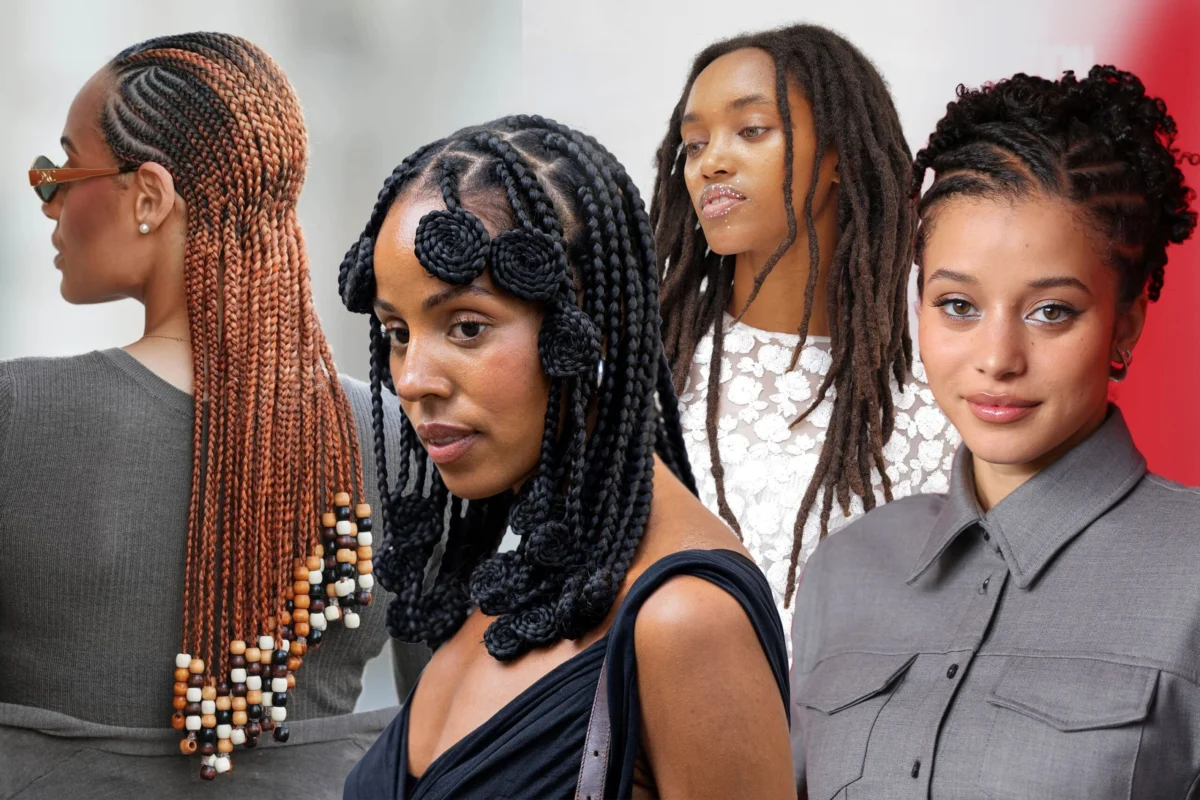
The term "protective hairstyle" might not be in everyone’s everyday vocabulary, but its practice is deeply embedded in the haircare routines of individuals with tightly curled or coily hair textures. From the simple plaits secured with elastic bands in early childhood to the intricate styles gracing fashion runways today, these looks are more than just fashion statements; they are strategic choices designed to safeguard natural hair from environmental damage and excessive manipulation. These hairstyles, which encompass a wide array of techniques like braids, twists, locs, crochet styles, sew-ins, Bantu knots, and even carefully constructed buns, serve a crucial purpose: to minimize stress on the hair shaft and scalp, thereby promoting length retention and overall hair health.

Cataanda James, a New York-based cosmetologist and recognized expert in curly hair, defines protective styles as "designed to protect the hair from damage, over-manipulation, heat, environmental stressors, and anything that can cause damage to the hair shaft." This is particularly vital for those with coily and curly hair types, as the natural oils produced by the scalp often face challenges in traveling down the length of these textured strands. This can lead to increased fragility and a greater susceptibility to breakage. By reducing the frequency of touching and styling, protective styles help to minimize friction and prevent damage. Kia Harper, a professional braider based in California, elaborates on this, stating, "your natural hair can retain length and stay healthy." The versatility of these styles means that nearly any method that encloses and shields natural hair can be considered protective, with options ranging from elaborate braided designs to simple, elegant updos.
Understanding the Core Purpose of Protective Styles
The fundamental principle behind protective hairstyles is the reduction of external aggressors and the minimization of manipulation. For individuals with naturally coily or curly hair, the hair shaft has a more delicate structure, often characterized by tighter bends and twists. This morphology can make it harder for the scalp’s natural sebum to moisturize the entire length of the hair, leading to dryness and increased brittleness. When hair is constantly being styled, brushed, or exposed to heat, it undergoes significant stress, which can lead to split ends, breakage, and a halt in growth.

Protective styles work by:
- Minimizing Manipulation: By keeping the hair in a set style for an extended period, the need for daily styling is reduced, thus preventing the friction and tension that can cause breakage.
- Sealing in Moisture: Many protective styles, especially those involving braids or twists, can help to trap moisture within the hair strands, combating dryness.
- Protecting from Environmental Factors: Styles that tuck the hair away can shield it from harsh weather conditions like wind, sun, and pollution, which can dehydrate and damage hair.
- Preventing Over-Processing: For those who frequently use heat styling tools, protective styles offer a respite, allowing the hair to recover from potential heat damage.
Popular Categories of Protective Hairstyles
The world of protective hairstyles is diverse and ever-evolving, but several key categories consistently remain at the forefront of trends and everyday wear. These styles are celebrated not only for their protective qualities but also for their aesthetic appeal and versatility.

Braids: The Timeless Foundation
Braids, arguably the most iconic category of protective styles, are formed by weaving three or more sections of hair together. Their enduring popularity stems from their remarkable versatility, longevity, and ability to add fullness and length with the incorporation of extensions.
"Braids are typically formed with three or more sections of hair, and these sections are woven over and around one another," explains James. Ladosha Wright, an Ohio-based professional hairstylist, highlights their adaptability: "Many braided styles can also be restyled into buns, ponytails, or updos, giving people several looks from one installation." The longevity of braided styles, often lasting well over a month, is another significant draw.

Among the most prevalent braided styles are:
- Cornrows: These are braided very closely to the scalp, traditionally in straight lines or intricate geometric patterns. They offer a sleek and secure base for further styling or can be worn as a standalone look. Historical evidence suggests braiding techniques have been used for thousands of years across various cultures, including ancient Egypt and Africa, as both functional and decorative hairstyles.
- Fulani-Inspired Styles: Characterized by cornrows in the front that transition into loose plaits cascading down the back, these styles often incorporate beads or other adornments, drawing inspiration from West African traditions.
- Box Braids: A broad category that encompasses many variations, box braids are typically created by parting the hair into square or box-like sections.
- Knotless Braids: A modern and increasingly popular iteration of box braids, knotless braids involve gradually feeding extension hair into the natural hair as the braid progresses, rather than tying it at the base. This method is favored for its lighter feel and reduced tension on the scalp.
- Goddess Braids and Boho Styles: These variations often incorporate wavy or loose strands of hair woven into the braids, creating a softer, more voluminous, and bohemian aesthetic. The trend has seen a resurgence, fueled by social media platforms showcasing creative interpretations.
The trend towards knotless braids, for instance, gained significant traction in the late 2010s and early 2020s, driven by influencers and stylists demonstrating their benefits. "These braids—in which the added hair is gradually fed into the plait, as opposed to being tied in at the base via a knot—are especially popular because they can create a lighter, more flexible feel when installed properly," notes Durham.

Twists: Simplicity and Versatility
While braids involve weaving multiple strands, twists are typically created by wrapping two sections of hair around each other. They offer a less intricate, yet equally effective, protective styling option.
"Twists are typically created by wrapping two sections of hair around each other," says Durham. Wright points out that "with or without added hair, twists offer a natural-looking, versatile style."

Popular twist styles include:
- Two-Strand Twists: The foundational twist style, where hair is sectioned, twisted upon itself, and left to hang. This style is relatively easy for individuals to do at home. Mateo Kirkpatrick, a Dallas-based hairstylist, highlights their dual-purpose nature: "You can wear the twist and then eventually wear a twist-out and get a two-in-one style."
- Flat Twists: Similar in technique to cornrows, flat twists are braided close to the scalp, creating a smooth and sculpted look.
- Mini Twists: These involve using very small sections of hair, resulting in a dense and intricate twist pattern.
- Senegalese, Passion, and Marley Twists: These styles typically involve the use of added extension hair, providing more length, volume, and a distinct texture. Senegalese twists are known for their smooth, uniform appearance, while passion twists offer a more bohemian and textured look. Marley twists are characterized by their kinky texture, mimicking natural hair.
Locs: A Journey of Transformation
Locs, also known as dreadlocks, are formed as sections of hair intentionally intertwine and mat together over time. This process is a more permanent commitment compared to many other protective styles.

"Locs are created as sections of hair intentionally intertwine and form together over time," explains Durham. The initiation of a loc journey can be achieved through several methods, including comb coiling, where a loctician uses a tapered comb to coil small sections of hair. This method, followed by drying under a hooded dryer, is a common starting point. Wright adds that "once the hair is completely dry, voila! The loc journey begins."
Other methods include twisting hair and allowing it to loc naturally (semi-freeform) or simply allowing the hair to loc on its own without intervention (free-form). Regardless of the method, the core principle is the natural interlocking of hair strands as they grow.

Prominent loc styles include:
- Wicks: Larger, thicker locs that offer a bold statement.
- Sisterlocks™: A specialized, micro-locking technique that uses a unique tool to create very fine, interlocking locs.
- Microlocs: Similar to Sisterlocks™ in their fine size, but can be achieved through various locking techniques.
For those seeking a less permanent option, "faux and soft locs offer a temporary way to achieve a similar look without permanently locking the natural hair," Durham adds. These styles use extensions to mimic the appearance of locs.

Bantu Knots: Versatile and Transformative
Named after the Bantu people of Sub-Saharan Africa, Bantu knots are a classic protective style that involves coiling hair into small, tight buns. This technique has a long history, deeply rooted in African hair traditions.
Bantu knots are created by parting the hair into sections, then twisting or braiding each section before wrapping it into a knot. They can range in size from small to large, and can be styled on natural hair or with extensions.

A key advantage of Bantu knots, similar to two-strand twists, is their ability to serve as a two-in-one style. "Once you unravel them, you’re left with defined texture," notes the original article. Hairstylist Monae Everett has previously told Allure, they’re "a great way to create heatless waves or preserve your curls overnight."
Weaves and Wigs: Adding Length and Fullness
Weaves and wigs represent another significant category of protective styling, primarily focused on adding length, volume, or an entirely new look while shielding the natural hair.

"A weave is a protective style that interlocks, attaches, connects, or weaves in extension hair, usually human, to natural hair in some form or fashion," explains James. The sew-in method, where natural hair is cornrowed and extension hair is sewn onto the braids, is widely considered one of the most protective ways to incorporate extensions. "From my experience, a sew-in is the most protective way to add length and fullness to one’s hair," she continues. "Since the natural hair is braided and totally tucked away and secured under the weave, it’s the least exposed."
Wigs, including full wigs, half wigs, and lace-front styles, also serve as protective options, provided they are not worn for excessively long periods. "Full wigs that cover the entire head, scalp and hair included, block oxygen and nutrients to the follicle," which can impede hair growth, cautions James. Therefore, while wigs offer protection, their continuous wear needs careful consideration.

Who Should Be Mindful of Protective Styles?
While protective hairstyles offer numerous benefits, they are not universally suitable for every hair type or scalp condition. Individuals with certain pre-existing conditions or hair concerns should approach them with caution.
Dr. Jeanine Downie, a board-certified dermatologist, advises that if hair is particularly fragile or already damaged, "focus on healthy hair growth first, rather than protective styling." Furthermore, individuals who are at risk for or have a history of traction alopecia—hair loss caused by prolonged tension on the hair follicles—should exercise extreme caution. "Anyone with seborrheic dermatitis, eczema, or other conditions needs to be careful not to trigger a flare-up," she adds.

For those with sensitive skin, the materials used in synthetic hair extensions can sometimes cause irritation. Dr. Downie suggests opting for human hair extensions if sensitivity is a concern, as they are generally less likely to cause adverse skin reactions.
Potential Downsides and Considerations
Despite their protective nature, protective styles are not without potential drawbacks. Experts consistently highlight two primary concerns: excessive tension and product buildup.

"Excessive tension, heavy extensions, product buildup, and improper takedown can all lead to breakage, thinning, and scalp irritation," warns Harper.
Tension: Overly tight or heavy styles can exert significant strain on the scalp. Dr. Downie explains that this can disrupt the normal hair growth cycle, potentially leading to "irreversible scarring and permanent damage to the follicle." Warning signs of excessive tension include small, inflamed bumps at the base of the hair follicles, or a persistent feeling of tightness. "Even dull pain is a sign," states Dr. Downie. Harper emphasizes, "I always emphasize that your hair shouldn’t hurt when you’re getting it done."

Product Buildup: Protective styles should not be an excuse to neglect scalp hygiene. Regular cleansing is crucial. Dr. Downie recommends washing and conditioning hair at least once a week, using a clarifying or detoxifying shampoo. Products like Ouai’s Clarifying Detox Shampoo, formulated with apple-cider vinegar and chelating agents, can effectively remove impurities without stripping the hair. For those who find it challenging to shampoo their scalp thoroughly without disturbing their style, scalp sprays and specialized braid sprays are recommended. These products are designed to cleanse and soothe the scalp without disrupting the integrity of the protective style. Cécred’s Scalp Refresher Spray, for instance, utilizes a blend of ferments to dissolve buildup and has a precision nozzle for targeted application.
Post-wash, it’s advisable to use lightweight, non-occlusive oils to moisturize the scalp and hair. Heavy waxes should be avoided. Jojoba oil, as found in Pattern’s Jojoba Hair & Scalp Oil Blend, is a good example of a lighter option.

Finally, the experts stress the importance of timely removal and proper takedown of protective styles. "It’s important to give your hair a break between installations and make sure you’re taking care of your natural hair underneath," says Harper. "At the end of the day, a protective style should protect your hair, not compromise its health." Consulting with a stylist for takedown is recommended if one is unsure of the correct procedure for their specific style.
