
 By admin
The cinematic landscape of the 1990s stands as a distinctive epoch, characterized by an unparalleled surge in original storytelling, diverse thematic exploration, and a unique form of audience engagement that forged lasting relationships between viewers and films. In an era predating the widespread prevalence of streaming services and the constant churn of digital discourse, the best films of the 1990s were predominantly original narratives, offering a stark contrast to today’s cinema, often dominated by sequels, remakes, and extensive meta-commentary. This period cultivated a viewing experience rooted in deep connection, where films were not merely consumed once and swiftly reviewed online, but cherished on well-worn VHS tapes, watched repeatedly until their iconic costumes, memorable dialogue, and emotional resonance became indelibly etched into cultural memory.
The 1990s represented a fascinating intersection of burgeoning technological innovation and a thriving independent film movement, which collectively pushed the boundaries of narrative and visual artistry. Directors like Quentin Tarantino, David Lynch, and Danny Boyle emerged as definitive voices, alongside established masters who reinvented their craft. This era also saw the rise of new genres and the redefinition of existing ones, from meta-horror to darkly comedic satires and deeply personal independent dramas. The sustained engagement with these films, facilitated by the home video market, allowed for a deeper appreciation of their nuances, contributing to their enduring cult status and critical re-evaluation over time. While an exhaustive compilation of every significant 90s film would be a monumental task, certain classics continue to offer profound escapism and entertainment, serving as pivotal touchstones in cinematic history.
A Chronology of Cinematic Milestones
The following selection of films encapsulates the diverse brilliance and lasting influence of 1990s cinema, presented in chronological order of their initial release. Each entry offers a glimpse into the unique creative spirit that defined the decade.
Wild at Heart (1990)
Directed by the inimitable David Lynch, Wild at Heart is a quintessential early-90s exploration of love, violence, and surrealism. Starring Laura Dern as Lula Fortune and Nicolas Cage as Sailor Ripley, the film follows their tumultuous journey after Sailor is imprisoned for a self-defense killing. Upon his release, Lula retrieves him, sparking a chaotic road trip fraught with danger and bizarre encounters. Typical of Lynch’s oeuvre, the narrative defies conventional explanation, instead immersing the viewer in a visceral experience characterized by stylistic flourishes, unexpected violence, and dreamlike sequences. The film garnered critical attention, notably winning the Palme d’Or at the 1990 Cannes Film Festival, solidifying Lynch’s reputation for crafting provocative and visually distinctive cinema. Its blend of neo-noir elements with a darkly comedic, almost fairytale-like sensibility, marked it as a unique entry in the road movie genre, influencing subsequent independent thrillers.
Death Becomes Her (1992)
Long before contemporary discussions around anti-aging treatments and the pursuit of eternal youth, Robert Zemeckis’s 1992 dark comedy, Death Becomes Her, offered a satirical and sublimely camp vision of immortality’s pitfalls. Meryl Streep and Goldie Hawn star as Madeline Ashton and Helen Sharp, two bitter rivals who consume a magic elixir promising everlasting youth. This leads to a series of increasingly absurd and visually inventive sequences involving physical disfigurement and outrageous fight scenes, underpinned by groundbreaking special effects that earned an Academy Award. The film’s sharp wit and over-the-top performances, particularly by Streep and Hawn, along with Bruce Willis in a more subdued role, provided a darkly humorous commentary on vanity, aging, and the superficiality of Hollywood culture. It has since gained significant cult status, celebrated for its unique blend of horror, comedy, and social critique, remaining relevant in discussions about beauty standards and the human obsession with youth.
True Romance (1993)
The 1990s proved a fertile ground for off-beat thrillers featuring stylish, often criminal, couples on the run, a subgenre further exemplified by True Romance. Penned by Quentin Tarantino and directed by Tony Scott, the film stars Christian Slater as Clarence Worley and Patricia Arquette as Alabama Whitman. Their whirlwind romance quickly spirals into a dangerous flight across the country after Clarence kills Alabama’s pimp and inadvertently absconds with a briefcase full of stolen cocaine. While initially a modest box-office performer, True Romance has since achieved enduring classic status, largely due to its sharp dialogue, an exceptional ensemble cast, and its distinctive aesthetic, which significantly influenced fashion trends with its leopard faux-fur coats, Hawaiian shirts, and slouchy denim. The film’s blend of violent action, dark humor, and an unconventional love story showcases Tarantino’s early narrative prowess and Scott’s dynamic directorial style, solidifying its place as a quintessential 90s crime caper.
Natural Born Killers (1994)
Oliver Stone’s controversial 1994 film, Natural Born Killers, introduced audiences to Mickey (Woody Harrelson) and Mallory Knox (Juliette Lewis), two unhinged and stylishly dressed outlaws embarking on a violent crime spree across America. The film’s highly stylized and frenetic presentation, employing a kaleidoscopic mix of film stocks, animation, and archival footage, served as a commentary on media sensationalism and society’s fascination with violence. Its provocative themes and graphic content generated significant debate upon release, leading to both critical acclaim and widespread condemnation. Despite its polarizing reception, Natural Born Killers is recognized for its audacious visual storytelling and its unflinching critique of how media can inadvertently glorify violence. The film’s distinctive aesthetic and its exploration of societal deviance have secured its place as a significant, albeit challenging, work of 90s cinema, prompting ongoing discussions about artistic responsibility and audience interpretation.
Pulp Fiction (1994)
Quentin Tarantino’s 1994 masterpiece, Pulp Fiction, redefined independent cinema and left an indelible mark on global pop culture. This stylish crime flick, featuring an ensemble cast including John Travolta, Samuel L. Jackson, Uma Thurman, and Bruce Willis, weaves together several interconnected storylines in a non-linear narrative structure. The film is celebrated for its razor-sharp dialogue, iconic monologues, and a rich tapestry of pop culture references. Upon its release, Pulp Fiction was a critical and commercial phenomenon, winning the Palme d’Or at the Cannes Film Festival and earning seven Academy Award nominations, including Best Picture, ultimately winning for Best Original Screenplay. Its profound influence on filmmaking is undeniable, inspiring countless imitators and solidifying Tarantino’s status as a visionary director. The film’s timeless costuming, particularly Uma Thurman’s character Mia Wallace and her distinctive bob haircut, has influenced fashion and beauty trends for decades, cementing its status as a cultural touchstone.
Serial Mom (1994)
John Waters’ 1994 black comedy, Serial Mom, stands as a unique entry in his filmography, bringing his signature transgressive humor to a more mainstream audience. Kathleen Turner delivers a memorable performance as Beverly Sutphin, an outwardly perfect suburban housewife who secretly embarks on a murderous rampage against anyone who commits minor annoyances or inconveniences her family. The film masterfully blends pitch-black comedy with a satirical critique of suburban conformity and media obsession with true crime. While Waters is renowned for his earlier "trash trilogy," Serial Mom is frequently cited by the director himself as one of his best works, successfully translating his cult aesthetic into a commercially viable, yet still subversive, narrative. Its initial reception was mixed, but it has since gained a dedicated cult following for its audacious premise and Turner’s unhinged portrayal, showcasing Waters’ ability to find humor in the darkest corners of human behavior.
Before Sunrise (1995)
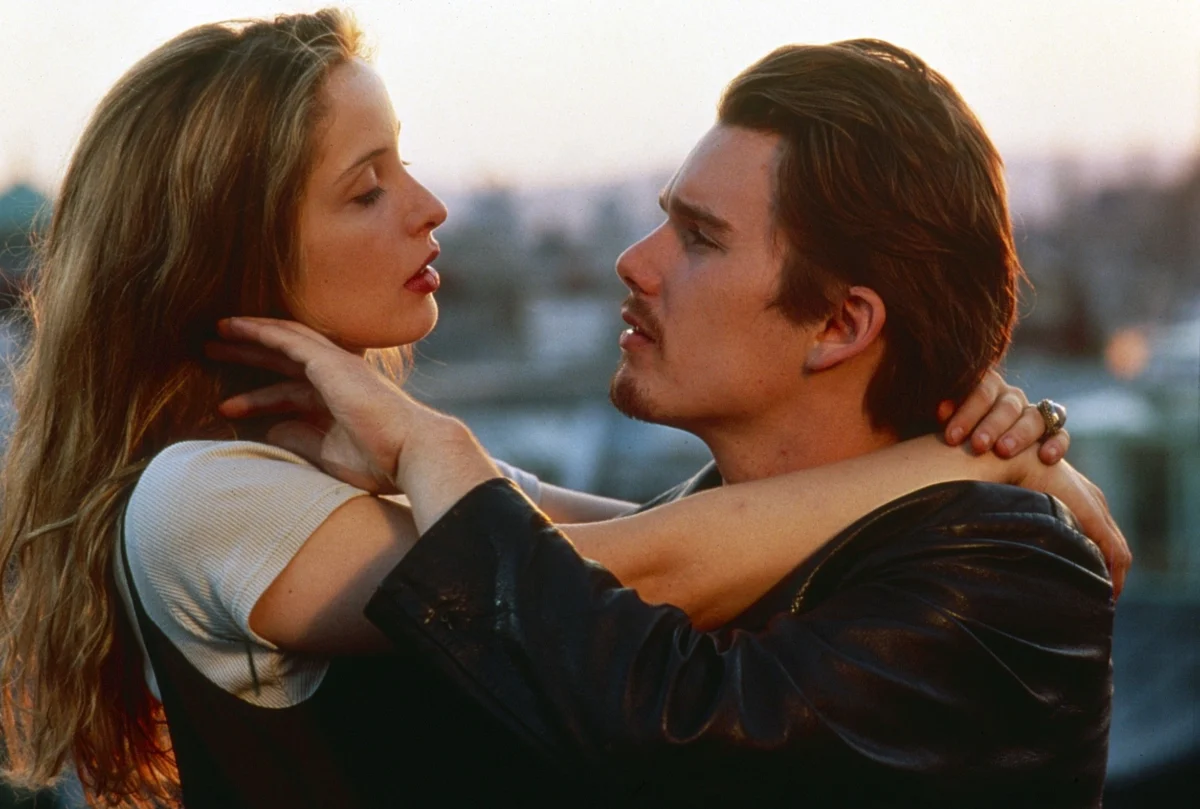
Richard Linklater’s 1995 romantic drama, Before Sunrise, initiated one of cinema’s most beloved trilogies. Starring Ethan Hawke as Jesse and Julie Delpy as Céline, the film chronicles their serendipitous encounter on a train in Europe and their decision to spontaneously disembark in Vienna to spend a single night together. The film’s brilliance lies in its simplicity: a dialogue-driven narrative that follows the two characters as they wander the city streets, engage in profound conversations, and gradually build an undeniable connection. Before Sunrise is lauded for its naturalistic performances, authentic dialogue, and its ability to capture the fleeting magic of youthful romance. It garnered critical acclaim for its innovative approach to storytelling and its deeply human portrayal of connection, inspiring subsequent generations of filmmakers and solidifying its place as a timeless romantic classic that explores themes of fate, connection, and the passage of time.
Fallen Angels (1995)
While Wong Kar-wai’s Chungking Express brought him international recognition and In the Mood for Love is often cited as his masterpiece, his 1995 film Fallen Angels offers a distinct and equally compelling cinematic experience. Originally conceived as the third segment of Chungking Express, Kar-wai expanded it into a standalone feature, a decision lauded by cinephiles. Shot predominantly at night, Fallen Angels immerses viewers in a neon-drenched Hong Kong cityscape, depicting the interconnected lives of a hitman, his enigmatic agent, and a mute ex-convict. The film is characterized by its delirious wide-angle shots, fragmented narrative, and a pulsating trip-hop soundtrack, prioritizing mood and atmosphere over conventional plot development. It is a visually arresting and emotionally resonant work that exemplifies Kar-wai’s signature style, often described as a film one loves intuitively without needing to articulate every reason, marking it as a cult favorite among his devoted followers.
Hackers (1995)
Iain Softley’s 1995 film, Hackers, stands as a vibrant snapshot of early internet culture and cyberpunk aesthetics, starring a young Angelina Jolie and Jonny Lee Miller. The plot, centering on a group of high school computer prodigies framed for a corporate embezzlement scheme, serves primarily as a vehicle for the film’s distinct visual style and techno-infused "vibes." Hackers is celebrated for its audacious fashion (featuring archival Vivienne Westwood and 70s motocross jackets), its depiction of "hacker hair," and its charmingly anachronistic vision of the internet, replete with floppy disks and fluorescent text interfaces. Despite a lukewarm critical reception upon release, the film has achieved significant cult status, revered for its nostalgic portrayal of a nascent digital world and its unapologetic embrace of a counter-cultural aesthetic. It remains a fascinating document of the decade’s technological optimism and nascent digital anxieties.
Toy Story (1995)
Pixar’s groundbreaking 1995 release, Toy Story, transcended the typical animated film to become one of the most critically acclaimed and culturally significant productions of the 1990s. As the first feature-length film entirely computer-animated, it revolutionized the animation industry. The narrative, centered on a group of sentient toys and their anxieties surrounding their owner Andy, deftly explores complex themes such as jealousy, friendship, the bittersweet passage of childhood, and existential identity. The film garnered widespread critical acclaim for its innovative animation, sophisticated storytelling, and profound emotional depth. It was a massive box office success and earned multiple Academy Award nominations, including Best Original Screenplay. Toy Story cemented Pixar’s reputation for crafting animated films with universal appeal and deep emotional resonance, creating a Pavlovian response in millennials to Randy Newman’s iconic opening song, "You’ve Got a Friend in Me," a melody that continues to evoke nostalgia and comfort.
Scream (1996)
Wes Craven’s 1996 slasher film, Scream, revitalized the horror genre by infusing it with meta-commentary and self-awareness. The film, which initiated a hugely successful franchise, cleverly deconstructs classic horror tropes while delivering genuine scares and suspense. Its unparalleled ensemble cast, including Drew Barrymore, Rose McGowan, Neve Campbell, Courteney Cox, and David Arquette, brought a level of charisma and performance quality that elevated it beyond standard horror fare. Scream was a commercial and critical success, celebrated for its witty script, inventive plot twists, and its ability to simultaneously pay homage to and satirize the genre. The film’s ending, renowned for its shocking reveal of the killer’s identity, remains a significant cultural moment, solidifying Scream‘s status as a seminal work that redefined teen horror for a new generation and continues to influence the genre.
Trainspotting (1996)
Danny Boyle’s 1996 masterpiece, Trainspotting, offers a stark yet darkly humorous portrayal of heroin addiction in an economically deprived area of Edinburgh. Starring Ewan McGregor as Mark Renton and a compelling ensemble cast, the film navigates the grim realities of unemployment, relapse, illness, and death with unflinching honesty. Beyond its social-realist elements, Trainspotting is distinguished by its surreal sequences, wry sense of humor, and memorable characters that elicit unexpected empathy. The film’s iconic soundtrack, featuring tracks from Blur, Iggy Pop, and Underworld, became a cultural phenomenon in its own right, reflecting the vibrant British music scene of the era. Trainspotting achieved critical acclaim and significant cultural impact, particularly in the UK, for its raw energy, stylistic innovation, and its ability to suck viewers into its chaotic vortex before delivering a powerful, albeit ambiguous, message about choice and consequence.
Run Lola Run (1998)
Tom Tykwer’s 1998 German thriller, Run Lola Run, is a high-octane, visually dynamic film that became an international cult sensation. Starring Franka Potente as Lola, the film thrusts the audience into a race against time as Lola has three chances to secure 100,000 marks within 20 minutes to save her boyfriend from a mob boss. The film’s unique structure, presenting three alternate timelines, each initiated by a seemingly minor decision, is propelled by a relentless techno soundtrack and Lola’s distinctive pillarbox red hair. With a brisk runtime of just 80 minutes, Run Lola Run is a propulsive cinematic experience that keeps audiences on the edge of their seats, exploring themes of chance, destiny, and the butterfly effect. It garnered widespread critical acclaim for its innovative narrative, stylistic flair, and exhilarating pace, influencing subsequent action and experimental films globally.
10 Things I Hate About You (1999)
No comprehensive list of 90s cinema is complete without a quintessential romantic comedy, and Gil Junger’s 1999 film, 10 Things I Hate About You, remains one of the most enduring and beloved. This deliciously fun, modern reimagining of Shakespeare’s The Taming of the Shrew launched the careers of a young Heath Ledger and Julia Stiles. The film, set in a contemporary high school, navigates the complexities of teenage romance, rebellion, and family dynamics with wit and charm. Its distinct 90s styling, featuring chunky flip-flops, colorful crocheting, and Doc Martens, provides a nostalgic visual backdrop. However, it is the timeless plot, sharp dialogue, and the undeniable chemistry between its leads that elevate it beyond a mere period piece to a cult classic. 10 Things I Hate About You achieved both critical and commercial success, solidifying its place as a cornerstone of the teen rom-com genre and a testament to the enduring appeal of clever adaptations.
Cruel Intentions (1999)
Roger Kumble’s 1999 film, Cruel Intentions, is a darkly seductive cult classic that reimagines Pierre Choderlos de Laclos’s 18th-century novel, Les Liaisons Dangereuses, within the opulent world of Upper East Side private schools. Starring Ryan Phillippe as Sebastian Valmont and Sarah Michelle Gellar as Kathryn Merteuil, the film follows the manipulative step-siblings as they engage in a sinister bet involving the headmaster’s virtuous daughter, Annette Hargrove (Reese Witherspoon). Beyond its scandalous plot, Cruel Intentions is celebrated for its sleek 90s high fashion, featuring designer labels like Gucci, Calvin Klein, Dolce & Gabbana, and Prada, which became synonymous with the characters’ privileged and morally corrupt world. The film’s provocative themes, sharp dialogue, and compelling performances solidified its status as a significant entry in the teen drama genre, demonstrating how classic narratives could be recontextualized for a modern, often darker, sensibility.
Fight Club (1999)
David Fincher’s 1999 film, Fight Club, initially met with a mixed critical and commercial reception but has since evolved into a profound cult phenomenon and a defining film of its generation. Starring Edward Norton as a discontented corporate office worker and Brad Pitt as the charismatic, anarchic Tyler Durden, the film delves into themes of consumerism, masculinity, and identity in late-20th-century America. Its complex narrative, featuring a shocking twist, and its unapologetic critique of societal norms resonated deeply with a generation grappling with existential ennui. Fight Club is lauded for its innovative direction, compelling performances, and its thought-provoking philosophical underpinnings. The film’s initial controversies eventually gave way to critical re-evaluation, recognizing its prescient commentary on modern alienation and its lasting impact on film discourse. Its distinctive aesthetic, including Pitt’s character’s kitsch 70s charity shop finds, also contributed to its enduring cultural footprint.
Human Traffic (1999)
Justin Kerrigan’s 1999 British film, Human Traffic, offers a vibrant and authentic portrayal of late-90s youth culture and the burgeoning rave scene in Cardiff. Featuring a breakout performance from a young Danny Dyer, the film follows a group of friends as they meticulously plan, exuberantly partake in, and eventually come down from a hedonistic weekend of partying and pill-popping. Human Traffic is characterized by its distinctive narrative style, employing quirky camera angles, trippy asides, and fast-paced spoken narration, a technique that influenced many films of the era. The film successfully captures the zeitgeist of a specific moment in British youth culture, exploring themes of escapism, friendship, and the search for identity amid the pulsating beats of club life. It has achieved cult status for its energetic depiction of a bygone era, celebrating the communal experience of dance music and offering a nostalgic look back at a time when collective euphoria served as an antidote to corporate drudgery.
The Virgin Suicides (1999)
Sofia Coppola’s directorial debut, The Virgin Suicides, released in 1999, is a haunting and visually exquisite pastel-tainted fever dream that explores themes of girlhood, depression, and the concealed darkness within a seemingly idyllic suburban neighborhood in the 1970s. Based on Jeffrey Eugenides’ novel, the film recounts the enigmatic lives and tragic deaths of the five Lisbon sisters, as observed through the collective memory of the neighborhood boys who were captivated by them. Coppola’s distinct visual language, characterized by soft focus, ethereal lighting, and a melancholic atmosphere, became instantly iconic, inspiring fashion, literature, and cinema for over two decades. The film, which emerged from a personal project for Coppola, garnered critical acclaim for its sensitive portrayal of adolescent angst and its profound aesthetic impact. The Virgin Suicides cemented Coppola’s reputation as a singular voice in cinema, capable of crafting evocative and emotionally resonant narratives that resonate long after viewing.
The Broader Landscape of 90s Cinema
The 1990s were not merely a collection of great films but a transformative period for the film industry as a whole. Several key factors contributed to its unique character:
The Rise of Independent Voices
The decade witnessed a significant surge in independent filmmaking, propelled by festivals like Sundance and the emergence of production companies such as Miramax. This ecosystem fostered new directors who challenged conventional narratives and brought fresh perspectives to the screen. Films like Pulp Fiction, Clerks, and Reservoir Dogs demonstrated that critically acclaimed and commercially successful cinema could exist outside the traditional studio system, leading to a golden age of diverse and often subversive storytelling. This independent spirit allowed for more experimental techniques and darker, more complex thematic explorations that might have been deemed too risky by major studios.
Technological Evolution and Practical Effects
The 90s represented a fascinating balance in filmmaking technology. While computer-generated imagery (CGI) began its ascendancy, notably with Toy Story and advancements in films like Jurassic Park, practical effects and traditional cinematography still held significant sway. Many films of the era expertly blended these techniques, leveraging new digital tools to enhance, rather than entirely replace, tangible artistry. This hybrid approach often resulted in a visual authenticity that some argue is less prevalent in today’s heavily CGI-reliant blockbusters.
Shifting Audience Engagement
Before the ubiquity of high-speed internet and streaming platforms, the home video market, primarily VHS and later the nascent DVD format, played a crucial role in how audiences engaged with films. The ability to own and rewatch movies on demand fostered a deeper, more intimate relationship with cinematic works. Films were discussed, quoted, and re-experienced countless times, allowing nuances to emerge and cult followings to solidify organically. This era of repeated viewing contributed significantly to the lasting impact and cultural resonance of many 90s films, as their narratives and aesthetics became deeply embedded in the collective consciousness.
Enduring Legacy and Contemporary Relevance
The films of the 1990s continue to resonate deeply in the 21st century, serving as a powerful counterpoint to many contemporary cinematic trends. Their emphasis on original storytelling, diverse genres, and often character-driven narratives offers a refreshing alternative to the current landscape, which frequently leans on established intellectual properties, sequels, and remakes. The enduring popularity of 90s films, evident in their continued presence on streaming platforms and in cultural discussions, underscores their timeless appeal and the quality of their craftsmanship.
The decade’s unique blend of artistic freedom, technological innovation, and a distinct mode of audience engagement created a fertile ground for cinematic masterpieces that explored the human condition with both depth and daring. From gritty social realism to surreal road trips, from meta-horror to poignant romances, 90s cinema carved out a legacy defined by its boldness, its originality, and its profound ability to connect with audiences on a deeply personal level. As the film industry continues to evolve, the 1990s remain a touchstone for impactful, original filmmaking, a period whose influence continues to shape and inspire the art of cinema.
