
 By Nila Kartika Wati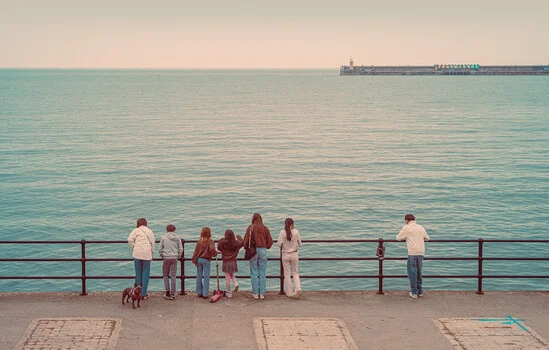
After approximately four decades dedicated to the art and craft of photography, a profound and significant transformation has been observed in the fundamental approach to image-making. This shift transcends technological advancements such as camera evolution, lens innovations, or the ubiquitous transition from analog film to digital capture. Instead, it centers on a deeper, more introspective alteration: the very nature of what a photographer seeks to capture when wielding their instrument. This transformation, initially a personal revelation for many seasoned practitioners, has evolved into a discernible trend within the broader photographic community, challenging established norms and redefining artistic purpose in an increasingly visually saturated world.
The Genesis of a Shift: Four Decades of Commercial Photography
Early in the careers of many professional photographers who began in the mid to late 20th century, the dominant mode of operation revolved around commercial assignments. This often entailed solving specific visual problems for clients, including publications, advertising agencies, and corporate brands. For instance, a substantial portion of work involved travel articles, a genre that typically demanded the capture of visually arresting landscapes, architecturally significant buildings, and dramatically iconic locations. The primary objective was clear: to produce images that would inspire wanderlust, enticing viewers to experience these celebrated sites firsthand. This commercial imperative naturally guided the photographer’s eye toward established beauty and widely recognized grandeur.
The era preceding widespread digital photography and the internet was characterized by a more controlled distribution of imagery. Photographers, often represented by agencies or working directly for publishers, were key gatekeepers of visual narratives. Their work was meticulously selected, edited, and presented in print, commanding significant attention. The technical demands of film photography—its cost, the time required for processing, and the meticulousness needed for composition—further reinforced a conservative approach focused on delivering proven, high-impact visuals. This environment, while fostering technical excellence, inadvertently cultivated a tendency to prioritize the "expected" shot.
The Paradox of Popular Views and Creative Stagnation
Working extensively with popular views, such as the sweeping vistas of the Grand Canyon or the majestic peaks of the Canadian Rockies, gradually illuminated a critical insight into human perception and photographic practice: familiarity. It became evident that when individuals, including photographers, visit these globally renowned locations, the impulse is not necessarily to photograph what is inherently interesting or unique to that moment, but rather what has already been "noticed and pointed out by others." This phenomenon manifests in the ubiquitous replication of iconic perspectives and landmarks—shots that, by their very nature, "shout for attention" and continue to receive it. This pervasive familiarity, ironically, possesses a subtle yet powerful capacity to dull genuine observation, causing both photographers and viewers to cease truly seeing and noticing the nuances of a scene.
This realization is not isolated to veteran photographers. Studies in visual perception and cognitive psychology have long noted how repeated exposure to stimuli can lead to habituation, where the brain filters out information deemed redundant or predictable. In photography, this translates into a reliance on established visual tropes, diminishing the incentive to explore unconventional angles or overlooked details. For many creative professionals, this cycle of replicating familiar imagery eventually breeds a sense of creative dissatisfaction. The sentiment of feeling like an "uncreative sheep" when continuously capturing the same perspectives as countless others is a shared struggle, reflecting a yearning for authenticity and individual artistic voice amidst a sea of derivative content.
Chronology of Change: From Film to Digital and the Social Media Revolution
The trajectory of photography over the past 40 years provides a crucial backdrop to this evolving artistic perspective:
- 1980s-1990s: The Film Era’s Commercial Hegemony: This period was dominated by film, with commercial photography being a primary revenue stream for many professionals. Large-format cameras, medium format, and 35mm SLRs were the tools of choice, requiring significant technical skill in exposure, development, and printing. Distribution was largely through print publications, advertising campaigns, and stock photo agencies. The focus was on high-quality, technically perfect images that met specific client briefs, often featuring aspirational landscapes or clear product shots. The average photographer might take hundreds, not thousands, of photos per year due to film and processing costs.
- Late 1990s-Early 2000s: The Dawn of Digital: The advent of consumer-grade digital cameras began to democratize photography. Early digital SLRs (DSLRs) started replacing film cameras in professional settings, offering instant feedback and eliminating film costs. This transition gradually accelerated workflows and reduced barriers to entry for aspiring photographers. While initial image quality was often debated against film, the convenience and speed were undeniable.
- Mid-2000s-Present: The Social Media Tsunami and Smartphone Photography: The internet’s widespread adoption, coupled with the rise of social media platforms like Flickr (2004), Facebook (2004), and Instagram (2010), fundamentally reshaped the photographic landscape. Smartphones, with increasingly sophisticated cameras, put a powerful photographic tool in nearly everyone’s pocket.
- Volume: It’s estimated that trillions of photos are taken globally each year, with billions uploaded to social media daily. This unprecedented volume has created an environment of visual saturation.
- Validation Economy: Social media platforms introduced "likes," "shares," and "followers" as new metrics of success, inadvertently fostering a culture where images that are immediately striking or conform to popular aesthetics often gain more traction. This creates pressure for "epic landscapes, dramatic skies, spectacular sunsets, and famous locations" to compete in crowded feeds.
- Accessibility vs. Originality: While digital and social media have made photography more accessible than ever, they’ve simultaneously intensified the challenge of cultivating a unique voice and capturing truly original content amidst the constant influx of familiar imagery.
This timeline illustrates how technological progress, while offering immense opportunities, also introduced new pressures that inadvertently reinforced the tendency to photograph the "obvious," thereby creating a fertile ground for the counter-movement towards "quieter" and more contemplative photography.
Redefining "Interesting": The Quest for the Ignored
This historical context brings into sharper focus the evolving methodology adopted by many photographers. The initial query, "Where’s the great photograph?", which often led to well-trodden paths, has been supplanted by a more inquisitive and challenging question: "What’s interesting here that everyone else is ignoring?" This revised approach is applicable across all environments, whether it’s the familiar street outside one’s home, the iconic grandeur of the Grand Canyon, or the architectural marvel of Big Ben in London.
This new quest often leads to the discovery of subjects that diverge from traditional photographic paradigms. It might involve meticulously documenting an unusual architectural detail, recognizing an intriguing interplay of shapes and forms, isolating vibrant patches of color, capturing the ephemeral beauty of a shadow, or simply responding to an inexplicable visual pull—something that immediately catches the eye for reasons that may not be consciously articulated until later reflection. This departure from conventional subjects is a deliberate move away from the notion that every photograph must aggressively vie for attention, a concept often fueled by the competitive dynamics of social media feeds.
The Rise of "Quieter Photographs" and Contemplative Engagement
A significant aspect of this evolving photographic philosophy is an increasing gravitation toward "quieter photographs." These are images that, upon initial viewing, might appear ordinary or understated but reveal greater depth and intrigue the longer they are observed. This preference represents a conscious rejection of the fleeting, high-impact imagery often prioritized in a fast-paced digital world. Instead, it champions a more contemplative form of engagement, inviting viewers to pause, reflect, and discover subtle narratives or aesthetic qualities that are not immediately apparent.
Photography critics and art historians have noted a parallel trend in contemporary art, where artists increasingly explore themes of slowness, mindfulness, and the beauty of the mundane, often in response to accelerated modern life. This photographic movement can be seen as a visual analogue, encouraging a deeper appreciation for the overlooked and fostering a more profound connection between the image, the photographer, and the viewer. It’s a deliberate attempt to counteract the "scroll culture" of social media, where millions of images are consumed and dismissed in seconds.
Liberation from External Validation: A New Metric for Success
Perhaps one of the most liberating aspects of this transformation is the shift in the photographer’s primary metric of success. Decades ago, particularly within commercial photography, the paramount concern was whether clients deemed the photographs "good," as their approval directly translated into financial compensation. Today, for many, that focus has dramatically shifted inward: the central question is whether the photographer personally likes the photograph.
This internal validation represents a profound artistic liberation. Once the creative individual disengages from the relentless pursuit of external approval—whether from paying clients, social media algorithms, or a general audience—a vast expanse opens for exploring subjects and styles that genuinely resonate with their artistic sensibilities. This fosters a more authentic and uninhibited creative process, where the intrinsic satisfaction of making an image aligns more closely with the photographer’s vision rather than external expectations. Psychologically, this shift can significantly reduce creative burnout and enhance the intrinsic motivation essential for sustained artistic development.
Beyond Equipment: The Enduring Power of Observation
After many years of practice, the continuous improvement of a photographer is increasingly understood to have little to do with acquiring the latest, most advanced equipment or uncovering some secret, "game-changing" technical trick. While technology undeniably plays a role in image capture, true artistic growth, particularly in the current visual landscape, is rooted in a more fundamental quality: the patience to look a little longer.
This patience allows for a deeper engagement with the subject matter, moving beyond superficial observation to uncover hidden layers of meaning, unexpected compositions, or fleeting moments of beauty. It underscores the profound insight that the most compelling photograph is not always the immediately spectacular or universally marveled-at subject. More often, it is the seemingly ordinary thing—the detail, the texture, the light, the interaction—that everyone else has ceased to notice, or perhaps never truly saw in the first place. This emphasizes that the human eye, guided by curiosity and patience, remains the most sophisticated and irreplaceable tool in a photographer’s arsenal.
Broader Implications and Future Outlook
This evolving perspective in photography carries significant implications across various domains:
- Artistic and Cultural Impact: It promotes individuality and challenges visual clichés, encouraging a more diverse and nuanced visual culture. It suggests a move towards art that rewards contemplation over immediate impact, potentially fostering more discerning viewers.
- Tourism and Marketing: For destinations globally, there’s a potential shift from purely aspirational, landmark-centric marketing to more authentic, immersive portrayals that highlight unique local details and experiences. This could lead to a richer, more sustainable form of tourism that values local character over mass appeal.
- Educational Value: For aspiring photographers, this paradigm shift emphasizes the critical importance of developing a unique vision, observational skills, and patience over an exclusive focus on gear or technical specifications. Photography education may increasingly prioritize critical thinking and artistic interpretation.
- The Enduring Value of the Human Eye: In an era where artificial intelligence and computational photography are rapidly advancing, the unique human capacity for subjective interpretation, curiosity, and the ability to find beauty in the overlooked becomes more valuable than ever. It reaffirms the photographer’s role as an interpreter of the world, not just a recorder of it.
In conclusion, the journey through decades of photographic practice reveals a profound evolution from a commercially driven, outwardly focused pursuit to an inwardly guided exploration of authenticity and overlooked beauty. This shift, epitomized by the patience to look longer and the courage to ignore the obvious, signifies a maturation of the craft. It redefines photographic success not by external validation or the grandeur of the subject, but by the quiet power of personal vision and the ability to unveil the extraordinary within the ordinary.
