
 By Nila Kartika Wati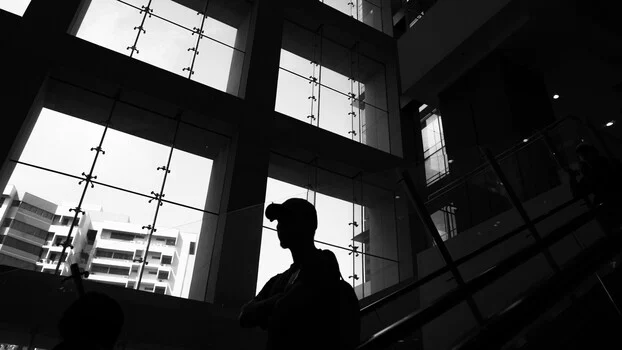
In an era saturated with vibrant digital color, the emergence and sustained relevance of a camera designed exclusively for black-and-white photography might appear counterintuitive. Yet, the Leica Q3 Monochrom, launched into a market increasingly driven by computational photography and hyper-realistic color rendition, posits a profound question about artistic intent and the enduring power of monochrome imagery. This article explores the unique value proposition of such a specialized instrument in 2026, examining its technical prowess, historical context, and the philosophical underpinnings that continue to draw discerning photographers to the grayscale.
A Legacy Forged in Black and White: The Historical Imperative
Photography, from its very inception in the early 19th century, was an art form born in monochrome. The pioneering efforts of Nicéphore Niépce, Louis Daguerre, and William Henry Fox Talbot yielded images devoid of color, relying solely on light, shadow, and texture to convey narrative and emotion. For over a century, from the daguerreotypes of the 1830s through the golden age of photojournalism and documentary photography in the mid-20th century, black and white remained not merely a stylistic choice but the fundamental medium. Iconic works by masters like Ansel Adams, Henri Cartier-Bresson, Dorothea Lange, and Robert Frank were conceived and realized in grayscale, demonstrating its unparalleled ability to strip away distraction and distill a scene to its essential elements.
The advent of commercially viable color photography in the mid-20th century, notably with Kodak’s Kodachrome in 1935 and Ektachrome in 1940, gradually shifted the paradigm. By the 1970s and 80s, color had become the dominant format for both amateur and professional use. However, black and white never truly disappeared; it evolved into a deliberate artistic choice, often associated with a sense of timelessness, gravitas, and a nostalgic echo of photography’s roots. This inherent sentimentality, regardless of how a modern monochrome image is produced, remains a significant draw, connecting contemporary viewers to a rich visual history.
The Modern Monochrome Conundrum: Beyond Nostalgia
Beyond its historical resonance, black-and-white photography possesses an undeniable visual impact when executed skillfully. It forces the viewer to engage with form, composition, texture, and light in ways that color sometimes obscures. High contrast, subtle tonal gradations, and the interplay of light and shadow become paramount, creating a powerful emphasis on graphical elements and abstract qualities. This is not to suggest that all black-and-white photographs are inherently superior; indeed, many subjects are best rendered in color, which can convey information, mood, and vibrancy that monochrome cannot.
The core question in 2026, therefore, is not whether black and white has artistic merit, but what unique value a dedicated monochrome camera offers in a world where virtually any digital image can be converted to grayscale with a click. Modern software algorithms are sophisticated, yet they operate on color data that has already been captured and interpreted. This is where specialized instruments like the Leica Q3 Monochrom carve out their niche.
The Leica Q3 Monochrom: A Technical and Artistic Statement
The Leica Q line of digital cameras has garnered considerable popularity among enthusiasts and professionals alike, lauded for its fusion of compact design, a powerful full-frame sensor, and the precision of a fixed, high-quality lens with robust autofocus. The standard Leica Q3, with its 60.3-megapixel backside-illuminated (BSI) CMOS sensor, has established itself as a highly capable and versatile tool. The Q3 Monochrom, however, takes this platform and refines it for a singular purpose: the capture of unparalleled black-and-white imagery.
The Dedicated Monochrome Sensor: A Technical Advantage
The most significant differentiator of the Leica Q3 Monochrom is its unique 60.3-megapixel BSI CMOS sensor, which is exclusively monochrome. Unlike conventional color sensors, which employ a Bayer filter array to capture red, green, and blue light at individual pixel sites, the Q3 Monochrom’s sensor lacks this filter. Each pixel directly registers luminance values without the need for color interpolation (demosaicing). This fundamental difference yields several critical advantages:
- Enhanced Resolution and Sharpness: Without the Bayer filter and the subsequent demosaicing process, each pixel contributes directly to the image’s detail. This results in sharper images with finer micro-contrast and a perceived increase in resolution, even at the same megapixel count as its color counterpart. The absence of color artifacts further refines detail rendition.
- Superior Light Gathering and Low-Light Performance: The removal of the color filter array allows more light to reach each photosite. This translates to greater light sensitivity, enabling cleaner images at higher ISO settings and improved dynamic range. Photographers can capture nuanced tones even in challenging low-light conditions with significantly reduced noise compared to a color sensor converted to black and white.
- Richer Tonal Gradation: By directly measuring luminance, the monochrome sensor is capable of rendering a broader and smoother range of grays, from the deepest blacks to the brightest whites, with incredibly fine steps in between. This allows for a more subtle and expressive portrayal of textures and forms.
- Simplified Data Processing: The camera’s Maestro IV processor, while still highly advanced, can dedicate its resources entirely to interpreting luminance data, leading to potentially faster processing times and a more direct translation of light into image. This processor is also responsible for rendering the supposedly "iconic Leica monochrome contrast," a characteristic tonal signature prized by many photographers.
Core Specifications and Ergonomics
Beyond its specialized sensor, the Leica Q3 Monochrom retains the acclaimed features of the Q3 platform:
- Maestro IV Processor: This powerful engine not only handles the unique sensor data but also enables responsive and adaptive autofocus, and facilitates the capture of high-resolution monochrome video, including 8K footage.
- Leica Summilux 28 f/1.7 ASPH. Lens: This fixed, wide-angle autofocus lens is renowned for its optical quality, sharpness, and ability to perform exceptionally well even at its wide-open aperture of f/1.7. The 28mm focal length provides a versatile perspective, ideal for street photography, landscapes, and environmental portraits.
- Digital Cropping Versatility: A standout feature, complementing the high-resolution sensor, is the dedicated zoom/crop button. This allows photographers to digitally crop the 28mm image in real-time within the electronic viewfinder (EVF) or on the rear screen, simulating focal lengths of 35mm, 50mm, 75mm, and even 90mm. While not an optical zoom, the 60.3MP sensor provides ample resolution for these crops to remain highly usable, offering a degree of compositional flexibility within the fixed-lens paradigm.
- Compact Body and Intuitive Controls: The Q3 Monochrom maintains the minimalist design and robust build quality characteristic of Leica. Its relatively compact form factor makes it an ideal companion for travel and daily carry.
- Tilt Screen: The inclusion of a tilt-only LCD screen (tilting up and down) significantly enhances shooting versatility, particularly for street photography and candid moments where shooting from low or high angles discreetly is advantageous. While a multi-angle or fully articulating screen might offer more flexibility for vertical shooting or studio work, the tilt mechanism aligns with the camera’s intended use for dynamic, on-the-go photography.
- High-Resolution Electronic Viewfinder (EVF): A 5.76-million-dot EVF with a maximum frame rate of 120 fps offers a clear, immersive, and near real-time viewing experience, emulating the traditional feel of an optical viewfinder.
- Weather Sealing: With an IP52 water-resistant and weather-sealed body, the Q3 Monochrom is designed to withstand challenging environmental conditions, reinforcing its suitability as a robust tool for outdoor and travel photography.
The Shooting Experience: A Refined Artistic Vision
Using the Leica Q3 Monochrom is, by all accounts, a distinct photographic experience. The 60-megapixel sensor delivers exceptional detail and resolution, making every captured nuance a reward. The enhanced autofocus system, a significant improvement over previous Q models, ensures quick and precise subject acquisition. The tilt screen further empowers photographers to explore diverse perspectives without physical strain, fostering a more fluid and less obtrusive shooting style.
However, the most profound difference lies in the singular focus on monochrome. This camera forces a different kind of visual thinking. Without the distraction of color, the photographer’s eye is trained to see in terms of light, shadow, texture, and form. It’s an exercise in abstraction, a challenge to convey mood and narrative through tonal values alone. This "limitation" becomes a catalyst for creativity, encouraging a more intentional and discerning approach to subject matter.
Photographers who embrace the Q3 Monochrom often report a heightened awareness of light quality – how it falls, shapes, and defines. They seek out scenes where contrast is inherent, where textures are pronounced, and where geometric compositions can shine. It’s a camera that encourages patience and observation, fostering a deeper immersion in the act of seeing. For many, this isn’t just about taking pictures; it’s about refining one’s creative vision to a purer form.
Market Positioning and Broader Implications
The Leica Q3 Monochrom is undeniably a niche product. Its premium price point and specialized nature mean it is not intended for the casual photographer or for those seeking a single, all-purpose camera. The standard Leica Q3, with its color capabilities, offers a more universal appeal for photographers desiring a compact, high-performance instrument. The Monochrom variant, however, is reserved for a very specific segment: the purist, the artist, the enthusiast who is deeply committed to black-and-white photography as their primary mode of expression.
Leica’s consistent commitment to dedicated monochrome cameras, evident in its earlier M Monochrom series (including the M9 Monochrom, M Monochrom Typ 246, M10 Monochrom, and M11 Monochrom), underscores a belief in the enduring artistic value of this approach. In an industry increasingly focused on computational photography that adds and enhances elements, Leica’s Monochrom line stands as a counter-narrative, advocating for subtraction and simplification to achieve artistic depth.
The existence of such a camera in 2026 also has broader implications for the photography world. It serves as a powerful reminder that technological advancement doesn’t always equate to adding more features or colors. Sometimes, true innovation lies in refining a specific aspect to its highest possible degree. It challenges photographers to consider their artistic intent more deeply, to question whether color truly serves their vision or merely acts as a default setting.
Conclusion: A Testament to Artistic Purity
The Leica Q3 Monochrom is more than just a camera; it is a philosophy encased in a meticulously crafted body. It is a testament to the enduring power of black-and-white photography, not merely as a nostalgic relic, but as a vibrant and sophisticated artistic medium in the digital age. By stripping away the complexities of color, it invites photographers to engage with light, shadow, form, and emotion at their most fundamental level. For those who answer its call, it offers an unparalleled tool for achieving a refined and deeply personal artistic expression, proving that in a world of endless options, sometimes less truly is more. It is a camera for the discerning eye, for the photographer who sees the world not just in hues, but in the timeless dance of light and darkness.
