
 By Nila Kartika Wati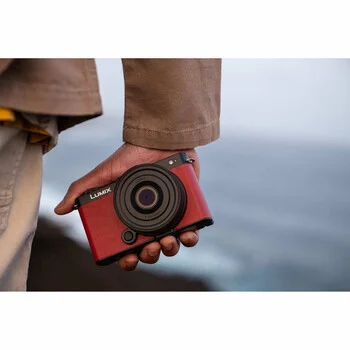
For nearly a decade, the dedicated camera industry found itself in an existential crisis, a quiet reckoning exacerbated by the relentless march of smartphone technology. The uncomfortable truth, increasingly acknowledged across executive boardrooms in 2026, is that for the vast majority of consumers, a standalone camera is no longer a necessity. The ubiquitous smartphone, armed with sophisticated computational photography and unparalleled connectivity, has not merely become "good enough" for casual image capture; it has surpassed traditional cameras in convenience, immediate sharing capabilities, and the very processing power that underpins everyday snapshots. This seismic shift has forced manufacturers to confront a fundamental question: if no one needs your product, why would they buy it? The answer, emerging almost serendipitously, points to the cultivation of desire over the relentless pursuit of technical capability, marking the most significant strategic reorientation the industry has seen in a generation.
A Decade of Decline: The Smartphone’s Ascendancy
The journey to this pivotal moment began well over a decade ago, coinciding with the widespread adoption of smartphones. In 2010, the Camera & Imaging Products Association (CIPA) reported global shipments of digital cameras peaking at an astonishing 121 million units. This era represented the zenith of compact point-and-shoots and the burgeoning popularity of DSLRs. However, as smartphones evolved, integrating increasingly powerful cameras with user-friendly interfaces, instant sharing, and a burgeoning ecosystem of apps, the dedicated camera market began a steep and seemingly irreversible decline. By 2020, CIPA figures indicated shipments had plummeted to just over 8 million units globally – a staggering 93% contraction from its peak.
This precipitous drop was primarily fueled by the smartphone’s inherent advantages for the casual photographer. A device always in one’s pocket, a smartphone offered seamless integration with social media, intuitive touch-screen controls, and, crucially, computational photography techniques that traditional cameras struggled to match. Features like HDR (High Dynamic Range), intelligent scene recognition, portrait mode with simulated bokeh, and advanced low-light processing, all powered by an integrated system-on-a-chip, delivered impressive results with minimal effort. The dedicated camera, once a staple for capturing life’s moments, was relegated to a niche for enthusiasts and professionals, or worse, perceived as an unnecessary burden.
The Spec Race: A Losing Battle Against Convenience
For years, the camera industry responded to this challenge by doubling down on its traditional competitive advantages: technical specifications. Manufacturers engaged in an escalating "spec race," each generation vying for more megapixels, higher ISO sensitivities, faster burst rates, and wider dynamic ranges. Marketing campaigns trumpeted these numerical superiority, implying that a better camera was simply one with bigger numbers on its datasheet. While these advancements yielded technically magnificent devices, they often felt emotionally inert – highly capable black boxes that performed flawlessly but failed to inspire a deeper connection with the user.
This strategy was fundamentally flawed because it pitted dedicated cameras against smartphones on a battlefield where the phone held insurmountable advantages for the average consumer. For everyday snapshots, convenience, connectivity, and computational prowess trumped raw sensor resolution or marginal gains in frame rate. Attempting to win back the casual shooter by offering slightly sharper images or a marginally wider ISO range was akin to a calculator company trying to compete with a smartphone on arithmetic – the smartphone offered the functionality as a secondary feature, always available, always connected. While dedicated cameras retained significant leads in areas like optical quality, sensor size, lens interchangeability, ergonomic design for extended shooting, and professional video capabilities, these advantages primarily appealed to a dwindling segment of serious photographers, not the vast market of casual consumers who had migrated to their phones.
The Pivot to Desire: Reimagining the Camera Experience
A turning point began to emerge in the early 2020s, with a handful of visionary manufacturers recognizing that the path to survival lay not in outcompeting the smartphone on its own terms, but in offering something structurally different and emotionally resonant. This radical-sounding idea proposed that a camera should be more than a tool; it should be a beautiful, tactile object that people want to pick up and use, an experience rather than just a means to an end.
Several key models spearheaded this paradigm shift:
- Fujifilm X100VI: Building on the legacy of its predecessors, the X100VI launched in early 2024 to unprecedented demand. Its retro-inspired design, complete with tactile dials for aperture, shutter speed, and ISO, transformed the act of photography into a deliberate, engaging ritual. Its acclaimed film simulations offered unique in-camera aesthetics, appealing to a generation yearning for distinct visual styles beyond the clinical perfection of smartphone output.
- Nikon Zf: Introduced around the same period, the Zf married Nikon’s full-frame mirrorless technology with a stunning, vintage-inspired body reminiscent of their classic film cameras. Its premium build quality and emphasis on physical controls made it an object of desire for enthusiasts seeking a more engaging shooting experience, proving that retro aesthetics could command a premium price point for advanced users.
- Panasonic Lumix S9: Positioned as a style-led compact, the S9 focused on portability, character, and an experience-first approach. It aimed to appeal to creators and style-conscious users who prioritized the joy of shooting and sharing in a compact, aesthetically pleasing package, rather than an exhaustive spec sheet.
These cameras competed on an entirely different plane: the intrinsic pleasure and unique experience of photography itself, something a smartphone, by its very nature as a multi-purpose device, cannot replicate. The market’s response was emphatic, signaling a decisive end to the spec-race argument.
Empirical Evidence: A Resurgent Market
The success of these "desire-driven" cameras was not subtle. The Fujifilm X100VI immediately became almost impossible to acquire upon its 2024 launch, generating waiting lists extending six months or more and frequently selling above its list price on the secondary market for roughly two years. Its phenomenal popularity was underscored by its position as the best-selling camera at Japan’s Map Camera in 2024, a major specialty retailer. This achievement was particularly noteworthy as it outsold every compact, every interchangeable-lens body, and every full-frame camera on their extensive list, despite chronic backorders. The Nikon Zf, a full-frame retro body retailing around $2,000, secured the fourth overall spot at the same retailer, a testament to how its tactile appeal and design outmaneuvered more conventional, technically focused Nikon offerings.
While Map Camera represents a specific, high-end specialty market in Shinjuku, Japan, the broader trends pointed in the same direction. Japanese domestic camera sales, a bellwether for the global industry, experienced growth in 2023 for the first time in over a decade, a trend that continued into 2024 and 2025. This rebound was partially attributed to post-pandemic travel and leisure spending, but the undeniable success of cameras like the X100VI and Zf strongly suggested that renewed consumer desire was a critical driving force. Retail tracking data indicated Japanese compact-camera sales more than doubled year-over-year in 2025, further solidifying the impact of this desire-driven resurgence.
Industry observers credit Sony with arguably igniting this shift, even if initially out of self-interest, by introducing smaller, characterful mirrorless bodies that subtly reminded consumers that cameras could be objects of personal aspiration. However, it was Fujifilm and Nikon who most fully embraced and refined this philosophy. Fujifilm, with its iconic film simulations and intuitive dial-driven controls, transformed shooting into a satisfying ritual. Nikon demonstrated that a retro-styled full-frame body could command a premium price and outsell its more conventional, performance-oriented counterparts. These companies fundamentally shifted their questioning from "what a camera needs to do" to "what a camera should make you feel."
The Low-Fidelity Revolution: Desire Beyond Image Quality
The "desire thesis" transcends premium price points, finding its most compelling validation in the unexpected boom of cheap, low-quality cameras. This phenomenon unequivocally demonstrates that consumer desire can be almost entirely detached from traditional metrics of image quality.
Consider the Kodak Charmera, a thumb-sized keychain camera priced around $35. It captures 1.6-megapixel images, roughly 1,440 pixels wide – a resolution comparable to early 2000s camera phones. By any objective technical measure, the Charmera is a poor performer; reviewers have widely criticized its image quality. Your smartphone effortlessly surpasses it in every technical category. Yet, the Charmera went viral, selling out upon launch, attracting scalpers, and, most tellingly, winning both the prestigious iF Design Award and the Red Dot Design Award. That a 1.6-megapixel toy, producing soft, noisy snapshots, could be celebrated by an industry typically obsessed with corner sharpness and dynamic range, is a profound statement.
The secret to the Charmera’s success lies precisely in its technical "flaws." Its lo-fi images, imperfect and nostalgic, deliver an "of-the-moment" aesthetic that a generation raised on the flawless, often sterile output of smartphones actively seeks. It represents a reaction against images that are "too clean, too corrected, too perfect to feel real." The camera’s appeal is further enhanced by its marketing – sold in blind boxes, it transforms purchase into a collectible game, and its design allows it to clip to a bag as much as a charm as a tool. Consumers are not buying the Charmera to produce technically superior photographs; they are buying it because it is fun, distinctive, and personal – the purest expression of "want" over "need."
This same logic underpins a broader category of cameras now flourishing in the market. Beyond "retro" aesthetics, this segment includes:
- Pocketable Enthusiast Compacts: Like the Ricoh GR IV, prized for their discreet form factor, unique controls, and distinct image rendering.
- Creator-Focused Compacts: Designed for ease of use, unique aesthetics, and immediate sharing.
- Budget Point-and-Shoots: Reissued or newly designed with a focus on simple, characterful output.
- Screenless, Distraction-Free Cameras: Such as the Camp Snap, designed to encourage presence and spontaneous capture without the distraction of a screen.
- Novelty Cameras: Including the Paper Shoot (made of stone paper) and various toy and keychain cameras, all existing primarily to deliver a specific feeling or aesthetic rather than technical perfection.
What unites these diverse offerings is not a singular vintage look, but a shared emphasis on compactness, low-friction operation, and a distinct personality. They are cameras that users want to carry because the act of using them is an experience in itself, rather than a chore. The fact that a $35 toy camera and a $4,000 Leica are both thriving on the same underlying force – the power of wanting – reveals where the true value in the 2026 camera market resides: not in the sensor, but in the desire it ignites.
Navigating the Tensions and Risks of Desire
While the pivot to desire has revitalized the industry, it is not without its inherent risks and complexities. Building a product strategy on desire is arguably more fragile than on capability. A clear spec advantage is measurable and can offer durable differentiation; a "vibe," however, can evaporate as cultural trends shift. The rapid growth of the cheap-camera segment, in particular, carries the distinct texture of a fad, and manufacturers must exercise caution to avoid betting their long-term business on fleeting novelties.
There is also the critical matter of substance behind the styling. Genuine products like the X100VI and Zf pair retro aesthetics with sophisticated modern engineering, offering a truly compelling blend of form and function. However, this trend also invites cynicism, and the industry has, at times, contributed to it. Canon’s 2025 re-issue of the PowerShot Elph 360 HS, a 2016 point-and-shoot, with largely unchanged specs, fewer wireless features, and a higher price, was seen by many as merely riding the compact-camera wave without offering genuine innovation. Retro styling can easily become a thin veneer over indifference, and discerning buyers will eventually distinguish between authentic craftsmanship and superficial repackaging. Even genuine efforts can reveal limitations; the aesthetic appeal of a Nikon Zf, for instance, can be diminished when paired with a modern Z-mount lens devoid of an aperture ring and covered in plastic, breaking the carefully constructed vintage spell.
The question of scarcity also presents a delicate tension. Fujifilm’s CEO has publicly stated that producing too many cameras and thereby lowering their perceived value would be "unfortunate," pointing to Leica’s premium, exclusive model as an aspiration. While Fujifilm also denies that X100VI shortages are a deliberate strategy, insisting they are manufacturing as fast as possible, both perspectives can coexist. The company may indeed be genuinely supply-constrained while simultaneously benefiting from the heightened prestige and mystique that persistent waitlists confer. The risk, however, lies in consumer perception. Buyers who simply wish to purchase a camera at its stated price, without entering lotteries or enduring months-long waits, may reasonably conclude that scarcity is being tolerated rather than actively combated, regardless of intent. Desire is a powerful motivator, but an industry that leans too heavily on frustrated demand for its mystique risks fostering resentment among its most ardent potential customers.
The Indisputable Path Forward
Despite these tensions and risks, the industry’s pivot to desire is undeniably the correct strategic move, primarily because the alternative – continuing to compete with smartphones on capability – leads directly to obsolescence. An industry that persistently attempts to out-spec the smartphone for casual use is an industry actively arguing itself out of existence.
By rediscovering that a camera can be an object of desire – something tactile, characterful, and inherently worth wanting for its own sake – the industry has carved out a unique and defensible niche that smartphones cannot occupy. The smartphone will invariably remain more convenient, more connected, and more capable for the vast majority of casual, computational photography. However, it will never be the device one reaches for purely because the act of using it feels good, because it connects to a sense of craft, or because it embodies a distinct personal style. That fundamental difference – the profound pleasure derived from the object itself and the deliberate, intentional act of making a photograph with it – is not a mere marketing gimmick. It represents the entire future of the dedicated camera. The companies that internalize and authentically execute this understanding are the ones most likely to thrive in the decades to come.
In essence, the smartest strategic decision the camera industry has made in years is to cease striving to be needed and to instead focus on being wanted. This fundamental reorientation has proven to be the winnable fight all along, ensuring that the art and craft of dedicated photography continue to inspire and engage a new generation of image-makers.
