
 By Nila Kartika Wati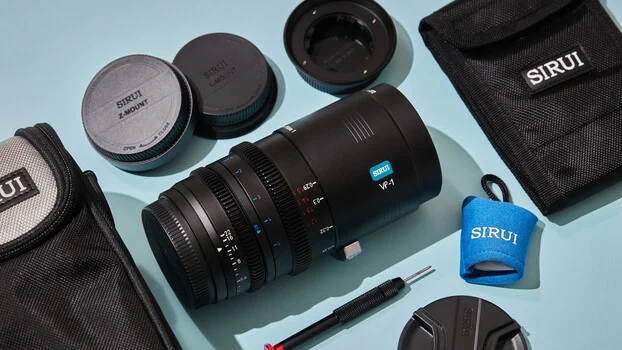
The Sirui Vision Prime 1 (VP-1) series of full-frame cine lenses, initially launched in February 2025, marked a significant entry into the professional filmmaking market by offering a compelling blend of value and innovative design. This initial release focused on essential mid-range focal lengths, including the 24mm T1.4, 35mm T1.4, and 50mm T1.4, aiming to provide accessible yet high-performance options for filmmaking enthusiasts while simultaneously addressing traditional pain points in lens design and workflow integration. Building on the successful reception of these inaugural lenses, Sirui expanded the VP-1 series earlier this year with the introduction of the 15mm T1.6 ultra-wide, the 75mm T1.4 telephoto, and the 150mm T4 1.5x Macro lens, effectively completing a versatile lineup that now spans from ultra-wide to telephoto and specialized macro applications. This expansion positions the VP-1 series as a comprehensive solution for diverse cinematic needs, catering to a wide spectrum of visual storytelling requirements. This in-depth review will meticulously examine one of the latest additions, the Sirui VP-1 150mm T4 1.5x Macro lens, to ascertain its suitability for demanding professional workflows and its overall impact on the contemporary filmmaking landscape.
Chronology and Market Context
Sirui’s strategic rollout of the Vision Prime 1 series in two distinct phases highlights a calculated approach to market penetration within the highly competitive cine lens segment. The initial February 2025 launch with the 24mm, 35mm, and 50mm T1.4 primes targeted the core needs of filmmakers, providing fast, versatile lenses suitable for a majority of narrative and documentary work. These focal lengths are often considered the backbone of a cine lens kit, making them ideal for establishing the series’ reputation. The subsequent expansion "earlier this year" with the 15mm, 75mm, and 150mm macro lenses filled critical gaps, offering specialized tools for ultra-wide establishing shots, compressed telephoto perspectives, and intricate close-up work. This phased release allowed Sirui to gauge market response, refine production, and then deliver a complete ecosystem.
The emergence of manufacturers like Sirui, particularly from China, has significantly democratized access to professional-grade cine lenses. For years, cine lenses were prohibitively expensive, largely reserved for high-budget productions. However, advancements in optical manufacturing, combined with a burgeoning independent filmmaking community and the widespread adoption of mirrorless cameras, have created a strong demand for more affordable, yet optically capable, solutions. This trend has seen a proliferation of new brands and product lines offering features traditionally found only in high-end lenses, such as uniform physical dimensions, consistent T-stops, minimal focus breathing, and robust build quality. Sirui’s VP-1 series is a direct response to this market shift, aiming to provide a coherent and cost-effective system that empowers a broader range of filmmakers.
Design and Engineering Innovations: The Foundation of Workflow Efficiency
The Sirui VP-1 series cine lenses are engineered with a strong emphasis on streamlining professional workflows, a philosophy evident in the design of the 150mm T4 1.5x Macro. As a dedicated cine prime, it incorporates industry-standard 0.8 MOD pitch-size gear rings for both focus and aperture control. These gears are essential for integration with follow focus systems and iris control units, ensuring precise and repeatable adjustments during filming. A notable design decision by Sirui is the implementation of uniform gear positions across all lenses in the VP-1 series. This critical feature allows camera assistants (ACs) to switch between different focal lengths without the time-consuming and often frustrating need to reposition their focus pullers or iris control motors, thereby significantly enhancing efficiency on set. This consistency is a hallmark of high-end cine lens sets and its inclusion in a more accessible series underscores Sirui’s commitment to professional-grade utility.
Beyond mechanical consistency, the VP-1 series introduces a distinctive and highly versatile mounting system, a patented innovation by Sirui. This system allows users to change the lens mount directly on the lens barrel, offering compatibility with multiple modern mirrorless camera systems, including Canon RF, Nikon Z, and Leica L-mount, despite the lenses natively featuring a Sony E-mount. This user-changeable mount eliminates the traditional dilemma faced by filmmakers who operate multiple camera systems or frequently rent equipment: either purchasing separate lenses for each mount or being restricted to a single ecosystem. The mount adapters are specifically designed for the VP-1 lenses, negating the need for shims to fine-tune focusing, which is a common and often delicate procedure with third-party adapters.
This versatile mounting system leverages the inherent advantages of modern mirrorless camera designs, particularly their short flange distances. The reduced distance between the lens mount and the sensor allows manufacturers greater flexibility in designing lenses that can accommodate various mount standards via adapters. While this design necessitates a slightly longer lens barrel to cater to mounts with longer flange distances (such as Canon RF and Leica L), the trade-off in physical length is often outweighed by the immense practical benefits. Historically, attempts at universal mounting systems, such as Tamron’s T-mount and Adaptall series from the 1970s, explored similar concepts, primarily for SLR cameras. However, Sirui’s application to modern mirrorless systems, with their distinct optical and mechanical requirements, represents a fresh approach. The Adaptall-2, for instance, even managed to communicate maximum aperture data to the camera body, a level of integration that Sirui’s current screw-based system does not yet offer, as it lacks electronic contacts for metadata transmission.
Sirui’s decision to include all compatible mounts with the purchase of a lens or set is a generous offering, providing immediate flexibility. However, the practicality of the screw-based mount changing mechanism in fast-paced, high-pressure production environments warrants consideration. The process involves unscrewing four small internal screws, replacing the mount, and re-securing them. While straightforward in a controlled setting, this could prove challenging on location. Industry feedback suggests that a more rapid, tool-less bayonet or positive-lock system, akin to some professional cinema cameras, would further enhance on-set efficiency. The absence of electronic contacts in the current system, while simplifying the physical mount design, does mean that crucial EXIF data (like aperture, focal length) is not recorded by the camera, which can be a minor inconvenience in post-production workflows.
The 150mm Macro lens itself, when fitted with the RF mount, measures approximately 144.6 mm in length and 80 mm in diameter, weighing about 750 g with caps. This is considered relatively lightweight for a full-frame macro cine lens of its capabilities, though it maintains a substantial and professional feel. Aesthetically, it is available in Black and Metal Gray, featuring a pleasing external metal finish that, while smooth to the touch, can be prone to fingerprint smudges. For operational clarity, focus distance markings in both imperial and metric units, magnification ratios, and T-stop values are precisely engraved on the lens barrel. A dedicated mounting point beneath the barrel provides additional support, particularly useful when rigging the lens on heavier camera setups or with external accessories.
Handling characteristics are consistent with professional cine primes. The stepless aperture ring allows for smooth, continuous iris pulls, with clear T-stop markings up to T11, transitioning to ½ stops and then full stops from T16 onward. The focus barrel boasts a generous 270° focus throw, enabling highly precise adjustments, particularly with larger gap adjustments towards macro distances. Initial use may find both the focus and aperture rings to be somewhat tight, but they tend to loosen to a nicely damped feel after a break-in period. While this damping is desirable, its long-term durability, especially given the "breaking-in" process, is a factor that will only be confirmed with extended use in varied conditions.
A minor labeling discrepancy on the front of the lens notes "Front Ø 72mm" on the outer casing and "Ø 67mm" on the front ring. To clarify, 72mm refers to the outer barrel diameter, while 67mm is the actual filter thread size. This 67mm filter thread is a significant advantage, as it is consistent across most of the VP-1 series (excluding the 15mm ultra-wide). This uniformity simplifies filter management, allowing filmmakers to use a single set of circular filters or a consistent matte box configuration across multiple lenses, further enhancing workflow efficiency.
Durability is addressed through what Sirui terms "Triple Protection," rendering the 150mm Macro highly resistant to dust, dirt, and splashes. This robust construction is primarily attributed to an internal focusing design, where the outer barrel maintains a constant length, and both the front and rear elements are securely sealed. The entire inner optical group is encased within its own sealed cylindrical unit, a detail visible when the camera mounts are interchanged. A rubber gasket at the rear further enhances the seal against the camera body, mitigating the ingress of environmental contaminants. While these features suggest a high level of protection, exercising caution in extreme conditions remains a prudent practice.
As an added value, Sirui includes a microfiber cleaning cloth in a small pouch with each lens. For filmmakers planning a deeper investment, purchasing a 3-lens set provides a dedicated hard case, offering secure transport and protection—a substantial benefit for traveling professionals.
Optical Performance and Capabilities
The Sirui VP-1 150mm T4 1.5x Macro lens is constructed with an optical formula comprising 16 elements arranged in 12 groups. Notably, this design does not incorporate aspherical elements, a divergence from some modern lens trends that often leverage aspherical designs for compactness and aberration control. Instead, Sirui employs three Extra-low Dispersion (ED) elements and three High-Refractive Index (HRI) elements. ED glass is crucial for minimizing chromatic aberration and ensuring accurate color rendition and sharp images, while HRI elements play a vital role in reducing stray light and enhancing overall light transmittance and contrast. The lens also features an HD multi-layer nano-coating, specifically applied to effectively suppress surface reflections, lens flare, and ghosting, thereby improving image clarity and color fidelity, particularly in challenging lighting conditions.
The lens features a 13-blade aperture, operating within a range from T4 to T22. This high blade count is instrumental in producing exceptionally smooth and circular bokeh, even when stopped down, a highly desirable characteristic for cinematic imagery. The T4 maximum aperture, while not as fast as the T1.4 primes in the series, is appropriate for a macro lens of this focal length, balancing light gathering with optical correction. However, the T22 minimum aperture may present practical limitations for extreme macro applications, where greater depth of field is often required. While stopping down further could offer more depth of field, it introduces potential issues such as diffraction and increased light requirements, which must be carefully balanced.
A standout feature of the 150mm Macro is its 1.5:1 reproduction ratio, surpassing the standard 1:1 magnification found in most dedicated macro lenses. This capability allows subjects to be rendered 1.5 times their actual size on the camera sensor, facilitating the capture of exceptionally fine details, textures, and intricate structures. Despite this extreme magnification, the 150mm focal length, combined with a minimum focus distance of just 0.29 meters, maintains a comfortable working distance between the front element and the subject, preventing casting shadows and allowing for better lighting control. The telephoto nature of the 150mm focal length also provides excellent subject isolation and cinematic compression, yielding a field of view of 9.12° vertically, 13.59° horizontally, and 16.26° diagonally. Critically for a cine lens, Sirui has designed the 150mm Macro to exhibit minimal focus breathing and distortion, ensuring visual continuity throughout focus pulls—an essential requirement for professional video production.
The lens is designed to cover a 46mm image circle, making it fully compatible with full-frame and APS-C format cameras without significant vignetting. For context, a standard 35mm full-frame sensor has a diagonal measurement of approximately 43mm, confirming ample coverage. However, attempting to adapt this lens to larger formats, such as the Fujifilm GFX medium format system (which typically features a 33 x 44mm sensor with a diagonal of approximately 55mm), would result in noticeable vignetting or hard edges, as it falls short of the required 55mm image circle. This confirms the lens’s optimization for standard 35mm full-frame sensors, and suggests it is unlikely to be offered in mounts for larger format systems like the Fujifilm GFX.
Real-World Application and Market Impact
The proliferation of high-quality yet affordable cine lenses, spearheaded by innovative manufacturers, has fundamentally reshaped the landscape of independent filmmaking. The Sirui VP-1 series, and particularly the 150mm Macro, represents a compelling proposition for filmmakers seeking to elevate their production values without incurring prohibitive costs. For those embarking on a serious journey into videography, investing in the complete VP-1 series offers distinct advantages: comprehensive focal length coverage, future-proofing through the versatile mount system, and crucial consistency in both physical rig setup and the final visual aesthetic. Sirui’s promise of consistent color rendering across the entire VP-1 series, while challenging to definitively verify with a single lens review, is a significant benefit for maintaining a cohesive look across a project. It is important to note that despite being part of the ‘Vision Prime T1.4 series,’ the 150mm macro is specifically a T4 lens, designed for its specialized purpose.
In terms of physical handling, the 150mm Macro’s form factor is well-suited for a variety of cinematic applications, including gimbal stabilization, where its moderate size and weight are advantageous. Its ergonomic design, featuring a focus ring with a larger diameter than the aperture ring and an appropriate non-movable gap between them, facilitates seamless and precise focus pulling without accidental aperture adjustments. The focus ring’s progression, while generally linear, does become considerably more compressed at the far end of its throw towards infinity, which can require some adaptation for extremely distant subjects.
The highly advertised interchangeable mount system, while innovative, requires careful consideration for on-location use. Sirui provides the necessary screwdriver and a separate carrying pouch for the mounts. While the process of unscrewing the four inner screws and replacing the mount is straightforward, performing this delicate operation in a chaotic or stressful production environment is generally not recommended. The risk of dropping small screws, introducing dust into the sealed system, or misaligning components suggests that mount changes are best performed in a controlled setting, treating the system as effectively fixed once a mount is chosen for a specific project. This is a practical trade-off for the exceptional versatility offered.
For a prime cine lens, particularly a macro, focus breathing is a critical performance metric. Sirui states that the 15mm and 75mm focal lengths exhibit "nearly imperceptible breathing." In the case of the 150mm Macro, testing reveals minimal focus breathing, with noticeable frame shifts typically occurring only after the 1.5-meter mark, which corresponds to the closer-focus magnification range. This minimal breathing is commendable for a lens of this type, ensuring visual continuity during focus transitions. Additionally, the lens exhibits no discernible focus shift when stopping down, maintaining consistent focus plane across aperture changes.
Regarding its 1.5x magnification capability, a practical reality emerges: at extreme macro distances, the depth of field becomes exceptionally shallow, even at the minimum T22 aperture. This characteristic can limit its real-world application for certain macro-intensive tasks where greater depth of field is paramount. While capable of extreme close-ups, the lens might be more practically considered a highly capable close-up cine lens for everyday video work rather than solely chasing its absolute 1.5x magnification limit. Its rendering leans towards a "non-clinical" sharpness, with sharp center resolution and a natural, gradual fall-off towards the edges, consistent across its focus range. The lens does exhibit diffraction artifacts when stopped down beyond T11, advising judicious use of smaller apertures.
Optical characteristics further define the lens’s aesthetic. Chromatic aberration is present when shooting wide open, particularly on high-contrast edges, but visibly diminishes when stopped down to T5.6. This subtle chromatic aberration can, when used intentionally, contribute to a distinct "halation" or "filmic" look, which can be desirable for certain creative styles, though it might be unexpected for those anticipating a clinically sterile image. The lens also demonstrates controlled flare when subjected to strong, direct light sources, which can be used for artistic effect. Thanks to its larger image circle, vignetting is remarkably low. While some cinematographers might prefer a degree of natural vignetting for character and compositional guidance, the absence of heavy vignetting provides a clean canvas. The larger image circle also contributes to a reduction in the "cat’s-eye" bokeh effect, maintaining a more pleasing, round highlight rendition towards the edges of the frame. The 13-blade aperture ensures beautifully smooth background and foreground blur, free from distracting onion-ring textures. While a 13-blade aperture technically produces a 26-point sunstar, which can be visually distracting in video, these only begin to form at T8 and become distinctly defined around T11, allowing for controlled use.
Summary and Final Thoughts
The Sirui VP-1 150mm T4 1.5x Macro lens is a compelling offering in the evolving market of accessible cine lenses, particularly for independent filmmakers and small production crews. While it may not outperform ultra-high-end cinema glass in every single metric, it provides an exceptional balance of utility, innovation, and affordability. Its primary limitations include the screw-based mount switching mechanism, which can be less convenient on a fast-paced set compared to bayonet systems, its T4 maximum aperture which, while appropriate for macro, is slower than some primes in its series, and the absence of EXIF metadata recording.
However, these considerations are largely overshadowed by its strengths. The 150mm Macro delivers impressive image quality with minimal focus breathing, pleasing bokeh from its 13-blade aperture, and a robust, cine-standard build. Its 1.5x macro capability, combined with a comfortable working distance, offers significant creative versatility. Crucially, the lens’s true value is amplified when considered as part of the complete Sirui VP-1 series. The uniform physical dimensions, consistent gear placement, and promise of unified color rendering across the focal lengths establish an incredibly efficient and cohesive system for professional on-location workflows. This systemic approach significantly reduces setup times, simplifies rigging, and ensures a consistent visual language across an entire project.
The Sirui VP-1 Vision Prime Full Frame 150mm T4 1.5x Macro is currently available for $649, presenting an outstanding value proposition for its feature set. For those seeking a comprehensive solution, the initial 3-lens kit (24mm, 35mm, 50mm) is priced at $1,499, and the newer 3-lens kit (15mm, 75mm, 150mm) is available for $1,899. Sirui’s commitment to providing versatile, high-performance tools at competitive price points not only empowers a new generation of filmmakers but also challenges established norms in lens design and accessibility within the cinematic industry. This series exemplifies a strategic effort to cater to the practical demands of modern content creation, offering a robust and adaptable lens ecosystem that is poised to become a staple for many professional and aspiring cinematographers.
