
 By Nila Kartika Wati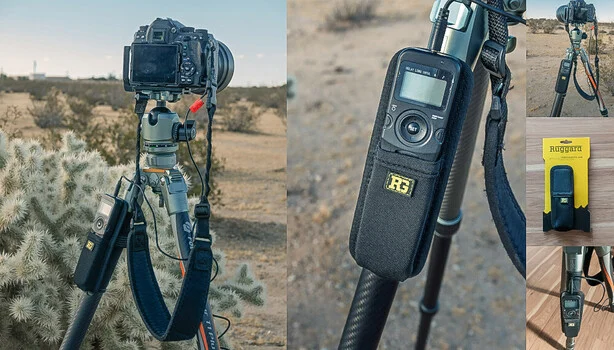
The Ruggard RTC-10 Timer-Remote Case (Standard) emerges as a specialized accessory designed to resolve a long-standing operational challenge for photographers engaged in long-exposure and time-lapse photography, particularly under demanding night conditions. This padded holder, engineered to strap directly to a tripod leg, aims to prevent the common issue of intervalometers or remote timers dangling precariously from cameras, thereby mitigating risks of cable strain and equipment instability. While the product introduces a practical solution, its effectiveness is notably enhanced by user-developed modifications addressing a specific design limitation concerning its attachment mechanism.
The Imperative for Equipment Stability in Specialized Photography
Night photography, astrophotography, and various forms of time-lapse capture inherently demand extended exposure durations and precise timing sequences, making external intervalometers indispensable tools. These devices automate shutter releases at predetermined intervals, freeing photographers from manual interaction that could introduce camera shake. However, the physical connection of an intervalometer to the camera via a cable creates a point of vulnerability. An unsecured intervalometer, left to swing freely, exerts dynamic tension on both its own connection port and the camera’s remote port. This constant tugging not only risks dislodging the cable, leading to missed shots or interrupted sequences, but also poses a long-term threat of wear and tear to sensitive electronic ports, potentially causing costly repairs or premature equipment failure. Industry professionals and workshop instructors frequently cite unsecured timer remotes as a primary source of operational frustration and equipment malfunction during night photography sessions, underscoring the critical need for robust securing methods.
Historical Evolution of Securing Methods: From Improvised to Specialized
Photographers have historically employed a range of solutions, from rudimentary to increasingly sophisticated, to address the challenge of securing intervalometers. This evolution reflects an ongoing quest for reliability, convenience, and equipment protection in diverse field conditions.
-
Early Improvised Solutions: Initial attempts often involved simple, readily available items like rubber bands or gaffer tape. While these methods offered immediate, albeit temporary, relief from dangling, they presented significant drawbacks. Rubber bands could degrade rapidly under environmental stress, lose elasticity, or snap, particularly in cold conditions. Both rubber bands and tape required cumbersome manipulation in low light, often leading to fumbling and prolonged setup times. Furthermore, their aesthetic and professional appeal were minimal, often leaving residue or requiring frequent replacement. These solutions, while functional in a pinch, lacked the elegance and durability required for professional-grade field operations.
-
The Velcro Era and its Limitations: The introduction of adhesive-backed hook-and-loop fasteners (Velcro) marked a significant step forward in terms of convenience. Photographers would apply Velcro strips to the back of their intervalometers and corresponding sections of their tripod legs, allowing for quick attachment and detachment. This method offered improved speed and ease of use compared to rubber bands. For many years, it served as a de facto standard. However, the inherent properties of Velcro presented its own set of challenges. Its open loop structure readily collects dust, dirt, plant debris, and even fabric fibers, gradually diminishing its adhesive strength. More critically, under extreme environmental conditions, the bond could fail catastrophically.
A notable incident illustrating the limitations of Velcro occurred in October 2024 at Convict Lake in California’s Owens Valley, a region renowned for its fierce winds. A photographer, attempting to capture Comet C/2023 A3 alongside the Milky Way, experienced winds so severe that tripods required constant physical bracing to remain upright. During an exceptionally powerful gust, an intervalometer secured with Velcro was torn from its tripod leg, propelled approximately 40 feet away. The impact caused the battery compartment door to detach, though fortunately, the batteries remained intact. This event served as a stark demonstration that while Velcro provided adequate security in moderate conditions, it proved insufficient against the immense forces encountered in extreme weather, highlighting the necessity for more resilient attachment mechanisms. The loss of equipment, even temporarily, and the disruption to a critical photographic sequence underscored the need for enhanced reliability.
-
Heavy-Duty Multipurpose Straps: Following such experiences, many photographers transitioned to more robust solutions, including heavy-duty, stretchable hook-and-loop straps. These straps offered superior tensile strength and a more secure, adjustable fit around both the intervalometer and the tripod leg. Their ability to be tightened significantly reduced movement and provided a higher degree of confidence against dislodgement, even in challenging conditions. The flexibility to use multiple straps further enhanced security. While undoubtedly more effective than standard Velcro, these straps introduced a slight increase in setup time due to the need for precise adjustment and wrapping. They represented a functional improvement but still retained a degree of improvisation rather than offering a fully integrated, purpose-built solution.
The Ruggard RTC-10: A Purpose-Built Pouch Solution
The emergence of dedicated products like the Ruggard RTC-10 Timer-Remote Case (Standard) signifies a maturation in the market for photographic accessories, acknowledging the specific pain points of specialized practitioners. The concept of a purpose-built pouch, akin to a "kangaroo pouch" for an intervalometer, was notably highlighted at the May 2026 Nightscaper Conference in New Mexico, indicating its relevance within the night photography community.
The Ruggard RTC-10 is an attachable, padded case specifically engineered to house camera intervalometers and timer remotes on a tripod leg. Its design objectives are clear: to eliminate the problem of dangling remotes, provide quick and easy access to controls, and protect the device from minor impacts and environmental exposure. The case utilizes a rubberized hook-and-loop strap for attachment to most standard tripod legs. The main compartment, crafted from elastic neoprene, is designed to snugly and securely hold a wide range of common timer remotes. The outer layer of Cordura material promises reasonable durability and resistance to abrasion.
Field Performance and Identified Design Gaps
Initial field assessments of the Ruggard RTC-10 reveal several strengths alongside a critical design limitation.
-
Ease of Use and Compatibility: The Ruggard case attaches with relative ease to larger tripod legs, such as the Feisol CT-3372, providing a reasonably snug fit. The deep, elastic neoprene pocket effectively secures the intervalometer, preventing it from falling out even when the tripod is moved between locations. Testing with several common wired intervalometers, including the Vello Shutterboss, Aream (now discontinued), and Insignia models—all of comparable size—confirmed their secure fit within the standard-sized Ruggard case. This consistent compatibility with popular devices enhances its utility for a broad user base.
-
The Velcro Attachment Limitation: The primary area of concern identified during testing relates to the length and design of the Ruggard’s integrated Velcro strap. On tripods with thinner legs, such as the Fotopro Pantour T1 Plus carbon fiber tripod or the Feisol CT-3342, which represent average or smaller tripod leg diameters, the strap’s available Velcro surface is insufficient to achieve a truly tight and stable attachment. This inadequacy results in the case swiveling around the tripod leg, sometimes even when the tripod is stationary. The issue could be readily resolved by extending the length of the Velcro material on the strap by approximately an inch on either side, allowing for greater overlap and a tighter cinching. Furthermore, incorporating slightly stretchable Velcro straps could significantly enhance the snugness and stability of the attachment, adapting more effectively to varying leg diameters and providing consistent tension. This oversight impacts a substantial portion of the photographic community using non-oversized tripods.
User-Driven Workarounds and Implications for Manufacturers
Recognizing the fundamental utility of the pouch concept despite the strap’s limitation, many users have developed practical workarounds. A common and highly effective solution involves supplementing the Ruggard’s integrated strap with external heavy-duty stretchable elastic straps. By wrapping one or more of these additional straps around the Ruggard case and the tripod leg, photographers can achieve a supremely tight and stable attachment, completely eliminating any swiveling. This hybrid approach leverages the Ruggard’s well-designed neoprene pouch while compensating for the inadequacy of its native attachment mechanism. This user-driven innovation underscores the strong market demand for such a product and the willingness of photographers to adapt solutions to achieve optimal functionality.
From a manufacturing perspective, the prevalence of such workarounds highlights an opportunity for Ruggard to refine its product. A minor modification to the Velcro strap—either by extending its length or incorporating stretchable material—would significantly enhance the RTC-10’s out-of-the-box performance and user satisfaction, potentially eliminating the need for supplementary straps. This feedback loop from the user community is invaluable for product iteration and improvement in specialized photographic accessory markets.
Broader Impact and Conclusion
The Ruggard RTC-10 Timer-Remote Case (Standard) represents a genuinely clever and largely effective solution to a perennial problem faced by night and long-exposure photographers. Its neoprene pouch design offers excellent protection and accessibility for intervalometers, crucial for maintaining workflow efficiency and safeguarding delicate equipment in challenging environments. The ability to securely house the intervalometer prevents cable strain, minimizes the risk of damage to camera and remote ports, and reduces the likelihood of missed shots due to equipment dislodgement.
Despite the notable design flaw concerning the insufficient length of its Velcro attachment strap for average-sized tripod legs, the product’s core utility remains high. The simple, user-implemented workaround involving additional heavy-duty straps effectively mitigates this issue, ensuring the Ruggard RTC-10 can deliver its intended benefits. This accessory contributes significantly to the reliability and longevity of photographic gear, particularly in specialized fields where environmental resilience and operational precision are paramount. As the demands of advanced photography continue to evolve, dedicated accessories like the Ruggard RTC-10 play an increasingly vital role in supporting photographers in their pursuit of capturing challenging and complex imagery. The continued refinement of such products, informed by user experience, will undoubtedly further enhance their value within the photographic community.
