
 By Nila Kartika Wati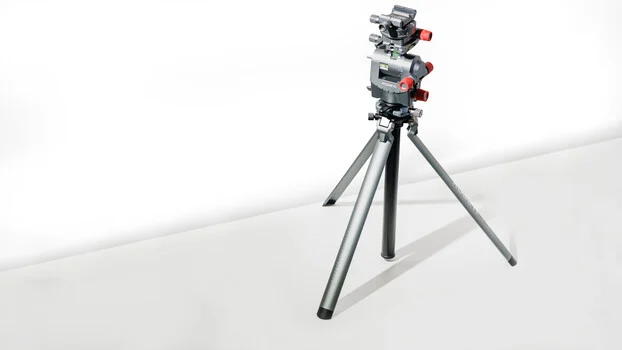
The landscape of professional photography equipment is constantly evolving, driven by the demand for enhanced precision, adaptability, and efficiency in the field. Tripods, fundamental tools for achieving stability and compositional accuracy, have seen significant innovation, with manufacturers seeking to balance robust performance with versatile application. Rogeti, a notable player in this specialized market, introduced its T32MAX tripod system as a testament to modular design and engineering excellence. This system was initially lauded for its inherent stability and precision, addressing long-standing compromises often accepted by photographers. However, early assessments of the T32MAX identified a specific limitation: its design choice to eliminate traditional leg angle selectors, prioritizing overall stability, inadvertently hindered ultra-low-angle shooting capabilities. The conventional workaround—inverting the entire center column—proved cumbersome and time-consuming in dynamic shooting environments. Recognizing this critical gap, Rogeti subsequently developed and released its patented solution: the C32BK, a specialized center column featuring an integrated mini tripod, meticulously engineered to resolve the low-angle dilemma within the T32MAX ecosystem.
The Evolution of Tripod Design and Rogeti’s Innovation Philosophy
Historically, tripods have evolved from basic three-legged stands to highly sophisticated instruments, incorporating various materials, locking mechanisms, and adjustment features. The core challenge has always been to provide maximum stability across a range of heights and terrains while remaining portable and user-friendly. Traditional tripods often employ leg angle selectors, allowing photographers to splay legs at different angles to achieve lower perspectives or adapt to uneven surfaces. While highly versatile, these mechanisms can sometimes introduce points of flex or complexity, potentially compromising ultimate stability, particularly under heavy loads.
Rogeti’s design philosophy with the T32MAX represented a strategic departure from this norm. By eliminating leg angle selectors, the T32MAX focused on creating an unyielding, rigid platform, a crucial attribute for genres like architectural, landscape, and studio photography where absolute precision is paramount. This decision underscored Rogeti’s commitment to core stability but, as observed by early adopters, created a specific functional void for extreme low-angle or tabletop setups. The company’s proactive response, culminating in the C32BK, highlights an agile approach to product development, integrating user feedback directly into their modular ecosystem. The C32BK is not merely an accessory; it is an intrinsic extension designed to complete the T32MAX’s operational spectrum, reflecting a growing trend in professional gear towards highly specialized, interconnected components.
The Engineering Marvel: C32BK’s Patented Design
At the heart of the C32BK’s innovation lies its patented 2-in-1 nesting architecture, an industry-first that allows a single component to serve dual, distinct functions. When integrated into the T32MAX, it functions as a conventional center column, providing vertical height adjustments. However, with a swift detachment, it transforms into a fully functional mini tripod, specifically designed for ultra-low-angle or tabletop photography. This ingenious integration effectively provides users with two specialized tripods occupying the footprint of one, significantly enhancing versatility without adding bulk to a photographer’s kit.
The construction of the C32BK prominently features what appears to be high-grade aluminum, chosen for its optimal balance of strength, corrosion resistance, and lightweight properties. This material choice ensures the accessory is both durable for rigorous field use and manageable for transport. When deployed as a mini tripod, the outer column tube of the C32BK longitudinally trisects, splitting into three distinct legs. This design is a remarkable feat of engineering, integrating three robust legs and a nested center column within a standard 32mm diameter tube. A necessary design compromise, however, is the reduction of the inner column diameter to 22mm. While this dimension is adequate for its intended purpose, it reflects the careful balance Rogeti maintains between compactness and functionality. Minor aesthetic implications include inevitable gaps between the legs when the column is closed and mounted on the T32MAX; however, the edges of each leg are subtly recessed, a thoughtful design detail that prevents skin pinching during operation.
Further enhancing its utility, the C32BK incorporates several meticulous design elements. A scale marking embossed on one of the legs serves as a practical height guideline when the unit functions as a center column. A 70mm gap strategically positioned between the outer and inner tubes facilitates the convenient extension of the legs during deployment. Additionally, durable rubber feet are affixed to the base of each leg, ensuring superior grip on various surfaces and preventing scratches, a critical consideration for indoor and studio work.
The structural integrity of the C32BK’s legs is a standout feature. Each leg forms a 120-degree cylindrical arc when trisected, a geometric configuration that significantly amplifies its structural rigidity. This design principle, rooted in fundamental engineering mechanics, minimizes flex and ensures exceptional stability. Despite the legs being only 2mm thick, this inherent stiffness translates into impressive load-bearing capabilities. In its lowest, most splayed stance, the C32BK can support a substantial 15 kg payload, accommodating even heavy camera-lens combinations. However, when the 22mm inner column is fully extended, the payload capacity decreases to 4 kg. This reduction, while understandable given the thinner column diameter and increased leverage, necessitates careful consideration of the camera setup. For instance, pairing it with the Rogeti RG-1 geared head, which weighs approximately 700g, reduces the effective payload headroom considerably, highlighting the need for photographers to match their gear appropriately to the tripod’s extended capacity.
The operational height range of the C32BK mini tripod—from 0.3 m in its lowest stance to 0.5 m with the inner column extended—perfectly complements the T32MAX. This range precisely fills the height gap below 0.5 m, the lowest achievable height with the T32MAX’s main leg sections fully collapsed. For applications requiring additional vertical reach, Rogeti offers the E22 extension column as a separate accessory. This extension adds approximately 260mm to the C32BK’s height; however, users are advised that extending the center of gravity will inevitably lead to some reduction in overall stability, a standard trade-off in tripod design. Furthermore, for professionals already invested in equipment featuring the widely adopted Arca-Swiss dovetail standard, the C32BK version with its integrated Arca-Swiss-compatible clamp provides a seamless and efficient direct mounting solution, streamlining field operations.
Addressing Low-Angle Photography: A Paradigm Shift
The conventional approach to low-angle photography often involves compromises. Traditional tripods with leg angle selectors require manual adjustment of each leg, a process that can be slow and disruptive to workflow, especially when frequently transitioning between different heights. Alternatively, some photographers resort to specialized low-profile tripods or makeshift supports, adding to the gear burden. Rogeti’s decision to omit leg angle selectors on the T32MAX, initially perceived as a limitation, was a deliberate choice to prioritize ultimate stability and a streamlined operational flow for typical shooting heights. This design philosophy is now fully realized with the C32BK, which transforms what seemed like a restriction into an elegant solution.
The integration of the C32BK with the T32MAX tripod system fundamentally redefines the approach to high-to-low transitions. The process is simplified to a binary choice: utilize the full-size T32MAX for standard heights, or, when space constraints or compositional requirements demand extreme low angles, deploy the C32BK mini tripod. This intentional design facilitates an instant shift from a full-height setup to an almost ground-level perspective without the need to unmount the camera or meticulously adjust the main tripod legs. The T32MAX’s design, featuring only three leg sections, further streamlines this process. This configuration typically requires only two adjustment levels to achieve desired heights, a pragmatic choice that also contributes to a smaller overall tripod footprint, particularly beneficial for indoor architectural photographers who often operate within confined spaces.
For practical reference, a fully extended T32MAX without its center column provides a working height of approximately 1.3 m. Closing one leg section reduces this to 0.9 m, and with all leg sections closed, the tripod stands at 0.5 m. It is precisely for anything below this 0.5 m threshold that the C32BK mini tripod becomes indispensable, seamlessly extending the system’s operational range down to 0.3 m. This integrated workflow minimizes operational friction, allowing photographers to maintain compositional flow and react more swiftly to changing photographic opportunities.
Workflow Optimization and Professional Adaptability
Beyond its primary function of enabling low-angle shots, the C32BK offers subtle yet significant enhancements to the overall photographic workflow. When nested within the T32MAX, the C32BK retains its two-step center column height adjustment. This feature allows for fine-tuning of height without needing to manipulate the main tripod legs, preserving the established composition. Adjusting a single center column is invariably faster and more precise than individually tweaking three or more leg sections. This approach drastically reduces the need for multiple readjustments, aligning perfectly with the demands of professional photography where efficiency directly impacts productivity.
While the system is highly optimized for a vast majority of scenarios, rare situations may arise where a traditional tripod with fully independent leg angle adjustments might still offer a unique advantage—for instance, when one leg needs to be splayed wide over an obstruction while maintaining significant height. However, such instances are statistically infrequent, accounting for a marginal percentage of typical professional assignments, as noted by experienced practitioners.
The C32BK also demonstrates considerable utility as a standalone piece of equipment. Its compact size, comparable to that of a foldable umbrella, makes it an attractive option for a dedicated travel or tabletop tripod. While its single-section legs preclude extension for greater height in this standalone mode, its inherent stability and small footprint are advantageous for lightweight setups. For those requiring more reach, the optional 260mm E22 extension column can elevate the C32BK to approximately 76 cm. However, this extended configuration, supported by a relatively thin inner column and a higher center of gravity, naturally offers reduced stability compared to its lowest stance. Despite this, the C32BK’s wide leg splay inherently provides a very steady base, capable of comfortably supporting a camera paired with a moderately long lens. A design characteristic to note is the fixed splay of the legs, which, while ensuring stability, means the ground footprint cannot be reduced.
The Rogeti system, with its interchangeable C32 series center columns, embodies a robust ecosystem. The choice between the C32G (geared column for precise height adjustments) and the C32B (for maximum practicality and low-angle versatility) allows photographers to tailor their T32MAX setup precisely to the demands of a given shoot. This modularity offers immense flexibility, though it can also present a "luxurious problem" of choice: the extensive array of modular pieces requires photographers to meticulously plan and pack according to the specific requirements of each assignment, as bringing every accessory might not always be practical.
One area identified for potential future development within this ecosystem concerns the C32BK’s standalone use. While it excels as a compact mini tripod, its pairing with the robust 700g RG-1 geared head consumes a significant portion of its 4kg extended payload limit. The introduction of a dedicated, lighter micro-geared head would unlock the C32BK’s full potential as an ultimate lightweight and portable rig, further enhancing its appeal as a travel companion.
Market Implications and Investment Value
The Rogeti tripod system, particularly the T32MAX with the C32BK, positions itself firmly within the premium segment of the professional photography equipment market. With a combined price point typically exceeding $1,000, it represents a substantial investment. However, its value proposition for working professionals is compelling. When viewed not merely as a tripod and an accessory, but as a highly adaptable, two-in-one modular platform that eliminates the need for carrying a separate, specialized low-angle tripod, the economic justification becomes clear.
This integrated approach offers tangible benefits: reduced gear weight and volume, streamlined workflow, and enhanced operational efficiency. For photographers specializing in architectural, product, or macro photography, where precise low-angle perspectives are frequently required, the C32BK transforms a previously cumbersome process into a seamless operation. This system’s ability to adapt to diverse shooting scenarios without compromising stability or requiring significant setup time represents a strategic advantage in a competitive professional landscape.
Rogeti’s commitment to innovation and modularity reflects broader trends in the photographic industry, where manufacturers are increasingly designing interconnected systems rather than isolated products. This approach not only extends the lifespan and utility of an initial investment but also allows users to gradually build a customized toolkit tailored to their evolving needs. The C32BK is a prime example of this philosophy, addressing a specific functional need within a larger, thoughtfully designed ecosystem.
Conclusion: A Strategic Advancement in Tripod Technology
The Rogeti T32MAX and C32BK combination represents a strategic advancement in professional tripod technology. By addressing a critical limitation of the T32MAX—its initial challenge with ultra-low-angle shooting—through an ingeniously engineered and patented solution, Rogeti has further solidified its reputation as an innovator. The C32BK not only resolves a specific functional gap but also fundamentally changes how photographers approach their setups on location, streamlining a process that was historically cumbersome and time-consuming.
For professionals seeking maximum practicality and unparalleled adaptability in the field, particularly those who frequently engage in low-angle photography, the C32BK is an exceptional accessory to pair with the T32MAX. Its ability to transition seamlessly from a full-height center column to a robust mini tripod, coupled with Rogeti’s overarching commitment to stability and modularity, makes the system a compelling choice. While the initial investment is significant, the comprehensive utility, enhanced workflow efficiency, and the effective acquisition of two specialized tripods within a single, integrated platform underscore its profound value for the discerning professional photographer. The Rogeti system, with the C32BK at its core, stands as a testament to thoughtful engineering aimed at expanding the creative possibilities and operational ease for photographers worldwide.
