
 By Nila Kartika Wati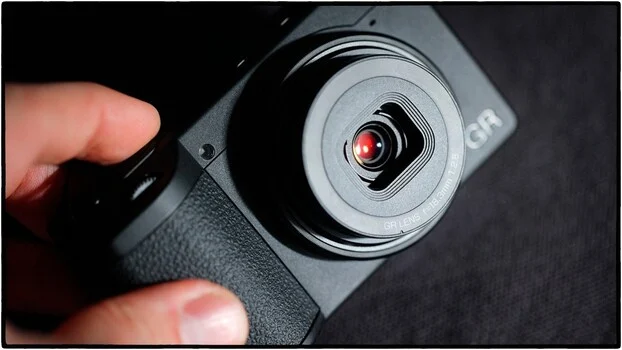
In an era dominated by advanced color imaging and computational photography, the introduction of a monochrome-only camera, particularly one that commands a higher price than its full-color counterpart, might appear to be a counterintuitive market strategy. However, the Ricoh GR IV Monochrome, the subject of an extensive real-world review by Hashem Moukaddem of "Pushing Film," unequivocally demonstrates the profound advantages a dedicated black and white sensor offers in image capture, pushing far beyond the capabilities of a desaturated color file. This compact APS-C camera, equipped with a fixed 28mm equivalent f/2.8 lens, positions itself not merely as a photographic tool but as a specialized instrument for artistic expression, appealing to a discerning segment of photographers committed to the nuanced world of monochromatic imagery.
The Uncompromised Vision: The Monochrome Sensor Advantage
At the heart of the Ricoh GR IV Monochrome’s distinct appeal lies its unique sensor architecture. Unlike conventional digital cameras that utilize a Bayer filter array — a mosaic of red, green, and blue filters over individual photosites to capture color information, which is then interpolated to create a full-color image — the GR IV Monochrome’s sensor completely strips out this color filter. This fundamental design choice allows each photosite to directly capture luminance data, leading to a host of significant photographic benefits.
Firstly, the absence of the Bayer array means no light is lost or filtered for color information, enabling the sensor to gather more light. This directly translates to superior performance in low-light conditions and significantly enhanced high ISO capabilities, producing cleaner images with less noise at extreme sensitivities. Secondly, without the need for demosaicing algorithms to reconstruct color, the camera can deliver inherently sharper details and finer micro-contrast. Each pixel directly contributes to the resolution of light and shadow, resulting in images that possess a striking clarity and an almost tactile quality, which a color sensor, even when desaturated, simply cannot replicate. The tonal range, the smooth transition from the deepest blacks to the brightest whites, is exceptionally rich, offering a level of subtlety that resonates deeply with the aesthetic principles of traditional black and white film photography. Moukaddem’s comparison to shooting black and white film versus desaturating a color shot underscores this distinction, highlighting the camera’s ability to render tonality as "its own thing," a unique visual language. Furthermore, the sensor’s direct luminance capture allows it to respond to physical color filters (such as red, yellow, or green) in precisely the same way black and white film does, offering photographers traditional means of manipulating contrast and tonal separation in the field.
A Legacy of Precision: The Ricoh GR Series Context
The Ricoh GR series has carved out a formidable reputation over decades, establishing itself as a beloved tool among street photographers and enthusiasts who value portability, speed, and exceptional image quality in a compact form factor. Tracing its lineage back to the film era with cameras like the GR1, the digital GR series, starting with the original GR Digital in 2005, has consistently championed a minimalist design philosophy paired with robust imaging capabilities. The GR III, launched in 2019, marked a significant evolution, introducing a larger APS-C sensor, in-body image stabilization, and a refined control scheme, cementing its status as a premium compact camera.
The introduction of a monochrome-only variant, following the footsteps of the GR III Monochrome, signifies Ricoh’s strategic acknowledgment of a dedicated and growing niche within the photography community. This move is not without precedent in the broader market, with manufacturers like Leica having pioneered dedicated monochrome digital cameras for over a decade. Ricoh’s decision to bring this specialized technology to its highly successful GR platform demonstrates a commitment to catering to photographers who prioritize artistic intent and the unique visual characteristics of black and white photography above all else. The GR IV Monochrome thus stands as a testament to Ricoh’s enduring philosophy: to provide photographers with highly capable, focused tools that foster creativity and deliver uncompromised image quality. Moukaddem’s review, built around "real-world use rather than spec sheets," perfectly aligns with the GR series’ ethos of practical, unobtrusive photography.
Real-World Performance: Handling and Innovative Features
Beyond its sensor, the Ricoh GR IV Monochrome distinguishes itself through thoughtful design and user-centric features that enhance the shooting experience. Moukaddem lauded the camera’s handling, emphasizing its rapid power-on time, a critical advantage for spontaneous street photography moments. The button layout is noted as "improved," suggesting iterative refinements from previous GR models, contributing to a more intuitive and fluid operation.
A standout feature highlighted in the review is the generous 53GB of built-in storage. In an industry where internal storage is often minimal or non-existent, Ricoh’s inclusion of such substantial capacity is a welcome innovation, mitigating the immediate need for external memory cards and providing a reliable backup. This feature, Moukaddem argues, is one that "more cameras should copy." Further enhancing its black and white specific capabilities, the GR IV Monochrome integrates a physical red filter within the camera body. This is a particularly astute design choice, as red filters are classically used in black and white photography to dramatically darken skies, accentuate clouds, and smooth skin tones, adding a powerful layer of creative control without the need for external accessories.
Moukaddem primarily operated the camera in aperture priority or program mode, relying on auto ISO, and found the exposure compensation rocker and the locking mode dial exceptionally pleasant to use, indicating a well-considered ergonomic design. The camera’s fixed 28mm f/2.8 lens renders images with a distinctive character, including a noticeable heavy vignette that the reviewer appreciates for its aesthetic contribution, though it can be optionally disabled with a correction profile. Importantly, the straight-out-of-camera JPEGs are described as holding up remarkably well, to the extent that they do not feel like a "downgrade" from the 14-bit DNG raw files, offering excellent immediate results for those who prefer a streamlined workflow. This balance of in-camera excellence and raw file flexibility caters to a wide range of post-processing preferences.
Unparalleled Tonal Control: Dynamic Range and Film Emulation Potential
The most compelling aspect of the Ricoh GR IV Monochrome, according to the review, is its extraordinary dynamic range. This capability allows photographers to "pull back shadow and highlight detail aggressively" in post-processing, providing immense latitude for shaping the final image. Even night shots, stabilized by the camera’s in-body stabilization system, remain usable at "extreme gain," demonstrating the sensor’s remarkable ability to capture detail in challenging low-light scenarios. Moukaddem’s stress test, conducted handheld in the dark, revealed that while ISO 25,600 does exhibit visible noise when viewed closely, the noise pattern itself remains "reasonably clean," avoiding the blotchy, distracting artifacts often seen in color sensors pushed to similar extremes.
This exceptional performance in low light and high dynamic range leads to a crucial shift in exposure philosophy: Moukaddem found himself "dialing in negative exposure compensation to protect highlights," understanding that recovering shadow detail is significantly easier than salvaging blown-out highlights. This mirrors a long-standing principle in both film and digital photography, often summarized as "expose for the highlights, develop for the shadows." The highlight roll-off, the transition from bright tones to pure white, is described as softer than expected from most CMOS sensors, exhibiting a gentle, film-like characteristic that avoids abrupt clipping, further enhancing the camera’s organic aesthetic.
For photographers engaged in a hybrid workflow, where the line between shooting film and finishing digitally in software like Lightroom has blurred, the GR IV Monochrome presents a compelling case. Moukaddem’s experiment of printing a GR file on Ilford Gold Fibre Rag, a baryta-style cotton rag paper designed to mimic traditional silver halide prints, yielded results reminiscent of Fujifilm Acros 100. He highlights that a monochrome DNG file serves as an exceptionally strong "starting canvas for a film emulation," as one is adding grain and texture to a "clean, filter-free capture" rather than first contending with the inherent color data and artifacts of a Bayer array. This purity of capture provides an ideal foundation for digital artists seeking to recreate the nuanced aesthetics of classic film stocks, offering greater control and more authentic results. The core takeaway from this experience — to expose to protect highlights and then build tonality in post-processing — is a universal principle for black and white work, amplified by the GR IV Monochrome’s generous midtone shaping capabilities.
Navigating the Niche: Challenges and Market Positioning
Despite its significant strengths, the Ricoh GR IV Monochrome is not without its considerations, particularly its positioning within the broader camera market. At an estimated price point of $2,200, it carries a substantial premium over the standard color GR model, making it a considerable investment. Moukaddem candidly acknowledges that this camera occupies a "niche within a niche," justifiable only for those who are genuinely committed to black and white photography and comfortable working primarily with a 28mm field of view.
Several areas for potential improvement were noted. The reviewer expressed a willingness to accept a "25% size increase" in exchange for crucial features like weather-sealing, a built-in flash, or extended battery life. The absence of a Pentax-compatible TTL hot shoe, present in earlier GR models, is also missed, with the current hot shoe offering no Through-The-Lens (TTL) flash metering. While Ricoh does offer the GF2 flash with some auto-metering capabilities, it was not tested in the review. Autofocus performance, while generally "snappy in most situations," can falter when "pushed hard or in very low light." In such instances, the camera’s "snap focus" feature, which allows pre-setting a fixed focus distance (e.g., 1 meter), becomes a reliable fallback, a testament to the GR series’ street photography heritage. Battery life is deemed "fine" and benefits from convenient USB charging directly within the camera body.
Ultimately, for the majority of casual photographers or those who require color capabilities, Moukaddem plainly states that the regular GR model would be a more sensible choice. However, for the specific demographic for whom "black and white is the whole point of picking up a camera," the GR IV Monochrome emerges as an exceptionally capable and rewarding tool.
Ricoh’s Vision and Broader Market Implications
Ricoh’s decision to invest in and release a specialized monochrome camera like the GR IV Monochrome speaks volumes about its strategic vision and understanding of evolving photographic trends. In a market saturated with increasingly complex, multi-functional cameras, Ricoh is betting on the appeal of specialization and artistic purity. This move aligns with a broader industry trend towards "mindful photography" or "purist" approaches, where photographers seek to simplify their tools to deepen their creative process and focus on the fundamentals of light, composition, and tone.
The GR IV Monochrome challenges the conventional wisdom that more features, especially color, always equate to better value. Instead, it argues for the intrinsic value of optimized performance within a specific artistic constraint. By delivering unparalleled black and white image quality, Ricoh not only caters to a niche but also subtly educates the wider photographic community on the unique technical and artistic benefits of dedicated monochrome capture. This could potentially influence other manufacturers to explore similar specialized offerings, fostering greater diversity in camera design and pushing the boundaries of what digital photography can achieve.
The camera’s success, even within its niche, underscores a growing appreciation for the timeless aesthetic of black and white imagery and the desire for tools that facilitate its most authentic rendition. It demonstrates that innovation isn’t solely about adding new features but also about refining and optimizing existing ones to an extreme degree for a focused purpose. The Ricoh GR IV Monochrome is more than just a camera; it is a statement piece, an affirmation of the enduring power and beauty of black and white photography in the digital age. It serves as a compelling reminder that sometimes, less color can indeed mean more art.
