
 By admin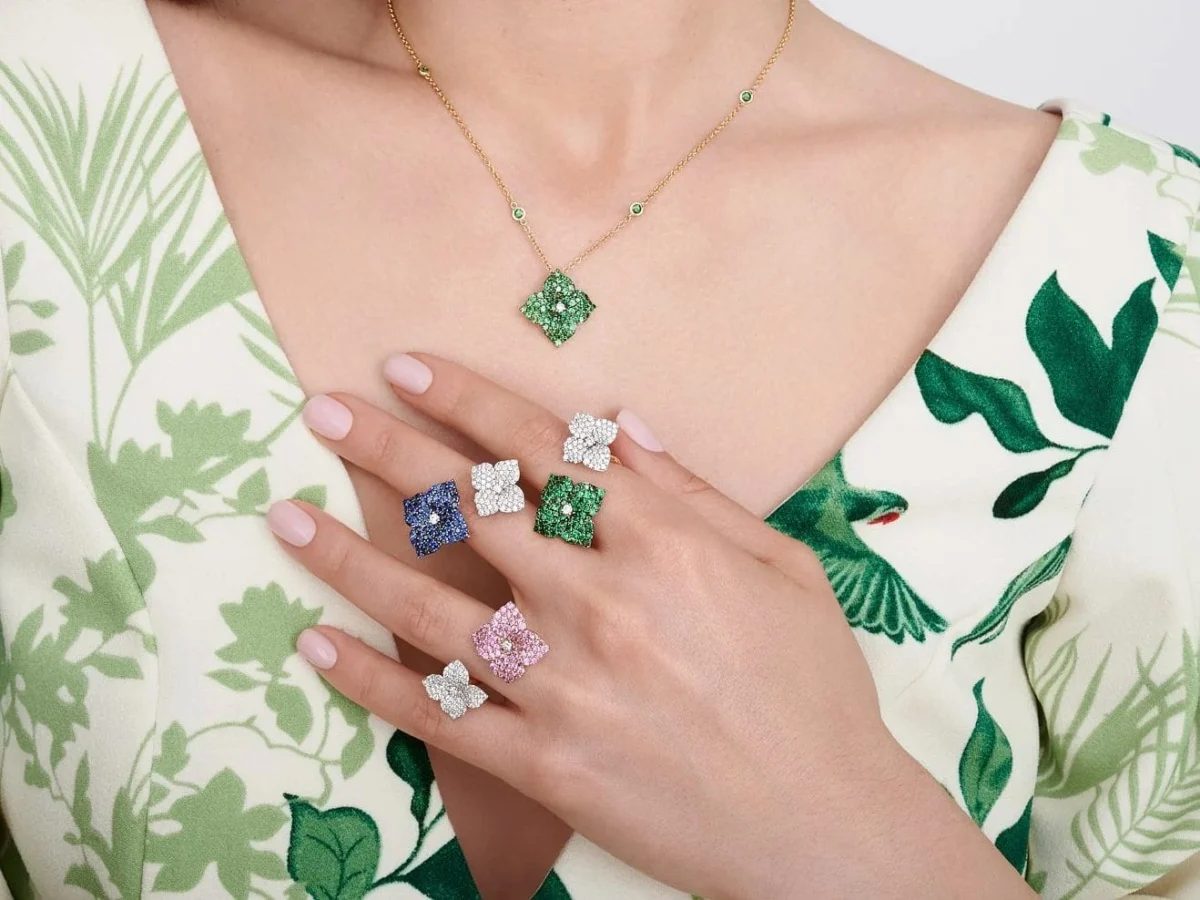
The luxury jewelry house Piranesi has initiated a significant expansion of its core collections, moving beyond the traditional blue sapphire to embrace a diverse palette of yellow, pink, and orange gemstones. This strategic evolution seeks to redefine the consumer’s relationship with the sapphire—a gemstone historically synonymous with deep azure hues—by applying the house’s signature design language to a broader spectrum of the corundum mineral family. By integrating these "fancy" sapphires into established lines such as Fiore, Dome, Mosaique, and Wave Heart, Piranesi is addressing a growing market demand for individuality and color diversity in high jewelry without sacrificing the brand continuity that collectors have come to expect from the Fifth Avenue institution.
For centuries, the sapphire has been defined by its most famous expression: blue. This association is so deeply ingrained in the global consciousness that the Gemological Institute of America (GIA) notes blue remains the gemstone’s most recognized color, carrying centuries of royal and ecclesiastical associations. However, as the fine jewelry market shifts toward personalized luxury and unique gemstone profiles, the industry is seeing a resurgence of interest in fancy-color sapphires. Piranesi’s latest assortment suggests a creative solution to the challenge of introducing alternative colors: rather than inventing new silhouettes for every new shade, the house maintains its recognizable forms, allowing the gemstone’s color to serve as the primary vehicle for novelty.

The Historical Trajectory of Piranesi: From Milan to Fifth Avenue
The expansion into a wider sapphire palette is the latest chapter in a history that spans generations and continents. Piranesi’s heritage is rooted in the artisanal traditions of Milan, Italy, where the house first established its reputation for working with precious metals and high-grade gemstones. A pivotal moment in the brand’s chronology occurred in 1976, when the family made the strategic decision to move its headquarters to New York City.
The brand began its New York era at the prestigious Rockefeller Plaza, positioning itself at the heart of the American luxury market during a period of significant cultural and economic transformation. Today, operating from its flagship presence on Fifth Avenue, Piranesi remains a multigenerational family-led house. This continuity of leadership has allowed the brand to maintain a consistent aesthetic "handwriting" even as it experiments with modern gemstone trends. The transition from traditional blue sapphires to a multicolor assortment reflects a broader industry trend where heritage houses must balance their historical legacy with the evolving tastes of a contemporary, globalized clientele.
Gemological Context: The Science and Rarity of Fancy Sapphires
To understand the significance of Piranesi’s move, one must look at the gemological properties of the sapphire. Sapphires belong to the mineral species corundum. While the presence of iron and titanium typically produces the iconic blue, other trace elements create an extraordinary range of colors. According to the GIA, fancy sapphires occur in pink, orange, yellow, green, purple, and violet, as well as various intermediate hues.

The rarity and value of these stones are dictated by their saturation and tone. Yellow sapphires, for instance, gain their warmth from the presence of iron. Pink sapphires, which sit on the color spectrum just before the red of a ruby, owe their hue to chromium. Orange sapphires are among the most distinct, ranging from yellowish-orange to a deep reddish-orange. A particularly rare variety mentioned in gemological circles is the padparadscha, a delicate pinkish-orange sapphire. Piranesi’s collection distinguishes between these varieties, ensuring that orange sapphires are presented with a deliberate focus on their unique saturation. By utilizing these variations, Piranesi is effectively educating its collectors on the geological diversity of the corundum species, elevating the "fancy" sapphire from a mere alternative to a primary choice for high-jewelry investment.
Design Continuity Across the Fiore and Dome Collections
A central pillar of Piranesi’s strategy is the use of recognizable design motifs to anchor new color stories. The Fiore collection, characterized by its four-petal flower motif, serves as a primary example. By setting yellow or pink sapphires into the Fiore Small Flower Bracelet or the Fiore Double Flower Ring, the house ensures that the piece is immediately identifiable as a Piranesi design. In the Double Flower Ring, the house pairs approximately 1.60 carats of pink sapphires with 0.80 carats of diamonds, creating a contrast that emphasizes the brilliance of the colored stones.
The Dome collection takes a more sculptural and architectural approach. This line is designed to showcase volume and a concentrated field of color. The Dome Ring, for example, utilizes a substantial 10.50 carats of deep-pink sapphires. To enhance the visual impact of the stones, Piranesi often employs 18K rose and black gold, a combination that provides a modern, edgy backdrop to the softness of the pink gemstones. This architectural use of color is further mirrored in the Dome Bangle, which features approximately 23.50 carats of round orange sapphires set in 18K rose gold. By maintaining the "Dome" silhouette, Piranesi allows the collector to focus on the intensity of the orange hue, which might otherwise feel too experimental in a less structured design.

Supporting Data and Technical Specifications
The technical execution of the collection reinforces Piranesi’s position in the high-jewelry sector. The use of 18K gold across all variations—yellow, white, rose, and black—provides the necessary structural integrity for high-carat-weight pieces while offering various aesthetic finishes.
Data from the current collection highlights the scale of these works:
- The Dome Bangle (Orange): Features approximately 23.50 carats of orange sapphires.
- The Dome Ring (Pink): Utilizes approximately 10.50 carats of pink sapphires.
- The Fiore Double Flower Ring (Pink): Pairs 1.60 carats of sapphires with 0.80 carats of diamonds.
- Materials: Exclusively 18K gold and high-clarity diamonds.
The inclusion of diamonds is not merely for added value but serves as a "visual frame" for the colored sapphires. In the Mosaique line, which uses organic arrangements of round and oval stones, the diamonds help to delineate the boundaries between the sapphires, ensuring that the multicolor palette remains sophisticated rather than chaotic. This technical precision is a hallmark of the family’s Milanese origins, where the setting of the stone is considered as important as the stone itself.

Market Analysis and Broader Industry Implications
The shift toward fancy-color sapphires is reflective of a broader movement in the global luxury market. Analysts note that high-net-worth individuals (HNWIs) are increasingly seeking "investment jewelry" that offers a point of difference from mass-market luxury. While a high-quality blue sapphire will always hold its value, the rarity of exceptional yellow, pink, and orange sapphires provides a unique value proposition for the seasoned collector.
Furthermore, the "color story" approach allows a jewelry house to tap into the psychological aspects of consumer behavior. Yellow sapphires are often associated with warmth, optimism, and "sunlight," making them popular for daytime wear or spring collections. Pink sapphires offer a bridge between the romanticism of the rose and the strength of a sculptural setting, appealing to a demographic that desires "feminine" colors without "fragile" designs. Orange sapphires, being the most unexpected, appeal to the "trendsetter" segment of the market—those looking for a conversation piece that deviates from the status quo.
Piranesi’s decision to keep the design language consistent while rotating the color palette is a sophisticated branding move. It minimizes the "risk" for the consumer. When a buyer is already familiar with the Fiore or Dome shape, the barrier to purchasing an unconventional color like orange is significantly lowered. The design provides the comfort of familiarity, while the color provides the excitement of the new.

Conclusion: The Future of the Multi-Color Sapphire Era
Piranesi’s expansion into yellow, pink, and orange sapphires represents a calculated and artistic broadening of the brand’s horizon. By leveraging its multigenerational heritage and its strategic location on Fifth Avenue, the house is successfully challenging the long-standing monopoly of blue over the sapphire category.
The success of this transition lies in the reversal of the traditional jewelry formula: instead of the design providing the surprise and the gemstone providing the continuity, Piranesi has made the design the constant and the color the variable. This allows each new shade to feel as though it has always belonged to the house’s vocabulary. As the fine jewelry market continues to evolve toward greater personalization and gemstone education, Piranesi’s commitment to the full spectrum of the sapphire ensures its relevance in a landscape where color is no longer just a trend, but a core component of a brand’s identity. The "King of Sapphires" title, therefore, is no longer about dominating a single color, but about mastering the entire rainbow that the corundum species has to offer.
