
 By Nana Wu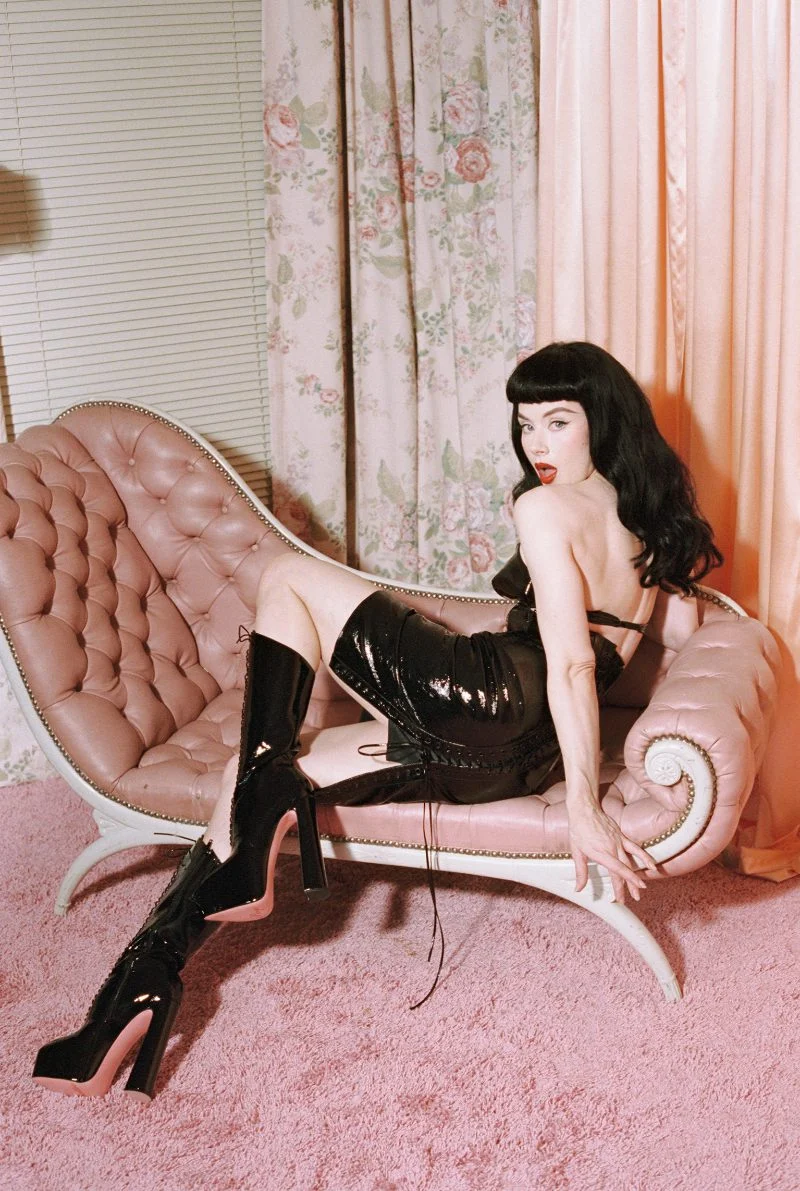
The Los Angeles-based footwear powerhouse Jeffrey Campbell has announced a landmark partnership with the estate of Bettie Page to produce a limited-edition capsule collection that bridges the gap between mid-century pin-up aesthetics and contemporary high-fashion construction. This collaboration, scheduled for a global release on March 12, marks a significant departure for the brand, which traditionally avoids frequent high-profile partnerships in favor of maintaining an independent, avant-garde design trajectory. By gaining exclusive access to the Bettie Page archives, Jeffrey Campbell has developed a collection that functions as both a sartorial tribute and a technical recreation of the items that defined the "Queen of Pin-ups" during her 1950s zenith.
The collection is designed to celebrate Page’s often-overlooked role as a pioneer of female creative direction. Long before the term became a corporate staple, Page was known for styling her own shoots, designing her own lingerie and swimsuits, and commissioning custom-made footwear that met her exacting standards for both visual impact and physical silhouette. The partnership aims to highlight this legacy of self-determination, moving beyond the two-dimensional image of the model to honor the artisan and strategist behind the lens.
Historical Context and the Bettie Page Legacy
Bettie Page remains one of the most influential figures in American pop culture, a woman whose image helped define the aesthetic of the 1950s while simultaneously challenging the era’s rigid social mores. Born in 1923, Page’s rise to fame was characterized by her distinctive look: jet-black hair with trademark short bangs, a playful yet powerful expression, and a wardrobe that she frequently constructed by hand. Unlike many of her contemporaries, who were styled by studio heads and costume designers, Page took an active role in her visual branding.
This sense of agency is what drew the Jeffrey Campbell creative team to the project. Mark Roesler, Page’s longtime agent and the chairman of CMG Worldwide, which manages the estate, was the primary catalyst for the collaboration. Roesler noted that Page took immense pride in her ability to design her own garments, viewing the construction of her wardrobe as an essential component of her professional output. According to estate records, Page was meticulous about the fit and silhouette of her footwear, often seeking out specific heel heights and arch curvatures that would accentuate her natural lines during photography sessions.
The collaboration comes at a time when the "pin-up" aesthetic is undergoing a cultural re-evaluation. No longer viewed solely through the male gaze, figures like Page are increasingly recognized as early examples of female entrepreneurs who maintained control over their intellectual property and image in a male-dominated industry.
Technical Execution and Archival Research
For Brigitte Campbell, the creative director of Jeffrey Campbell, the project was a deep dive into the technical specifications of vintage fashion. The brand was granted unprecedented access to Page’s personal archives, including original footwear, personal photographs, and even her physical measurements. This level of access allowed the design team to move beyond mere imitation and into the realm of historical recreation.
"As a long-time fan, with countless coveted books and photographs that I’ve sourced from vintage fleas, it was surreal to touch her personal fetish heels," Brigitte Campbell stated during the collection’s development phase. She noted that the physical artifacts revealed "nuanced details" that were often lost in the grain of mid-century film. These details included specific stitching patterns, the reinforcement of the heel stems, and the unique curvature of the platforms that Page preferred for her most iconic poses.
The resulting footwear—ranging from classic pumps to dramatic, sky-high platforms—is built to reflect Page’s actual proportions. One of the most distinctive features of the collection is the inclusion of pink soles, a design choice intended to symbolize "soft feminine power" while providing a modern contrast to the traditional black leather and patent finishes of the uppers.
Apparel and the Silhouette of an Era
While Jeffrey Campbell is primarily recognized as a footwear brand, the Bettie Page collaboration extends into a curated selection of apparel. These pieces are designed to complement the footwear while staying true to the handmade spirit of Page’s original wardrobe.
A central piece of the apparel line is a lace-up leather dress, which draws direct inspiration from Page’s experimental fetish-wear shoots. During the 1950s, these images were highly controversial and eventually led to Page being called to testify before a Senate subcommittee on juvenile delinquency. Today, those same garments are viewed as foundational texts in the history of alternative fashion.
Another key item in the capsule is the bullet bra, a silhouette that defined the mid-century era. The construction of the bullet bra—characterized by its conical shape and reinforced stitching—requires a level of technical precision that differs significantly from modern lingerie manufacturing. By including this item, the collection pays homage to the structured, architectural approach to the female form that Page helped popularize. Each apparel item is reported to be handmade, ensuring that the quality aligns with the artisanal standards Page set for herself.
Market Positioning and Scarcity
In an era of mass-produced fast fashion, the Jeffrey Campbell x Bettie Page collection is leaning heavily into the concept of scarcity and collectibility. Each style in the collection is hand-numbered, with production runs strictly limited to between 30 and 60 pieces per style. This decision reflects the brand’s philosophy of catering to a dedicated, niche audience rather than the mass market.
The branding for the collection also features a logo drawn directly from Page’s personal signature, further cementing the personal connection between the product and the individual. This move toward hyper-limited releases is a growing trend among independent fashion houses looking to maintain brand prestige and avoid the pitfalls of over-saturation.
"We’ve always been the kind of brand that, like Bettie, would rather be loved by few than liked by many," Brigitte Campbell explained. This sentiment resonates with the history of the Jeffrey Campbell brand, which has remained a predominantly women-led company with a small staff of fewer than 20 people. The brand’s independence has allowed it to take creative risks that larger, publicly traded footwear companies often avoid.
The Business of Icons: A Chronology of Collaboration
The partnership between Jeffrey Campbell and the Bettie Page estate is the result of a multi-year negotiation and design process. The timeline of the collaboration highlights the meticulous nature of estate-managed fashion:
- Initial Outreach: Mark Roesler of CMG Worldwide approached Jeffrey Campbell several years ago, citing the brand’s reputation for edgy, vintage-inspired designs as the perfect match for Page’s legacy.
- Archival Access: Throughout the following year, the Jeffrey Campbell design team spent months studying the Page archives, documenting the construction of her custom heels.
- Prototype Development: The "fetish" heels and platforms underwent multiple rounds of prototyping to ensure they could support the dramatic heights associated with Page’s photography while remaining wearable for modern consumers.
- Limited Production: Manufacturing began in small-batch workshops, with artisans hand-numbering each pair to ensure authenticity.
- Official Launch: The collection is set to debut on March 12, exclusively through the official Jeffrey Campbell website.
Broader Implications for the Fashion Industry
The Jeffrey Campbell x Bettie Page collaboration serves as a case study for how modern brands can engage with historical figures in a way that is both respectful and commercially viable. By focusing on Page’s role as a creator and designer, rather than just a model, the collection aligns with modern values of empowerment and professional recognition.
Furthermore, the success of such a niche, limited-run collection could signal a shift in consumer behavior. As shoppers become increasingly weary of generic, mass-produced collaborations, the demand for "story-driven" products with historical depth is on the rise. The inclusion of technical details, such as the use of Page’s actual measurements, adds a layer of "sartorial archaeology" that appeals to fashion historians and collectors alike.
The collaboration also underscores the enduring power of the "pin-up" aesthetic in the 21st century. Despite the radical changes in fashion over the last 70 years, the silhouettes championed by Page—high waists, structured bras, and dramatic heels—continue to reappear on runways from Paris to New York. By providing a direct link to the source of these trends, Jeffrey Campbell positions itself as a custodian of fashion history.
As the March 12 launch approaches, the fashion industry will be watching closely to see how the market responds to this high-concept, low-volume release. If the collection sells out as expected, it may pave the way for more "archival-focused" collaborations that prioritize historical accuracy and craftsmanship over mass-market appeal. For now, the Jeffrey Campbell x Bettie Page capsule stands as a tribute to a woman who, in the words of Brigitte Campbell, paved the way for the "liberties and freedoms" enjoyed by women-led creative teams today.
