
 By Nila Kartika Wati
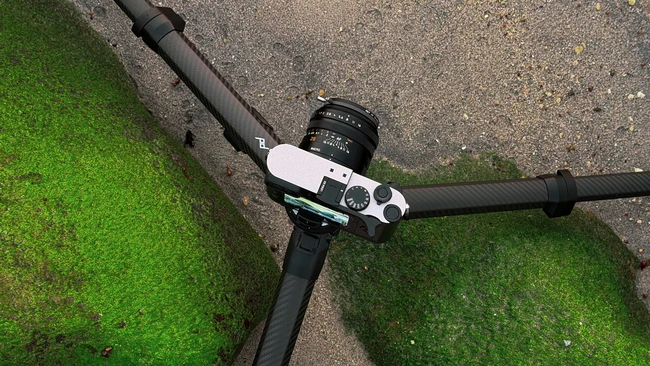
When the Peak Design Travel Tripod (PDTT) first emerged years ago, it ignited an unprecedented level of enthusiasm within the photography community, quickly becoming an aspirational piece of gear for many. Its revolutionary design promised a new era of portability, leading numerous photographers to integrate it into their workflows, often in scenarios where its unique attributes were not optimally leveraged. This initial widespread adoption, driven by its undeniable innovation, has since given way to a more nuanced understanding of its ideal application, particularly as Peak Design has expanded its tripod offerings and the broader photographic landscape has shifted towards increasingly compact camera systems. Much like acquiring a missing piece of clothing that finally makes an existing garment shine, the PDTT’s true purpose has become clearer with the advent of companion gear that truly complements its design philosophy.
The Genesis of a Design Revolution
Before the advent of the Peak Design Travel Tripod, the market for travel tripods was largely characterized by compromises. While existing options offered portability, they often did so by sacrificing stability, height, or by employing designs that, while foldable, still resulted in an awkward or bulky form factor. Traditional travel tripods typically folded their legs upwards around the center column to reduce length, but this often left protruding parts and an uneven silhouette. Peak Design, already a recognized innovator in camera accessories known for its meticulous engineering and user-centric design, sought to fundamentally rethink this paradigm.
Launched following an immensely successful crowdfunding campaign that underscored the market’s hunger for a genuinely new approach, the PDTT immediately stood out. Its core innovation lay in a completely unique leg and center column architecture. Instead of folding upwards, the legs were engineered with a specific profile that allowed them to collapse inward, nestling perfectly around the central column. This design facilitated the creation of a solid, compact cylinder when stowed, eliminating any unnecessary gaps or protruding elements. The result was an unprecedentedly sleek and minimalist form factor that could be easily held in one hand or slipped into a backpack’s side pocket without significant bulk or imbalance. This departure from conventional design was not merely aesthetic; it represented a significant engineering feat that would soon be emulated by numerous other manufacturers, a testament to its disruptive impact on the industry.
The user experience it offered was undeniably satisfying. The seamless, almost sculptural quality of its collapsed form spoke volumes about its design integrity. It was light, easy to handle, and felt robust despite its compact dimensions. This initial impression of elegance and efficiency contributed significantly to its widespread appeal, positioning it as a must-have accessory for photographers seeking to minimize their travel footprint without compromising on gear quality.
Initial Reception and Perceived Limitations
Despite its groundbreaking design, the Peak Design Travel Tripod was not without its initial challenges and criticisms, largely stemming from its unique integrated ball head. Designed to maintain the tripod’s compact profile, the ball head featured an inverted ball joint where the top platform enveloped the ball connected to the center column. While ingenious for space-saving, this design introduced ergonomic peculiarities. To achieve a full range of motion, the center column often had to be slightly extended, as its most compressed state restricted movement. Furthermore, the absence of a dedicated panning axis meant that all rotational adjustments relied solely on the ball joint, making precise panoramic compositions more cumbersome than with traditional heads. The fixed unique mounting clamp, while secure, also limited the camera’s tilt range, constrained by a specific notch on the ball joint. While workarounds existed, these design choices undeniably impacted the fluidity of the user experience, particularly for photographers accustomed to more conventional tripod heads.
Beyond the ball head, a common sentiment among early adopters, particularly those utilizing heavier camera systems, was that the tripod felt "too short" or "too small." Despite its impressive load capacity – 9.1 kg (20 lbs) for both the 1.27 kg (2.8 lbs) carbon fiber and 1.56 kg (3.4 lbs) aluminum versions – the relatively thinner and shorter leg sections often created a visual disproportion with larger full-frame mirrorless cameras equipped with substantial lenses. This perception, while not always indicative of actual instability under normal conditions, led many to question its suitability for demanding scenarios. For instance, while carbon fiber construction offered enhanced durability and vibration dampening, the tripod’s slender profile made it less ideal for high-wind environments or situations requiring partial submersion in flowing water, where a broader, more robust footprint is often preferred for ultimate stability. It appeared that, in their initial enthusiasm, many photographers were inadvertently asking the PDTT to perform beyond the implicit boundaries of its compact design, misinterpreting its innovative portability as an endorsement for universal application across all photographic disciplines.
The Shifting Landscape of Photography: The Rise of the Compact Camera
The past half-decade, particularly accelerated during and after the global pandemic, has witnessed a notable resurgence and exponential growth in the popularity of compact cameras. This trend isn’t centered around smaller-than-usual interchangeable-lens cameras that still necessitate relatively large lenses, but rather on fixed-lens cameras designed for ultimate portability and discretion. These cameras, epitomized by models that can comfortably fit into a coat pocket, have carved out a significant niche, appealing to photographers who prioritize a streamlined, less obtrusive shooting experience without sacrificing image quality.
The most palpable illustration of this phenomenon is the extraordinary demand for the Fujifilm X100V and its successor, the X100VI. These cameras, renowned for their blend of retro aesthetics, tactile controls, and exceptional image quality, have consistently faced supply shortages, underscoring their immense popularity. Similarly, the Ricoh GR III and its newer iterations, including the Ricoh GR IV, have maintained a loyal following among street and documentary photographers for their unparalleled pocketability and sharp optics. Even in the luxury segment, brands like Leica have reported a significant and undeniable increase in the popularity of their Leica Q system, a trend recently highlighted by industry analysts. These full-frame, fixed-lens cameras, such as the Leica Q2 and the newer Leica Q3, offer a potent combination of premium build, superb image quality, and a relatively compact form factor compared to traditional interchangeable-lens systems.
This macro-trend towards smaller, high-performance fixed-lens cameras has inadvertently provided the perfect context for a re-evaluation of the Peak Design Travel Tripod’s role. These cameras, inherently designed for casual, on-the-go photography, prioritize discretion and ease of carry above all else. They represent a philosophical alignment with the PDTT’s own design principles, suggesting a symbiotic relationship that was perhaps not fully apparent at the tripod’s initial launch.
Finding Its Niche: The Compact Camera Companion
The revelation regarding the Peak Design Travel Tripod’s optimal utility often occurs when pairing it with these contemporary compact cameras. The experience of mounting a Leica Q2 or Q3, a Fujifilm X100VI, or a Ricoh GR III onto the PDTT immediately clarifies its intended purpose. On paper, the tripod’s 9.1 kg load capacity is more than sufficient for virtually any full-frame setup. However, the qualitative experience of balancing a substantial camera body and lens atop its slender frame often feels incongruous. In contrast, when combined with a camera like the Leica Q2, which the author personally noted, the proportions feel inherently balanced, and the entire setup exudes a coherent sense of design and purpose.
The Leica Q2, for example, is a camera often used handheld for approximately 95% of its photographic life. Yet, for a landscape photographer, the possibility of occasionally stabilizing it for longer exposures or precise compositions, perhaps with a set of compact filters, remains an attractive "just-in-case" scenario. For such spontaneous, on-the-go travel and street photography situations, this combination is exceptionally logical. One would not typically venture knee-deep into a boulder-strewn beach or ascend a wind-swept mountaintop with this particular setup, which demands more robust and specialized gear. However, for urban exploration, casual travel photography, or discreet landscape captures where portability is paramount, the PDTT and a compact fixed-lens camera form a highly effective duo.
While the ergonomic quirks of the ball head, such as the need to slightly extend the center column for full movement or the multi-step process for achieving ultra-low-angle shots, persist, these limitations become less significant in the context of casual, spontaneous photography. The demands for precise, fine-tuned adjustments are often lower than in studio or highly controlled landscape environments. The focus shifts from meticulous technical control to capturing fleeting moments with minimal fuss, a scenario where the PDTT’s quick deployment and compact form factor are distinct advantages.
This specialized fit is further underscored by the introduction of other offerings in Peak Design’s lineup, such as the "Pro Tripod" (or analogous, more robust models the brand might develop). The existence of a more substantial, feature-rich tripod from the same manufacturer helps delineate the Travel Tripod’s role. It confirms that the PDTT was not designed to be an all-encompassing solution but rather a highly optimized tool for a specific use case: supporting compact camera systems for photographers who prioritize ultimate portability and a minimalist approach.
Technical Deep Dive: Strengths and Enduring Limitations
Revisiting the technical aspects of the Peak Design Travel Tripod reveals a product born from innovative engineering, yet constrained by the very design principles that make it unique. The carbon fiber variant, at 1.27 kg, is remarkably lightweight for a tripod that extends to a respectable height. Its ability to support up to 9.1 kg of gear is technically impressive, far exceeding the weight of most compact camera systems and even many professional full-frame mirrorless setups. However, load capacity alone does not fully dictate real-world stability. The slender leg sections, while crucial for the tripod’s signature compact fold, can exhibit more flex or vibration than thicker, more conventional tripod legs, especially at full extension or in adverse conditions.
The integrated ball head, while compact, remains the most frequently cited area for potential improvement. Its inverted design prioritizes space-saving over granular control. The lack of an independent panning base, a standard feature on most professional ball heads, means that any horizontal rotation requires loosening the main ball, potentially altering the vertical tilt. This makes multi-shot panoramas or precise adjustments to horizontal composition more challenging. While Peak Design offers an optional Universal Head Adapter for those wishing to swap out the integrated head for a third-party one, this negates some of the core benefits of the PDTT’s integrated design, particularly its seamless, compact collapse.
Furthermore, while the tripod boasts impressive weather sealing and durable materials, its inherent design for compactness can limit its suitability for truly extreme environments. As noted, strong winds can challenge its stability with heavier setups, and its relatively small footprint might not be ideal for deep water immersion where larger, more stable legs are preferred. These are not flaws in manufacturing but rather inherent trade-offs made in pursuit of unparalleled portability.
Market Impact and Enduring Legacy
The Peak Design Travel Tripod’s impact on the photography accessories market is undeniable and far-reaching. Upon its release, it not only garnered critical acclaim but also spurred a wave of innovation across the entire tripod industry. Numerous manufacturers quickly responded by introducing their own "travel-friendly" designs, many attempting to replicate the PDTT’s cylindrical folding mechanism or adopting similar space-saving approaches. This competitive response underscores the PDTT’s role as a catalyst, pushing the boundaries of what was considered possible for portable camera support.
Its legacy extends beyond mere mechanical imitation. The PDTT helped redefine user expectations for travel tripods, setting a new benchmark for compactness, aesthetic integration, and thoughtful design. It proved that a utilitarian tool could also be a piece of sophisticated engineering art. Moreover, it reinforced Peak Design’s reputation as a brand that consistently challenges conventional wisdom in product design, delivering solutions that are not only functional but also highly desirable.
The re-evaluation of the PDTT’s optimal use case does not diminish its innovative spirit or its market significance. Instead, it refines its narrative, positioning it as a specialized, high-performance tool perfectly aligned with a growing segment of the photography market. Its journey from a perceived generalist solution to a recognized specialist companion for compact camera systems is a testament to the dynamic nature of photographic technology and user needs.
Conclusion: The Right Tool for the Right Task
The Peak Design Travel Tripod, years after its highly anticipated debut, has come full circle. Initially seen by many as a universal panacea for travel photography, its true strengths are now best understood within the context of specific photographic needs and the evolving ecosystem of camera gear. It wasn’t that photographers were "using it wrong," but rather that the full breadth of its ideal application, particularly with the burgeoning popularity of compact fixed-lens cameras, wasn’t immediately apparent.
For demanding professional work with heavy setups, or in extreme environmental conditions, more robust, specialized tripods from Peak Design’s own expanding lineup or other manufacturers might indeed offer superior stability and ergonomic control. However, for the discerning photographer who values ultimate portability, sleek design, and a minimalist approach to gear, especially when paired with the increasingly popular compact cameras like the Fujifilm X100 series, Ricoh GR models, or Leica Q system, the Peak Design Travel Tripod finds its undeniable stride.
This evolution in understanding underscores a fundamental principle in photography: matching the right tool to the right task. The PDTT changed the way travel tripods were conceived and manufactured, and its enduring value lies not in being a jack-of-all-trades, but in its optimized utility for casual, on-the-go travel and street photography scenarios. For those days when minimizing bulk and focusing solely on the visual narrative is paramount, the Peak Design Travel Tripod remains an exemplary piece of engineering, allowing photographers to keep their eyes open for potentially great images with an elegant, unobtrusive companion.
