
 By Nila Kartika Wati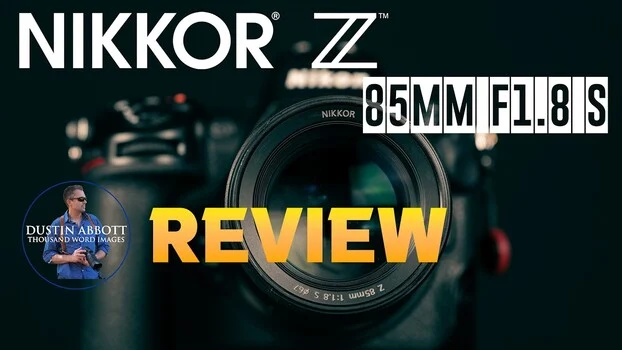
The Nikkor Z 85mm f/1.8 S, initially launched in 2019, entered the nascent Nikon Z mirrorless system as the sole dedicated 85mm prime lens, positioning itself as a premium offering for portrait photographers and enthusiasts. Five years on, as the camera industry approaches 2026, the landscape surrounding this lens has undergone a profound transformation. What was once an undisputed choice now contends with a burgeoning field of competitors, particularly from third-party manufacturers, often at a significantly lower price point. This fundamental shift – from being the exclusive option to a high-end holdout in a crowded market – forms the core narrative behind its contemporary relevance and whether it can still justify its prominent position on a photographer’s wishlist.
The Evolution of the Z-Mount Landscape and Nikon’s Strategy
When Nikon introduced its Z-mount mirrorless system in 2018, it embarked on a strategy to establish a new optical standard. A key component of this strategy was the S-Line series of prime lenses, characterized by their f/1.8 apertures. Unlike many other camera manufacturers who often prioritize f/1.4 or f/1.2 primes as their flagship "S-Line equivalent" lenses, Nikon made a deliberate, and at the time, somewhat unconventional, decision to position f/1.8 as its premium aperture for these initial offerings. This approach aimed to deliver exceptional optical performance in relatively compact and lighter packages, distinguishing them from the larger, heavier, and often more expensive ultra-fast primes.
The Nikkor Z 85mm f/1.8 S, arriving in 2019, was a direct manifestation of this philosophy. It promised superior image quality, advanced autofocus capabilities, and robust build quality, hallmarks of the S-Line. For a period, this strategy proved effective. With a closed Z-mount ecosystem, Nikon faced minimal direct competition, allowing its S-Line primes, including the 85mm f/1.8 S, to dominate their respective focal lengths. This absence of alternatives simplified purchasing decisions for early Z-mount adopters, who often valued the cohesive performance and integration of first-party glass with their new camera bodies like the Z 6 and Z 7.
However, the dynamics of the mirrorless market are fluid. In the intervening years, Nikon began to open its Z-mount to select third-party manufacturers, a move that, while beneficial for overall system adoption, introduced a new layer of complexity for its own lens lineup. This policy shift, coupled with the rapid technological advancements in lens design and manufacturing by independent companies, quickly reshaped the competitive environment.
Technical Specifications and Build Quality: A Foundation of Excellence
The Nikkor Z 85mm f/1.8 S is a testament to Nikon’s engineering prowess, embodying the brand’s commitment to quality. Physically, the lens measures 75 mm in diameter and 99 mm long, with a weight of 470 g. This makes it a substantial lens, notably 100 g heavier than its 35mm f/1.8 S counterpart, indicating a more complex optical formula and robust construction. However, its dimensions and weight are significantly more manageable when compared to ultra-fast primes like Nikon’s own Nikkor Z 85mm f/1.2 S, which is a considerable 43 mm longer and a hefty 700 g heavier. This perspective highlights the f/1.8 S’s deliberate design as a portable yet high-performing option.
The build quality is further reinforced by comprehensive weather-sealing, implemented across nine distinct seal points, commencing at the mount gasket. This robust sealing provides photographers with confidence when shooting in challenging environmental conditions, a critical feature for professionals and serious enthusiasts alike. The exterior finish is consistent with the S-Line aesthetic, featuring a minimalist design with a durable matte black coating that resists fingerprints and minor abrasions.
Optical Performance: Unwavering Quality
At the heart of the Nikkor Z 85mm f/1.8 S lies its sophisticated optical design, comprising 12 elements arranged in eight groups. This configuration includes two Extra-Low Dispersion (ED) elements, specifically engineered to minimize chromatic aberration and enhance sharpness and contrast across the frame. Dustin Abbott’s recent re-evaluation, conducted on a high-resolution Nikon Z 8 camera, provided a contemporary look at the lens’s imaging capabilities, validating many of its initial accolades.
Sharpness, a paramount concern for portrait lenses, is a standout attribute. Tests conducted on the 45-megapixel Z 8 demonstrate remarkable consistency from the center to the very corners of the frame, even when shooting wide open at f/1.8. The mid-frame performance, in particular, exhibits exceptional detail and clarity. Real-world portraits captured at f/1.8 showcase a level of intricate detail in subjects’ eyes and skin texture that Abbott suggests most photographers would find beyond reproach. This unwavering sharpness is a significant factor in the lens’s enduring appeal, confirming that its optical formula holds up remarkably well against modern high-resolution sensors.
Distortion is minimal, with Abbott’s findings indicating only a trace amount of pincushion distortion, which is easily correctable in post-processing if deemed necessary. Vignetting, the darkening of image corners, is present at wider apertures, measuring approximately one stop in the corners. While noticeable, this effect is often considered aesthetically pleasing for portraits, drawing attention to the central subject, and can also be mitigated in editing software.
Chromatic aberration, however, presented a more complex picture than anticipated. Abbott observed more green fringing than expected, particularly on shiny surfaces located behind the focal plane. While not debilitating, this artifact suggests that while the ED elements are effective, they do not entirely eliminate all forms of chromatic aberration in high-contrast situations.
Bokeh, the quality of the out-of-focus areas, is another critical characteristic for an 85mm portrait lens. The f/1.8 aperture, combined with the lens’s optical design, produces a pleasingly smooth and creamy background blur that effectively isolates subjects. While detailed specifics on the number of aperture blades were not provided in the original text, the overall rendering of out-of-focus highlights and transitions contributes significantly to its portrait capabilities.
Flare resistance holds up well at wider apertures, maintaining good contrast and minimizing distracting artifacts. Interestingly, Abbott noted a slight decrease in flare resistance when stopped down to f/11, observing a touch more ghosting and veiling. This behavior, though minor, is a point of consideration for landscape or architectural photographers who might use the lens at smaller apertures in challenging lighting conditions.
Autofocus Prowess and Control Ring Limitations
The autofocus system of the Nikkor Z 85mm f/1.8 S represents a significant upgrade over some of its S-Line siblings. Unlike the 35mm and 50mm f/1.8 S lenses, which utilize a single Stepping Motor (STM) unit, the 85mm f/1.8 S employs dual focus motors. This dual-motor configuration provides enhanced torque and speed, allowing the lens to move its heavier glass elements quickly and precisely. This is particularly beneficial for a fast prime lens, where accurate focusing is paramount, especially at wider apertures with their inherently shallow depth of field.
In practical tests, particularly for portraiture, Abbott reported excellent eye-detection consistency. During graduation and Father’s Day shoots, the lens, paired with the Nikon Z 8, consistently locked onto subjects’ eyes, a crucial feature for sharp portraits. This reliability underscores its suitability for professional portrait work. However, the lens did exhibit some limitations when tracking persistent action in burst shooting scenarios, with Abbott observing occasional back-focused frames. This suggests that while highly capable for static or moderately moving subjects, it might not be the absolute top performer for fast-paced sports or wildlife photography where continuous, high-speed tracking is essential.
Feature-wise, the lens maintains the minimalist aesthetic of the S-Line with an AF/MF switch for manual focus override and a single programmable control ring. While this design contributes to its sleek profile, Abbott highlighted the limitations imposed by having only one control ring. Unlike lenses with dedicated aperture rings or multiple programmable rings, assigning the control ring to aperture adjustment means sacrificing full-time manual override. This forces photographers to choose between convenient aperture control or quick manual focus adjustments, a trade-off that can impact workflow efficiency, especially for hybrid shooters.
For videographers, aperture racking, the smooth adjustment of aperture during video recording, is supported. However, Abbott noted a noticeable lag in its operation. A change initiated at f/8, for instance, would continue to travel to f/11 before finally settling at the desired f-stop. This delay could pose challenges for filmmakers requiring precise and instantaneous aperture changes during takes, potentially leading to inconsistencies in exposure.
The Rise of Third-Party Contenders: A New Market Dynamic
The most significant factor challenging the Nikkor Z 85mm f/1.8 S’s position is the emergence of robust third-party alternatives. Nikon’s initial strategy of positioning f/1.8 as a premium aperture created a unique market niche, which for a time, protected its lenses from direct competition. However, this niche also became an attractive target for third-party manufacturers once the Z-mount was opened.
Among the most prominent challengers is Viltrox, which has rapidly established itself as a credible and cost-effective alternative. Viltrox now offers two compelling 85mm options that directly compete with the Nikkor Z 85mm f/1.8 S, fundamentally altering the market’s value proposition:
- Viltrox Pro 85mm f/1.4: This lens directly addresses the desire for a faster aperture, offering f/1.4 with what Abbott describes as "gorgeous rendering." While not an f/1.8 lens, its wider aperture at a competitive price point provides a strong argument for photographers seeking greater light-gathering capabilities and shallower depth of field.
- Viltrox 85mm f/2 Evo: This option directly challenges the f/1.8 S on price, offering a slightly slower f/2 aperture at approximately one-third of the cost. For budget-conscious photographers, the Evo presents an extremely attractive proposition, offering respectable performance without the premium price tag.
These third-party lenses highlight a crucial principle in maturing lens ecosystems: release-era pricing rarely survives sustained contact with a diverse and competitive market. A lens that was effortlessly justifiable as the "only game in town" is now evaluated through an entirely different lens (pun intended) once viable alternatives emerge, even if the optical quality of the original first-party lens remains unchanged. The mere presence of these alternatives forces consumers to weigh the perceived value of first-party integration and marginal performance gains against significant cost savings.
Nikon’s Internal Competition: The Z 85mm f/1.2 S
Further complicating the market for the Nikkor Z 85mm f/1.8 S is Nikon’s own release of the Nikkor Z 85mm f/1.2 S. While targeting a different segment of the market – professionals demanding the absolute fastest aperture and ultimate image quality – its existence indirectly pressures the f/1.8 version. The f/1.2 S offers an even shallower depth of field, superior low-light performance, and potentially even more refined optical characteristics, albeit at a significantly higher price, weight, and size.
For some photographers, the f/1.2 S represents the true "premium" 85mm lens within the Z-mount system. This can make the f/1.8 S feel somewhat caught in the middle: not as fast or luxurious as its f/1.2 sibling, but still commanding a premium price compared to the increasingly capable third-party f/1.4 and f/2 options. This internal competition, while offering more choices to consumers, necessitates a clearer understanding of the f/1.8 S’s specific niche and value proposition.
Pricing Dynamics and Value Assessment: The Sticking Point
The most significant "sticking point" for the Nikkor Z 85mm f/1.8 S in the current market is its pricing. At an approximate retail price of $750, it positions itself at a premium. Abbott states plainly that this price feels "overpriced for an 85mm f/1.8 in the current market," especially when considering the available alternatives. It costs more than many f/1.4 competitors (including some third-party options) and approximately three times the price of the Viltrox 85mm f/2 Evo.
From a purely economic perspective, the premium over either Viltrox option is difficult for Abbott to justify for his personal use, reflecting a sentiment likely shared by many budget-conscious photographers. The market has simply moved on from the pricing models established when first-party lenses faced no direct competition.
However, a nuanced view acknowledges the enduring strengths that keep the Nikkor Z 85mm f/1.8 S on the table. First-party loyalty remains a powerful factor for many photographers who prioritize seamless integration, guaranteed compatibility, and potential long-term support. The solid build quality, including comprehensive weather-sealing, offers peace of mind. Crucially, the optics remain genuinely excellent; the image quality produced by this lens is objectively superb and consistently delivers professional-grade results.
To mitigate the initial cost, Abbott points to a robust used market and periodic sales as viable avenues for softening the financial impact. These secondary markets can make the lens a more attractive proposition for those seeking its first-party advantages without paying full retail.
The Enduring Appeal: Who is it For?
Despite the intensified competition and evolving market dynamics, the Nikkor Z 85mm f/1.8 S continues to hold significant appeal for specific segments of the photography community.
- Nikon Loyalists: Photographers deeply invested in the Nikon ecosystem, who prioritize native lens performance, seamless camera integration, and the assurance of a first-party warranty, will find this lens a compelling choice.
- Professionals Demanding Reliability: For portrait and wedding photographers who rely on consistent, high-quality results in varied conditions, the lens’s robust build, weather-sealing, and reliable autofocus (especially for eye-detection) offer a degree of confidence that might outweigh the cost savings of third-party alternatives.
- Those Prioritizing Portability over Extreme Aperture: For photographers who desire excellent optical quality and a beautiful bokeh from an 85mm prime but find the size, weight, and cost of the f/1.2 S prohibitive, the f/1.8 S strikes a superior balance of performance and practicality. It’s a more travel-friendly and hand-holdable option for extended shooting sessions.
- Value Seekers on the Used Market: As noted, those willing to explore the used market or wait for sales can acquire this optically superb lens at a more competitive price point, unlocking significant value.
Ultimately, Dustin Abbott’s re-evaluation frames the Nikkor Z 85mm f/1.8 S as a "complicated recommendation." It is a lens that, on its own merits, continues to deliver outstanding optical performance, robust construction, and reliable autofocus for its primary application: portraiture. The challenge is not with the lens itself, but with the dramatically altered market context it inhabits. Its initial positioning as a premium f/1.8 lens, once a unique selling proposition, has been thoroughly tested by the influx of faster and more affordable competitors.
For photographers in 2026, the decision to invest in the Nikkor Z 85mm f/1.8 S will depend less on its inherent quality – which remains genuinely excellent – and more on their priorities regarding budget, brand loyalty, the desire for the absolute fastest aperture, and the value placed on marginal differences in performance and integration. The lens stands as a testament to Nikon’s optical engineering, but also as a case study in how rapidly a competitive landscape can evolve, forcing even the best products to re-evaluate their place in the market. Its continued presence and performance serve as a benchmark against which all other 85mm Z-mount lenses, first-party and third-party alike, are measured.
