
 By Nila Kartika Wati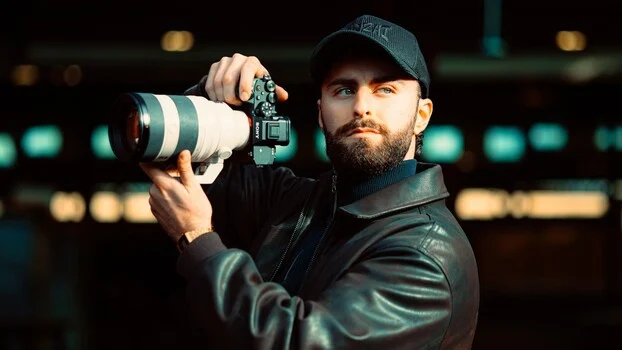
In a recent illuminating discussion, Mike, the creative force behind the popular YouTube channel North Borders, offered a profound re-evaluation of modern photographic practice, emphasizing the critical role of improvisation and the often-overlooked realities behind the lens. His insights challenge conventional wisdom, suggesting that the most impactful photography often emerges from the unplanned, urging creatives to embrace chaos, cultivate resilience, and strategically navigate the digital landscape. This comprehensive perspective, delivered through five core lessons and a bonus habit, provides a vital roadmap for aspiring and established photographers alike seeking to define their unique voice and sustainable career paths.
The Landscape of Modern Photography: North Borders’ Influence
North Borders, a YouTube channel renowned for its high-quality cinematic content and insightful discussions on photography and filmmaking, has cultivated a significant following within the creative community. Mike, the channel’s creator, has established himself as a thought leader, blending technical expertise with a philosophical approach to the craft. His recent talk, a sit-down discussion shared with his audience, serves as a timely intervention in an industry often characterized by aspirational, highly curated imagery that can obscure the messy realities of creative work. The relevance of Mike’s perspective is underscored by the explosive growth of creator-led education platforms, which have become primary sources of learning and inspiration for a new generation of visual artists. This shift reflects a desire for authentic, experience-driven advice that goes beyond mere technical tutorials, addressing the psychological and business challenges inherent in creative professions.
Instagram: A Double-Edged Sword in the Creative Arsenal
Mike’s first lesson tackles Instagram, a platform he describes as a near-perfect split between the best and worst tool a creative can touch. This assessment resonates with a broad spectrum of digital artists who leverage the platform for visibility and networking while grappling with its inherent pitfalls. On one hand, Instagram’s global reach offers unparalleled opportunities for connection; Mike himself credits the app with introducing him to his girlfriend, close friends, and numerous paying clients. This positive aspect highlights Instagram’s function as a critical professional networking tool, a digital portfolio, and a discovery engine for new talent. According to a 2023 survey by the Freelancers Union, approximately 65% of freelance creatives reported using social media platforms, including Instagram, as their primary channel for client acquisition and self-promotion.
However, Mike’s warning against the "comparison trap" illuminates the platform’s darker side. The endless scroll, curated highlight reels, and constant exposure to others’ perceived successes can foster an environment of perpetual self-doubt and inadequacy. Psychological studies, such as those published in the Journal of Social and Clinical Psychology, have consistently linked increased social media use to heightened feelings of anxiety, depression, and lower self-esteem, particularly when individuals engage in upward social comparison. Mike’s simple yet profound advice — "There’s no ceiling to comparing yourself to other people, and the only way to win is to stop playing" — underscores the importance of mindful engagement and self-awareness in an attention-economy driven by algorithmic comparison. Industry analysts often highlight this paradox, noting that while platforms like Instagram are indispensable for modern creatives, their design often prioritizes engagement metrics over user well-being, necessitating a disciplined approach to their use.
Embracing Imperfection: The Art of Copying and the Space for Chaos
Mike’s advice takes a practical turn with his second and third lessons, which advocate for active learning through emulation and the strategic embrace of unforeseen circumstances. He encourages photographers to find an admired image online and attempt to recreate it. This practice, he argues, is not about plagiarism but about deep learning. The physical impossibility of an exact replica — due to differences in subject, location, lighting, and lens choice — forces the creator to problem-solve and adapt. In these inevitable deviations, new insights emerge, unique to the recreating artist. This method mirrors classical art education, where students historically copied masterworks to internalize techniques and develop their own styles. It’s a foundational pedagogical approach that fosters technical mastery and critical observation, serving as a powerful counter-narrative to the modern emphasis on instant originality.
Building on this, Mike champions leaving "room for chaos," recognizing that the best photographic moments often arise from the unplanned. He recounts several compelling examples: an impromptu shoot near the Nürburgring where a dramatic sunset unexpectedly lit up the sky, a last-minute thunderstorm shoot on a single street in Melbourne, and a Sony creator photo battle where his team’s original plan collapsed, leading to an improvised version that yielded superior results. These anecdotes powerfully illustrate that rigid adherence to a meticulously planned vision can stifle creativity and prevent the capture of truly unique, ephemeral moments. In contrast, a polished, fully planned client shoot with a RED Komodo, while successful, barely registered in his memory, highlighting the emotional and creative impact of spontaneous creation.
This philosophy is further reinforced by a potent construction analogy: builders always factor a contingency line into every budget because real-world projects inevitably encounter unforeseen issues. Applying this principle to photography — planning 70 to 80 percent, having a backup location, and leaving the rest open — transforms how a photographer approaches a shoot. This approach reflects a broader shift among working photographers, moving away from a rigid "mood-board-to-final-frame" pipeline toward a more fluid, reactive methodology. This agility is crucial given the dynamic nature of light, weather, and human subjects. Improvisation, Mike stresses, is a muscle that requires continuous training, irrespective of one’s technical proficiency. Photographers who can adapt to a blown-out sky, a sudden downpour, or a last-minute model cancellation are not just resilient; they are reliably productive, capable of delivering compelling work even when the original plan falters. This adaptive skill often distinguishes a robust, dependable professional from a fragile one, long before the quality difference becomes evident in the final images. A 2022 survey by the Professional Photographers of America indicated that adaptability and problem-solving were among the top soft skills valued by clients in the current market, underscoring the commercial as well as creative importance of this approach.
The Unseen Labor: Beyond the Shutter Click
Mike’s fourth lesson pulls back the curtain on the often-glamorized life of a photographer, revealing the significant proportion of time spent away from the camera. He estimates that actual shooting constitutes less than 25 percent of his total work time. The vast majority is dedicated to the myriad tasks of a one-person business: editing, answering emails, managing finances, marketing, and client communication. This reality, frequently obscured by the highlight reels of social media, underscores the entrepreneurial demands placed on modern creatives. Data from various freelance platforms and creative industry surveys consistently show that independent contractors spend an average of 70-80% of their time on administrative tasks, marketing, and business development rather than core creative work.
This extensive behind-the-scenes labor can be isolating. Mike’s powerful counter-recommendation is to "find your people," whether through online communities or in-person meetups. The value of a trusted group chat for honest feedback, a sounding board for ideas, or simply shared camaraderie cannot be overstated. A handful of like-minded friends, he posits, far outweighs a hundred loose acquaintances. This emphasis on community aligns with research on creative collaboration and mental well-being for freelancers. Studies by organizations like the National Association of Freelancers have highlighted that peer networks are crucial for mitigating feelings of isolation, fostering professional growth, and even leading to new business opportunities through cross-pollination of ideas. Two creatives bouncing ideas off each other, Mike notes, isn’t simple addition; it’s a compounding source of new work, leading to exponential growth in creativity and opportunity.
Defining "The" Photographer: Crafting a Unique Identity
Mike’s fifth lesson introduces a crucial distinction between being a photographer and being the photographer. The former describes a professional hired based on broad criteria: good SEO, a clean portfolio, and a fair price. This is a legitimate and often lucrative path, serving clients who need a generalist to fulfill a specific photographic brief. Many photographers successfully build careers within this model, providing essential services across various industries.
However, "the" photographer is hired not merely for their technical skill or competitive pricing, but specifically for their unique creative vision. This client isn’t just buying an image; they’re buying the artist’s distinct perspective, their signature style, and their creative voice. This path comes with an initial cost: developing a distinctive style (e.g., dark, gritty, blue, heavily stylized) inherently narrows the potential client pool. There will be jobs lost early on because the artist’s aesthetic doesn’t fit every client’s needs. Yet, the long-term payoff is profound: eventually, "the" photographer competes primarily with themselves, as there is no true substitute for their unique artistic fingerprint. This phenomenon is a cornerstone of effective brand building and market differentiation, principles that are increasingly vital in the saturated creative marketplace. The implication is that while broad appeal offers immediate opportunities, a distinctive niche fosters long-term demand and premium pricing, allowing the artist to command their value based on their irreplaceable vision.
The Elusive Style and the Joy of Play
Tying all his insights together, Mike’s final point challenges the common directive to "find your style." He argues that style is not something one actively searches for or forces; rather, it emerges organically through consistent practice, experimentation, and the continuous refinement of one’s artistic voice. It’s a natural byproduct of the journey, not a destination to be consciously sought. This perspective encourages photographers to focus on the process, on continuous learning and creation, trusting that their unique aesthetic will coalesce over time.
As a bonus, Mike shares a simple yet powerful habit: using a thrifted Pentax film camera specifically for personal projects and pure enjoyment. This act of separating "work" photography from "play" photography serves as a crucial mental trick. In an era where creative passions often become monetized careers, the line between hobby and profession can blur, leading to burnout and a loss of joy in the craft. By designating a specific tool for personal, non-commercial exploration, Mike reclaims the unadulterated pleasure of photography, reminding himself and his audience of the intrinsic motivation that often sparked their initial interest. This practice is a potent antidote to the pressures of commercial work, allowing for creative freedom and rekindling the pure, unburdened love for image-making.
Broader Implications for the Creative Industry
Mike’s comprehensive talk from North Borders offers more than just practical tips; it provides a philosophical framework for sustainable creative practice in the digital age. His emphasis on resilience, adaptability, and authenticity resonates deeply with the evolving demands of the creative economy. By demystifying the creative process, acknowledging the unseen labor, and advocating for genuine human connection, Mike empowers photographers to navigate the complexities of their profession with greater clarity and purpose. His insights challenge the often-unrealistic expectations fostered by social media, urging a return to fundamental principles of learning, adaptation, and self-discovery. For photographers at any stage of their journey, embracing these lessons can lead not only to better images but also to a more fulfilling and enduring creative life, transforming them from merely "a" photographer into "the" indispensable artist.
