
 By admin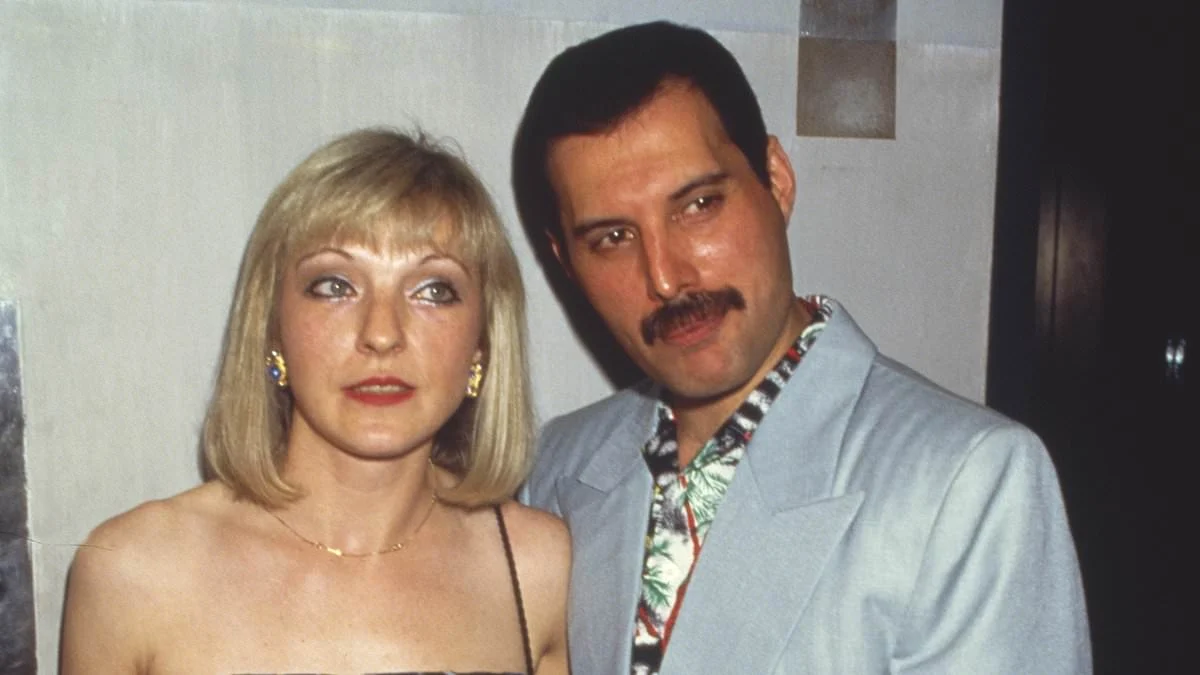
The enduring legacy of Freddie Mercury, the legendary frontman of Queen who would have celebrated his 80th birthday this week, continues to be a focal point of both public adoration and intense private dispute. Nearly thirty-five years after his passing in November 1991, the singer’s estate and personal history remain at the center of a complex narrative involving his closest confidantes and individuals claiming a familial connection. This ongoing tension has been reignited by the publication of a new volume titled Freddie Mercury: A Life In Lyrics, authored by Mary Austin, Mercury’s former fiancée and the primary beneficiary of his estate. While the book is intended to offer fans an intimate look at the singer’s creative process through handwritten lyrics and private photographs, it has sparked a sharp rebuttal from the family of a woman known as "B," who claimed until her death last year to be Mercury’s secret daughter.
The dispute highlights the broader challenges of managing the posthumous reputations of global icons. Mary Austin, who inherited Mercury’s Kensington home, Garden Lodge, and a significant portion of his wealth, has long been the gatekeeper of his personal effects. Her new book presents her interpretation of Mercury’s life and work, but it is being challenged by "Thomas," the husband of the late "B." Thomas asserts that Austin’s narrative is factually flawed and ignores the existence of Mercury’s alleged daughter. The conflict centers on a collection of thirteen notebooks that "B" claimed were given to her by Mercury, which served as the basis for the book Love Freddie by biographer Lesley Ann Jones. As Austin continues to voice skepticism regarding the possibility of Mercury harboring a secret child, the opposing camp prepares to release a photographic volume next year intended to "prove beyond all doubt" the biological connection between the singer and "B."
A Timeline of Posthumous Legacy and Disputed Claims
The chronology of Freddie Mercury’s estate management has been marked by significant milestones that have kept his name in the headlines. Following his death from AIDS-related complications in 1991, Mary Austin became the custodian of his most private archives. For decades, these items remained largely out of public view until 2023, when Austin collaborated with Sotheby’s for a massive auction of Mercury’s personal belongings. The auction, which included his Yamaha baby grand piano and handwritten drafts for "Bohemian Rhapsody," grossed over £40 million, a portion of which was donated to charity. However, the commercialization of these items also invited scrutiny from those who felt the singer’s private world was being dismantled.
The emergence of "B’s" claim added a layer of complexity to this timeline. According to Thomas, the upcoming photographic book will feature images from as early as December 1969, which he claims show Austin and Mercury together earlier than Austin’s own account suggests. Austin’s book states they met in mid-1970, just as the band Smile was transitioning into Queen. Thomas argues that such "glaring" factual errors undermine the credibility of Austin’s entire memoir. This battle over dates and notebooks represents more than a personal grievance; it is a struggle over the historical record of one of the 20th century’s most scrutinized public figures.
Strategic Shifts and Casting Crises in the West End
While the music world grapples with the past, the London theatrical scene is facing immediate challenges regarding its future productions. The highly anticipated revival of Stephen Sondheim’s Sunday In The Park With George at the Barbican, originally slated to be a centerpiece of the upcoming theatrical season, has been thrown into uncertainty. The production was initially anchored by the star power of Ariana Grande and Jonathan Bailey, both of whom have recently starred in the film adaptation of the musical Wicked. However, following Grande’s announcement that she requires a hiatus from the spotlight, Bailey has also confirmed his departure from the project.
The exit of two high-profile leads has significant economic and creative implications for the Barbican. Producers are reportedly in high-stakes negotiations with American musical theatre stalwarts Jonathan Groff and Ben Platt to fill the void left by Bailey. Groff, a Tony and Grammy winner known for Hamilton and his voice work in Disney’s Frozen, and Platt, the star of Dear Evan Hansen, represent the caliber of talent required to sustain a production of this magnitude. Nevertheless, the role of Dot, originally intended for Grande, remains uncast. Industry insiders suggest that the production may be deferred by a full year to allow for a complete creative reset. The "Monday morning feeling" currently pervading the production team underscores the fragility of "star-casting" models, where the viability of a multi-million-pound show often rests on the availability of a single A-list performer.
The Mara Sisters and the Surrealism of Werner Herzog
In contrast to the casting difficulties in London, the Venice Film Festival has provided a platform for successful creative collaborations, most notably the premiere of Bucking Fastard. The film marks the first time sisters Rooney and Kate Mara have acted together, playing the roles of co-dependent twins Jean and Joan Holbrooke. Directed by the visionary Werner Herzog, the film is loosely inspired by the true story of the Chaplin twins, Freda and Greta, who gained notoriety in York during the 1980s for their synchronized speech and shared behavioral patterns.
Herzog’s directorial approach often eschews traditional rehearsal in favor of capturing raw, psychological synergy. He reportedly reduced the Maras’ rehearsal schedule from two weeks to five days, noting that their lifelong bond provided a "world between them" that required no artificial construction. The film, set in Ireland and featuring Domnhall Gleeson and Orlando Bloom, explores the themes of identity and shared consciousness. The historical context of the Chaplin sisters—who were once jailed for their obsessive harassment of a local man—provides a dark, surreal foundation for Herzog’s narrative. The Mara sisters’ ability to speak in unison on screen has been described as "musical," suggesting a performance that leans into the avant-garde style Herzog is known for.
Digital Distribution Errors and the Risks of Streaming
The intersection of technology and film distribution has also seen recent friction, specifically involving Amazon’s release strategy. The streaming giant faced significant embarrassment after accidentally making the new Jason Statham action film, Mutiny, available to subscribers before its scheduled theatrical window. This logistical error has had a direct impact on the film’s box office performance, which has reportedly taken only half of its projected earnings. Consequently, Amazon is expected to face substantial compensation claims from the film’s producer, Lionsgate.
Furthermore, Amazon’s decision to deprioritize certain projects in favor of a partnership with OpenAI has led to the departure of the film Artificial from its roster. The film, starring Andrew Garfield and Monica Barbaro, has since found a prestigious slot for a gala premiere at the BFI London Film Festival in October. These incidents highlight the volatile nature of the current media landscape, where the rush toward artificial intelligence and digital-first distribution can lead to costly errors and the loss of high-value creative content to traditional festival circuits.
Institutional Stability and the Future of Fashion Media
The fashion industry is currently observing a potential shift in leadership at the highest levels of Conde Nast. Anna Wintour, the long-standing editor-in-chief of Vogue and a global arbiter of style, is facing questions regarding her continued tenure following the cancellation of a Met Gala theme centered on John Galliano. The decision to honor Galliano was met with a significant backlash due to the designer’s history of anti-Semitic remarks in 2011. Although Galliano has undergone a period of professional rehabilitation, the sensitivity of the Met Gala’s public image led to a strategic retreat.
At 76, Wintour remains a formidable figure, yet insiders suggest that the Galliano debacle may have provided the impetus for the company to consider a succession plan. Despite the controversy surrounding the Met Gala, Galliano’s commercial influence remains robust, with a high-profile collaboration with Zara set to launch globally. The contrast between the social scrutiny of high-fashion institutions and the unabated consumer demand for Galliano’s designs illustrates the complex moral and economic calculations currently defining the industry.
Reflections on Stardom and Political Engagement at Venice
The Venice Film Festival also served as a venue for more personal reflections from Hollywood’s elite. George Clooney, receiving a Lifetime Achievement award, pivoted from his cinematic career to discuss the importance of his personal life, specifically his marriage to human rights lawyer Amal Clooney. His comments underscored a trend among veteran actors to balance their public personas with advocacy and family-centric narratives.
Simultaneously, the festival has been a site of political discourse, led by jury president Maggie Gyllenhaal. Gyllenhaal addressed the ongoing gender disparity in the film industry, noting with pointed irony the presence of only one female director in the main competition lineup. Her assertion that "films are fundamentally, unavoidably political" serves as a reminder that the arts do not exist in a vacuum. Whether it is the battle over a rock star’s estate, the casting of a West End musical, or the selection of films for a major festival, the themes of representation, legacy, and institutional accountability remain at the forefront of the global cultural conversation. As these stories unfold into the coming year, they will continue to shape the public’s understanding of how fame is managed, how history is written, and who is granted the authority to tell those stories.
