
 By Nila Kartika Wati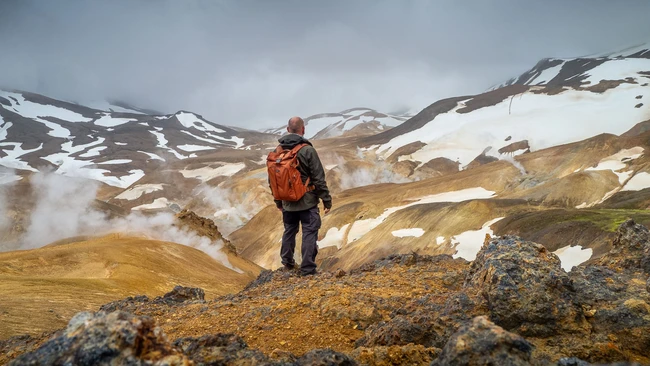
For photographers embarking on ambitious expeditions, the choice of equipment, particularly the carrying solution, is paramount. The delicate balance between portability, protection, and capacity often dictates the success and enjoyment of a photographic journey. This was the central consideration for a recent photography tour in Iceland, where the objective was to maintain a lightweight setup without compromising on essential gear. The newly introduced Think Tank FocusPoint 30L backpack emerged as a compelling candidate, promising a compact and stylish design. This report details its performance and suitability for the demanding conditions of Icelandic photography, following an extensive two-week field test.
The Perennial Quest: Finding the Ideal Photography Backpack
The challenge of selecting the perfect camera bag is a familiar dilemma for most photographers. The market offers a vast array of options, each designed with specific applications in mind. For extensive international travel and significant gear loads, larger capacity backpacks, such as the 50-liter Shimoda Action X50, have long been a go-to choice. While offering ample space and robust protection, these larger packs often present logistical hurdles, particularly concerning airline carry-on restrictions and overall bulk. The Shimoda Action X50, for instance, despite its generous capacity suitable for comprehensive kits, frequently pushes the boundaries of carry-on dimensions, necessitating careful navigation of airport regulations.
Conversely, for day trips or lighter assignments, smaller, more specialized bags like the Think Tank Retrospective 15 backpack prove invaluable. This particular model, known for its compact footprint, comfortably accommodates a single camera body and two lenses, including a substantial telephoto such as a 100-500mm optic. Its design thoughtfully integrates space for personal items like lunch and a rain jacket, a crucial consideration for photographers operating in unpredictable environments. Furthermore, its compatibility with accessories like the Gitzo Traveler tripod, which fits snugly into a dedicated side pocket, highlights its practical design for mobile photographers.
The upcoming Iceland tour, however, presented a unique requirement: the need to carry an additional lens beyond the capacity of the Retrospective 15, without sacrificing the essential space allocated for personal necessities. While external lens pouches offer a workaround, the desire for an integrated, streamlined solution remained strong. It was against this backdrop that the Think Tank FocusPoint 30L, a rolltop backpack, captured attention, offering a perceived blend of slim profile, aesthetic appeal, and versatile storage.
Introducing the Think Tank FocusPoint 30L: A Promising Contender
The initial appeal of the Think Tank FocusPoint 30L lay in its modern aesthetic and its promise of a low-profile design. The rolltop configuration suggested flexible capacity, potentially bridging the gap between a dedicated day pack and a larger travel pack. Its advertised "plenty of extra space" for essentials like lunch and a rain jacket—items deemed non-negotiable for Icelandic conditions—further heightened interest. The crucial test, therefore, was whether this seemingly compact 30-liter bag could adequately house a professional photography kit.
The planned equipment list for the Iceland expedition comprised a Canon EOS R5 mirrorless camera body, paired with three essential RF lenses: the RF 100-500mm f/4.5-7.1L for telephoto reach, the RF 15-35mm f/2.8L for wide-angle landscapes, and the RF 24-105mm f/4L as a versatile standard zoom. A pre-purchase trial confirmed that this specific configuration of gear could indeed be meticulously organized and secured within the FocusPoint 30L’s main compartment. This successful initial fit test provided the confidence to acquire the bag and integrate it into the Icelandic travel plans.
Key Specifications and Design Philosophy
The Think Tank FocusPoint 30L is designed with a discerning photographer in mind, prioritizing accessibility, modularity, and a refined aesthetic. Available in several colorways, including Urban Rust (the tested model), Asphalt Black, Greenway, and Golden Hour, it caters to varied style preferences.
A defining feature of the FocusPoint series is its inherent versatility. While primarily engineered as a photo backpack, its modular design allows for the complete removal of the internal photo compartment. This transforms the FocusPoint into a conventional daypack, an attribute that significantly enhances its utility for non-photography-specific excursions or as a general travel bag. This flexibility is a direct response to the growing demand for hybrid solutions that serve multiple purposes, reflecting a broader trend in outdoor gear design towards adaptable equipment.
Access to the primary camera compartment is facilitated via a rear-panel opening, providing enhanced security against theft when the pack is worn. Additionally, a side access panel allows for quick retrieval of a camera without fully dismounting the backpack, a feature appreciated by photographers who prefer to keep their gear readily available. Above the dedicated photo compartment lies a substantial secondary space, accessed via the rolltop closure. This area is ideal for personal effects such as jackets, food, or even supplementary camera gear, and it also houses a padded sleeve capable of accommodating a 16-inch laptop, a standard requirement for modern travel photographers for image processing and backup.
The rolltop closure itself is secured by a magnetic flap, offering a convenient and tactile seal before the top is rolled down and fastened with a robust, aesthetically pleasing buckle. This mechanism not only secures the contents but also allows for an expansion of the bag’s overall capacity, a crucial detail for accommodating last-minute additions or an unexpected extra lens. Further external features include an expandable side pocket, perfectly sized for a water bottle or a compact tripod, and a large front pocket for additional accessories. Internally, the bag incorporates thoughtful details such as a lanyard for keys and protective covers over internal zippers, preventing potential scratches to delicate equipment. The sternum strap is height-adjustable, and shoulder straps are equipped with attachment points compatible with popular clip systems like Peak Design. The waist belt is also removable, further enhancing the bag’s adaptability.
Field Performance in Iceland: A Test of Resilience
The true measure of any photography backpack lies in its performance under real-world conditions. Iceland, with its notoriously unpredictable weather and rugged landscapes, presented an ideal testing ground for the FocusPoint 30L.
During the planning phase, a last-minute adjustment to the gear load-out introduced an additional layer of complexity. Instead of a single camera system with three lenses, the decision was made to carry a dual-camera setup: the Canon EOS R5 with the RF 100-500mm, alongside an Olympus OM-D E-M1 Mark III paired with the M.Zuiko 12-100mm f/4 PRO and the M.Zuiko 7-14mm f/2.8 PRO. This expanded kit, while offering greater photographic versatility, immediately challenged the FocusPoint 30L’s carefully planned internal organization. The Olympus 7-14mm lens, initially intended for the main compartment, found itself temporarily relegated to a small external pouch or the rolltop compartment alongside personal necessities. This situation highlighted a common trade-off in compact bag design: the more versatile the gear list, the more critical efficient internal organization becomes. The practice of carrying a camera outside the bag while actively shooting meant the 7-14mm could be re-integrated into the main compartment when stationary, but the initial space constraint was evident.
A significant operational observation pertained to the internal divider system. Due to the presence of the side access panel, the dividers within the main compartment cannot be rigidly fixed across the entire width of the bag. This design choice, while enabling quick side access, inadvertently compromises the stability of the dividers. Consequently, equipment, particularly smaller items, tended to shift or "wander" within the compartment, especially during movement. Photographers who do not frequently utilize side access may find this a minor inconvenience, necessitating careful placement of gear at the bottom of compartments to minimize movement. This suggests a design optimization challenge for manufacturers aiming to offer both quick access and robust internal organization.
Iceland’s weather patterns are famously capricious, often transitioning rapidly from bright sunshine to torrential rain. While the expedition generally enjoyed favorable conditions, several instances of moderate rainfall provided an opportunity to assess the FocusPoint 30L’s weather resistance. The bag’s primary material proved capable of repelling light rain effectively. However, the integrity of the zippers became a point of concern. Following a medium rain shower, noticeable leakage occurred through the zipper seams, indicating that the bag is not inherently waterproof at these vulnerable points. This necessitated the deployment of the included rain cover, a critical accessory for protecting sensitive electronics in genuinely wet conditions. This finding underscores the importance of not solely relying on the bag’s material for water resistance in adverse weather.
Furthermore, the breathable foam mesh on the back panel, designed for ventilation and comfort, absorbed moisture during rain showers. While aiding in comfort in dry conditions, its saturation meant a prolonged drying time, which can be inconvenient during multi-day trips where gear needs to be ready quickly for the next day’s adventures. This area, often uncovered by standard rain covers, remains a potential vulnerability in sustained wet environments.
Broader Implications and Market Context
The experience with the Think Tank FocusPoint 30L in Iceland offers valuable insights into the evolving demands of travel photography and backpack design. The market for photography bags is increasingly segmented, with specialized products catering to extreme outdoor use, urban daily carry, and long-haul travel. The FocusPoint 30L appears to target a "hybrid" niche—a stylish, compact bag that offers more capacity than a traditional daypack but is not engineered for the rigorous demands of multi-day wilderness expeditions.
Industry trends suggest a growing preference for modular and versatile gear, allowing photographers to adapt their kits to diverse scenarios. Think Tank Photo, a respected brand known for its robust and photographer-centric designs, has clearly aimed to address this with the FocusPoint line. However, the trade-offs in achieving such versatility are evident. The side-access feature, while convenient for some, directly impacts the stability of internal dividers, a critical aspect of gear protection. Similarly, while the rolltop design offers flexible capacity and a degree of weather resistance, the zipper vulnerabilities highlight that true all-weather protection often requires dedicated waterproofing solutions or a more rugged, less aesthetic design.
The increasing popularity of destinations like Iceland, known for their dramatic landscapes and challenging weather, places a premium on gear that can withstand the elements. Photographers traveling to such locations often face a difficult choice between lightweight portability and absolute ruggedness. The FocusPoint 30L, while excelling in the former, demonstrates limitations in the latter, positioning it as an excellent choice for urban exploration, casual day trips, or travel to more temperate climates, rather than as a primary pack for demanding outdoor adventures where heavy rain or prolonged exposure to the elements are expected.
Conclusion: A Niche Performer for Specific Demands
After two weeks of rigorous testing across Iceland’s varied terrain and unpredictable weather, the Think Tank FocusPoint 30L emerges as a well-conceived and aesthetically pleasing backpack with many commendable features. Its thoughtful details, such as the key lanyard, protective internal zipper covers, adjustable sternum strap, and numerous small compartments for accessories, underscore a strong understanding of photographer needs. The ability to carry a substantial camera kit alongside personal essentials like a rain jacket and lunch, while maintaining a low-profile and carry-on friendly form factor, is a significant advantage. The expandable rolltop further enhances its utility, offering flexibility in capacity.
However, the field test also highlighted specific areas where its design choices introduce limitations for certain use cases. The internal camera insert’s divider stability, compromised by the side-access design, proved to be an annoyance for maintaining precise gear organization. More critically, while the bag’s material offers good resistance to light rain, the zippers’ susceptibility to leakage necessitates the consistent use of the provided rain cover in anything more than a drizzle. Furthermore, the slow-drying breathable mesh on the back panel can be a minor inconvenience in persistently wet conditions.
In essence, the Think Tank FocusPoint 30L is a superb backpack for daily use, urban photography, and less adventurous trips where weather extremes are not a primary concern. Its stylish design, comfortable carry, and well-thought-out features make it an attractive option for photographers seeking a versatile and compact solution for everyday needs or travel to more predictable environments. For those embarking on truly rugged outdoor expeditions, particularly to destinations renowned for their challenging weather, a bag designed with more robust weather sealing and internal stability might be a more appropriate choice. The FocusPoint 30L successfully carves out its niche as an elegant and practical solution for the photographer who prioritizes aesthetics and versatility for a small to medium camera kit in less extreme conditions.
