
 By admin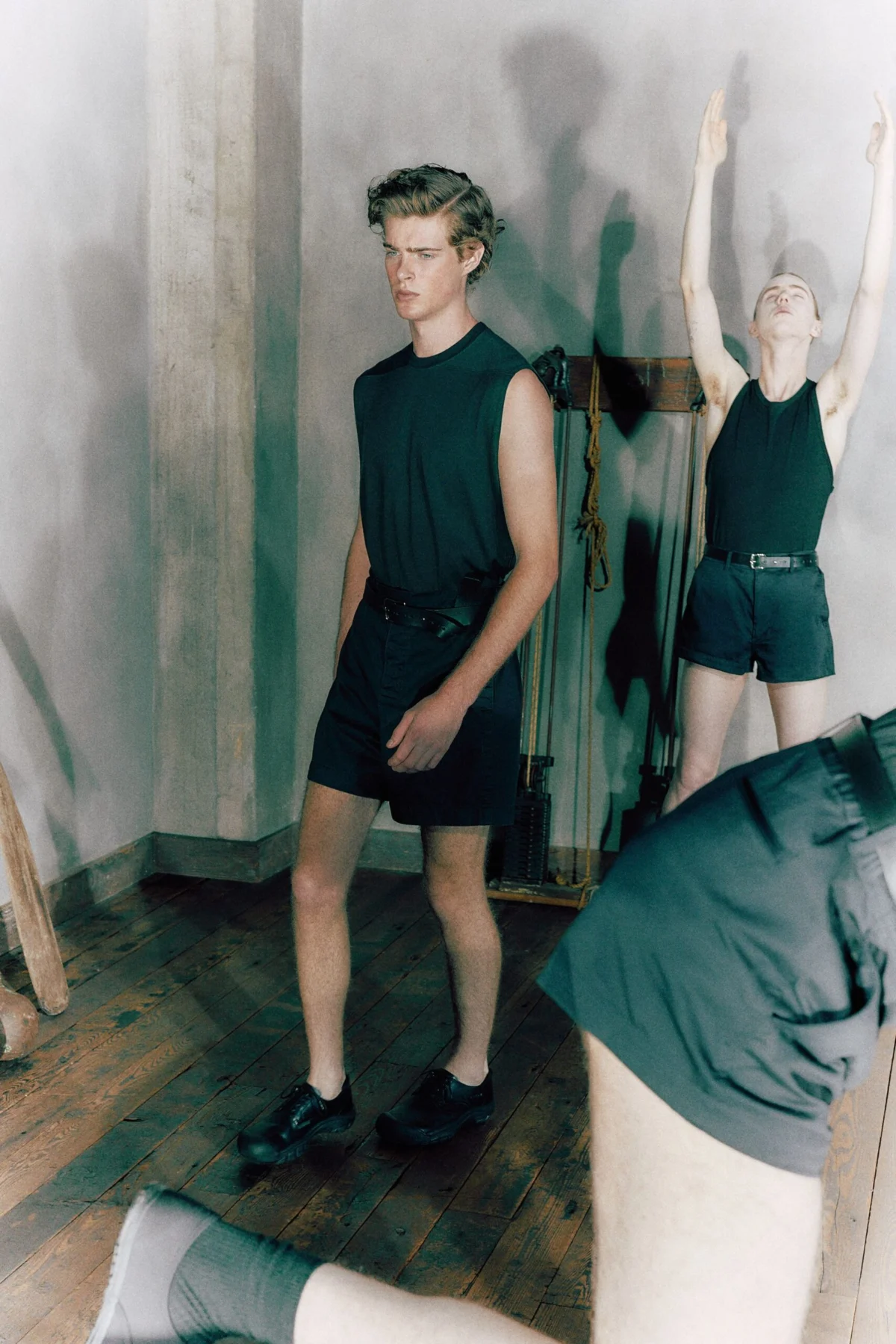
N.Hoolywood, under the visionary direction of Daisuke Obana, has unveiled its Spring 2027 collection, presenting a profound reinterpretation of classic American Ivy style through a distinctly Japanese sensibility. Dubbed "Watora"—a portmanteau coined by the design team from "Work" and "Traditional"—the collection is a sophisticated blend of collegiate elegance, utilitarian robustness, and a philosophical nod to physical and mental cultivation. This innovative approach, deeply rooted in Obana’s extensive knowledge of post-war Japanese fashion history and his background as a vintage dealer in the 1990s, promises to redefine contemporary prep wear, offering a nuanced counterpoint to prevailing trends.
The Genesis of "Watora": A Brooks Brothers Catalyst
The impetus for N.Hoolywood’s exploration into the historical depths of American prep was not merely an internal creative drive but originated from a significant external request: a proposal for a capsule collection from the venerable American institution, Brooks Brothers. This collaboration provided the perfect platform for Obana to delve into a subject he is inherently conversant in—the intricate relationship between Japanese fashion and American sartorial traditions, particularly the enduring influence of Ivy League aesthetics. Brooks Brothers, a brand synonymous with classic American style since its founding in 1818, has long been a foundational pillar of Ivy style, making their approach to N.Hoolywood a testament to Obana’s expertise and the brand’s unique ability to reinterpret heritage. The request, likely initiated in late 2025 or early 2026, set in motion a meticulous research and development phase that would shape the entire Spring 2027 offering.
A Deep Dive into American Archives
Following the agreement with Brooks Brothers, Obana and his dedicated team embarked on an extensive research expedition to the East and West coasts of the United States. This immersive journey saw them staying at iconic institutions like the Los Angeles Athletic Club and the New York Athletic Club. These clubs, bastions of American sport, social life, and tradition, offered invaluable access to archives that held tangible records of historical athletic wear, club uniforms, and the broader lifestyle associated with the American collegiate and upper-crust elite. The team’s deep dive into these repositories, examining vintage photographs, uniform specifications, and even old membership records, allowed them to experience the material culture of a bygone era firsthand.
It was during this archival exploration that Obana made a pivotal observation, a generational realization that would become the conceptual cornerstone of the collection. He noted, "I realized [the younger members of the team] had never experienced that period. Something that existed in my own memory looked completely new to them." This insight underscored the challenge and opportunity: to present a style that, while historical, felt fresh and relevant to a contemporary audience. The task was not merely to reproduce authentic traditional style, which Obana deemed "not interesting for us," but to infuse it with a new perspective. This led to intensive discussions within the creative team about merging traditional clothing with another fundamental pillar of N.Hoolywood’s design philosophy: workwear and utility clothing. This fusion, marrying the precision of traditional tailoring with the rugged functionality of workwear, birthed the unique lexicon of "Watora."
From Ivy League to "Watora": A Cultural Synthesis
The Enduring Legacy of Ivy Style
To fully appreciate N.Hoolywood’s "Watora" collection, it is crucial to understand the historical context of Ivy style. Originating in the elite American universities of the Ivy League in the early 20th century, this sartorial code—characterized by tweed blazers, oxford shirts, chinos, loafers, and knit ties—epitomized an understated, intellectual, yet inherently casual elegance. Post-World War II, its influence spread globally, finding an exceptionally fervent following in Japan. The phenomenon, often termed "Ametora" (American Traditional), saw Japanese youth in the 1960s meticulously adopting and adapting Ivy League fashion, largely influenced by the iconic VAN Jacket Inc. and its founder, Kensuke Ishizu. This adoption was not mere mimicry; it was a process of careful study, reinterpretation, and ultimately, a unique integration into Japanese fashion identity, often with an even greater emphasis on authenticity and detail than in America itself.
Daisuke Obana, having grown up amidst this cultural exchange and honed his eye as a vintage dealer, possesses an intrinsic understanding of this lineage. His brand, N.Hoolywood, founded in 2002, has consistently explored and deconstructed Americana, from military wear to denim, filtering it through a distinctively Japanese lens. The "Watora" collection is a natural evolution of this brand identity, taking the well-trodden path of Ivy style and injecting it with the raw, practical energy of workwear. This approach contrasts with some contemporary "nouveau prep" interpretations, such as those presented by Michael Rider at Celine, which often lean into a more polished, luxurious, and occasionally maximalist aesthetic. N.Hoolywood’s "Watora" distinguishes itself by seeking a deeper, more utilitarian authenticity.
N.Hoolywood’s Distinctive Interpretation
The "Watora" concept, combining "Work" and "Traditional," transcends simple stylistic juxtaposition. It represents a philosophical merging of two seemingly disparate worlds: the refined intellectualism of the Ivy League and the grounded pragmatism of the working class. Obana’s team grappled with how to make classic Ivy relevant without losing its essence. The solution lay in identifying the shared qualities of durability, functionality, and a sense of purpose that exist in both traditional collegiate wear and robust work garments. The challenge was to create something that honored the past but was undeniably forward-looking, resonating with a generation that values authenticity, utility, and sustainability.
Crafting the "Watora" Aesthetic: Design and Materials
The Spring 2027 "Watora" collection manifests this hybrid philosophy through a series of thoughtfully designed garments that challenge conventional categorizations. Examples highlighted from the collection include a classic marinière, the standard striped sailor’s shirt, unexpectedly adorned with professorial elbow patches—a direct nod to academic tradition. This piece exemplifies the fusion: the practical, hard-wearing nature of a sailor’s uniform combined with the intellectual, somewhat worn-in look of a scholar.
Further embodying the "Watora" ethos are trousers spattered with what appears to be paint, a clear homage to the arduous, hands-on labor of artisans and tradesmen. These are not merely distressed garments; they tell a story of active engagement and creative work. Perhaps these are classic chino trousers, a staple of Ivy style, but reimagined with the rugged character of a painter’s work pants. Another striking example is a trimmed blazer, traditionally crafted from fine wool or tweed, but here reinterpreted in sturdy denim. This denim blazer blurs the lines between formal and informal, embodying a relaxed yet structured elegance that is both practical and sophisticated.
Beyond these specific examples, one can infer a broader application of "Watora" principles throughout the collection. Expect to see tailored chinos crafted from heavier twills with reinforced knees, tweed jackets featuring utility pockets or durable canvas panels, and oxford shirts reimagined in more robust, perhaps even ripstop, fabrics. Classic varsity jackets might be updated with subtle workwear details, such as additional tool loops or more resilient hardware. The collection likely showcases a thoughtful interplay of materials: traditional wools and fine cottons interwoven with hard-wearing canvas, heavy denim, and durable synthetic blends, all chosen for their ability to withstand the rigors of an active life while maintaining a refined aesthetic. This material innovation is key to achieving the desired "lived-in quality" and "patina" that Obana envisions.
The Philosophy of Movement: "Physical Culture" and Presentation
The presentation of the N.Hoolywood Spring 2027 collection—through both an emotive film and a meticulously curated lookbook—is as conceptually rich as the garments themselves. The cast, described as reminiscent of a Merchant-Ivory film, exudes an old-world charm and refinement, yet with a crucial distinction: "these boys look willing to break a sweat." This active, engaged quality is central to Obana’s vision.
To set this scene, Obana, an athlete himself, integrated a performance element featuring models interspersed among actors practicing "Physical Culture," a gymnastic wellness movement popularized in the 1920s. As detailed in the show notes, this movement was based on "training the body and cultivating refinement." It was a holistic approach to well-being that emphasized not just physical strength but also grace, discipline, and moral character. This historical context is vital; it grounds the collection in a philosophy that links physical exertion with intellectual and spiritual development. "We wanted to place contemporary clothing within the physical language of the past," Obana explained, perfectly encapsulating the bridge between the collection’s historical inspirations and its modern utility.
The models in N.Hoolywood’s sort-of classic clothes convey an attitude of "noblesse oblige and vintage flair." This isn’t merely about wearing expensive clothes; it’s about embodying a sense of responsibility and active participation in life. Sweaters are tucked into high-waisted pants, and shorts hems are carefully rolled—styling cues that suggest a purposeful, ready-for-action sensibility. Crucially, the "lived-in quality" of the garments has less to do with an unchanging, static prep style and more, as Obana articulates, with the natural aging process typical of workwear and workout gear. This patina, the subtle wear and tear, the fading and softening of fabrics, is earned through physical exertion and active use. It’s a visual metaphor for the principle: "No pain, no gain." The collection champions clothing that tells a story of an engaged life, of garments that evolve with their wearer, gaining character and authenticity through experience.
Broader Implications and Industry Resonance
Redefining Prep for a New Era
N.Hoolywood’s "Watora" collection arrives at a time when "prep" aesthetics are again gaining significant traction in global fashion. However, Obana’s approach offers a profound counter-narrative to the often-superficial revival of heritage styles. While other designers might focus on nostalgic reproduction or luxurious embellishment, N.Hoolywood delves into the functional and philosophical underpinnings of these styles. By intertwining Ivy League formality with the rugged pragmatism of workwear and the disciplined ethos of "Physical Culture," Obana not only redefines prep but elevates it to a discourse on utility, authenticity, and holistic well-being. This unique perspective distinguishes N.Hoolywood in a crowded market, positioning it as a thoughtful innovator rather than a mere trend follower.
The Global Dialogue of Heritage Fashion
The collaboration with Brooks Brothers and N.Hoolywood’s subsequent reinterpretation of American archetypes underscores the dynamic and ongoing cross-cultural dialogue in contemporary fashion. Japanese designers have long demonstrated an unparalleled ability to absorb, analyze, and then re-export Western styles with renewed vigor and often superior craftsmanship. The "Watora" collection is a prime example of this phenomenon, where an American institution’s heritage is given a fresh, globally resonant voice through the lens of a Japanese brand. This exchange enriches both cultures, providing Brooks Brothers with a modern, artistic narrative and N.Hoolywood with access to a rich historical tapestry to weave into its forward-thinking designs.
Longevity, Patina, and Sustainable Appeal
In an era increasingly conscious of environmental impact and ethical consumption, the "lived-in quality" and emphasis on "patina" in the "Watora" collection carry significant implications for sustainability. By celebrating garments that improve with age and wear, N.Hoolywood promotes a philosophy of longevity over disposability. This aligns with a growing consumer demand for high-quality, durable clothing that can be cherished and worn for years, resisting the fast-fashion cycle. The focus on robust materials and construction, inherent in workwear, further supports this ethos, making the collection not just aesthetically appealing but also inherently more sustainable.
The Future of Collaboration and Cross-Cultural Inspiration
The Spring 2027 "Watora" collection from N.Hoolywood, catalyzed by the Brooks Brothers collaboration, is more than just a seasonal offering; it is a significant cultural statement. It demonstrates the enduring power of historical references when approached with intellectual curiosity and creative audacity. The collection’s success will likely inspire further cross-cultural collaborations, encouraging designers to look beyond their immediate geographical and historical contexts for inspiration. By blending the past with the present, tradition with utility, and refinement with exertion, Daisuke Obana and N.Hoolywood have not only created a compelling vision for Spring 2027 but have also contributed a vital chapter to the ongoing evolution of global fashion.
