
 By Nila Kartika Wati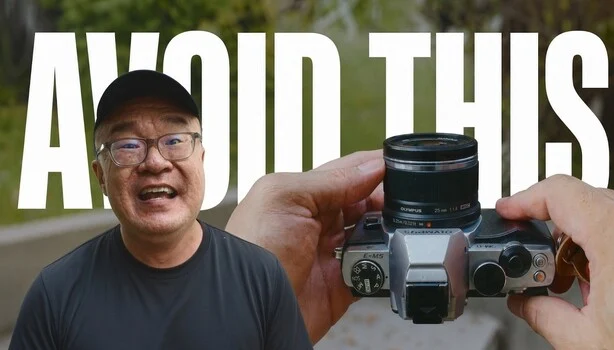
In an era defined by ubiquitous digital cameras and powerful post-processing software, the journey from novice to proficient photographer often encounters unseen obstacles rooted not in technical limitations but in fundamental habits. While many beginners instinctively believe that a superior camera body or advanced editing techniques hold the key to unlocking their photographic potential, the reality, as articulated by acclaimed photography educator Robin Wong, suggests a deeper, more systemic issue. Wong, whose extensive experience and popular online tutorials have garnered a significant following, posits that a set of common, often overlooked, practices are frequently the true impediments to progress. These five habits, which Wong himself admits to having grappled with in his formative years, require nothing more than dedicated time and focused attention to rectify, offering a cost-free pathway to substantial improvement.
The Paradox of Accessibility: Skill Over Gear in the Digital Age
The proliferation of digital photography over the last two decades, accelerated by the advent of accessible DSLR and mirrorless cameras, and further democratized by advanced smartphone imaging, has created an environment where anyone can capture an image. This accessibility, while fostering creativity, has also inadvertently obscured the foundational principles that distinguish a mere snapshot from a compelling photograph. Robin Wong, a prominent voice within the global photography community known for his candid insights and practical advice, frequently addresses this disparity. His YouTube channel, a valuable resource for countless aspiring photographers, serves as a platform to demystify complex concepts and challenge prevalent misconceptions. Wong’s central thesis underscores a timeless truth: mastery in photography, much like any other craft, is primarily a function of disciplined practice and a deep understanding of core principles, rather than an endless pursuit of the latest technological marvel.
This perspective gains particular relevance as the photography market continues its rapid evolution. While camera manufacturers consistently push the boundaries of sensor technology, autofocus speeds, and video capabilities, the fundamental elements of compelling image-making—composition, light, moment, and narrative—remain constant. The allure of new equipment, often amplified by aggressive marketing campaigns, can divert beginners from the essential task of honing their visual literacy and technical proficiency. Wong’s observations serve as a critical counter-narrative, urging photographers to introspectively evaluate their habits before attributing shortcomings to their gear.
Mistake 1: The Practice Imperative – The Volume of Vision
The foremost habit Wong identifies as a significant barrier for beginners is simply not shooting enough. This might appear counterintuitive in an age where digital storage is cheap and shutter counts are virtually limitless, but Wong draws a powerful analogy to Olympic training. Elite athletes dedicate years, often logging thousands of hours of daily practice, before they ever reach the podium. Similarly, serious photography demands consistent, rigorous engagement. An individual who only dedicates a few hours one or two days a week, regardless of their natural talent or equipment, will inevitably find their progress stagnated.
This emphasis on volume is not about mindlessly snapping photos; it’s about deliberate practice. The initial thousands of images captured by a beginner are, more often than not, destined for the discard pile. However, this high volume of "bad" images is precisely the mechanism through which learning occurs. Each discarded frame represents a lesson learned—a misjudged exposure, a clumsy composition, a missed moment. Psychologists and educators often highlight the importance of iterative practice and feedback loops in skill acquisition. In photography, the act of reviewing one’s own extensive body of work, identifying patterns of error, and consciously striving for improvement in subsequent shoots, forms the bedrock of development. Without this significant volume of output, the critical self-reflection and experiential learning necessary for growth simply cannot materialize. Data from photography workshops consistently shows that participants who actively shoot between sessions, rather than passively consuming theoretical content, demonstrate significantly faster progress in applying learned techniques. The journey to developing a distinct photographic voice and consistent technical proficiency is a marathon, not a sprint, measured in shutter clicks as much as in years.
Mistake 2: Mastering the Frame – The Discipline of In-Camera Excellence
The second habit Wong targets is a lack of shooting discipline, particularly in an era dominated by powerful post-processing software. While tools like Adobe Photoshop, Lightroom, and increasingly sophisticated AI-powered editing suites can indeed "rescue" a seemingly weak frame—correcting exposure, adjusting composition, or even removing unwanted elements—Wong stresses that this capability should not become a crutch. His critique is not of post-processing itself, which he acknowledges as an integral part of modern photography, but rather of the reliance on it to compensate for fundamental errors made during capture.
The discipline Wong advocates for involves meticulously getting composition, framing, exposure, and focus correct in the field. The temptation to "fix it in post" often leads to compromises that even the most advanced software cannot fully rectify. For instance, severely underexposing an image in-camera to preserve highlights might lead to excessive noise creeping into the shadows when those areas are later boosted in editing. Similarly, a missed focus point, a soft image, or an irredeemable composition cannot be magically sharpened or rearranged to perfection, regardless of the software’s capabilities. Post-processing, in its ideal application, serves to polish an already good image, enhancing its impact and refining its aesthetic; it rarely, if ever, transforms a fundamentally flawed capture into a truly compelling one. This principle echoes the historical practices of master photographers, such as Ansel Adams, who meticulously planned and executed their exposures in the field, understanding that the negative or transparency held the ultimate potential that subsequent darkroom work would reveal. The digital darkroom, while more flexible, operates on the same premise: quality output begins with quality input.
Mistake 3: The Foundational Pillars – Embracing the Basics
Following a similar logical thread, Wong identifies skipping the basics as the third pervasive mistake. Many beginners, captivated by the stunning imagery found in publications like National Geographic or on popular social media feeds, attempt to emulate complex visual styles or advanced techniques without a firm grasp of the foundational elements of photography. This, Wong illustrates with a vivid analogy, is akin to attempting a flying kick before one has even learned how to stand or maintain balance.
The "basics" in photography fundamentally revolve around the exposure triangle: shutter speed, aperture, and ISO. Understanding how these three interdependent variables control the amount of light reaching the sensor and how they each impact the aesthetic qualities of an image (motion blur, depth of field, noise) is non-negotiable. Without this core understanding, advanced concepts such as flash photography, long exposures, selective focus, or environmental portraiture remain elusive. Attempting to replicate a professional look by simply copying settings or gear choices, without comprehending the underlying principles, inevitably leads to frustration and inconsistent results. Leading photography educators globally consistently emphasize the mastery of these fundamentals as the prerequisite for any meaningful artistic or technical progression. A structured learning approach, often involving manual mode shooting to force an understanding of each variable’s impact, is widely recommended to build this essential foundation. This methodical approach ensures that photographers develop an intuitive sense for light and exposure, allowing them to adapt creatively to diverse shooting conditions rather than relying on automated camera settings alone.
Mistake 4: The Gear Obsession – Beyond the Upgrade Cycle
Perhaps the most financially impactful of the common pitfalls, Wong’s fourth observation addresses the pervasive habit of upgrading gear too soon. His emphatic statement, "there are no bad cameras, only bad photographers," challenges a deeply ingrained consumerist mindset within the photography community. A camera model considered excellent a decade or even two decades ago, he argues, remains perfectly capable of producing outstanding images today. The underlying implication is clear: if a photographer is unable to achieve desired results with their current setup, investing in the latest, most expensive camera body is unlikely to resolve the core issue, which typically lies with skill rather than equipment.
This point resonates strongly when examining the contemporary camera market. While manufacturers continually release new models boasting incremental improvements, the tangible benefits for a large segment of photographers, particularly beginners, are often marginal. The gap between a five-year-old flagship body and a brand-new release has narrowed considerably, primarily revolving around highly specialized features such as incredibly fast subject-detection autofocus tailored for rapidly moving wildlife or sports, or higher burst rates designed for action sequences. For photographers primarily engaged in genres like street photography, landscape, or portraiture, where subjects are often static or move predictably, these cutting-edge features offer negligible practical advantage.
The used camera market vividly illustrates this point. Models like the original Sony a7 III or a Fujifilm X-T3, both considered professional-grade cameras upon their release just a few years ago, now sell for a fraction of their launch price. Yet, their image quality, dynamic range, and overall performance hold up remarkably well against many cameras released today. For working-class photographers or those on a limited income, succumbing to the endless upgrade cycle represents a significant financial drain that seldom translates into improved photographic output. Instead, Wong advocates for a deeper relationship with one’s existing gear. Learning a single camera inside and out—understanding its menu system, its focusing behavior, its limitations, and the extent to which its files can be pushed in post-processing—imparts far more valuable knowledge and skill than superficial familiarity with multiple bodies. This intimate understanding allows a photographer to operate instinctively, focusing entirely on the creative act rather than fumbling with settings or second-guessing equipment capabilities.
Mistake 5: The Unfinished Journey – From Capture to Completion
While not explicitly detailed as one of the "five mistakes" in the initial summary, Wong’s reference to his "finished photo book" implicitly points to a critical fifth habit often neglected by beginners: the failure to complete projects, curate work, and share it effectively. Many aspiring photographers accumulate vast digital archives of images, yet rarely undertake the deliberate process of selection, sequencing, and presentation that transforms individual shots into a cohesive body of work. This lack of completion can stifle growth and prevent the critical self-assessment necessary for artistic development.
The act of creating a photo book, an exhibition, or even a carefully curated online portfolio, forces a photographer to critically evaluate their images, identify strengths and weaknesses, and understand how individual photographs contribute to a larger narrative. This process is invaluable for developing an editorial eye, understanding visual storytelling, and solidifying a personal photographic style. Historically, the creation of prints, portfolios, and photo books has been a cornerstone of photographic practice, providing tangible milestones and opportunities for feedback. In the digital age, it’s easy to overlook this crucial step, allowing images to languish unseen on hard drives. By actively engaging in project completion, photographers move beyond merely "taking pictures" to "making photographs" that communicate intent and evoke response. Seeking constructive feedback from peers or mentors on completed projects further refines one’s vision and technical execution, providing external perspectives that accelerate learning.
The Path Forward: Cultivating a Photographer’s Mindset
Robin Wong’s insights collectively paint a compelling picture of the photographic journey, one that prioritizes diligent practice, fundamental understanding, and mindful habits over the allure of technological advancement. His message is a potent reminder that while cameras and software are powerful tools, they are ultimately extensions of the photographer’s vision and skill. The transformation from an aspiring amateur to an accomplished photographer is not a destination achieved through a single purchase or a clever trick, but rather a continuous process of learning, practicing, and reflecting.
Seasoned professionals and leading photography educators widely echo Wong’s sentiments, emphasizing that true mastery stems from an unwavering commitment to the craft. By consciously addressing these five pervasive habits—shooting with consistent dedication, meticulously perfecting in-camera capture, mastering the foundational elements of exposure, resisting the premature gear upgrade cycle, and committing to the completion and curation of projects—beginners can unlock their genuine creative potential. This mindful approach not only fosters technical proficiency but also cultivates a deeper appreciation for the art of photography, ensuring that the limiting factor in image creation remains the photographer’s eye and imagination, rather than their equipment or their habits.
