
 By Nila Kartika Wati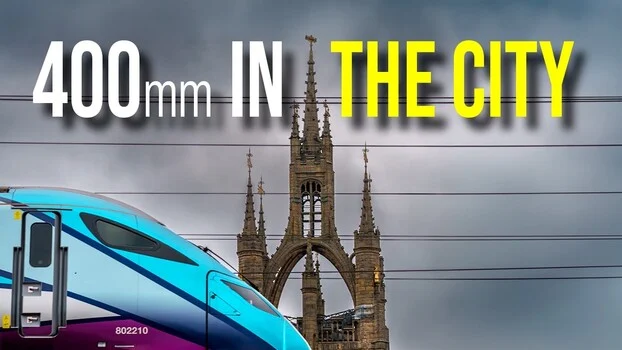
While the prevailing instinct among photographers exploring urban environments is often to deploy wide-angle lenses, aiming to encompass vast swathes of skyline and architectural grandeur, a compelling counter-narrative is emerging, championed by photographers like Jason Row. Row demonstrates how a long telephoto lens, typically associated with wildlife or sports photography, can fundamentally transform urban landscape capture, enabling the isolation of intricate details and the sophisticated stacking of city layers in ways a conventional 24mm lens cannot achieve. This innovative approach offers a fresh perspective on dense urban environments, moving beyond panoramic views to uncover the nuanced interplay of architecture, history, and human activity.
A Revolutionary Perspective on Urban Photography
The traditional wisdom dictates that wide-angle lenses are indispensable for city photography, allowing photographers to "cram as much of the skyline into the frame as they can." This approach, while effective for capturing the sheer scale of urban development, often sacrifices detail and introduces distortions, particularly at the edges of the frame. Jason Row’s methodology, however, flips this paradigm. By utilizing a telephoto lens, he shifts the focus from expansive overviews to meticulously curated compositions, revealing the often-overlooked textures, patterns, and juxtapositions that define a city’s character. His work challenges photographers to reconsider their toolkit and embrace the creative possibilities offered by lenses traditionally deemed unsuitable for urban contexts.
Row’s recent photographic expedition across Gateshead and into Newcastle, documented through his insights and imagery, showcases the profound capabilities of a Sigma 100-400mm Contemporary lens. Paired with a Sony camera body, this setup allows Row to engage with urban subjects in an unconventional manner. The choice of the Sigma 100-400mm Contemporary is particularly noteworthy. While this lens offers impressive reach and optical quality, its classification as a "Contemporary" model within Sigma’s lineup signifies a balance of performance and portability compared to their heavier "Art" series. However, as Row candidly acknowledges, carrying such a substantial piece of equipment through a city, especially on a warm day with a loaded backpack, presents significant physical demands. Despite this, the artistic payoff—manifested in unparalleled reach and unique lens compression—justifies the effort, enabling him to meticulously isolate architectural features, create compelling juxtapositions of historical and modern structures, and capture reflections and geometric patterns that would be lost in the broader context of a wider lens.
Navigating the Urban Tapestry: Gateshead and Newcastle
The choice of Gateshead and Newcastle as the canvas for this telephoto exploration is particularly apt. These conjoined cities, straddling the River Tyne, offer a rich tapestry of industrial heritage, modern architectural marvels, and intricate urban planning. Gateshead, historically an industrial powerhouse, is now home to iconic structures like the Gateshead Millennium Bridge and the BALTIC Centre for Contemporary Art, juxtaposed against its older, more utilitarian buildings. Crossing the High Level Bridge, a historic railway and road bridge designed by Robert Stephenson and opened in 1849, provides a physical and metaphorical transition into Newcastle. Newcastle upon Tyne itself boasts a vibrant mix of Georgian architecture, Victorian industrial structures, and contemporary developments. This architectural diversity provides an ideal testing ground for a telephoto lens, allowing Row to highlight the dialogue between different eras and styles.
The High Level Bridge, with its distinctive double-deck design, offers numerous vantage points for isolating details on either bank of the Tyne. From its elevated position, Row can selectively focus on elements of the cityscape that are otherwise obscured or minimized by a wider field of view. The Millennium Bridge, famous for its tilting mechanism, and other landmarks along the quayside, become subjects ripe for telephoto abstraction, where specific curves, reflections, or structural elements can be extracted and celebrated as standalone compositions. This deliberate selection of iconic and lesser-known urban elements underscores the potential of telephoto lenses to uncover new aesthetic narratives within familiar cityscapes.
Precision in Practice: Optimized Camera Settings
Achieving sharp, impactful images with a long telephoto lens in a dynamic urban setting requires meticulous attention to camera settings. Jason Row’s recommended setup offers a practical blueprint for photographers attempting this technique. He consistently shoots in shutter priority mode, fixing the shutter speed at 1/250 second. This choice is critical because long focal lengths amplify camera shake, making slow shutter speeds detrimental to image sharpness. By prioritizing a relatively fast shutter speed, Row effectively mitigates motion blur from both camera movement and subject movement, particularly important when capturing passing vehicles or pedestrians.
To maintain correct exposure under varying light conditions typical of a city environment—ranging from bright open squares to shadowed alleys—Row allows the camera’s ISO to float automatically between 100 and 12,800. This adaptive ISO management ensures that the camera can compensate for changes in ambient light without requiring constant manual adjustments, allowing the photographer to focus on composition and timing. Furthermore, Row leverages both lens-based and in-body image stabilization (IBIS). He sets the lens image stabilization to mode one, which is generally suitable for most shooting scenarios, while simultaneously engaging the in-body stabilization of his Sony camera. This dual-stabilization system provides a robust defense against camera shake, crucial for handheld telephoto shooting. The combined effect of a fast shutter speed and sophisticated stabilization technologies allows Row to capture sharp images even at the extreme end of his 400mm zoom.
Beyond technical precision, Row also employs shutter speed creatively. For instance, he might ramp up the shutter speed significantly higher than 1/250 second to freeze a train crossing the High Level Bridge, capturing every detail of its motion. Conversely, he might deliberately drag the shutter speed down to introduce intentional motion blur, transforming the same moving train into an artistic streak of color and light, conveying a sense of speed and dynamism within the static urban backdrop. This demonstrates a comprehensive understanding of photographic controls, using them not just for technical correctness but as tools for artistic expression.
The Science and Art of Lens Compression
At the heart of Row’s distinctive aesthetic lies the principle of lens compression. This phenomenon, often misunderstood as a direct property of focal length, is more accurately described as a byproduct of the distance between the camera, the subject, and the background. When a photographer stands significantly far back from a subject and uses a long telephoto lens to zoom in, the background elements appear to be "compressed" or "stacked" closer to the subject, flattening the perspective and reducing the perceived depth of field. This optical effect is precisely why a bus or tram, when photographed from a distance with a telephoto, can appear to fill the frame while the buildings behind it seem to press in closely, creating a dense, layered composition.
This effect is not exclusive to photography; film directors frequently employ lens compression to manipulate spatial perception, making crowds appear denser or exaggerating the effort of a runner who seems to sprint in place against a rapidly approaching background. In a bustling city, lens compression is a powerful artistic tool. It enables photographers to distill visual chaos into clean, graphic images. By stacking a modern glass facade against a centuries-old stone building, for example, the compression makes them appear to exist on a single, flat plane, highlighting their juxtaposition without the distracting spatial separation that a wider lens would emphasize. This perceptual shift—from viewing surroundings as individual scenes to understanding them as interconnected layers—unlocks an entirely new realm of photographic possibilities, transforming the entire city into a vast repository of raw material for compelling visual narratives.
Ethical Distance: Telephoto for Street and People Photography
Beyond architectural and urban landscapes, Row makes a compelling, albeit quieter, argument for the telephoto lens as an invaluable tool for people photography within urban settings. He openly discusses his personal challenges with traditional street photography, particularly his discomfort with approaching strangers and invading their personal space. The long telephoto lens provides an elegant solution to this ethical dilemma, allowing him to isolate individuals from a considerable distance without intruding. This enables the capture of candid moments and genuine expressions that might otherwise be lost if the photographer were closer, offering a more natural and less performative portrayal of urban life.
The same expansive reach that artfully flatters a passing train also works effectively on a lone figure silhouetted against an interesting architectural backdrop or engaged in a moment of quiet contemplation. This ability to maintain distance while still capturing intimate human moments aligns with a growing movement in street photography that prioritizes respect and discretion. Row also highlights the commercial viability of this approach, noting that his transport-related shots have been particularly successful sellers. Furthermore, he underscores the value of using a locked-off tripod for both stills and video when employing a telephoto lens. This stable platform ensures maximum sharpness and allows for controlled, deliberate framing, a distinct aesthetic often overlooked in online video content, much of which is shot handheld or with gimbals at wider focal lengths, leading to a more dynamic but potentially less refined visual style. The tripod-based telephoto approach, conversely, offers a cinematic quality, emphasizing stability and precise composition.
Broader Implications and the Future of Urban Photography
Jason Row’s innovative use of the Sigma 100-400mm Contemporary in urban environments has significant implications for the broader field of photography. Firstly, it challenges conventional wisdom and encourages photographers to experiment with lenses outside their traditional applications. This mindset can lead to groundbreaking creative output and expand the perceived capabilities of existing photographic equipment. The market for versatile telephoto zoom lenses, once dominated by wildlife and sports photographers, may see increased interest from urban and landscape photographers seeking new artistic avenues. Lens manufacturers like Sigma and Sony might find renewed emphasis on the versatility and portability of their telephoto offerings.
Secondly, this approach offers a fresh perspective on city branding and tourism. By showcasing cities through isolated details, compressed layers, and unique juxtapositions, photographers can create compelling visual narratives that go beyond postcard clichés. This can offer a deeper, more artistic appreciation of urban landscapes, potentially attracting a different demographic of visitors interested in cultural and architectural nuances.
Finally, Row’s methodology, particularly his ethical considerations in street photography, provides valuable lessons for aspiring photographers. It demonstrates that creative solutions can address personal discomforts or ethical boundaries, ultimately leading to more authentic and respectful visual storytelling. His emphasis on understanding the physics of lens compression and mastering camera settings also underscores the importance of technical proficiency as a foundation for artistic expression. The ability to "see the city as layers rather than scenes" is a transformative concept that encourages a more analytical and artistic engagement with one’s surroundings, turning every urban vista into a potential masterpiece.
As viewers engage with Row’s video showcasing his photographic journey across Newcastle and Gateshead, observing the shots he pulls off and his plans for utilizing the lens at the Millennium Bridge, they are not just witnessing a demonstration of equipment. They are being invited into a new way of seeing, a method that promises to enrich the visual dialogue surrounding our increasingly complex and layered urban environments. This innovative application of telephoto photography represents a significant contribution to the evolving landscape of urban visual arts.
