
 By Nila Kartika Wati
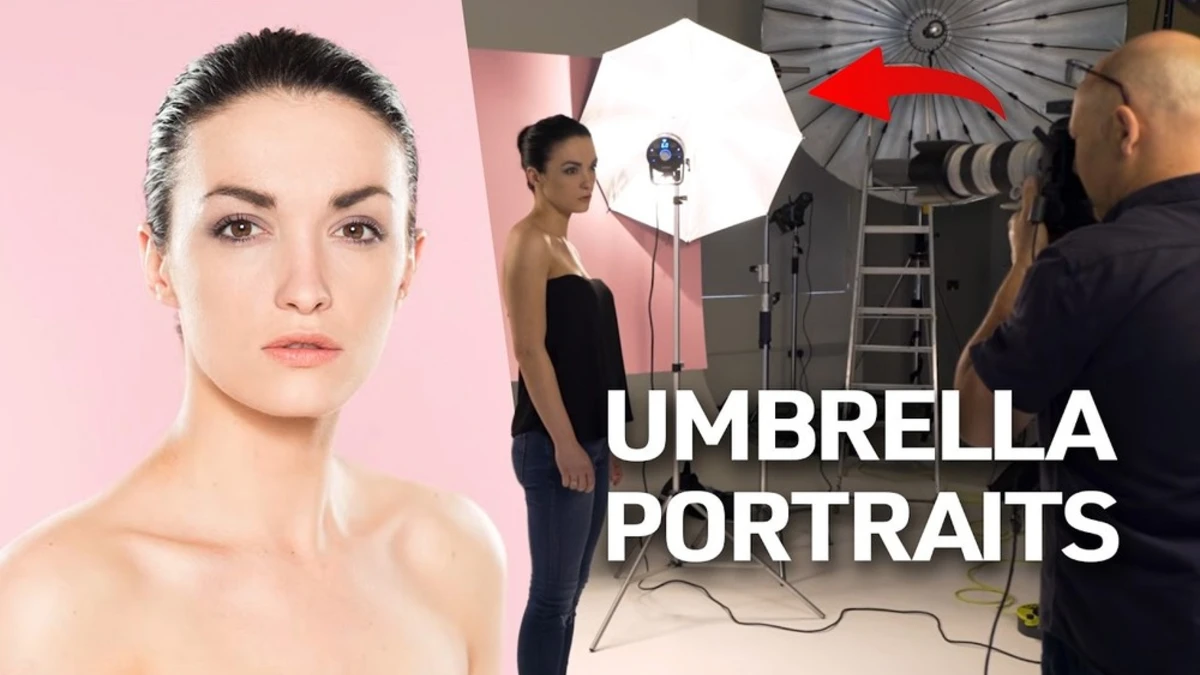
Achieving a truly radiant and dimensionally rich high-key portrait, particularly one imbued with a pop art aesthetic, hinges on the delicate and often challenging interplay between rim light and fill light. In such a scenario, where the goal is brightness and ethereal cleanliness, the luminosity of one light source can inadvertently diminish the perceived strength of another, leading to a flat or overexposed image if not meticulously controlled. This intricate balance is what distinguishes a professional, vibrant beauty shot from one that appears either burned out or lacking in sculptural definition.
The renowned photography educator Karl Taylor, through his Visual Education platform, recently offered a compelling masterclass in constructing a dynamic pop art beauty portrait. His methodology, which emphasizes an iterative and highly perceptive approach to light balancing, provides invaluable insights for photographers aiming to elevate their studio craft. The core of his demonstration revolved around the strategic deployment of three umbrellas: two silver parabolic umbrellas positioned behind the model at 45-degree angles to sculpt the rim, and a single Broncolor Focus 110 deep umbrella placed directly in front to provide the essential fill.
The Foundation of High-Key Aesthetics and Pop Art Influence
High-key photography, a genre celebrated for its predominantly bright tones and minimal shadows, has a rich history dating back to early 20th-century Hollywood glamour photography. Its objective is often to evoke feelings of optimism, purity, and ethereal beauty, making it a popular choice for fashion, beauty, and portraiture. The aesthetic relies heavily on a high lighting ratio between the subject and the background, ensuring the overall image is luminous and airy. When combined with a pop art sensibility, as demonstrated by Taylor, the technique takes on an additional layer of vibrant, graphic appeal. Pop art, which emerged in the 1950s and 60s, is characterized by bold colors, clear lines, and often draws inspiration from commercial imagery and popular culture. In photography, this translates to striking, clean compositions where color and form are paramount, and lighting plays a crucial role in enhancing these elements.
Taylor’s choice of a vibrant pink hardboard background, deliberately placed close enough to the rear rim lights, exemplifies this pop art influence. The spill from the silver umbrellas transforms the background into a pale pastel wash, creating a harmonious yet visually striking backdrop. Taylor openly acknowledges and even embraces the inherent unevenness of this background illumination, understanding that the board’s proximity to one light over the other will naturally create a subtle gradient. He notes that should a more uniform or distinct gradient be desired, a slight tilt of the board could further manipulate the light fall-off. This deliberate acceptance of controlled imperfection is a hallmark of an experienced professional who understands light’s behavior intimately.
For the subject, meticulous preparation is key to maximizing the effect of the rim lighting. The model’s hair is slicked back, and her shoulders are bare. This specific styling choice ensures that the rim light, designed to trace the contours of the subject, can wrap seamlessly around the hair, neck, and shoulders without any clothing or loose strands breaking the crisp, defined edge. This attention to detail in styling is as critical as the lighting setup itself, as it directly influences how the light interacts with the subject’s form.
The technical camera settings employed by Taylor provide a robust starting point for such a shoot. He opts for a 70-200mm zoom lens, set at 70mm, a versatile focal length that offers a pleasing perspective for beauty portraits without introducing significant distortion. The aperture is set at f/4, providing sufficient depth of field to keep the model’s features sharp while allowing for a subtle softening of the background. A shutter speed of 1/60 second is chosen, standard for studio flash photography, ensuring synchronization with the strobes while preventing ambient light from influencing the exposure. Finally, an ISO setting of 100 maintains optimal image quality, minimizing noise and maximizing dynamic range, which is crucial for the clean aesthetic of high-key work.
The Iterative Process of Light Balancing: A Masterclass in Perception
One of the most revealing aspects of Taylor’s approach is his departure from the conventional wisdom of testing each light individually. Instead, he advocates for firing all three lights simultaneously from the outset. This method, he explains, allows him to immediately perceive the complex interactions between the lights, reading the combined effect in a single frame. With only three lights positioned in relatively straightforward configurations, an experienced eye can discern the contribution of each light source, accelerating the calibration process. This strategy underscores a profound understanding that light does not operate in isolation; rather, each source influences and is influenced by the others, particularly in a high-key setup where reflectivity and spill are significant factors.
The initial test shot, however, immediately revealed a critical discrepancy. Taylor discovered that one of the rear heads was set to 400 Joules (J) while the other was at 800 J. This meant that despite matching power settings on the pack, the output difference was a full stop, a substantial variation that would inevitably lead to uneven lighting. Correcting such fundamental errors early on is paramount to building a balanced lighting scheme.
His first corrected test shot, with power levels adjusted, showed a strong rim light but a severely underexposed fill. This imbalance is common and highlights the primary challenge of high-key portraiture: achieving enough fill to brighten the face without overpowering the delicate rim definition. Taylor’s subsequent adjustments were a masterclass in this delicate dance. Raising the fill light by two stops, while seemingly a logical step to brighten the face, caused the rim light to nearly vanish, effectively flattening the image and eroding the desired sculptural quality. Conversely, increasing the rim lights by two stops made the fill appear dark again, plunging the face into shadow and losing the high-key aesthetic.
This back-and-forth adjustment vividly illustrates a fundamental principle of light interaction: the perceived brightness of each light source is relative to the others. A change to one light’s output inherently alters the overall lighting ratio and thus the visual impact of all other lights in the setup. This dynamic relationship necessitates a systematic and perceptive approach, where each adjustment is evaluated not in isolation, but within the context of the entire lighting scheme.
Understanding Lighting Ratios: The Language of Light
Photographers commonly quantify this relationship using lighting ratios, expressed in "stops." A one-stop difference between two lights signifies a 2:1 ratio, meaning one light is twice as bright as the other. A two-stop difference translates to a 4:1 ratio, and so on. Understanding these ratios is foundational to predictable and repeatable lighting setups. Studio strobes, such as those from Broncolor, typically feature power scales where each whole number increment corresponds to one stop of light output. Similarly, speedlights, when operated in manual mode, follow this principle, with each step (e.g., from 1/1 to 1/2 to 1/4) representing a reduction of one stop in output.
Taylor’s iterative process—adjusting one light, observing the combined effect on the edge and the face, and then adjusting the other light by a known number of stops—is universally applicable across these various lighting systems. It’s a method that prioritizes visual feedback and an understanding of light’s exponential nature over blind adherence to numerical settings. This empirical approach is particularly valuable when dealing with complex setups or when striving for a highly specific aesthetic like the pop art beauty portrait.
Beyond Power Settings: The Subtle Art of Posing and Modifier Control
The refinement of the portrait extended beyond mere power adjustments, delving into the subtle yet profound impact of model positioning and advanced modifier control. Taylor observed that the model’s head position could alter the rim light as significantly as changes to the power dial. With her body subtly angled away from the camera, her head naturally turned towards one of the rear rim lights. This slight rotation meant that more light glanced off that side of her face, creating an uneven rim. To counteract this, Taylor made another precise adjustment, dropping the power of that particular rim light by half a stop. This seemingly minor tweak restored the desired evenness to the two edges, demonstrating that achieving balance often requires asymmetrical power settings to compensate for the three-dimensional reality of the subject’s form in space.
During this fine-tuning phase, Taylor also experimented with increasing the overall light output, pushing everything up by half a stop. He quickly identified that this made the front fill light too intense, reaching a setting of 7. He consequently brought it back to 6.5, leaving the rim lights slightly raised. This adjustment led to the fill light appearing a touch brighter than before, not solely due to its own power increase, but because some of the extra light from the rear umbrellas was bouncing back onto the face, contributing to the overall fill. This phenomenon, known as bounce light, is a critical consideration in studio photography, highlighting how even seemingly isolated light sources can contribute to the ambient fill.
The final layer of refinement involved manipulating the Broncolor Focus 110 deep umbrella. Taylor removed the standard reflector from the light head inside the umbrella and then slid the head in and out along the shaft. This technique, common with deep parabolic modifiers, alters the light’s beam angle and quality. Moving the light head deeper into the umbrella creates a tighter, more focused beam with higher contrast and harder shadows, while pulling it forward widens the beam, resulting in softer, more diffused light and gentler shadow transitions. By comparing the resulting hardness of the shadow under the jawline with each adjustment, Taylor was able to precisely sculpt the facial contours, adding depth and definition crucial for a high-end beauty portrait.
The increasing popularity and accessibility of deep parabolic modifiers, such as the Profoto Umbrella Deep, have extended this level of precise control beyond high-end professional studios. These modifiers often allow photographers to slide the light along the shaft, enabling them to easily adjust the beam from a tight, focused spot to a wider, softer spread. This innovation empowers photographers with smaller kits to achieve the sophisticated light shaping capabilities that Taylor masterfully demonstrates, democratizing advanced lighting techniques.
Implications for Contemporary Photography Education and Practice
Karl Taylor’s demonstration transcends a mere technical tutorial; it serves as a powerful testament to the importance of foundational knowledge combined with perceptive observation in photography. In an era where photographic technology is increasingly automated, the ability to understand and control light manually remains the ultimate differentiator for professional photographers. His systematic approach, from initial setup to minute adjustments, underscores that mastery of light is an iterative process of experimentation, evaluation, and refinement.
The insights gained from such a detailed breakdown of a lighting setup have profound implications for both aspiring and experienced photographers. Firstly, it demystifies complex studio lighting, breaking down a seemingly daunting task into manageable, logical steps. Secondly, it emphasizes that technical settings are merely starting points; the true art lies in interpreting the light’s interaction with the subject and making informed adjustments based on visual feedback. This approach fosters a deeper understanding of light’s properties, encouraging photographers to think critically rather than relying on rote memorization of settings.
Furthermore, the accessibility of high-quality educational content from platforms like Visual Education, combined with increasingly versatile and affordable lighting equipment, means that advanced techniques are no longer exclusive to a select few. Photographers worldwide can now learn from masters, experiment with sophisticated modifiers, and apply these principles to elevate their own work, whether in commercial studios or home setups. The pursuit of a bright, clean beauty shot with perfectly balanced rim and fill lights, once a hallmark of elite photographic craftsmanship, is now within reach for a broader community of visual artists, fostering innovation and pushing the boundaries of contemporary portraiture. The detailed comparison of jawline shadows and the nuanced behavior of the front light in various positions, as shown in the full video, offers an invaluable resource for anyone committed to mastering the art of studio lighting.
