
 By Nila Kartika Wati
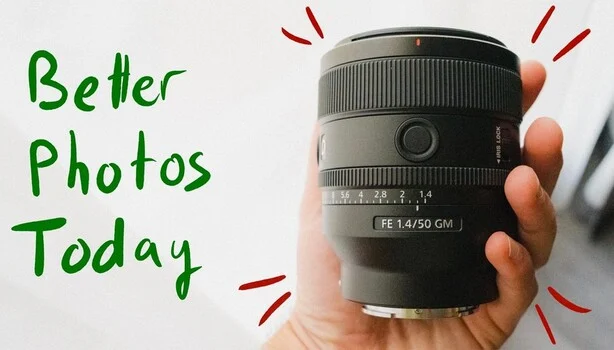
The 50mm prime lens, often the inaugural purchase for aspiring photographers due to its affordability and wide aperture, presents a unique set of challenges and opportunities that many initially overlook. While its capacity to render beautifully blurred backgrounds (often referred to as ‘bokeh’) is a common draw, leading many to shoot wide open consistently, true mastery of this focal length extends far beyond technical settings. Roman Fox, a renowned London-based street photographer and educator, offers a compelling framework for understanding and utilizing the 50mm lens that prioritizes anticipation, deliberate observation, and a fundamental shift in photographic mindset, moving beyond the reactive instincts often developed with wider lenses.
The Enduring Appeal and Initial Pitfalls of the 50mm Prime
Historically, the 50mm lens has held a venerable position in photography. Often dubbed the "nifty fifty," its design closely mimics the perspective of the human eye on a full-frame sensor, making it a natural choice for many camera manufacturers to bundle as a standard kit lens or recommend as a versatile prime. Its relatively simple optical construction allows for excellent light-gathering capabilities (often f/1.8 or f/1.4) at an accessible price point, making it a gateway for countless photographers into the world of shallow depth of field and prime lens quality. For decades, from the film era to the digital age, it has been a workhorse for everything from portraiture to photojournalism.
However, this initial accessibility often leads to a predictable pattern of usage. New photographers frequently gravitate towards shooting the 50mm wide open, primarily to achieve the dramatic background separation that has become a hallmark of popular online photography trends. While visually striking, this approach, if not balanced with an understanding of composition and context, can lead to images that lack environmental narrative or feel disconnected from their surroundings. The habits cultivated with wider focal lengths—such as the 28mm or 35mm, which offer a broader field of view and greater depth of field—tend to falter when applied unthinkingly to the tighter perspective of a 50mm lens.
Shifting Vision: The "Look Ahead" Philosophy
Roman Fox, known for his incisive street photography, particularly within the bustling urban landscape of London, frequently chooses a 50mm lens for his street work, although he opts for slightly wider 35mm or 40mm equivalents for travel. His own journey began with a Canon EF 50mm f/1.8, which, like many, he initially kept locked at its widest aperture. Fox’s primary tip for mastering the 50mm stems from an unconventional past experience: testing cars and learning to drift. He recalls consistently spinning out until an instructor imparted a crucial lesson: stop staring at the hood and instead look 10 seconds ahead on the track, anticipating where the car would be, rather than reacting to its immediate position.
Fox applies this same forward-thinking logic to photography with a 50mm lens. With a wider lens like a 28mm, the expansive frame allows a photographer’s attention to rest directly in front of them; the broad field of view captures a significant area, making reactive shooting more forgiving. However, carrying this immediate focus habit to a 50mm lens, Fox explains, inevitably leads to missed moments or compositions that are uncomfortably cramped, lacking crucial negative space or context. The narrower field of view of the 50mm demands a different kind of visual engagement. He advises photographers to scan approximately 10 meters ahead, adjusting this distance based on the typical proximity of their subjects. While conceptually simple, implementing this "look ahead" as a physical habit on a busy street requires significant practice and a conscious re-training of one’s visual reflexes. It underscores the idea that photographic skill isn’t just about camera settings, but about how one perceives and interacts with the environment.
Anticipation Over Reaction: The Art of Deliberate Observation
This initial "look ahead" principle naturally leads to Fox’s second, equally critical piece of advice: prioritizing anticipation over instant reaction. When working with wider lenses, many street photographers develop a rapid-fire approach, instinctively capturing moments as they unfold directly beside them. Fox argues that with a 50mm, this speed often becomes a liability. The tighter field of view means that events further away, which are better suited for the 50mm’s perspective, tend to unfold more slowly from the photographer’s vantage point. This offers a valuable window for thought and strategic positioning, rather than simply firing off a shot.
Consider his example: a person in a bright red coat crossing the street. Instead of immediately snapping a picture, Fox suggests analyzing the scene. Where is that person headed? What kind of background or lighting will they encounter in their path? This pause allows the photographer to potentially cross the street, find a cleaner background, or position themselves to capture the subject in more favorable light. This fundamental shift from reactive impulse to calculated anticipation is, according to Fox, the genesis of many of the most compelling 50mm frames. It demands patience, thoughtful observation, and a predictive understanding of human movement within an urban environment, rather than relying solely on quick reflexes. This approach aligns with a philosophical division in street photography often described as "hunting" (actively seeking and reacting) versus "fishing" (finding a strong composition and patiently waiting for the right subject to enter it). The 50mm, in Fox’s view, strongly favors the latter.
The Technical Landscape: Sensor Size, Aperture, and Shutter Speed
Fox’s insights are not confined to a single camera system but are rooted in the fundamental physics of a field of view, making them transferable across various sensor sizes. On an APS-C (crop sensor) body, for instance, a lens with a focal length of approximately 33mm or 35mm will yield a field of view roughly equivalent to a 50mm lens on a full-frame camera. This is precisely why lenses like the Fujifilm XF 33mm f/1.4 R LM WR are popular as the "normal" prime option within the Fujifilm X-series system. This understanding of equivalent focal lengths is crucial for photographers working with different camera formats to achieve a consistent visual aesthetic.
The aperture’s behavior also shifts with sensor size. A smaller sensor generally provides about one stop more depth of field at the same f-number and framing compared to a full-frame sensor. This means that the extremely shallow depth of field and "blown-out" backgrounds that full-frame shooters often achieve at wide apertures are less pronounced on crop bodies, offering a more forgiving depth of field for street photography where context can be important.
Furthermore, the market for fixed-lens cameras has seen a noticeable trend towards tighter focal lengths in recent years, reflecting a growing appreciation for a more deliberate, less wide-angle approach. The Ricoh GR IIIx, for example, offers a 40mm-equivalent view, while the high-end Leica Q3 features a 43mm lens. Both of these cameras occupy a sweet spot between the classic 35mm street photography look and the tighter 50mm perspective. Significantly, both cameras, by their very design, reward the "look-ahead" and "slow-down" methodologies that Fox advocates. This industry trend suggests a broader recognition of the benefits of these focal lengths for thoughtful, compositional photography.
Beyond focal length, technical settings demand nuanced attention with a 50mm lens. Fox highlights that an aperture of f/2, which might yield acceptable context at 28mm, will aggressively separate the subject from the foreground and background at 50mm on a full-frame or medium format sensor. While this can create a "dreamy" aesthetic popular on platforms like Instagram, Fox suggests stopping down to f/8 or even f/11 if the goal is to maintain environmental context and visual narrative within the scene. This deliberate choice of aperture directly influences the storytelling capacity of the photograph.
Shutter speed, too, requires a more conservative approach. Wide lenses, especially when coupled with effective in-body image stabilization (IBIS), can often tolerate slower shutter speeds like 1/60s or even lower without noticeable motion blur. However, when actively moving and shooting with a 50mm lens, Fox recommends a much faster shutter speed, ideally 1/500s, to decisively freeze motion and eliminate blur. He considers 1/250s to be pushing the limit, acknowledging that this is a conservative stance. For photographers whose style leans more towards "fishing"—waiting patiently in a fixed position for a subject to enter a pre-composed frame—slower shutter speeds might be feasible, especially if the subject is relatively static or their movement is intentionally incorporated for artistic effect. However, for dynamic street photography, minimizing motion blur is paramount.
The Broader Impact: Cultivating a Deeper Photographic Vision
Roman Fox’s comprehensive advice for mastering the 50mm lens transcends mere technical instruction; it advocates for a fundamental shift in a photographer’s approach to seeing and capturing the world. By encouraging photographers to commit to a single field of view for an extended period—a few weeks, at minimum—he emphasizes the rapid adjustment of one’s innate sense of distance and timing. Constantly switching lenses disrupts this calibration, hindering the development of an intuitive understanding of how a particular focal length renders the world.
This deliberate practice of "seeing" at 50mm fosters a more discerning eye, encouraging photographers to seek out compositions, anticipate narratives, and utilize the frame as a tool for intentional storytelling rather than just a capture device. It pushes photographers beyond the initial fascination with shallow depth of field towards a deeper appreciation for light, form, context, and human interaction. His methodology, whether applied to the 50mm, its APS-C equivalents, or the increasingly popular 40mm-range fixed-lens cameras, underlines a powerful principle: photographic mastery often comes not from accumulating more gear, but from intimately understanding and strategically deploying the tools one already possesses. Fox’s insights offer a valuable roadmap for photographers seeking to elevate their craft, moving from simply taking pictures to truly making photographs with purpose and precision.
