
 By admin
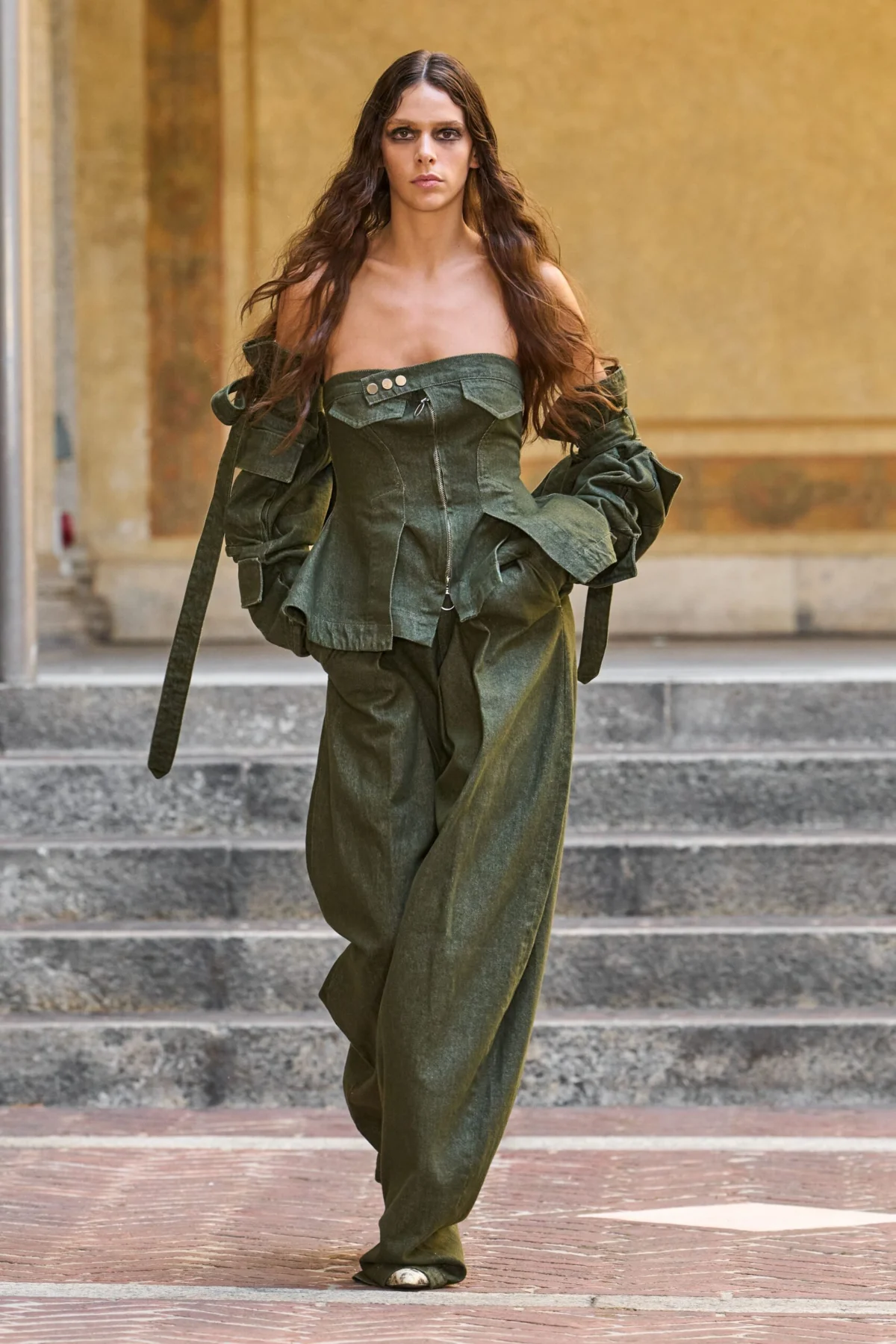
Marques’Almeida, the acclaimed fashion label founded by Marta Marques and Paulo Almeida, recently made a significant return to Milan Fashion Week, showcasing a collection that eloquently narrated their journey through a tumultuous decade. This appearance, supported by Portugal Fashion’s internationalization program, marked a pivotal moment for the brand, which last garnered widespread attention after winning the prestigious LVMH Prize in June 2015. Since that defining moment, the duo has navigated a complex landscape of global economic shifts, geopolitical challenges, and an ever-evolving fashion industry, proving their enduring essence while embracing necessary adaptation.
A Decade of Transformation: From LVMH Buzz to Global Headwinds
The LVMH Prize win in 2015 catapulted Marques’Almeida onto the global stage, bestowing upon them not only a significant financial grant but also invaluable mentorship and industry recognition. This period, immediately following their victory, saw the brand thrive amidst the vibrant fashion scenes of London and Paris, cultivating a distinct identity recognized for its raw, deconstructed denim and a rebellious, youthful spirit. Their aesthetic resonated deeply with a generation seeking authenticity and a departure from polished luxury, establishing them as pioneers of a new wave of design.
However, the subsequent years presented an array of unprecedented challenges that tested the resilience of independent labels worldwide. The 2016 Brexit referendum and its eventual implementation created significant logistical and financial hurdles for businesses operating between the UK and the European Union, impacting supply chains, tariffs, and market access for many London-based designers, including Marques’Almeida. According to a 2021 report by the British Fashion Council, Brexit alone was estimated to cost the UK fashion industry billions in lost trade and increased operational costs.
Following closely, the global COVID-19 pandemic delivered a seismic shock to the entire industry, forcing widespread store closures, production halts, and a dramatic shift in consumer behavior towards comfort and digital engagement. While the fashion industry experienced an estimated 93% decline in economic profits in 2020, as per McKinsey’s ‘State of Fashion’ report, independent brands, often with leaner structures and less capital, were particularly vulnerable. Concurrently, trade tensions under the Trump administration led to tariffs that further complicated international manufacturing and retail, adding another layer of cost and uncertainty. More recently, increasing instability in the Middle East has contributed to global economic jitters, affecting consumer confidence and supply chain stability.
The Strategic Return to Portugal and the Power of Mentorship
These "slings and arrows," as Marta Marques succinctly put it, played a crucial role in the brand’s strategic decision to return home to Portugal. This move was not merely a retreat but a calculated pivot, allowing them to consolidate operations, leverage local resources, and recalibrate their business model. Beyond maintaining their label, Marques and Almeida have also dedicated themselves to teaching and mentoring upcoming designers within Portugal, fostering the next generation of creative talent. This commitment highlights a growing trend among established designers to give back to their local communities and strengthen regional fashion ecosystems.
Their appearance at Milan Fashion Week this season was made possible through the robust support of Portugal Fashion, specifically its internationalization program. This initiative is a critical component of Portugal’s national strategy to elevate its fashion and textile industry on the global stage. By providing financial, logistical, and promotional assistance, Portugal Fashion enables promising Portuguese designers to participate in prestigious international events, expand their networks, and reach new markets. Such programs are vital for independent brands, which often lack the extensive resources of larger fashion houses, allowing them to compete effectively and showcase their unique vision without bearing the full financial burden of international exposure.
"We’re still an independent brand, and have been for over 15 years now," Marques stated, reflecting on their journey. "So we’ve had to adapt. But I think that has served us well. I think our essence is still there, but we’re open to discovering new possibilities so that we can keep doing what we do." This statement encapsulates the ethos of many successful independent brands: a blend of steadfast identity and flexible strategy, crucial for survival and growth in a volatile industry.
The Milan Collection: A Refined Evolution of Disruptive Authenticity
The collection presented at Palazzo Isimbardi in Milan offered a poignant reflection of this journey, showcasing an evolved aesthetic that remained true to the brand’s core while embracing new dimensions. The designers’ enduring fascination with 1990s The Face editorials, a touchstone of their initial inspiration, was still palpable. These iconic editorials, known for their raw energy and rebellious spirit, continue to inform the brand’s sense of "thrilling disruption."
Denim: The Enduring Signature, Reimagined
The collection opened with a look that could have been directly transplanted from an early Marques’Almeida archive: a signature peplum, a nonchalant slouch, and an undeniable attitude, all rendered in their foundational material – denim. Denim has always been synonymous with the label, defining its initial identity but also, at times, threatening to confine perceptions of its scope. This collection masterfully demonstrated how denim remains a central pillar, yet one that is constantly reinterpreted and elevated.
The range of denim pieces was particularly noteworthy. Look 4, for instance, featured a paradigm dress characterized by "masterfully restrained drape and darting," showcasing a sophisticated understanding of tailoring that transcends the material’s utilitarian origins. The garment-dyed denim pieces further exploited the inherent irregularities and depth of color that have always lent a unique, artisanal quality to their work. This approach highlights how Marques’Almeida has consistently pushed the boundaries of denim, transforming it from a casual staple into a medium for high fashion expression, challenging the notion that denim is merely a trend or a limited material.
Expanding Horizons: The Emergence of "Occasion Wear"
A significant development within this collection was the introduction of what Marques, with a "fleeting wince," conceded was "occasion wear." This represents a conscious expansion of their brand’s appeal, acknowledging that the "cool girl" whose wardrobe they helped define in the mid-2aughts has matured. Her life has moved on, and her sartorial needs have diversified. This evolution reflects a broader trend in the fashion industry where designers are adapting to the changing lifestyles and purchasing habits of their core demographic, often transitioning from niche appeal to a more comprehensive offering.
The "occasion wear" segment featured an array of sophisticated yet distinctive pieces:
- Bias-cut dresses thick with ruffles: These pieces blended fluidity with a touch of romantic drama.
- Jacquards twisted and draped across the body: Demonstrating an intricate understanding of fabric manipulation and silhouette.
- Peplum tops and bows erupting at the shoulder: Reintroducing classic feminine elements with a contemporary, often exaggerated, twist.
- Lace tailoring: A juxtaposition of delicate fabrication with structured forms, adding an unexpected edge.
- Palazzo trousers: Offering elegance and comfort, catering to a modern demand for versatility.
- Great explosions of ostrich feather worn on the head: These dramatic embellishments pushed certain passages towards a Vegas-esque exuberance, yet simultaneously retained a "gently self-satirizing" quality, characteristic of the brand’s playful subversion.
Signature Subversion: Roughing Up Resolution
Crucially, the collection maintained Marques’Almeida’s distinctive knack for "roughing up whatever seemed too close to neat resolution." This inherent instinct to disrupt conventional elegance prevents their designs from tipping into predictable "froufrou." Elements such as dragging trains, skewed proportions, and tilted hemlines injected an intentional imperfection, a sense of lived-in authenticity that has always defined their aesthetic. Furthermore, the deliberate pairing of tough, utilitarian shoes with more delicate or elaborate ensembles created a dynamic tension, underscoring their signature blend of grit and glamour. This artistic approach not only makes their shows "fun to watch" but also reinforces their commitment to an anti-establishment spirit that continues to resonate with a discerning audience.
Broader Implications and Industry Recognition
Marques’Almeida’s return to Milan Fashion Week, backed by Portugal Fashion, carries significant implications for both the brand and the wider industry. For the brand, it signals a renewed global push, leveraging their hard-won experience and a refined aesthetic honed through adversity. It demonstrates that independence, when coupled with adaptability and strategic support, can lead to sustained relevance in a highly competitive market.
For Milan Fashion Week and the Camera Della Moda, featuring designers like Marques’Almeida is essential for maintaining vitality and attracting diverse international talent. The reviewer’s suggestion that the Camera Della Moda should promote them to an earlier slot in the week speaks volumes about the quality and impact of their collection. Showcasing such innovative and compelling work earlier in the schedule would ensure greater visibility and allow it to command the attention it deserves, rather than being overshadowed by the exodus of attendees heading to Paris. This sentiment highlights the ongoing challenge for major fashion weeks to effectively curate and prioritize talent, ensuring that truly exceptional collections are given prime exposure.
Furthermore, the brand’s journey serves as an inspiring case study for other independent labels struggling to navigate global economic volatility. Their pivot to Portugal, engagement in mentorship, and embrace of state-backed internationalization programs underscore the importance of diversified strategies, community engagement, and leveraging national support systems. In an era where corporate behemoths often dominate the fashion landscape, the enduring spirit and evolving vision of Marques’Almeida offer a powerful testament to the resilience and creative ingenuity of independent design. Their Milan show was not just a collection of garments; it was a narrative of survival, adaptation, and the unwavering pursuit of a unique sartorial voice.
