
 By Nana Wu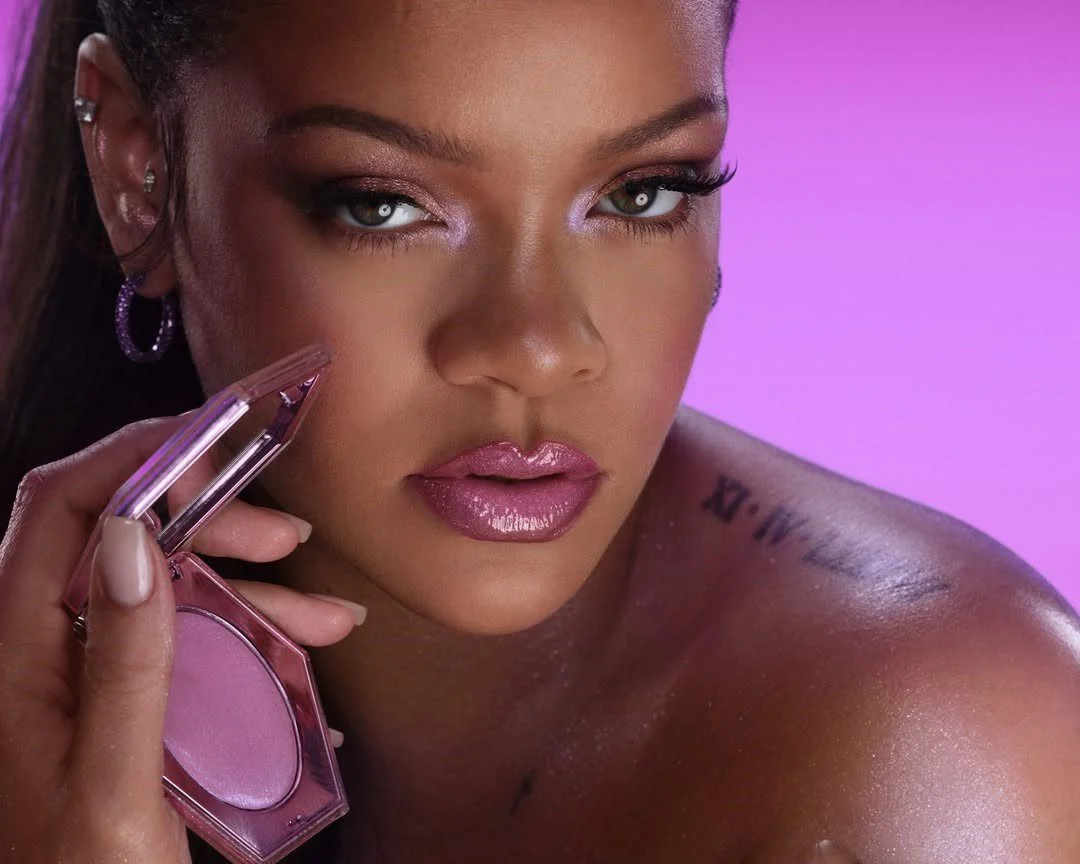
The French luxury conglomerate Louis Vuitton Moët Hennessy (LVMH) is reportedly evaluating the sale of its 50 percent stake in Fenty Beauty, the cosmetics powerhouse co-owned by international superstar and entrepreneur Rihanna. According to reports from Reuters, LVMH has engaged the services of investment bank Evercore to advise on the potential transaction. This development marks a significant turning point for one of the most successful celebrity-led beauty ventures in history and signals a broader strategic realignment within the world’s largest luxury goods group.
Fenty Beauty was launched in 2017 under the umbrella of Kendo Brands, LVMH’s internal incubator designed to develop and scale innovative beauty labels. From its inception, the brand was a disruptive force in the multi-billion dollar cosmetics industry. Its debut "Pro Filt’r" foundation launched with an unprecedented 40 shades, a move that forced legacy competitors to expand their color ranges and birthed the industry term "The Fenty Effect." By prioritizing inclusivity and leveraging Rihanna’s massive global platform, Fenty Beauty achieved immediate commercial success, reportedly generating $100 million in sales within its first few weeks of operation.
Financial Performance and Market Valuation
As of 2024, Fenty Beauty remains a formidable player in the prestige beauty sector. Financial analysts estimate the brand’s annual sales at approximately $450 million. Based on current market multiples for high-growth beauty assets, the brand’s total valuation is projected to sit between $1 billion and $2 billion.
The potential divestment comes at a time when the "celebrity beauty" market is reaching a state of maturity. While many celebrity-backed lines have struggled to maintain relevance, Fenty Beauty has consistently outperformed its peers by transitioning from a trend-driven launch to a staple brand within Sephora’s global retail network. However, for LVMH, the decision to explore a sale may be less about Fenty’s individual performance and more about the conglomerate’s overarching financial objectives and portfolio optimization.
A Chronology of the LVMH-Rihanna Partnership
The relationship between Rihanna and LVMH has been multifaceted, spanning several product categories and business models. To understand the current potential sale, it is necessary to examine the timeline of this high-profile collaboration:
- September 2017: Fenty Beauty launches globally in 17 countries and 1,600 stores. The launch is hailed as a masterclass in inclusive marketing.
- 2019: Following the success of the cosmetics line, LVMH and Rihanna announce the launch of Fenty, a luxury fashion house. This marks the first time LVMH has built a fashion brand from scratch since Christian Lacroix in 1987.
- 2020: The partnership expands into skincare with the launch of Fenty Skin, focusing on clean, clinical, and sustainable formulas.
- February 2021: In a rare setback, LVMH and Rihanna announce the "suspension" of the Fenty fashion house due to challenges exacerbated by the COVID-19 pandemic and the difficulty of scaling a luxury ready-to-wear brand at a high price point.
- 2021–2023: Fenty Beauty continues to expand its footprint, entering the fragrance market and launching Fenty Hair. The brand also expands its retail presence in key markets like China and Africa.
- Late 2024: Reports emerge that LVMH is seeking to offload its stake, hiring Evercore to navigate the process.
Strategic Portfolio Cleanup and Divestment Trends
The news of a potential Fenty Beauty stake sale does not exist in a vacuum. LVMH, under the leadership of Chairman and CEO Bernard Arnault, has been actively "cleaning up" its portfolio over the past eighteen months. The conglomerate appears to be moving away from joint ventures and smaller, high-maintenance labels to focus on its "power houses"—brands with multi-billion dollar revenues and significant operating margins.
Recent divestments include the sale of Off-White, the streetwear label founded by the late Virgil Abloh, to Bluestar Alliance. Additionally, LVMH sold its stake in Stella McCartney back to the founder in a move to streamline its fashion division. Rumors have also circulated within the industry regarding the future of Marc Jacobs, another brand within the LVMH stable that has seen fluctuating fortunes over the last decade.
Industry analysts suggest that LVMH is increasingly prioritizing brands where it maintains total control and where there is deep historical synergy with its core identity of "French craftsmanship." While Fenty Beauty is highly profitable, it is a shared-ownership model. By exiting the partnership, LVMH could reallocate capital toward wholly-owned ventures that offer higher long-term margins and fewer complexities regarding intellectual property and creative control.
The Rise of In-House Luxury Beauty: La Beauté Louis Vuitton
A key indicator of LVMH’s shifting focus is the recent internal investment in La Beauté Louis Vuitton. Unlike Fenty Beauty, which sits under the Kendo incubator, this new venture is a direct extension of the Louis Vuitton maison. Led by legendary makeup artist Pat McGrath, the line emphasizes ultra-luxury positioning, sustainable packaging, and artisanal innovation.
The success of the Pat McGrath-led Louis Vuitton makeup collection has reportedly exceeded internal expectations. It demonstrates that LVMH can achieve high-growth results by leveraging its existing luxury heritage rather than relying on external celebrity partnerships. By folding beauty directly into its most powerful fashion houses—such as Louis Vuitton, Dior, and Givenchy—LVMH ensures that the brand equity remains entirely within the group.
Macroeconomic Context and the Luxury Slowdown
The timing of the potential Fenty Beauty sale is also influenced by a cooling global luxury market. Following a period of post-pandemic "revenge spending," the industry is facing a deceleration in demand, particularly in the Chinese market, which has historically been a primary growth engine for LVMH.
High interest rates, geopolitical instability, and a shift in consumer behavior toward "quiet luxury" have pressured LVMH’s stock price and organic growth rates. In its most recent earnings reports, the group noted a softening in its Fashion & Leather Goods and Perfumes & Cosmetics divisions. Selling a 50 percent stake in a brand valued at up to $2 billion would provide LVMH with a significant cash infusion, strengthening its balance sheet as it prepares for a potential prolonged period of slower market growth.
Implications for Rihanna and the Future of Fenty
For Rihanna, the potential exit of LVMH presents several strategic options. The artist-turned-mogul, whose net worth is largely tied to her business ventures, could seek a new private equity partner to buy out LVMH’s stake. Alternatively, she could look to a different strategic conglomerate, such as Estée Lauder Companies or L’Oréal, although such a move would likely face antitrust scrutiny given the size of those players.
There is also the possibility that Rihanna could attempt to take the brand fully private or prepare it for an Initial Public Offering (IPO). Given the brand’s strong cash flow and loyal customer base, an IPO would likely be well-received by investors looking for exposure to the prestige beauty sector.
However, the departure of LVMH would mean losing access to the group’s unparalleled supply chain, logistics network, and its symbiotic relationship with Sephora (which is also owned by LVMH). While Fenty Beauty is large enough to stand on its own, the operational support provided by LVMH’s Kendo division has been a critical component of its rapid global scaling.
Industry Reactions and Market Sentiment
While LVMH and Evercore have declined to provide official comments on the record, the market sentiment suggests a "wait and see" approach. Competitors in the beauty space are closely watching the valuation metrics that emerge from this deal. If Fenty Beauty fetches a price at the high end of the $2 billion estimate, it would reaffirm the enduring value of celebrity brands that possess genuine market utility and community engagement.
Conversely, a lower-than-expected valuation might signal a correction in the prestige beauty market, indicating that investors are becoming more cautious about the long-term sustainability of brands tied so closely to a single individual’s public image.
Conclusion: A New Era for LVMH
The potential sale of Fenty Beauty signifies the end of an era for LVMH’s "incubator" strategy. For years, the group sought to find the "next big thing" by partnering with external creatives and celebrities. Today, the strategy has shifted toward reinforcing the moats around its existing crown jewels.
By streamlining its portfolio and focusing on in-house luxury, LVMH is betting that the future of the conglomerate lies in its ability to sell "timelessness" rather than "trends." Whether Fenty Beauty finds a new home with a private equity firm or continues under a different ownership structure, its legacy as a disruptor is secure. For LVMH, the move represents a calculated retreat from shared ventures in favor of total dominance over its core luxury maisons.
