
 By Layla Zulfa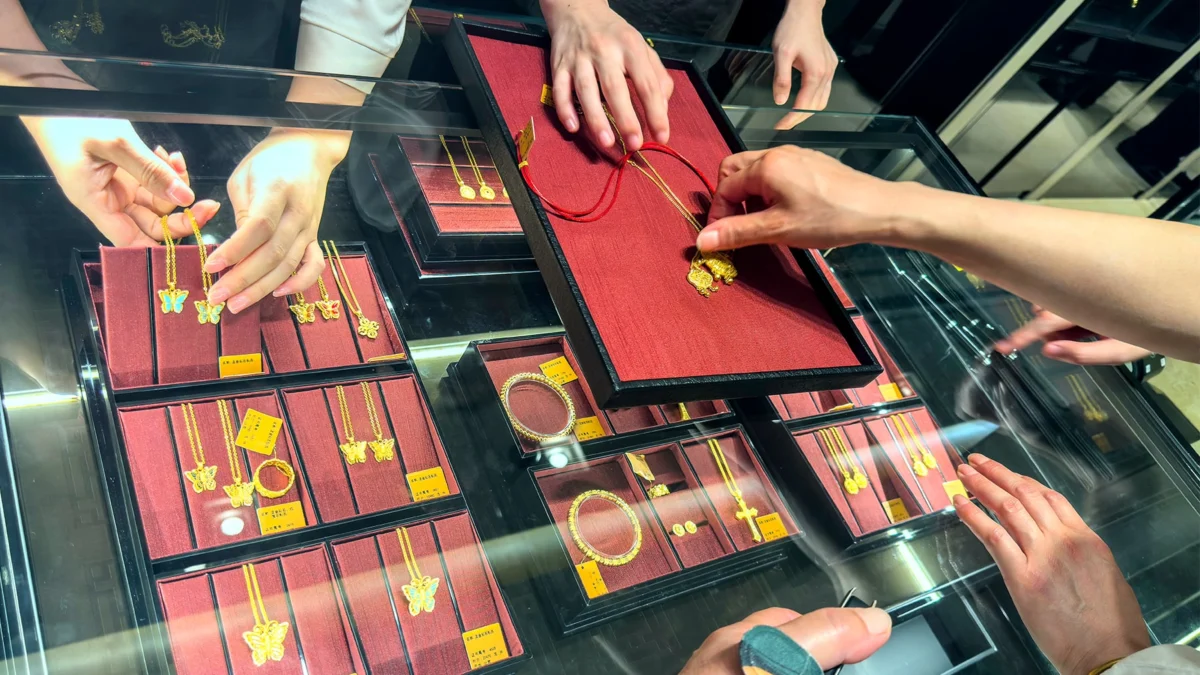
Chinese jeweller Laopu Gold Co. experienced a significant downturn in its market valuation on Tuesday, shedding an estimated $2.1 billion after forecasting a substantial slowdown in its revenue growth for the first half of 2026. The company, widely regarded as one of China’s most rapidly ascending and "viral" consumer brands, projected revenue growth of up to 66 percent, a figure that, while robust in absolute terms, marks a sharp deceleration from its previously delivered triple-digit expansion rates. This unexpected shift in outlook sent ripples through the investment community, particularly among those who had heavily backed the resilience and explosive potential of domestic Chinese luxury and consumer labels.
A Steep Decline in Market Valuation
The dramatic market reaction saw Laopu Gold’s shares plunge by approximately 15% on Tuesday, translating directly into the loss of billions in market capitalisation. This single-day erosion of value underscores the delicate balance of investor sentiment, especially concerning high-growth companies operating in dynamic, yet increasingly complex, economic environments. The sell-off was swift and decisive, reflecting a re-evaluation of the company’s future earnings potential against a backdrop of broader economic uncertainties in China. For a brand that had epitomised the burgeoning success of the "Guochao" (national trend) movement in the luxury sector, this market correction serves as a stark reminder of the challenges inherent in sustaining exponential growth.
The Roots of Investor Disquiet: A Shift in Growth Trajectory
The core of investor apprehension stems from the contrast between Laopu Gold’s historical performance and its forward-looking guidance. For several years leading up to this announcement, Laopu Gold had been a darling of the Chinese consumer market, consistently reporting revenue growth figures well exceeding 100%, and in some periods, even surpassing 150% year-over-year. This extraordinary trajectory was fueled by a potent combination of innovative product design, savvy digital marketing, and a deep resonance with the cultural pride encapsulated by the "Guochao" movement. The projection of "up to 66 percent" growth for the first half of 2026, therefore, represents a significant recalibration of expectations. While a 66% growth rate would be enviable for most established companies globally, for a brand whose valuation was predicated on hyper-growth, it signaled a potential maturation or saturation of its primary growth engines.
From Hyper-Growth to Measured Expansion
Analysts quickly pointed out that the market had priced Laopu Gold as a company capable of sustaining its previous, aggressive expansion. The implied slowdown, therefore, directly challenged these valuations. Investors who had bought into the stock at high multiples, anticipating continued rapid acceleration, found themselves confronting a new reality of more moderate, albeit still strong, growth. This shift necessitates a fundamental re-evaluation of the company’s intrinsic value and its position within investment portfolios. The market’s reaction suggests that the premium placed on Laopu Gold’s "viral" status and high-growth narrative was highly sensitive to any signs of deceleration, irrespective of the underlying strength of the projected figures.
Unpacking Laopu Gold’s Market Position and "Viral" Appeal
Laopu Gold has carved out a distinctive niche in the highly competitive Chinese luxury jewellery market. Unlike many traditional jewellery brands that focus exclusively on modern designs, Laopu Gold differentiates itself through its emphasis on heritage, craftsmanship, and the integration of traditional Chinese cultural elements into contemporary pieces. Its offerings often feature intricate gold work, drawing inspiration from ancient motifs and artisanal techniques, which appeals strongly to a younger generation of Chinese consumers increasingly proud of their cultural identity. This blend of tradition and trendiness, coupled with an aggressive and highly effective digital marketing strategy across platforms like Douyin (TikTok), Weibo, and Xiaohongshu, propelled it into the spotlight as a "viral" brand.
The "Guochao" Phenomenon and Brand Identity
The "Guochao" movement, characterized by a surge in demand for domestic brands that infuse modern aesthetics with traditional Chinese culture, has been a significant tailwind for companies like Laopu Gold. This trend represents a shift in consumer preference, moving away from an exclusive focus on Western luxury brands towards a greater appreciation for local craftsmanship and design narratives. Laopu Gold successfully tapped into this sentiment, fostering a strong brand identity that resonated deeply with patriotic consumers and those seeking unique, culturally significant luxury items. Its stores, often designed with a blend of classic Chinese architectural elements and modern retail concepts, further enhanced its brand appeal, creating immersive shopping experiences that captivated its target demographic. This carefully cultivated image and connection with its consumer base had, until recently, shielded it from some of the broader economic pressures affecting other sectors.
Broader Economic Headwinds and Shifting Consumer Sentiments
The market’s sharp reaction to Laopu Gold’s forecast cannot be entirely divorced from the wider economic landscape in China. The country’s economy has been navigating a period of significant transition and challenge, marked by a slowdown in overall growth, persistent issues in the property sector, and fluctuating consumer confidence. While the luxury market has often demonstrated a degree of resilience, particularly in the premium segment, it is not immune to prolonged periods of economic uncertainty. High-end discretionary spending, though less volatile than mass-market consumption, can still be affected by shifts in wealth perception and future income expectations.
Macroeconomic Pressures on Discretionary Spending
Recent economic indicators have painted a mixed picture for China. Data from the National Bureau of Statistics has shown a deceleration in overall retail sales growth in recent quarters, with particular pressure noted in categories beyond essential goods. Unemployment, particularly among youth, has been a persistent concern, and a cautious outlook on personal finances has led many consumers to adopt a more conservative approach to spending. While Laopu Gold caters to an affluent segment, even these consumers may become more discerning or defer large purchases in an environment of perceived economic instability. This macro backdrop likely amplified investor concerns, transforming a slowdown from hyper-growth to strong-but-slower growth into a major cause for alarm.
A Chronology of Anticipation and Disappointment
Pre-Announcement Momentum
Prior to Tuesday’s announcement, Laopu Gold’s stock had been performing robustly, buoyed by successive quarters of stellar financial results and an optimistic outlook from analysts. The company had consistently exceeded market expectations, driven by aggressive store expansion, successful product launches, and an ever-growing online presence. Its market capitalization had swelled, reflecting investor confidence in its ability to continue capturing a larger share of China’s burgeoning luxury market. The narrative surrounding Laopu Gold was one of unstoppable momentum, positioning it as a safe bet within the often-volatile Chinese consumer sector. This upward trajectory fostered an environment where any deviation from extraordinary growth was bound to be met with disappointment.
The Forecast Revelation and Immediate Fallout
The revised growth forecast for the first half of 2026 was reportedly communicated during a routine investor briefing following the release of the company’s latest quarterly results. While the official financial report itself might have reflected strong current performance, the forward-looking guidance acted as a powerful dampener. The projection of "up to 66 percent" revenue growth for the upcoming period, juxtaposed against an implied historical growth rate that likely exceeded 120-150% in previous periods, instantly triggered a wave of selling. The market, operating on high expectations, reacted with swift punitive action. Within hours of the news breaking, Laopu Gold’s shares began their precipitous decline, wiping out billions in value and marking a significant turning point in the company’s recent market history. Trading volumes surged, indicating widespread investor repositioning and a palpable sense of unease regarding the company’s future trajectory.
Analyst Perspectives and Company Responses
Interpreting the Numbers
Following the market reaction, financial analysts were quick to offer their interpretations. Many acknowledged that a 66% growth rate is still commendable, especially for a company of Laopu Gold’s increasing scale. However, the consensus was that the market had over-indexed on the company’s past hyper-growth, leading to an inflated valuation that was unsustainable once growth rates began to normalize. "This isn’t necessarily a sign of trouble for Laopu Gold’s fundamentals, but rather a re-pricing of its growth premium," stated one senior analyst from a prominent investment bank. "The market was expecting a marathon runner to maintain a sprint pace indefinitely. The 66% projection suggests a more realistic, albeit still very strong, long-distance pace." Other analysts highlighted the increasing maturity of the "Guochao" trend itself, suggesting that while it remains powerful, the initial explosive growth phase for many brands might be giving way to a more competitive and established market environment.
Laopu Gold’s Stance on Sustainable Growth
While Laopu Gold Co. did not issue an immediate, detailed public statement directly addressing the stock plunge, sources close to the company reportedly emphasized a commitment to sustainable, high-quality growth. It is inferred that management would likely highlight ongoing investments in product innovation, brand building, and supply chain efficiencies designed to ensure long-term value creation. Such statements would typically aim to reassure investors that the company is adapting to evolving market conditions, prioritizing robust profitability and market share consolidation over sheer top-line growth at any cost. This strategic pivot, if confirmed, would suggest a shift towards a more mature business model, focusing on brand longevity and customer loyalty rather than purely aggressive expansion.
Implications for China’s Luxury Sector and "Guochao" Brands
The market’s reaction to Laopu Gold’s revised forecast carries significant implications not just for the jeweller itself, but for the broader landscape of Chinese luxury and "Guochao" brands. For years, these domestic labels have been heralded as the future of Chinese consumption, embodying cultural pride and offering a compelling alternative to established international luxury houses.
Re-evaluating the Growth Narrative
The Laopu Gold incident prompts a crucial re-evaluation of the "Guochao" growth narrative. While the underlying trend of cultural appreciation and support for domestic brands remains strong, the period of unchecked, explosive growth fueled by novelty and social media virality might be drawing to a close. Investors and market observers will likely become more discerning, scrutinizing the fundamentals of these brands more closely, including their profitability, brand equity, and sustainable competitive advantages, rather than simply relying on top-line growth figures. This could lead to a differentiation between brands that have built genuine, enduring value and those that primarily rode the wave of fleeting trends.
A More Discerning Consumer Landscape
Furthermore, the incident might reflect a subtle but important shift in the Chinese consumer landscape. As the market matures and economic growth moderates, consumers, even affluent ones, may become more discerning. They might seek greater value, timeless design, and demonstrable quality over purely trend-driven purchases. This could pose challenges for brands that have prioritized rapid expansion and aggressive marketing over deep-seated brand equity and craftsmanship. International luxury brands, which have faced stiff competition from "Guochao" labels, might also find opportunities to reaffirm their value proposition in a market that could be moving towards more considered consumption.
The Path Forward: Adaptation in a Maturing Market
For Laopu Gold, the path forward will involve navigating a more demanding investment climate and adapting its strategies to a maturing market. This could entail a greater focus on enhancing profit margins, optimizing its retail footprint, and diversifying its product offerings to appeal to an even broader demographic. Continued innovation in design and a reinforcement of its unique cultural narrative will be critical to maintaining its competitive edge.
The experience of Laopu Gold serves as a cautionary tale for other high-growth "viral" brands in China: the market demands not just growth, but sustainable, quality growth. The honeymoon period for exponential expansion may be waning, giving way to an era where fundamental business strength, strategic adaptability, and a clear vision for long-term value creation will be paramount to success in China’s evolving luxury and consumer market.
