
 By admin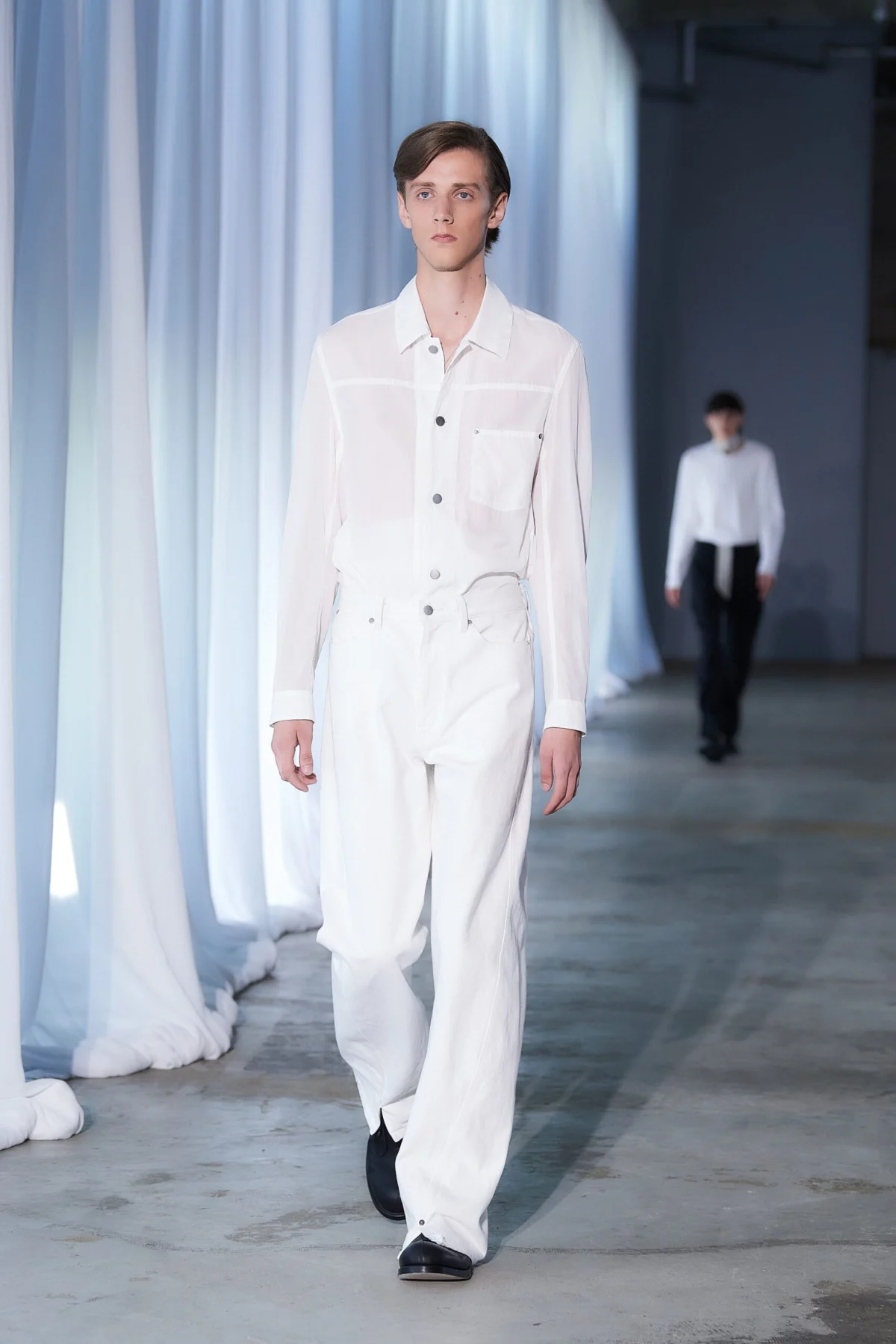
Koki Enomoto, the visionary designer behind the acclaimed Attachment label, has once again captivated the fashion world with his latest collection, aptly titled "Lightly." Unveiled in a meticulously curated presentation, the collection delves into a profound exploration of presence and perception, translating an ethereal observation into a tangible, wearable wardrobe. At its core, "Lightly" challenges conventional notions of weight and form in clothing, proposing a future where garments communicate not just through their visible aesthetics but also through their interaction with the unseen forces around us, most notably, the wind.
The genesis of this collection is rooted in an unexpectedly poetic moment of serendipity. Earlier this year, while on a routine run, Enomoto paused, catching his breath and glancing upwards. His gaze was drawn to a seemingly mundane piece of gray netting, suspended from an overpass, dancing delicately in the unseen currents of air. This simple observation ignited a profound insight. "I felt like I was seeing something invisible," Enomoto recounted during a comprehensive walkthrough at his showroom. "You can’t see the wind, but by making the fabric sway, it revealed the wind’s presence. I wondered what would happen if I applied that idea to clothing." This revelation became the philosophical cornerstone for "Lightly," propelling Enomoto to investigate how garments could articulate the imperceptible, granting form to the formless through considered design.
Attachment: A Legacy of Considered Design and Japanese Minimalism
To fully appreciate the significance of "Lightly," it is crucial to understand the foundation laid by Koki Enomoto and his brand, Attachment. Established in the late 1990s, Attachment quickly carved out a distinctive niche within the global fashion landscape, particularly revered for its minimalist aesthetic, meticulous tailoring, and innovative approach to fabric development. Enomoto, a stalwart of Japanese design, has consistently demonstrated a commitment to precision, functionality, and a subdued elegance that often borders on the avant-garde without sacrificing wearability. The brand is known for its monochromatic palettes, slim yet comfortable silhouettes, and a focus on high-quality materials that age gracefully.
Attachment’s trajectory has been marked by a consistent evolution, reflecting broader shifts in contemporary menswear while maintaining a unique identity. Previous collections have explored themes ranging from urban utility to sophisticated deconstruction, always underpinned by Enomoto’s unwavering dedication to craftsmanship and a thoughtful engagement with the wearer’s experience. The brand’s showrooms, often characterized by their stark, architectural simplicity, serve as an extension of this design philosophy, emphasizing clean lines and an uncluttered focus on the garments themselves. This established legacy provides a rich context for "Lightly," demonstrating that the collection is not merely a fleeting trend but a logical, albeit deeply philosophical, progression in Enomoto’s ongoing design narrative.
Sculpting Air: The Collection’s Core Philosophy
"Lightly" is a masterclass in translating an abstract concept—the invisible—into tangible, wearable art. Enomoto’s design process for this collection began, as is characteristic of his methodology, with the fabric itself. He paid meticulous attention to how textiles moved, draped, and interacted with the body, not just statically, but in motion. This focus extended beyond mere aesthetics, delving into the very physics of garment-body relationship. "It was about determining the right amount of space between the fabric and the body, focusing not just on lightness, but on the character and silhouette the garment takes on when worn," Enomoto explained.
This nuanced approach to fit and form is central to "Lightly." The collection features what Enomoto describes as a "slimmer fit, but not a suffocating one." This delicate balance is achieved through strategic design interventions. For instance, an easy cotton shirt, seemingly simple, was given structural integrity and adaptable form through a precisely placed drawstring at the waist. Enomoto elaborated on this technique: "When you make a garment oversized, it tends to lose its structure and doesn’t hold its form as beautifully, so we’ve tried to make things slimmer." This statement underscores a subtle but significant departure from the prevailing oversized trend in contemporary fashion, suggesting a return to a more defined yet unrestrictive silhouette that celebrates the body while offering supreme comfort. The "sci-fi minimalism" that defines the tailoring within "Lightly" is not about futuristic aesthetics alone, but about an almost surgical precision in excising anything extraneous, distilling garments to their most essential and functional forms. This results in pieces that feel modern, streamlined, and profoundly comfortable, blurring the lines between utilitarian practicality and high-fashion elegance.
Textural Narratives: Materials and Movement
The tactile experience of "Lightly" is paramount, driven by Enomoto’s discerning selection of materials. The collection is a testament to the power of fabric innovation, featuring an array of textiles chosen for their unique properties of drape, breathability, and subtle translucency.
A standout example is the reimagining of the classic trucker jacket. In "Lightly," this workwear staple is rendered in translucent cupra cotton. Cupra, a regenerated cellulose fiber derived from cotton linter (the short fibers that cling to cottonseeds after ginning), offers a luxurious hand-feel akin to silk, excellent drape, and remarkable breathability. Its translucent quality transforms the rugged trucker jacket into something delicate and ethereal, challenging its traditional associations with heavy-duty utility. Enomoto’s choice of cupra also subtly nods to increasing industry awareness regarding sustainable practices, as regenerated fibers offer a more environmentally conscious alternative to virgin materials. By using cupra, Enomoto not only elevates the garment aesthetically but also imbues it with a sense of year-round wearability, expanding its seasonal utility beyond a mere two weeks a year, as he implied.
Another key material is silk, seen in the striped hooded shirts. These garments were designed to billow gracefully with movement, allowing glimpses of bare skin underneath, further emphasizing the collection’s theme of revealing and concealing. The natural sheen and fluidity of silk perfectly embody the lightness and movement Enomoto sought to capture. Complementing these airy pieces are leather blazers crafted from an extraordinarily thin and pliable leather. This innovative treatment allows the sleeves to be rolled up with the same ease as a traditional poplin shirt, a remarkable feat for a material often associated with stiffness and structure. This demonstrates a sophisticated technical mastery, pushing the boundaries of what is conventionally expected from leatherwear and offering unparalleled comfort and versatility. The overall effect across these diverse materials is a collection that feels almost weightless, allowing the wearer to feel "fully dressed, while feeling as though you were barely wearing anything at all."
Form and Function: Signature Pieces and Their Evolution
"Lightly" showcases a series of garments that embody the collection’s core tenets of lightness, fluidity, and refined minimalism. Each piece, while distinct, contributes to a cohesive narrative of understated elegance and functional innovation.
The aforementioned translucent cupra cotton trucker jackets represent a significant stylistic and material evolution. By transforming a robust, traditionally masculine silhouette into something delicate and airy, Enomoto challenges gendered sartorial norms and expands the jacket’s functional lifespan. This iteration is not merely a seasonal update but a reinterpretation of purpose, allowing the garment to transition effortlessly between seasons and occasions.
The striped hooded shirts crafted from yellow silk exemplify the collection’s interplay of movement and revelation. The choice of yellow, often associated with light, optimism, and warmth, adds a subtle vibrancy to the otherwise restrained palette characteristic of Attachment. The billowing quality of the silk, combined with the hooded design, creates a dynamic silhouette that responds to the wearer’s movement and the environment, literally "revealing the wind’s presence" in a visually captivating manner.
Perhaps most illustrative of Enomoto’s material innovation are the leather blazers. The ability to roll up their sleeves with the ease of poplin is a testament to the meticulous research and development invested in the collection’s textiles. This feature enhances the blazers’ versatility, allowing them to be styled casually or formally, adapted to varying temperatures, and worn comfortably for extended periods. This practical design element reinforces the collection’s commitment to comfort and ease, ensuring that the sophistication of the leather does not come at the expense of wearability.
Furthermore, Enomoto’s approach to merging categories of clothing, leading to pieces like "shirt-blousons," speaks to a broader trend in contemporary fashion towards hybrid garments. These pieces defy rigid categorization, offering the formality of a shirt with the relaxed volume of a blouson. This not only streamlines the wardrobe but also encourages a more fluid and personal approach to dressing, aligning with a consumer base that values adaptability and multi-functionality in their apparel.
The Theatricality of Presentation: Setting the Scene
The environment in which "Lightly" was presented was as integral to its narrative as the garments themselves. Enomoto chose a stark concrete warehouse, a space typically associated with raw utility and industrialism. This choice immediately established a powerful juxtaposition, creating a minimalist backdrop against which the delicate nuances of the collection could shine. The primary staging element was a single, sheer white curtain, strategically lit from behind.
This minimalist set design was not merely aesthetic; it was deeply symbolic. The sheer white curtain, illuminated from behind, evoked the very idea of the invisible being made visible—light passing through a veil, revealing form and shadow. This mirrored Enomoto’s initial inspiration: seeing the wind’s presence through the movement of netting. The interplay of light and shadow on the curtain and the garments themselves underscored the collection’s ethereal quality, enhancing the perception of lightness and transparency. The concrete warehouse, with its inherent rawness, amplified the refinement and artistry of the clothes, creating a dialogue between the organic and the man-made, the rough and the delicate. Such considered staging is a hallmark of high-fashion presentations, where the ambiance and context are meticulously crafted to deepen the audience’s understanding and appreciation of the designer’s vision. It allowed the focus to remain squarely on the fabrics, the movement, and the subtle architectural details of the clothing, reinforcing the collection’s contemplative and sensory nature.
Broader Industry Context: Resonance in Contemporary Fashion
"Lightly" arrives at a particularly resonant moment in the fashion industry. The post-pandemic landscape has significantly shifted consumer priorities, placing an unprecedented emphasis on comfort, versatility, and garments that facilitate a fluid lifestyle. Enomoto’s collection, with its focus on lightness, unrestrictive silhouettes, and adaptable materials, directly addresses these evolving demands. The desire for clothing that allows for ease of movement and a feeling of "barely wearing anything at all" aligns perfectly with a world that increasingly blurs the lines between work, leisure, and personal expression.
Furthermore, "Lightly" can be situated within the broader context of Japanese design, which has long been celebrated for its innovative use of textiles, architectural forms, and a profound respect for craftsmanship. Designers like Issey Miyake, Yohji Yamamoto, and Rei Kawakubo have paved the way for a generation of creators who prioritize intellectual rigor and material experimentation. Enomoto, through Attachment, continues this legacy, offering a distinct voice that marries technical precision with philosophical depth. His exploration of translucency and the "invisible" also taps into a growing appreciation for sensory design, where the tactile and the perceived qualities of a garment are as important as its visual impact. The subtle sustainability narrative inherent in materials like cupra cotton also positions "Lightly" within the ongoing global conversation about conscious consumption and responsible material sourcing, even if it is not the collection’s primary stated objective.
Critical Reception and Future Outlook
While specific critical reactions are inferred, a collection of this caliber, with its thoughtful conceptual foundation and meticulous execution, would undoubtedly garner significant praise from fashion critics and industry insiders. Experts would likely commend Enomoto’s ability to translate an abstract philosophical concept into a coherent and commercially viable collection. The innovative use of materials, particularly the ultra-thin leather and translucent cupra, would be highlighted as pushing boundaries in textile technology. Critics might also praise the collection’s subtle elegance and its contribution to a more refined, comfortable, and versatile approach to modern dressing.
"Lightly" reinforces Koki Enomoto’s position as a designer who operates at the intersection of art, philosophy, and fashion. It suggests a future where garments are not just aesthetic statements but also mediums through which we engage with our environment and our senses. The collection’s emphasis on the unseen, on the subtle interplay of fabric and air, offers a meditative counterpoint to the often loud and transient nature of fashion trends. For Attachment, "Lightly" marks a significant evolution, deepening the brand’s intellectual appeal while expanding its practical versatility. It is a collection that invites introspection, encouraging wearers to consider not just what they see, but what they feel, and what their clothes subtly reveal about the world around them.
In conclusion, Koki Enomoto’s "Lightly" collection transcends mere clothing design, offering a profound commentary on perception, presence, and the delicate balance between the visible and the invisible. By taking inspiration from a fleeting moment of observation and meticulously translating it into a collection of impeccably crafted garments, Enomoto has once again demonstrated his unique ability to fuse intellectual depth with practical elegance. "Lightly" is not just a collection of clothes; it is an invitation to experience the world with a heightened sense of awareness, revealing the subtle beauty of unseen forces through the art of dress.
