
 By admin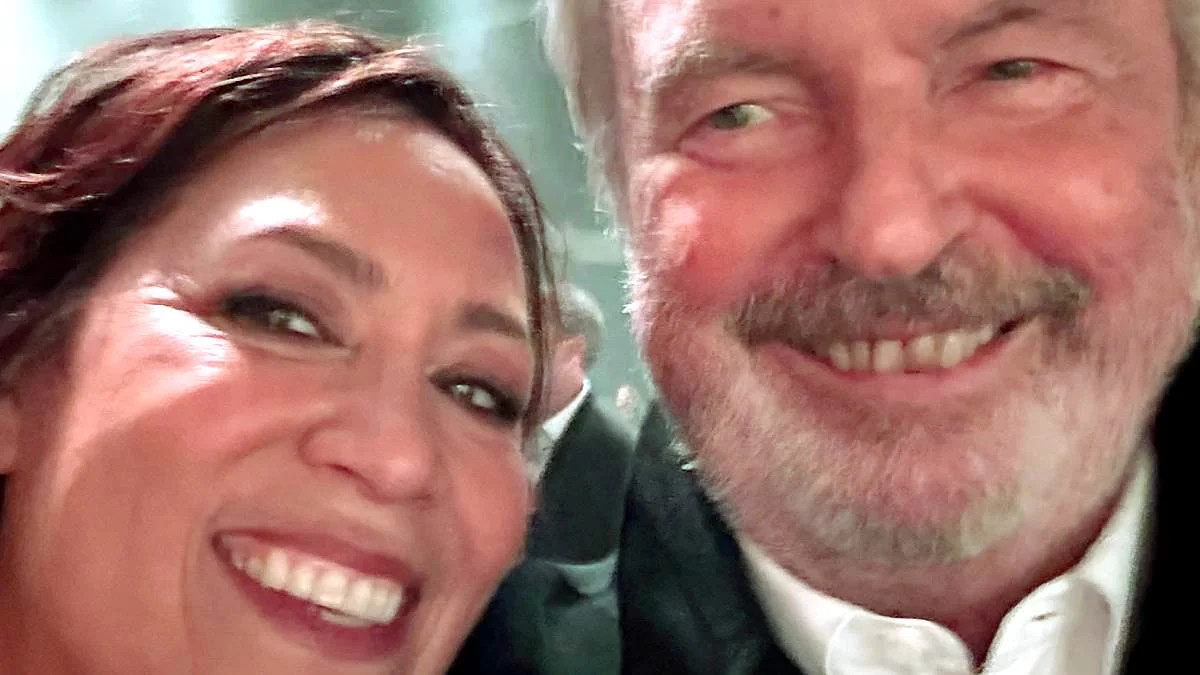
The boundaries of digital ethics and the sanctity of personal grief have come under intense scrutiny following a viral incident involving Australian music icon Kate Ceberano and the late actor Sam Neill. Ceberano, 59, expressed profound distress and physical revulsion after discovering an artificial intelligence-generated image depicting her in a state of mourning for her long-time friend and colleague. The incident has reignited a global conversation regarding the unregulated proliferation of "deepfake" technology and the predatory nature of social media pages that leverage celebrity deaths for engagement and advertising revenue.
The controversy began when a Facebook page titled "Golden Era Hollywood" uploaded a series of hyper-realistic, AI-generated images. One specific image portrayed Ceberano sitting on a sofa, visibly distraught and weeping, while holding a smartphone that displayed a fabricated "final photo" of her and Neill together. The caption accompanying the post claimed the image captured Ceberano’s reaction to Neill’s passing, stating: "Kate Ceberano mourned her dead friend Sam Neill by sharing their final photo together from his last public appearance at the Sydney Awards."
Ceberano, a multi-award-winning singer known for her hit "Brave," took to Instagram on Monday to denounce the post. She described her initial reaction as one of physical illness, stating she "nearly threw up" upon seeing the synthetic recreation of her own likeness and emotions. "What the actual…!!!!!! My first interaction with an AI version of myself. I nearly threw up," she wrote to her followers. She further expressed sympathy for the members of the public who were deceived by the post, adding, "I feel sorry to the good people who wrote meaningful comments to this specious post. You were tricked and I kinda think this is just the beginning. I’m speechless!!!!!!"
The Context of a National Loss: The Passing of Sam Neill
To understand the gravity of the public’s reaction, one must consider the stature of Sam Neill in the global and Australasian cultural landscape. The New Zealand-born actor, internationally celebrated for his roles in "Jurassic Park," "The Piano," and "Peaky Blinders," passed away on July 13, 2026, at the age of 78. His death followed a highly publicized and courageous battle with stage three angioimmunoblastic T-cell lymphoma, a rare form of blood cancer.
While Neill had announced in early 2026 that he was in remission and cancer-free, his death was attributed to pneumonia. His family described his passing as "sudden and unexpected," noting that he died in Sydney surrounded by his loved ones. The outpouring of grief following his death was immense, with tributes flowing from Hollywood A-listers, political leaders, and fans worldwide. This atmosphere of collective mourning provided the backdrop for AI-driven pages to exploit the emotional vulnerability of the public.
The Mechanics of "Engagement Bait" and AI Misinformation
The page responsible for the images, "Golden Era Hollywood," is part of a growing trend of social media entities that utilize generative AI tools—such as Midjourney, DALL-E, or Stable Diffusion—to create emotionally charged content. These pages often target older demographics who may be less familiar with the nuances of AI-generated artifacts.
The strategy employed by such pages is often referred to as "engagement baiting." By posting sensationalist or heart-wrenching content, the pages garner thousands of likes, shares, and comments. This activity signals to social media algorithms that the content is valuable, thereby increasing the page’s reach and, by extension, its potential for monetization through platform-based ad sharing or external links.
In the case of Sam Neill’s passing, "Golden Era Hollywood" did not stop at Ceberano. The page also published AI-generated images of other prominent figures ostensibly grieving for the actor, including Academy Award-winner Nicole Kidman and Neill’s former partner, the acclaimed journalist Laura Tingle. These images followed a similar template: a high-profile individual shown in a moment of private vulnerability that never actually occurred.
Industry Reaction and the "Uncanny Valley" of Grief
Ceberano’s condemnation of the AI post was met with immediate support from the Australian entertainment industry. Celebrities who have also been the subject of deepfakes or who fear the implications of the technology voiced their solidarity.
Poh Ling Yeow, host of "MasterChef Australia," commented on the post, noting that the image felt inherently "wrong" even before it was confirmed as a fake. Radio presenter Bianca Dye and American actress Jenna Elfman also expressed their shock, highlighting how the technology is increasingly used to bypass the consent of the individuals being depicted.
The psychological impact of these images is significant. Experts in digital media point to the "uncanny valley" effect—the sense of unease felt when a computer-generated figure looks almost, but not quite, human. However, as AI technology advances, this "valley" is narrowing, making it difficult for the average user to discern truth from fabrication. When this technology is used to simulate grief, it creates a parasitic relationship between the technology and real-world human tragedy.
A Timeline of Sam Neill’s Final Years and the Subsequent Hoax
- March 2023: Sam Neill reveals he is undergoing treatment for stage three angioimmunoblastic T-cell lymphoma. He remains optimistic, documenting his journey in his memoir, "Did I Ever Tell You This?"
- Late 2024 – Early 2026: Neill announces he is in remission. He continues to work and advocate for cancer research, maintaining a strong public presence.
- July 13, 2026: Neill passes away in a Sydney hospital due to complications from pneumonia.
- July 15–20, 2026: Global tributes are held. During this period, AI-generated pages begin circulating fabricated images of "final moments" and "grieving celebrities."
- July 21, 2026: Kate Ceberano discovers the deepfake of herself on Facebook.
- July 22, 2026: Ceberano issues a public statement via Instagram, sparking a wider debate on AI ethics in Australia.
Supporting Data: The Proliferation of Deepfake Technology
The incident involving Ceberano is not an isolated event but rather a symptom of a rapidly escalating technological challenge. According to data from deepfake detection firms, the number of deepfake videos and images found online has been doubling every six months. While much of the early focus on deepfakes centered on non-consensual adult content or political misinformation, "celebrity grief exploitation" is emerging as a potent new category.
A 2025 study on social media misinformation found that AI-generated images depicting emotional "human interest" stories receive 40% more engagement than standard news reports. This creates a financial incentive for bad actors to continue producing such content. Furthermore, Australian eSafety Commissioner reports have indicated a 60% increase in complaints related to deepfake identity theft and likeness misappropriation over the last two years.
The Legal and Ethical Landscape
The legal framework surrounding AI-generated likenesses remains a "Wild West" in many jurisdictions, including Australia. While laws exist regarding defamation and the "right of publicity," they are often difficult to enforce against anonymous page administrators who may be operating from different countries.
In Australia, the eSafety Commissioner has the power to order the removal of certain types of harmful content, but the threshold for "harm" is often debated when it comes to satirical or "tribute" content that isn’t explicitly pornographic or violent. However, legal experts argue that using a person’s likeness to imply an emotional state or a private action without consent could fall under broader privacy violations or misleading and deceptive conduct.
Ethicists are particularly concerned about the "digital resurrection" of the deceased and the "synthetic manipulation" of the living. The use of Sam Neill’s death to generate traffic is seen by many as a violation of the "dignity of the deceased"—a concept that, while not always legally codified, remains a cornerstone of journalistic and social ethics.
Broader Implications for the Future of Media
The Ceberano incident serves as a cautionary tale for the future of digital consumption. As generative AI becomes more accessible, the ability to manufacture "news" becomes a tool for anyone with a social media account. This leads to a "reality apathy," where the public becomes so cynical about the authenticity of digital content that they begin to distrust real images and legitimate news sources.
For public figures like Kate Ceberano, the battle is two-fold: protecting their professional brand and defending their personal emotional space. The singer’s decision to speak out is a vital step in educating the public on how to spot these fabrications. Clues such as distorted fingers (a common AI flaw), inconsistent lighting, and overly "painterly" textures are often present in these images, yet they are easily missed during a casual scroll through a social media feed.
As the industry moves forward, there are increasing calls for social media platforms like Meta (the parent company of Facebook and Instagram) to implement more robust AI labeling systems. While Meta has pledged to label AI-generated content, the "Golden Era Hollywood" post proves that many of these images still slip through the cracks, disguised as genuine tributes.
Conclusion
The disgust expressed by Kate Ceberano is more than a personal grievance; it is a defense of human authenticity in an era of synthetic replication. By exploiting the death of Sam Neill—a man whose career was defined by genuine emotion and artistic integrity—the creators of these AI deepfakes have highlighted the urgent need for stricter digital regulations and a more discerning public. As Ceberano noted, this may only be the beginning, but the backlash against such "specious" content suggests that there remains a strong public desire for truth and respect in the digital age.
