
 By Layla Zulfa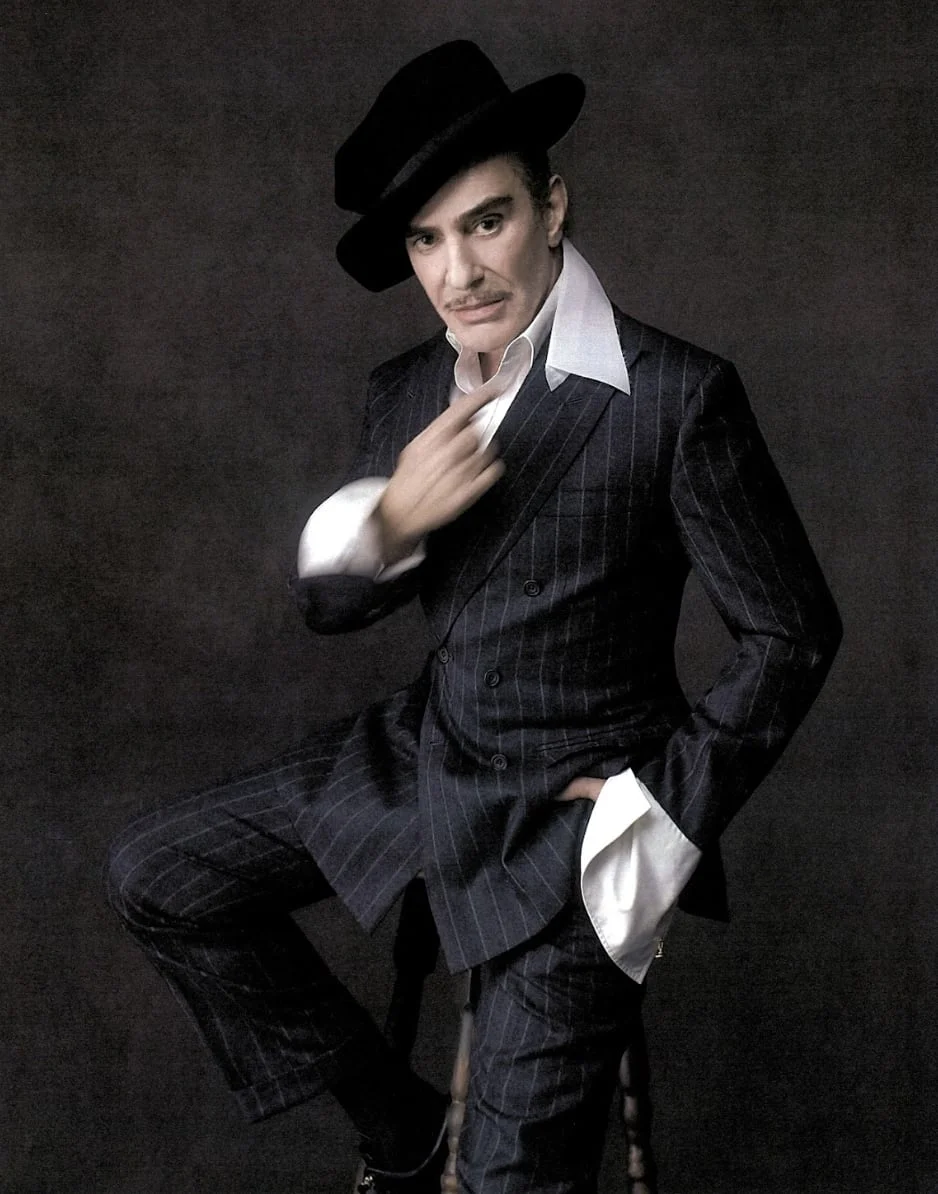
The Metropolitan Museum of Art has announced that its next major fashion exhibition will spotlight the extraordinary career of John Galliano, a designer celebrated for his singular talent and equally known for a scandal that dramatically altered the trajectory of his professional life. This upcoming blockbuster show will elevate Galliano to a rarefied echelon, making him one of only three living designers to be granted a major solo exhibition at the prestigious institution, a testament to his undeniable artistic impact on the global fashion landscape. The exhibition promises a comprehensive exploration of Galliano’s prolific and often provocative contributions to haute couture and ready-to-wear, inviting a re-evaluation of his legacy within the context of fashion as art.
The Met’s Endorsement and Galliano’s Unique Position in Fashion History
A solo exhibition at The Met’s Costume Institute is considered one of the highest honors in the fashion world, signifying a designer’s indelible mark on cultural history and sartorial innovation. The institution, renowned for its meticulous scholarship and breathtaking presentations, has historically reserved such extensive retrospectives for either deceased luminaries or a select few living designers whose influence is deemed foundational and enduring. Prior to Galliano, only two other living designers have received this singular honor: Yves Saint Laurent in 1983 and Rei Kawakubo of Comme des Garçons in 2017. This places Galliano in an exclusive pantheon, unequivocally acknowledging his genius and the profound impact he has had on shaping contemporary aesthetics, theatricality, and the very definition of modern luxury fashion. The Met’s decision underscores a curatorial emphasis on artistic merit and historical significance, often navigating complex narratives that include the personal lives of the creators. Andrew Bolton, the Wendy Yu Curator in Charge of The Costume Institute, is known for his intellectually rigorous and visually stunning exhibitions, which consistently draw record-breaking crowds and spark global conversations about fashion’s place in art and society.
A Legacy Forged in Theatrical Grandeur: Galliano’s Early Career and Rise to Stardom
John Galliano’s journey into the upper echelons of fashion began with a prodigious talent cultivated at London’s Central Saint Martins. Born in Gibraltar in 1960 and raised in London, his early education imbued him with a deep appreciation for history, art, and the dramatic arts. His 1984 graduate collection, "Les Incroyables," inspired by the French Revolution, instantly garnered critical acclaim and was famously bought in its entirety by London boutique Browns, signaling the arrival of a truly unique vision. This collection, characterized by its historical romanticism, deconstructed silhouettes, and theatrical flair, established the hallmarks of his distinctive aesthetic.
Throughout the late 1980s and early 1990s, Galliano honed his craft, navigating the challenging financial realities of running an independent label while consistently delivering collections that pushed boundaries. His technical mastery, particularly his innovative approach to the bias cut, allowed fabrics to drape and flow with an unparalleled sensuality and grace. He became a master storyteller, transforming runway shows into immersive theatrical experiences, each collection a meticulously crafted narrative replete with historical references, elaborate staging, and character-driven styling.
His undeniable talent caught the attention of luxury conglomerates. In 1995, he was appointed creative director of Givenchy, a historic French haute couture house owned by LVMH. His tenure, though brief, revitalized the brand with a surge of youthful energy and dramatic elegance. The following year, in 1996, he made a seismic move to Christian Dior, another jewel in the LVMH crown, where he would spend fifteen years. At Dior, Galliano was given an unprecedented platform to unleash his full creative potential. He resurrected the house’s iconic New Look silhouette while infusing it with his signature maximalism, cross-cultural influences, and a fearless sense of fantasy. Collections such like the "Masai" collection (Spring/Summer 1997 Haute Couture), the "Egypt" collection (Spring/Summer 2004 Haute Couture), and the numerous collections inspired by historical figures, art movements, and global cultures, solidified his reputation as a visionary. His shows were spectacles of unparalleled grandeur, often costing millions of dollars and featuring hundreds of elaborate looks, drawing celebrities, royalty, and fashion enthusiasts from around the globe. During his time at Dior, Galliano was credited with not only elevating the brand’s creative profile but also significantly boosting its commercial success, contributing to LVMH’s dominant position in the luxury market.
The Unraveling: The 2011 Scandal and Its Immediate Aftermath
Galliano’s stratospheric career came to a sudden and catastrophic halt in February 2011. Reports emerged of the designer, in an inebriated state, making anti-Semitic remarks to patrons at La Perle, a bar in Paris’s Marais district. A video of a separate incident, showing him declaring "I love Hitler" and directing hateful slurs at a group of women, subsequently went viral, sending shockwaves through the fashion industry and the wider world. The public outcry was immediate and intense.
LVMH, the parent company of Christian Dior and his eponymous John Galliano label, acted swiftly and decisively. Within days, Galliano was suspended and then formally dismissed from both roles. The decision was announced by Bernard Arnault, chairman and CEO of LVMH, who stated that there was "no room for anti-Semitism or racism" in the company. The fallout was immense. Natalie Portman, a prominent face of Dior perfumes, publicly condemned Galliano’s remarks. Fashion industry figures expressed a mix of shock, disappointment, and condemnation. The designer faced legal proceedings in France and was found guilty of public insults based on origin, religion, race, or ethnicity, receiving a suspended fine. The scandal not only cost him his prestigious positions but also led to a period of professional ostracization and personal introspection. His self-titled label, which had achieved global recognition, also suffered immensely, struggling to maintain its identity and commercial viability in the wake of its founder’s disgrace. This period marked a profound turning point, prompting widespread discussion about accountability, the ethics of public figures, and the pressures within the high-stakes world of luxury fashion.
The Path to Redemption: A Resurgence with Maison Margiela
Following his dismissal, Galliano retreated from the public eye. He entered rehabilitation, sought therapy, and engaged in a period of intense reflection and recovery. During this time, he publicly expressed remorse for his actions, attributing them to a confluence of personal struggles, addiction, and the immense pressures of his profession. His journey back into the industry was gradual and carefully managed. In 2013, he undertook a short-term residency with Oscar de la Renta in New York, a tentative step back into the creative fold that garnered cautious support from some industry figures.
The true turning point in his professional rehabilitation came in October 2014, when he was appointed creative director of Maison Margiela, the avant-garde Parisian fashion house owned by Only The Brave (OTB) Group. The appointment was seen by many as a bold, even controversial, move, given Margiela’s minimalist, deconstructed aesthetic, which stood in stark contrast to Galliano’s maximalist tendencies. However, under Galliano’s direction, Maison Margiela has experienced a remarkable creative renaissance and commercial resurgence. He has masterfully blended his theatrical sensibilities with Margiela’s intellectual rigor, creating collections that are both conceptually rich and visually compelling. His "Artisanal" (couture) collections, in particular, have been lauded for their innovative techniques, upcycling, and profound storytelling, demonstrating a matured and more introspective approach to design. He has championed gender fluidity, explored new frontiers in sustainable design, and continued to push the boundaries of craftsmanship, proving that his creative genius remained undimmed. His work at Margiela has been consistently praised by critics and has garnered a new generation of admirers, effectively carving out a successful second act in his illustrious career.
The Met’s Perspective: Curatorial Vision and Artistic Merit
The Metropolitan Museum of Art’s decision to stage a Galliano exhibition speaks volumes about the institution’s commitment to presenting fashion as a serious art form, often independent of the moral complexities of its creators. While the scandal of 2011 remains an undeniable part of his narrative, the Met’s curatorial approach, led by Andrew Bolton, typically prioritizes the aesthetic, historical, and conceptual impact of a designer’s work. The exhibition will likely offer a comprehensive look at Galliano’s entire career, from his formative years and independent label to his groundbreaking tenures at Givenchy and Dior, and his critically acclaimed resurgence at Maison Margiela.
Bolton and his team are known for their ability to contextualize fashion within broader cultural and art historical movements. For Galliano, this could involve exploring themes such as romanticism, theatricality, cross-cultural appropriations (both celebrated and debated), the deconstruction of historical dress, and the tension between tradition and innovation. The exhibition is expected to showcase the breadth of his technical prowess, his unparalleled skill in draping and cutting, and his unique ability to transform fabric into emotionally resonant sculpture. The Met’s stance suggests a belief that Galliano’s contributions to fashion design are so significant and transformative that they warrant academic study and public display, allowing visitors to engage with the artistry firsthand and draw their own conclusions about his place in the annals of fashion history. It is a move that acknowledges the enduring power of his creative vision, separating, to some extent, the art from the artist’s personal failings, a recurring debate in art criticism.
Broader Implications: Art, Ethics, and Second Chances in Fashion
The announcement of Galliano’s Met exhibition carries significant implications for the fashion industry, art institutions, and public discourse around redemption and accountability. On one hand, it represents a powerful affirmation of Galliano’s artistic genius and his remarkable journey of rehabilitation. It signifies a collective willingness, at least within certain powerful cultural spheres, to acknowledge that individuals can atone for past mistakes and that artistic contributions can be evaluated independently of personal conduct. This exhibition could be seen as a culmination of his decade-long effort to rebuild his reputation and prove his enduring value to the industry.
However, the exhibition will undoubtedly reignite discussions surrounding "cancel culture," forgiveness, and the ethical responsibilities of cultural institutions. While many in the fashion world have lauded his creative comeback, some critics and members of the public may question the decision to honor a figure whose past actions caused deep offense. This tension underscores the complex interplay between artistic freedom, public morality, and the dynamics of celebrity in the 21st century. The Met, by choosing to present Galliano’s work in such a prominent manner, implicitly engages with these debates, offering a platform for critical engagement rather than merely a celebratory retrospective. It forces a conversation about whether art can truly be separated from its creator, and at what point, if ever, a public figure’s redemption is considered complete. The exhibition’s framing will be crucial in navigating these sensitive issues, likely focusing heavily on the artistic evolution and impact rather than dwelling on personal biography, except where it directly informs the creative output.
Economic and Cultural Impact
The economic and cultural impact of a Met Costume Institute exhibition is substantial. These shows are consistently among the most popular at the museum, drawing hundreds of thousands of visitors and generating significant revenue through ticket sales, museum memberships, and merchandise. For example, "Alexander McQueen: Savage Beauty" (2011) attracted over 650,000 visitors, and "Rei Kawakubo/Comme des Garçons: Art of the In-Between" (2017) garnered over half a million. A Galliano exhibition is poised to achieve similar numbers, contributing significantly to New York City’s tourism economy.
Beyond the immediate financial gains, the cultural impact will be profound. The exhibition will introduce Galliano’s work to a new generation of fashion enthusiasts and students, providing an invaluable educational resource. It will also spark widespread media coverage, academic discourse, and public debate, further cementing fashion’s status as a legitimate field of scholarly inquiry and artistic expression. Vintage Galliano pieces are already highly coveted, and a Met exhibition will likely drive up demand and prices for his archival work, while also boosting interest in his current designs for Maison Margiela. This cultural re-contextualization will allow for a deeper understanding of his influence on subsequent designers and the broader trajectory of contemporary fashion, ensuring his place as a pivotal figure in modern design history.
The forthcoming John Galliano exhibition at The Metropolitan Museum of Art is far more than a simple retrospective; it is a momentous cultural event. It marks a significant milestone in the career of one of fashion’s most brilliant, yet controversial, figures, solidifying his position as an artistic titan. Simultaneously, it challenges the fashion world and wider society to grapple with complex questions of genius, morality, forgiveness, and the enduring power of art to transcend personal narratives, offering a profound and timely exploration of fashion’s capacity for both breathtaking beauty and challenging introspection.
