
 By Nila Kartika Wati
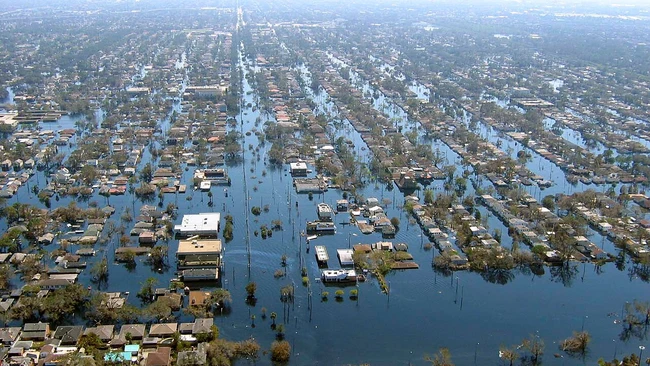
Twenty years after Hurricane Katrina ravaged the Gulf Coast, an image bearing Getty Images number 53509740 remains on Getty’s platform, its caption unchanged: "Two residents wade through chest deep water after finding bread and soda from a local grocery store after Hurricane Katrina came through the area on August 29, 2005 in New Orleans, Louisiana." This seemingly innocuous description stands in stark contrast to an Associated Press (AP) photograph from the same period, depicting a young Black man navigating chest-deep water with a case of Pepsi and a garbage bag, which was widely captioned as "looting." This juxtaposition ignited a furious debate about media bias, particularly racial bias, in photojournalism that continues to resonate today, serving as a seminal example in American classrooms and newsrooms alike. The disputed wording, despite decades of scrutiny, persists, highlighting fundamental challenges in journalistic ethics and the mechanics of news dissemination.
Background: A City Drowned in Crisis
Hurricane Katrina, a Category 5 storm, made landfall on August 29, 2005, as a powerful Category 3 hurricane near Buras-Triumph, Louisiana. While its initial impact was severe, the true catastrophe unfolded when New Orleans’ levee system failed, inundating 80% of the city. The ensuing chaos plunged hundreds of thousands of residents into a desperate fight for survival. Basic infrastructure collapsed, electricity was cut, and fresh water and food became scarce. With official rescue efforts initially slow and inadequate, particularly in poorer, predominantly Black neighborhoods, many residents were left to fend for themselves amidst rising floodwaters and rapidly deteriorating conditions. The human toll was immense, with over 1,800 fatalities across the Gulf Coast, and the storm caused an estimated $125 billion in damages, making it one of the costliest natural disasters in U.S. history. This dire context is crucial for understanding the desperate actions of residents and the highly charged environment in which journalists operated.
The Infamous Juxtaposition and Public Outcry
The two photographs in question quickly became symbols of perceived media bias. The AP frame, captured by staff photographer Dave Martin, depicted a young Black man in a desperate situation, his actions labeled as "looting." In contrast, the Getty image, taken by New Orleans-based photographer Chris Graythen, showed a lighter-skinned couple, their acquisition of provisions described as "finding." The images appeared side-by-side on Yahoo News by Tuesday, August 30, 2005, creating an immediate and stark contrast for millions of readers.
This pairing fueled widespread accusations of racial prejudice in news coverage. Critics argued that the captions demonstrated a clear double standard: a Black individual was immediately criminalized for acquiring necessities, while white individuals engaging in similar acts were portrayed sympathetically as survivors. Salon, an early and prominent voice in this controversy, highlighted the racial component, describing Graythen’s subjects as a "white man and a light-skinned woman," thereby accentuating the perceived racial bias. Brian Nelson, Yahoo’s public relations manager at the time, simply stated, "We don’t edit photo captions," underscoring a critical systemic issue in news aggregation.
Agency Responses and Photographers’ Accounts
By September 2, 2005, Salon had contacted both news agencies for clarification. Jack Stokes, AP’s director of media relations, defended Martin’s caption, stating the photographer "saw the person go into the shop and take the goods, and that’s why he wrote ‘looting’ in the caption." Santiago Lyon, AP’s director of photography, elaborated on the agency’s policy: "When we see people go into businesses and come out with goods, we call it ‘looting.’ When we just see them carrying things down the road, we call it ‘carrying items.’" This implied a clear standard based on direct observation of the act of acquisition.
Getty’s spokeswoman, Bridget Russel, explained that Graythen had discussed his frame with his editor. She affirmed that if he hadn’t witnessed looting, he couldn’t label it as such. However, when pressed on how he knew the goods were "found," Russel conceded, "I wish I could tell you. I haven’t been able to talk to Chris." This highlighted a gap in verifiable information within Getty’s own explanation.
The most candid insight came from Chris Graythen himself, who posted on the SportsShooter forum at 6:10 p.m. on August 31, 2005. His message, raw and unpolished, revealed the immense personal toll of Katrina: he was homeless, hadn’t seen his wife in five days, and his parents and grandparents had lost their homes. He described spending hours in a boat rescuing people and was typing while eating his first real meal in days. Graythen explained that "a million items floating in the water" near a grocery store with five feet of water and no doors meant "the stock was drifting away." He stated, "These people were not ducking into a store and busting down windows to get electronics. They picked up bread and cokes that were floating in the water. They would have floated away anyhow." Crucially, he directly addressed the racial aspect, asserting, "If you don’t believe me, you can look on Getty today and see the images I shot of real looting today, and you will see white and black people, and they were DEFINATELY looting. And I put that in the caption." Dave Martin, who joined AP in 1983 and covered major events like Katrina and the Deepwater Horizon spill, died in 2014, leaving his direct thoughts on the caption unrecorded.
Beyond the "Same Act" Narrative: Deeper Implications
The popular narrative that two photographers observed the exact same act and chose racially biased words is an oversimplification. The frames originated from two different agencies, involved two different photographers, and captured two distinct scenes. Graythen’s own account of captioning both Black and white individuals as "looting" when he witnessed explicit acts complicates the simplistic racial bias argument against him personally.
However, a counter-narrative suggesting the captions had a purely race-neutral explanation also fails under scrutiny. Salon’s investigation found other Martin frames in the AP database from the same scene, also referring to "looters," even when the pictures themselves didn’t explicitly show looting. This suggests the label was applied based on the photographer’s broader observation, not just the visible action in the specific frame. Similarly, Graythen’s caption, while attempting to exonerate, inferred "from a local grocery store" and "finding" without him directly witnessing the items being picked up from the store. Both captions contained assertions not directly verifiable by the image alone. One assertion criminalized, the other exonerated, and neither was fully checkable by viewers.
This highlights a critical flaw in the news production chain: the caption field’s capacity to accept legal characterizations or inferences about strangers, which then travel unedited to millions of screens. Yahoo’s "We don’t edit photo captions" was not an excuse for laziness but a reflection of how news aggregation systems worked then, and largely still do. The characterization written by a photographer on the ground becomes the definitive description wherever the picture appears, because the logistical challenge of human editors rewriting thousands of captions daily is insurmountable for aggregators.
While these specific frames might not perfectly demonstrate "two photographers, same act, different captions," they powerfully symbolize the broader issue of racial bias in media coverage of disasters. Studies following Katrina indeed highlighted how media often framed Black victims as "refugees" or "looters" while portraying white victims as "evacuees" or "survivors," reinforcing harmful stereotypes and influencing public perception of the crisis and its victims.
Evolution of Journalistic Standards and Ethics
The controversy surrounding the Katrina captions spurred a re-evaluation of journalistic practices, though changes were not immediate or always directly attributed to this incident.
The Associated Press Stylebook and News Values have seen significant updates:
- 2005 Context: AP’s news values then primarily focused on photographic truth: "AP pictures must always tell the truth. We do not alter or manipulate the content of a photograph in any way." The Stylebook advised specifying sources for allegations, particularly in criminal cases, and ensuring "an unproved action is not being treated as fact." It also stated that "Pictures and captions must be as accurate and objective as news stories" and warned of libel risks.
- Post-2005 Additions: More recent versions of AP’s news values now include a two-part rule under images: "accuracy first, and then a warning against generic photos that could be mistaken for imagery shot for the story at hand, ‘or that could unfairly link people in the images to illicit activity.’" A general attribution rule has been added: "Anything in the AP news report that could reasonably be disputed should be attributed." This directly applies to claims of "looting." The standing fairness clause, requiring efforts to obtain a response from anyone portrayed negatively, remains, though it poses an ethical dilemma in fast-moving disaster scenarios where individuals cannot be identified or reached.
- 2020 Revisions (Driven by Protest Coverage): Significantly, the 2020 AP Stylebook added a specific "looting, looters" entry, advising careful and specific application of the term and warning against stigmatizing larger communities or groups. A companion entry on "riot, unrest, protest, demonstration, uprising, and revolt" urged careful term selection. Expanded race-related coverage guidance included a crucial directive: "Consider carefully when deciding whether to identify people by race. Often, it is an irrelevant factor and drawing unnecessary attention to someone’s race or ethnicity can be interpreted as bigotry." These changes reflect a heightened awareness of the power of language and the potential for unconscious bias, particularly in sensitive social and political contexts.
Getty’s published editorial policy emphasizes holding photographs to the same accountability standards as written journalism, requiring captions to meet accuracy standards and prompt correction when they do not. World Press Photo, known for its rigorous contest requirements, offers perhaps the clearest guideline: describe the subjects and activities visible in the frame, and attribute anything not directly witnessed, much like attributing a police casualty count. This rule, had it been universally applied in 2005, would have kept both disputed captions strictly within the bounds of what the photographers actually saw.
The Ethical Imperative: Context and Judgment
The Katrina incident underscores a profound ethical failure in judgment. In a crisis where thousands were dying, governmental response was abysmal, and people were literally fighting for survival, labeling a man carrying food and drink as a "looter" ignored the crucial context. It criminalized an act of desperate self-preservation. While the photographer may have believed he witnessed an act that fit a narrow definition of "looting," the word’s implication in those circumstances was devastatingly negative and devoid of necessary empathy. This points to a failure of professional judgment, where strict adherence to a technical rule overshadowed the broader human context and the potential for unconscious bias, particularly racial bias, to influence word choice.
Lessons for Caption Discipline
The most enduring lesson comes from a simple piece of advice offered on the SportsShooter thread hours before Graythen posted. On August 31, 2005, Dick Van Nostrand wrote: "It might be better to write a caption saying a person ‘leaves’ a grocery with a side of beef and allow the authorities to determine if he/she is a looter. We photograph people in court and refer to ‘alleged’ crimes until the person’s trial is over." This advice remains the gold standard.
For photojournalists, this translates into actionable steps:
- Two-Part Caption Construction: The main clause should state only what is visibly present in the frame (e.g., "A man wades through chest-deep water carrying a case of soda"). Any inferences, prior observations, or reported information must be in a separate, attributed sentence (e.g., "An Associated Press photographer observed the man leaving a flooded grocery store with the case"). This makes claims checkable and separates facts from observations or allegations.
- Maximize Metadata Fields: Use all available fields, including the "Description Writer" field, to take ownership of the caption.
- Neutral Verbs: When the action’s beginning isn’t witnessed, opt for neutral verbs like "carrying," "leaving," or "holding," rather than judgmental terms like "taking" or "looting."
- Self-Correction for Bias: Before transmitting, review captions to ensure verb choice doesn’t subtly change based on the subject’s race or perceived socio-economic status. Such shifts betray the photographer’s own biases, not the scene.
- Identify Subjects: The failure to name the "unnamed young man" or "two residents" in the 2005 captions represents a fundamental lapse. Asking for names, even in chaotic situations, provides dignity and accuracy.
- Prompt Corrections: Adhere to agency rules (like AP’s) requiring corrected captions to be labeled as such.
The Enduring Legacy
Today, Graythen’s Getty frame, with its original caption, remains online. The man in the AP frame was never publicly named. The metadata field, now larger but no inherently "smarter," awaits the next journalist. The words typed into it, often under immense pressure and in the midst of chaos, possess a lasting power that will outlive the photographer’s memory of the afternoon. The Katrina caption controversy serves as a perpetual reminder of the immense responsibility of photojournalism, the systemic challenges of news dissemination, and the critical need for empathy, rigorous factual reporting, and an unwavering vigilance against unconscious bias, especially when portraying vulnerable individuals in moments of profound crisis. The lessons learned, though often slowly, continue to shape ethical guidelines and best practices in an ever-evolving media landscape.
